



Figuring out which mushrooms you can cook, which ones can help you feel better, which ones are illegal, and which ones can seriously hurt you is more confusing than it should be. The same word describes the portobello on your grill, the lion's mane in a morning gummy, the psilocybin mushrooms showing up in the news, and the death cap that sends foragers to the hospital nearly every fall. If you have ever stood in the produce aisle, scrolled past a mushroom coffee ad, or wondered whether a mushroom supplement is going to make the room spin, you are in good company.
Sorting it all out is simpler than it looks. Researchers estimate that there are somewhere between 2.2 and 3.8 million species of fungi on Earth, but for everyday life, the types of mushrooms that matter fall into four practical groups. There are culinary mushrooms you cook with, functional mushrooms you take for daily support, psychedelic mushrooms that contain psilocybin, and poisonous mushrooms you should never eat. This guide walks through each group in plain language, explains the science behind the ones worth adding to your routine, and shows you exactly where Troomy's triple-extracted functional mushroom gummies fit in.
What Is a Mushroom, Exactly?
A mushroom is the fruiting body of a fungus. It is the part that pushes up out of the soil or off the side of a log to release spores, a little like the apple on an apple tree. The rest of the organism lives out of sight as mycelium, a web of thread-like cells that can spread through soil or wood and quietly break down organic matter. Fungi are not plants. They belong to their own biological kingdom, and their cell walls are built from chitin, the same tough material found in insect shells, instead of the cellulose that gives plants their structure.
That detail matters more than it sounds. Chitin is a big reason many of the beneficial compounds in mushrooms stay locked inside until heat, water, or alcohol pulls them out, which is the whole idea behind extraction in a quality supplement. It is also why the part of the fungus a product uses makes a real difference. Our guide to fruiting body vs. mycelium and what full spectrum really means goes deeper if you want the full picture.
How Many Types of Mushrooms Are There?
Nobody has a final count. That multimillion-species estimate covers every kind of fungus, including yeasts and molds, and the vast majority of those species have never been formally described. Mushroom-forming fungi are only one slice of that total, and mycologists are still naming new ones.
Scientists classify mushrooms by genus, spore color, gill structure, and DNA. That system is essential in a lab, but it is not how most people think about mushrooms in daily life. You mostly want to know what a mushroom does and whether it is safe. So this guide sorts the kinds of mushrooms by how people use them: culinary, functional, psychedelic, and poisonous. A few species land in more than one group. Shiitake and maitake, for example, are delicious in a stir-fry and are also valued for their functional compounds, which is exactly why both appear in our 14-mushroom Daily blend.
Culinary Mushrooms: The Types You Already Know
Culinary mushrooms are the edible mushrooms grown and sold for their flavor and texture. They are the easiest place to start, because you have almost certainly eaten a few of them this month.
The most familiar trio is a bit of a trick question. White button mushrooms, cremini (often sold as baby bella), and portobello mushrooms all belong to the same species, Agaricus bisporus. Buttons are harvested young and pale, cremini are a brown strain picked a little later, and portobellos are cremini that have been left to open up into big, meaty caps. Same mushroom, three stages and a few strains, which is why they are so easy to swap in recipes.
Beyond that trio, the specialty shelf has grown fast. Shiitake bring a deep, smoky umami to broths and stir-fries. Oyster mushrooms have delicate, fan-shaped caps and a mild flavor that crisps up beautifully in a hot pan. Maitake, also called hen of the woods, grows in ruffled clusters that roast into something close to a savory chip. Enoki are long and noodle-like, king trumpets slice into thick scallop-style rounds, and fresh lion's mane has a soft, shaggy texture that many cooks compare to crab. Wild favorites like chanterelles, morels, and porcini show up seasonally at farmers markets and specialty grocers, and those are best bought from a trusted seller rather than picked on a hike. If you want ideas for the kitchen, our guide on which mushrooms to cook with and our deep dive on shiitake mushroom benefits are great next reads.
Are Culinary Mushrooms Good for You?
They are one of the more nutritious foods in the produce section. Mushrooms are low in calories and naturally provide fiber, B vitamins, potassium, and selenium. They also have a couple of tricks that most vegetables do not.
The first is vitamin D. When commonly eaten mushrooms are exposed to ultraviolet light, whether from the sun or a UV lamp, they produce vitamin D2, and a review in the journal Nutrients found that UV-exposed mushrooms have the potential to be the only non-animal, unfortified food that delivers a substantial amount of vitamin D in a single serving. The second is antioxidants. Researchers at Penn State found that mushrooms are the highest dietary source of the antioxidants ergothioneine and glutathione taken together, with wild porcini testing highest of the 13 species they analyzed and cooking having little effect on either compound. Curious about the macros? Our breakdown of how much protein is in mushrooms covers it.
There is one catch worth knowing. A handful of sautéed mushrooms at dinner is great nutrition, but it is a different thing from a concentrated, extracted functional mushroom. Many of the most researched functional species, like reishi and chaga, are far too woody and bitter to eat at all. Our guide to medicinal mushrooms vs. culinary mushrooms explains the difference in detail.
What Are Functional Mushrooms?
Functional mushrooms, sometimes called medicinal or adaptogenic mushrooms, are species valued for their naturally occurring bioactive compounds rather than their flavor. The headline compounds are beta-glucans, which are complex polysaccharides found in fungal cell walls, along with triterpenes and a handful of species-specific compounds like the hericenones and erinacines in lion's mane. Researchers who study these mushrooms point to complex polysaccharides like beta-glucans as a major reason medicinal mushrooms are associated with immune activity, while noting that each species has its own personality.
Many of these mushrooms have been part of traditional wellness practices in East Asia for centuries. What is new is the growing body of modern research looking at how they support focus, stress, energy, sleep, and whole-body wellness, and a new generation of formats that make them easy to take. For the complete background, start with our complete guide to adaptogenic mushrooms or the Troomy Mushroom 101 guide.
Each functional mushroom has a specialty, and that is how we built the Troomy lineup. Every blend starts with a real, everyday problem and matches it to the mushroom known for helping with it.
Lion's Mane: For the Foggy Head at Work
Reading the same email four times before it sinks in is a pretty clear sign of brain fog. Lion's mane is the mushroom people reach for in that moment. It is named for its shaggy white spines, and it is best known for supporting focus, memory, and mental clarity.
The research in healthy adults is early but interesting. In a small randomized, placebo-controlled pilot study published in Nutrients, healthy adults aged 18 to 45 performed faster on a focus and attention task just 60 minutes after taking lion's mane, and after 28 days of daily use the group showed a trend toward lower perceived stress. The authors were clear that the study was small and that larger trials are needed, which is exactly the kind of honest, promising science we like to see.
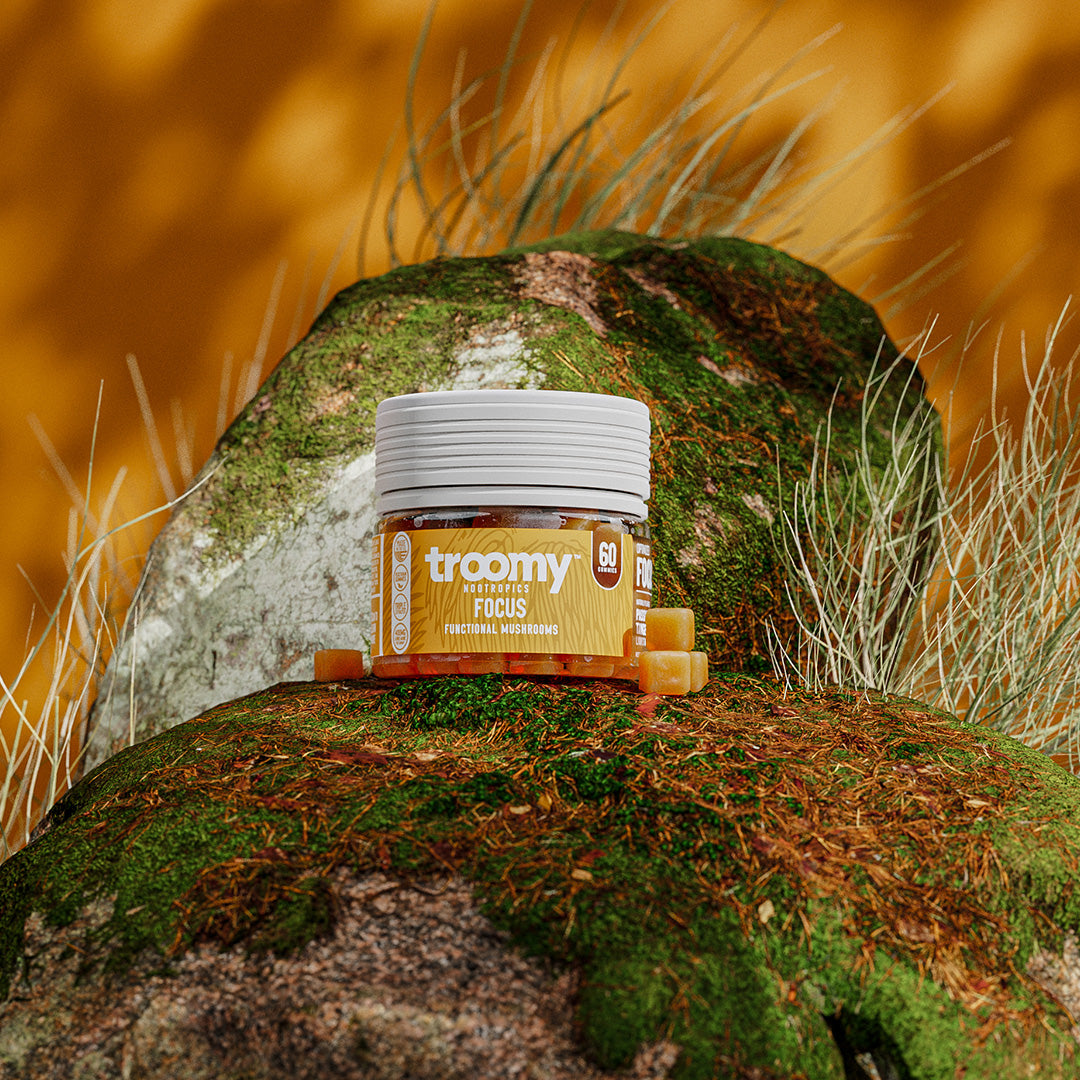
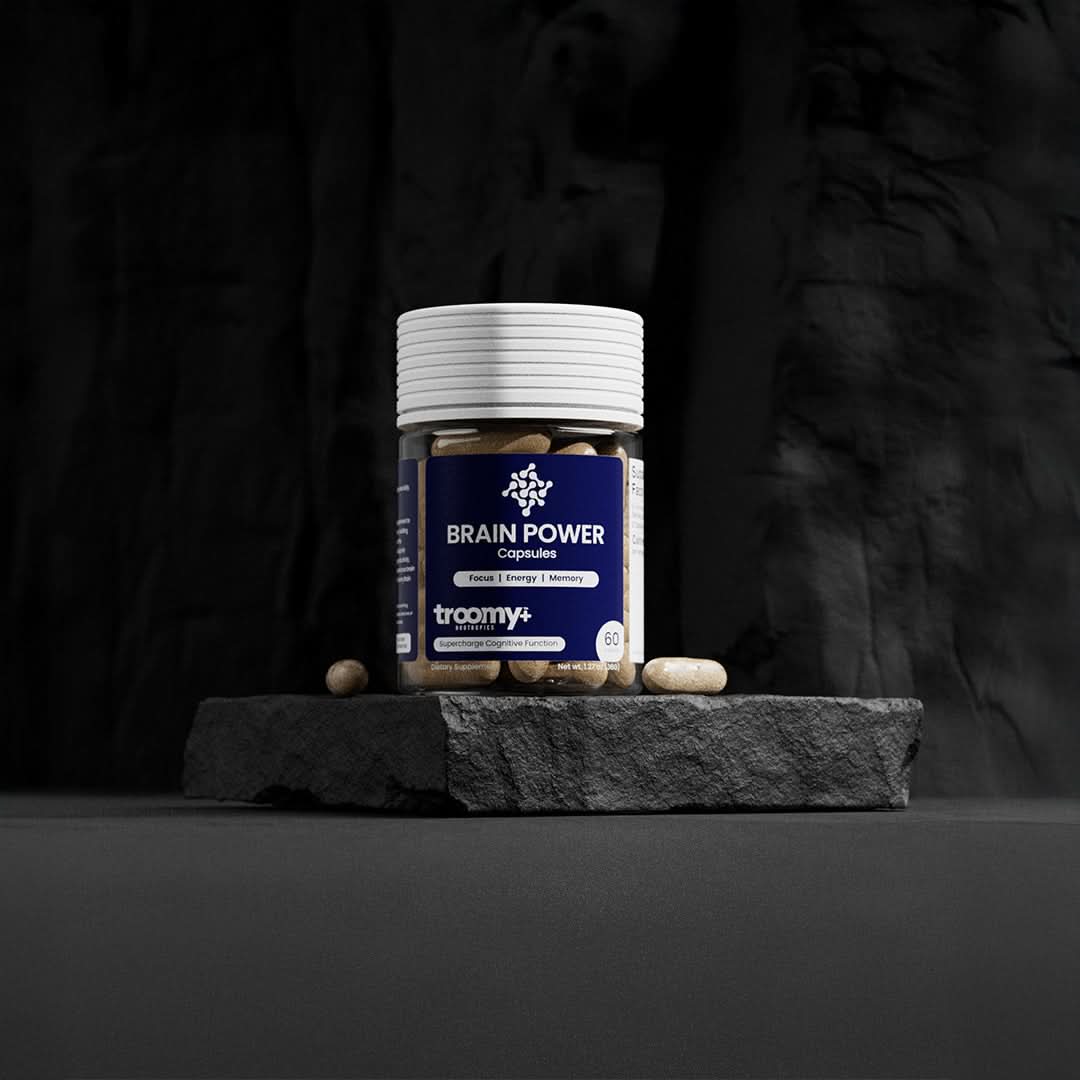
That is the idea behind Focus Lion's Mane Mushroom Gummies. Each serving delivers 800mg of triple-extracted lion's mane in a passionfruit tangerine gummy, completely caffeine-free, so you get steady mental clarity without the jitters. If your long days call for a lift as well as focus, Brain Power Cognitive Function Capsules pair lion's mane with cordyceps, L-theanine, and citicoline, and they contain 125mg of natural caffeine, about one cup of coffee, so take them earlier in the day. You can browse both in our brain health and focus collection, and our definitive guide to lion's mane covers the rest of the science.
Reishi: For the Brain That Will Not Switch Off
You got home an hour ago, and your mind is still replaying every meeting. Reishi is the mushroom for that feeling. Known as lingzhi in China, reishi is a glossy, reddish, woody mushroom that is far too tough to cook, and it has a long history of use for promoting health and longevity in China, Japan, and other Asian countries. Its triterpenes and polysaccharides are the compounds researchers focus on most, and in multiple small, short-term placebo-controlled trials, reishi has been well tolerated.
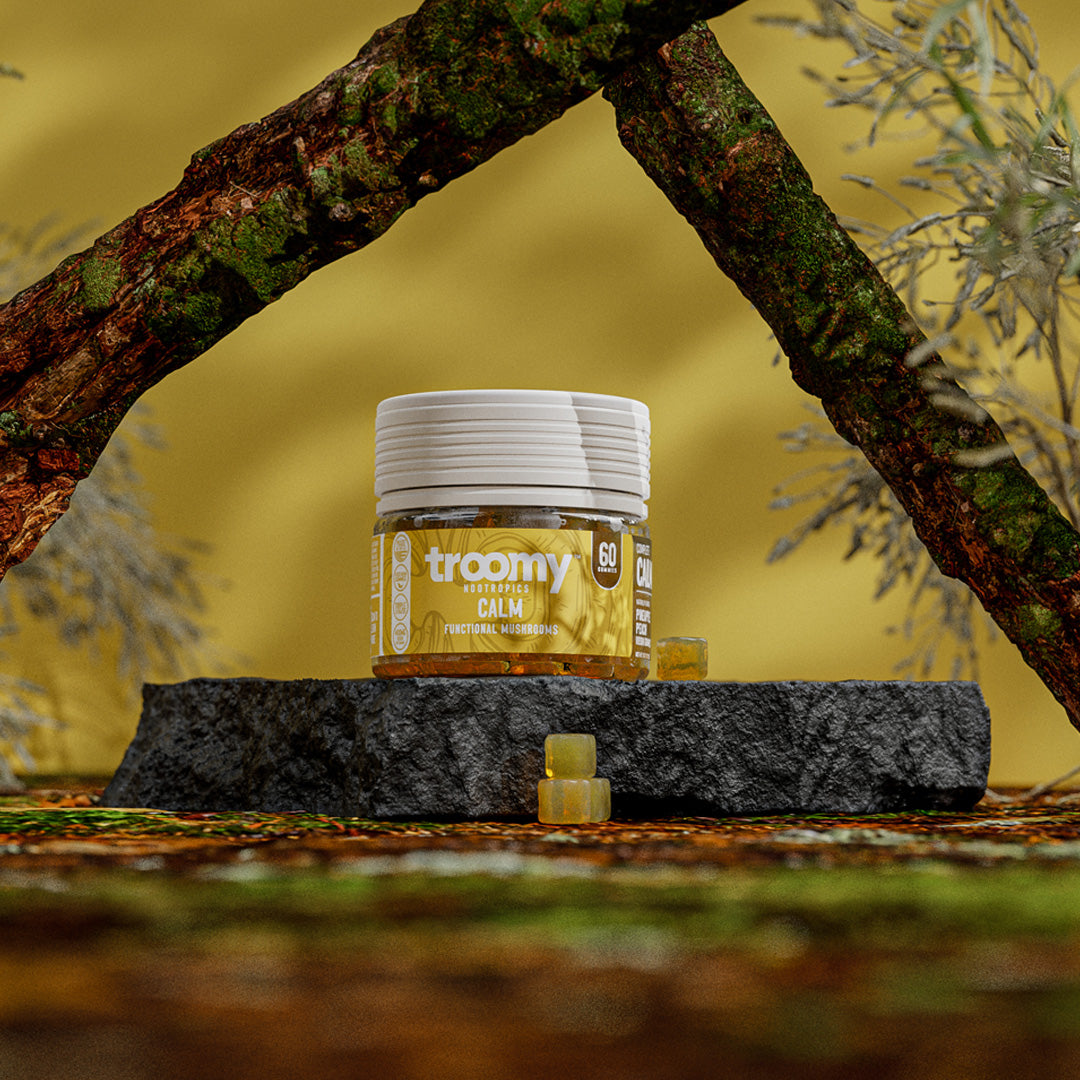
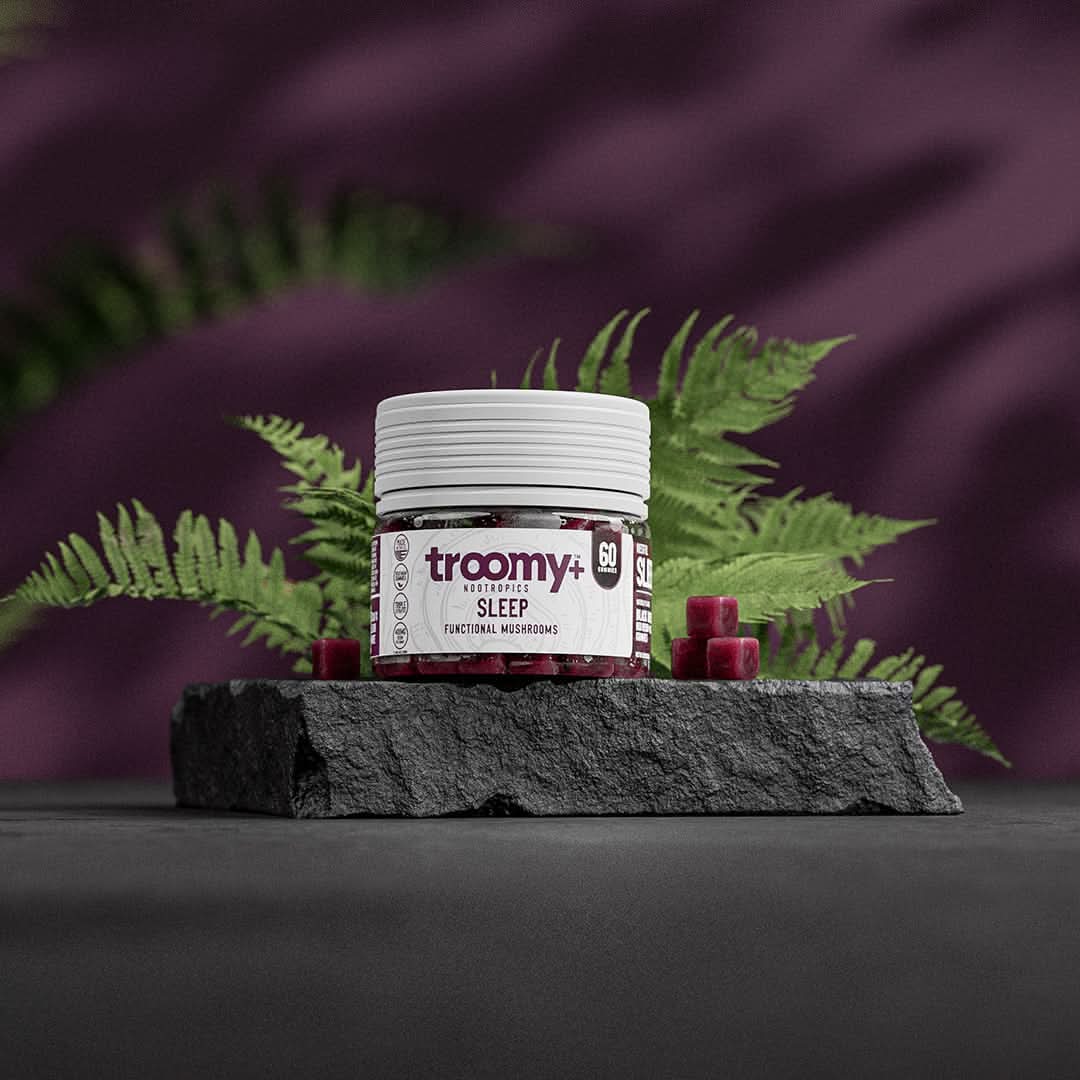
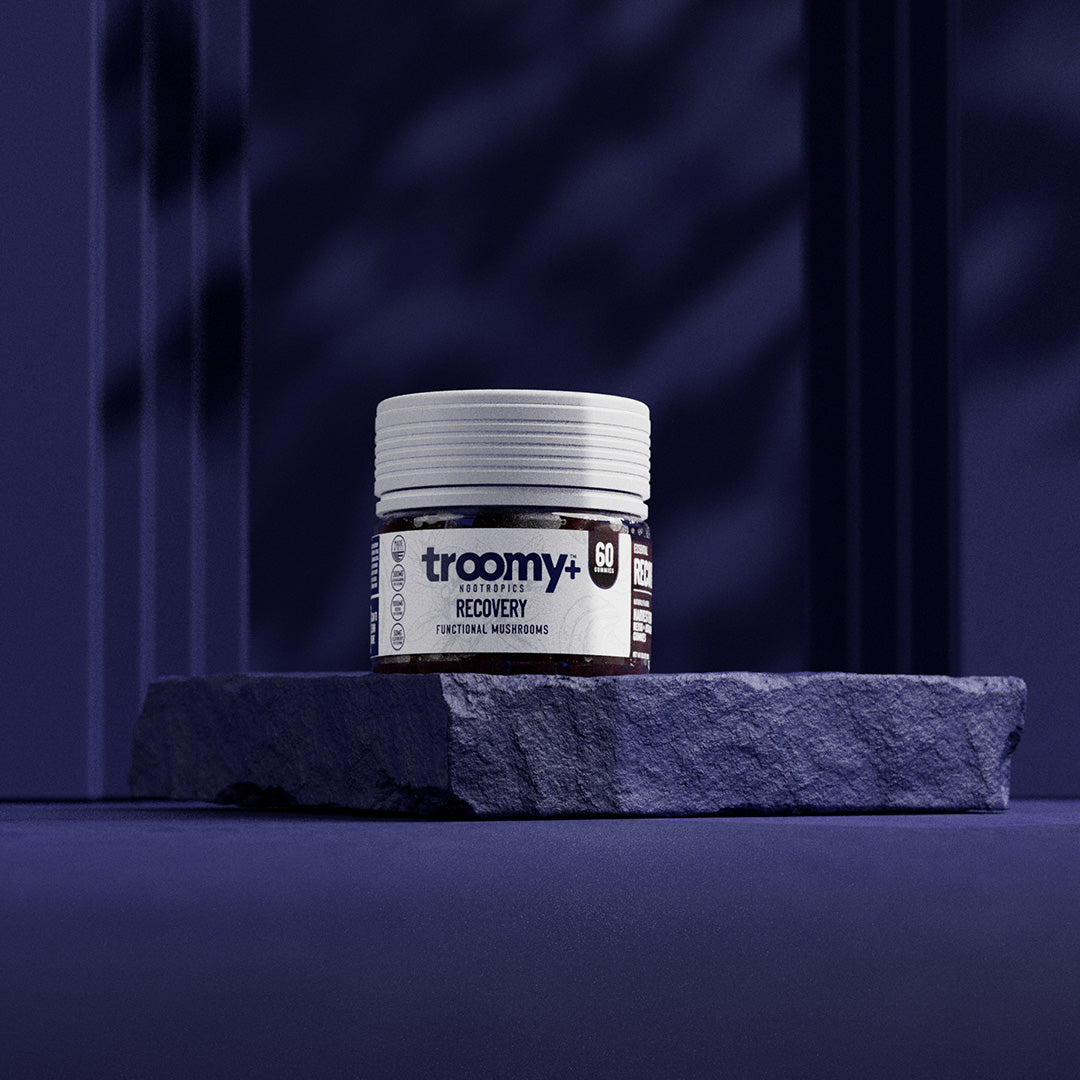
Reishi is so versatile that it anchors three Troomy blends. Calm Reishi Mushroom Gummies help take the edge off a stressful day without making you drowsy, in a pineapple peach flavor. Sleep Reishi Mushroom Gummies with Melatonin combine reishi with melatonin, chamomile, lemon balm, and passionflower for the nights you cannot fall asleep, so you wake up refreshed instead of groggy. And Recovery Ashwagandha and Reishi Mushroom Gummies pair reishi with ashwagandha to help you bounce back after big workouts and draining workdays. Explore them in our mood and stress collection and our sleep and bedtime collection, or read our full guide to reishi mushroom benefits and how to take it.
Cordyceps: For the 3pm Crash
It is 3pm, you are three cups of coffee deep, and you are still dragging. Cordyceps is the mushroom for that slump. The wild species that made cordyceps famous grows on caterpillars in the Himalayas, but many modern supplements, including ours, use Cordyceps militaris, a cultivated species that is far more sustainable to grow. It is also not psychedelic, in case you were wondering, and our guide to whether cordyceps are psychedelic settles the question for good.
Cordyceps is best known for supporting energy, stamina, and endurance. In a randomized, double-blind, placebo-controlled study of 28 young adults, a mushroom blend containing Cordyceps militaris improved tolerance to high-intensity exercise, with longer time to exhaustion after one week and improvements in maximal oxygen uptake after three weeks of consistent use.
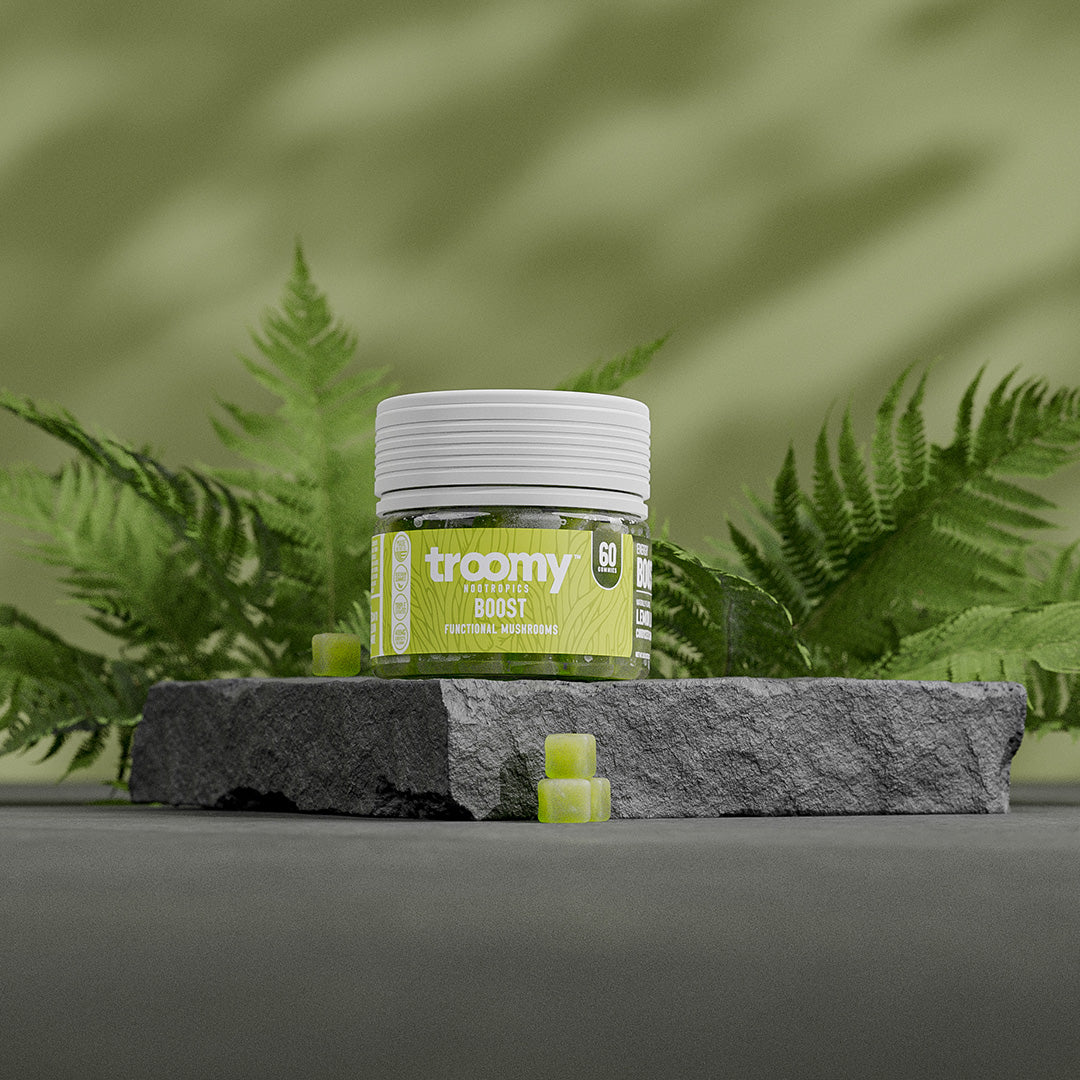
Boost Cordyceps Mushroom Gummies bring that support to a lemon-lime gummy with zero caffeine, so you get clean, steady energy that does not crash. They are a favorite before the gym, during long shifts on your feet, and in place of that afternoon cold brew. Find them in our natural energy collection, and read more in our guide to cordyceps benefits, uses, and how to take it.
Chaga, Turkey Tail and Maitake: The Immune Support Crew
When cold and flu season rolls around, three functional mushrooms tend to come up together. Chaga looks less like a mushroom and more like a lump of burnt charcoal growing on birch trees, and it is prized for its beta-glucans and antioxidants. Because it is so distinctive and so popular, imitations exist, and our guide to spotting false chaga shows you what to watch for. Turkey tail is a thin, striped, fan-shaped mushroom that grows on fallen logs almost everywhere trees do, and it is one of the most studied mushrooms for immune support thanks to its protein-bound polysaccharides, PSK and PSP. Maitake bridges both worlds as a delicious culinary mushroom that also brings beta-glucans to the table.
You can read more in our guides to chaga mushroom benefits and turkey tail mushrooms, or shop our immune support collection.
Tremella: The Beauty Mushroom
Dull skin, brittle nails, and a tub of collagen powder you cannot bring yourself to finish are all very real problems. Tremella, also called snow fungus, is a translucent, jelly-like mushroom that has been used in Chinese beauty traditions for generations. Its polysaccharides are known for holding onto water, which is why it is often called the hydration mushroom.
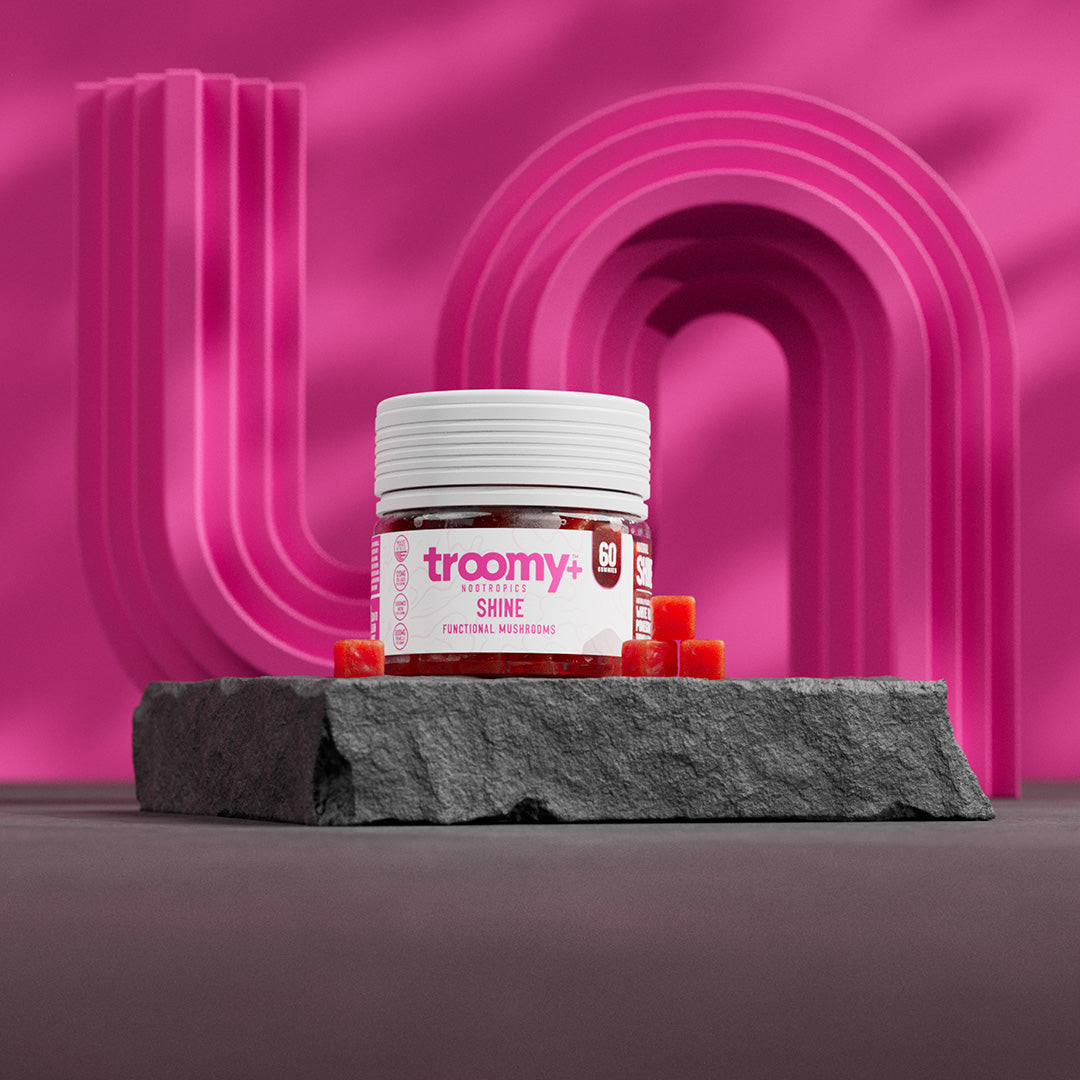
Shine Tremella Mushroom Gummies with Biotin and Collagen combine tremella with biotin and collagen in a white peach pomegranate gummy to support healthy hair, skin, and nails from the inside out. Like any beauty supplement, Shine works on a longer timeline, and results typically show after 6 to 12 weeks of daily use. Browse our beauty collection or learn more about tremella mushroom benefits.
Where Do Culinary and Functional Mushrooms Overlap?
Some mushrooms refuse to pick a lane. Shiitake, maitake, oyster, and lion's mane are all delicious to cook and are all studied for their functional compounds. So why take them in a supplement at all?
There are three good reasons. First, many of the most valuable functional species, like reishi, chaga, and turkey tail, are simply not edible as food. Second, the compounds people are after are concentrated through extraction, and you would need to eat a lot of mushrooms, very consistently, to get anywhere close. Third, consistency is where functional mushrooms do their best work, and most people are not cooking shiitake and maitake every single day.
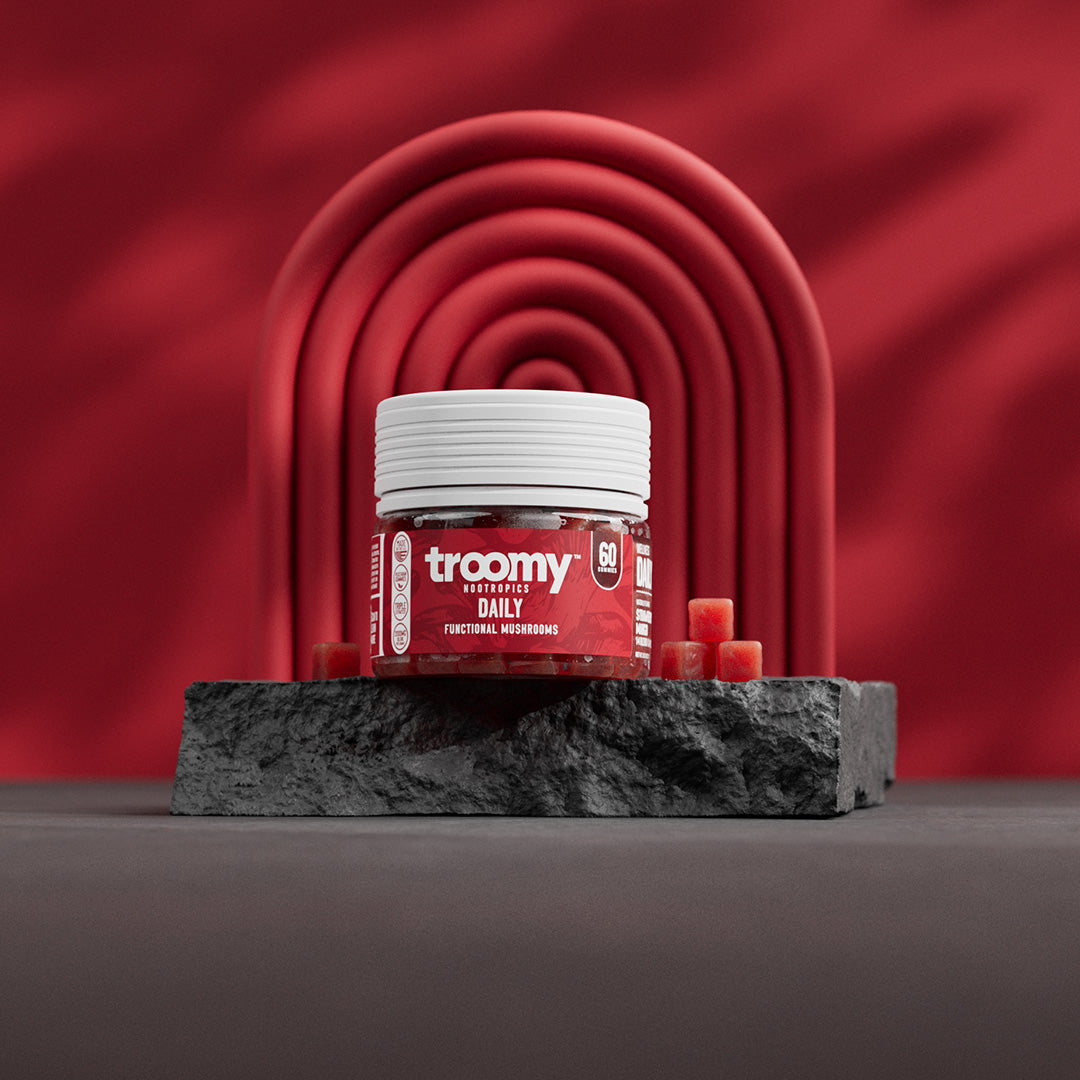
That is the thinking behind Daily 14 Mushroom Blend Gummies. Each strawberry mango gummy combines 14 functional mushrooms, including reishi, cordyceps, chaga, lion's mane, turkey tail, maitake, shiitake, and oyster, for whole-body support in one simple step. If you just want one easy thing to do for yourself every day, Daily is it.
What Should You Look For in a Functional Mushroom Supplement?
Not all mushroom supplements are created equal, and the label tells you a lot if you know what to read. Here is what separates a supplement that works from one that sits in the cabinet.
Start with the part of the mushroom. Troomy uses both the fruiting body and the mycelium for full-spectrum support. Some products rely only on mycelium grown on grain, which means part of what you are paying for can be the grain it grew on. Next, look at extraction. Most brands single or double extract. We triple-extract our mushrooms to capture a broader spectrum of beneficial compounds, and our guide to what triple extraction is and why most brands skip it explains why that matters.
Then check where and how it is made. Troomy gummies are made in the USA in a GMP-certified facility and are third-party tested for purity. Our guide on why made in the USA matters for mushroom supplements covers what to look for on any label. Finally, pick a format you will stick with. A supplement only works if you take it, and that is the reason Troomy exists. Powders are messy and capsules can feel medicinal, so we built plant-based pectin gummies in real fruit flavors that customers say taste like candy. If you are weighing formats, our comparison of mushroom gummies vs. fresh mushrooms, powders, and mushroom coffee lays it all out.
Trying something new should feel low risk, too. A 60-count bottle of Focus, Calm, Sleep, or Boost works out to about $1.17 a day, and Troomy is backed by a 30-day money-back guarantee, so if it is not for you, you get your money back. Many customers feel Focus, Calm, Sleep, and Boost within 30 to 60 minutes, while Daily, Recovery, and Shine build over a few weeks of consistent use, much like a daily vitamin.
What Are Psychedelic Mushrooms?
Psychedelic mushrooms, often called magic mushrooms, are species that contain psilocybin and psilocin, compounds that alter perception, mood, and thought. Most belong to the genus Psilocybe. They are a completely different category from the culinary and functional mushrooms covered above.
Under federal law, psilocybin is a Schedule I controlled substance, and the U.S. Government Accountability Office notes that it is generally a federal crime to possess, manufacture, or distribute it. A few states, including Oregon and Colorado, have created their own regulated programs, and psilocybin is being studied in supervised clinical research. The legal landscape is changing quickly, so the rules where you live may differ from the rules one state over.
Here is the part that matters for your wellness routine. Functional mushrooms like lion's mane, reishi, cordyceps, chaga, turkey tail, and tremella contain zero psilocybin and have zero hallucinogenic properties. Taking a Troomy gummy will not make you trip, and our blends are legal to buy across the United States. Our side-by-side guide to functional mushrooms vs. psychedelic mushrooms goes deeper.
What About Amanita Muscaria Gummies?
Amanita muscaria, also called fly agaric, is the red mushroom with white spots from storybooks and video games. It contains muscimol and ibotenic acid, and in recent years it has shown up in gummies and chocolates marketed as legal psychedelics. In December 2024, the FDA told manufacturers that Amanita muscaria and its constituents are not authorized for use as ingredients in conventional food. Earlier that year, a CDC and FDA investigation into a recalled line of mushroom chocolates and gummies tied the products to 180 illnesses, including 73 hospitalizations, across 34 states.
The takeaway is simple. Read the label. A legitimate functional mushroom supplement names the species inside and never promises a buzz, a trip, or psychedelic effects. If a product does, put it back on the shelf.
Poisonous Mushrooms: Which Types Should You Avoid?
This is where the stakes get real. U.S. poison control centers receive roughly 7,500 reports of poisonous mushroom ingestion every year, and a review of national poison center data logged 133,700 mushroom exposures between 1999 and 2016. Many of the most serious cases come down to one thing: a toxic mushroom that looked like an edible one.
Why Is the Death Cap So Dangerous?
The death cap, Amanita phalloides, is the most notorious mushroom on the planet for good reason. It contains amatoxins, and according to the CDC, amatoxin-containing mushrooms account for more than 90% of mushroom poisoning deaths worldwide. Amatoxins are not broken down by cooking, and symptoms usually do not start until six or more hours after eating, which means people often feel fine long after the damage to the liver has begun.
This is not a distant problem, especially for anyone on the West Coast. During the 2025 to 2026 season, Northern California saw 39 cases of suspected amatoxin poisoning from foraged mushrooms, resulting in three liver transplants and four deaths, the largest outbreak of its kind in California history. The same report notes that the western destroying angel, Amanita ocreata, is native to California, and that the peak season for both species runs from October through April. In other words, the riskiest stretch of the year is starting right now.
What Other Poisonous Mushrooms Look Like Edible Ones?
The dangerous part about toxic mushrooms is how ordinary many of them look. Young destroying angels can resemble button mushrooms or puffballs. False morels, in the genus Gyromitra, have wrinkled, brain-like caps that can fool people hunting for true morels. The glowing orange jack-o'-lantern mushroom is often mistaken for chanterelles and causes intense stomach upset. Deadly Galerina is a small, plain brown mushroom that carries the same amatoxins as the death cap and can grow right alongside edible species on wood. The green-spored parasol pops up in lawns and parks after rain and looks harmless enough to tempt a curious kid. Fly agaric, mentioned above, is poisonous as well as psychoactive.
Even experienced foragers get it wrong, which is why identification apps and quick visual checks are not enough.
How Can You Stay Safe Around Wild Mushrooms?
The CDC's advice is direct: wild mushrooms should not be eaten unless they have been identified by an expert. Buy culinary mushrooms from grocery stores and reputable farmers market vendors. Keep an eye on young kids and pets in yards and parks after rainy stretches. If you think someone has eaten a wild mushroom, call the Poison Help Line at 1-800-222-1222 right away, even if they feel fine, since amatoxin symptoms are delayed.
The same principle applies to supplements. Choose products from brands that name their species, make their products in the USA, and third-party test them, so you always know what you are getting.
How Do You Choose the Right Functional Mushroom for Your Routine?
Start with the problem you most want solved, and pick the one blend built for it. If brain fog is dragging down your workday, start with Focus. If stress follows you home every night, try Calm. If you cannot fall asleep, or you wake up groggy, go with Sleep. If the afternoon crash is your nemesis, reach for Boost. If you feel drained after big workouts or long days, Recovery is your match. If you want glowing skin and stronger nails, choose Shine. And if you just want one simple thing that covers the basics, Daily is the easy answer.
Most people start with one blend and add a second once the first becomes a habit. Some of the most popular pairings are Focus with Calm for sharp focus without the stress, and Boost in the morning with Sleep at night to bookend the whole day. Our guide on when to take mushroom supplements from morning to night makes timing easy.
The Bottom Line on Types of Mushrooms
Now that you know the four types of mushrooms, the next time someone says mushrooms, you will know which kind they mean. Culinary mushrooms belong on your plate. Poisonous mushrooms belong nowhere near it. Psychedelic mushrooms are a separate category with their own laws. And functional mushrooms are the ones quietly helping real people get through foggy afternoons, restless evenings, and long weeks with a little more ease.
If that foggy afternoon sounds familiar, two gummies is the whole routine. Try Focus Lion's Mane Mushroom Gummies and see what it feels like to get through your list with a clear head.
Frequently Asked Questions About Types of Mushrooms
What are the four main types of mushrooms?
The four practical types of mushrooms are culinary, functional, psychedelic, and poisonous. Culinary mushrooms, like button, shiitake, and oyster mushrooms, are grown for cooking. Functional mushrooms, like lion's mane, reishi, and cordyceps, are valued for naturally occurring compounds that support focus, calm, energy, and overall wellness. Psychedelic mushrooms contain psilocybin and are a controlled substance under federal law. Poisonous mushrooms, like the death cap, can cause severe illness or death and should never be eaten.
Are functional mushrooms the same as magic mushrooms?
Not at all. Magic mushrooms contain psilocybin, a compound that alters perception and is classified as a Schedule I controlled substance under federal law. Functional mushrooms such as lion's mane, reishi, cordyceps, chaga, and tremella do not contain psilocybin and have zero hallucinogenic properties. Troomy gummies are made only with functional mushrooms, so they will not make you trip.
Can you get the benefits of functional mushrooms by cooking them?
Partly. Shiitake, maitake, oyster, and lion's mane are all delicious to cook and add real nutrition to your plate. Many of the most studied functional mushrooms, including reishi, chaga, and turkey tail, are too woody or bitter to eat, and the compounds people are after are concentrated through extraction. That is why many people enjoy mushrooms at dinner and also take an extracted functional mushroom supplement, like Troomy Daily, for consistent everyday support.
Which type of mushroom is best for focus?
Lion's mane is the functional mushroom most associated with focus, memory, and mental clarity. In a small 2023 pilot study of healthy adults, participants performed faster on an attention task 60 minutes after taking lion's mane. Troomy Focus gummies deliver 800mg of triple-extracted lion's mane per serving and are caffeine-free.
Which mushroom is best for stress and sleep?
Reishi is the functional mushroom best known for supporting calm and restful nights. Troomy Calm uses reishi to help take the edge off a stressful day without making you drowsy, while Troomy Sleep combines reishi with melatonin, chamomile, lemon balm, and passionflower to help you fall asleep more easily and wake up refreshed.
Which mushroom is best for natural energy?
Cordyceps is the go-to functional mushroom for energy, stamina, and endurance. Research on a Cordyceps militaris blend found improved tolerance to high-intensity exercise after one and three weeks of use. Troomy Boost delivers cordyceps in a caffeine-free lemon-lime gummy for clean, steady energy that does not crash.
How can you tell if a wild mushroom is poisonous?
You cannot reliably tell by looking, smelling, tasting, or using an identification app. Many deadly mushrooms, including the death cap and destroying angel, closely resemble edible species, and their amatoxins are not destroyed by cooking. The CDC recommends never eating a wild mushroom unless an expert has identified it. If you think someone has eaten a poisonous mushroom, call the Poison Help Line at 1-800-222-1222 right away.
How long does it take for functional mushrooms to work?
It depends on the blend. Many Troomy customers feel Focus, Calm, Sleep, and Boost within 30 to 60 minutes. Daily and Recovery build over two to four weeks of consistent use, and Shine typically shows results after 6 to 12 weeks, similar to other beauty supplements. Functional mushrooms work best with daily use over four to eight weeks.
Are Troomy mushroom gummies safe to take every day?
Troomy gummies are designed for long-term daily use. They are made in the USA in a GMP-certified facility, third-party tested for purity, triple-extracted, and non-psychoactive. Every blend except Brain Power is caffeine-free, and Brain Power contains 125mg of natural caffeine, so it is best taken earlier in the day. As with any supplement, talk to your healthcare provider before starting if you are pregnant, nursing, taking medication, or sensitive to mushrooms.


