



Cordyceps has one of the most remarkable origin stories in the world of natural wellness. Wild Cordyceps sinensis grows at elevations above 14,000 feet in the Tibetan and Himalayan highlands, where it parasitizes caterpillar larvae and was historically so rare that only the wealthiest households in imperial China could access it. For over a thousand years, Traditional Chinese and Tibetan Medicine practitioners prescribed it for fatigue, low libido, respiratory weakness, and recovery after serious illness. Today, the cultivated species Cordyceps militaris has made these benefits accessible to anyone, and peer-reviewed research is beginning to explain the mechanisms behind what traditional practitioners observed for centuries.
This is the complete guide to cordyceps mushroom: what it is, what the science actually shows, how it works in the body, how it compares to stimulants, and how to take it effectively.
What Is Cordyceps Mushroom?
Cordyceps is a genus of parasitic fungi with over 750 known species. For health and supplementation purposes, the two species of interest are Cordyceps sinensis and Cordyceps militaris. Cordyceps sinensis is the wild variety that grows on ghost moth larvae in the high-altitude grasslands of Tibet. It cannot be commercially cultivated at meaningful scale due to its unique parasitic lifecycle and high-altitude growing conditions, making it essentially unavailable as a functional supplement ingredient. Cordyceps militaris is the cultivated species grown on grain substrates in controlled environments. It contains the same primary bioactive compounds as the wild strain and is the species used in all serious functional mushroom products, including Troomy.
What Is the Difference Between Cordyceps Sinensis and Cordyceps Militaris?
Both species contain cordycepin and polysaccharides as their primary active constituents. Research on Cordyceps militaris increasingly supports its use as a bioequivalent alternative to wild Cordyceps sinensis for the energy and endurance benefits documented in clinical studies. Any supplement product claiming to contain wild-harvested Cordyceps sinensis at meaningful doses should be evaluated with skepticism given the supply realities. Cordyceps militaris, properly extracted, is what the human research is actually based on, and it is what delivers results.
What Are the Active Compounds in Cordyceps?
The two primary bioactive compounds in Cordyceps militaris are cordycepin (3-deoxyadenosine) and polysaccharides including beta-glucans. Cordycepin is a structural analog of adenosine (the molecular precursor to ATP) and is the active constituent most closely associated with cordyceps' energy-supporting properties. Polysaccharides are the immunomodulatory fraction found across virtually all functional mushrooms and are responsible for the adaptogenic and immune-supporting properties associated with consistent long-term use. For these compounds to be bioavailable, the mushroom must be properly extracted. Raw mushroom powder without extraction has poor bioavailability because the active compounds are bound within fungal cell walls that the human digestive system cannot break down.
What Does Cordyceps Do? The Research-Backed Benefit Profile
Cordyceps is not a single-mechanism supplement. The research points to several interlocking benefits that together explain why it has remained a cornerstone of traditional medicine and why modern clinical research continues to validate it.
How Does Cordyceps Support Energy at the Cellular Level?
The foundational mechanism behind cordyceps energy support is its influence on cellular ATP production. Cordycepin, the primary bioactive in Cordyceps militaris, is a structural analog of adenosine and the precursor to ATP, the molecule your cells use to power virtually every energy-dependent biological function. Because cordycepin interacts with the same biochemical pathways that govern how efficiently mitochondria produce ATP, cordyceps supports energy from the inside out rather than through external stimulation of the nervous system or adrenal glands.
Does Cordyceps Improve VO2 Max and Endurance?
The strongest human clinical evidence for cordyceps comes from a 2016 randomized, double-blind, placebo-controlled study published in the Journal of Dietary Supplements. This trial found that supplementation with Cordyceps militaris extract for three weeks was associated with improved VO2max and time to exhaustion in healthy adults. VO2max, or maximal oxygen consumption, is the gold standard measure of aerobic capacity. Improving it means the body can take in, transport, and use oxygen more efficiently during sustained effort, which directly translates to endurance performance, faster recovery between efforts, and reduced subjective fatigue. The full peer-reviewed study is available at pubmed.ncbi.nlm.nih.gov/27408987.
A growing body of research reviewing Cordyceps militaris across multiple studies has further documented that cordyceps supports oxygen utilization, reduces exercise-induced fatigue markers, and demonstrates adaptogenic properties that help the body manage physical stress. The cordycepin and polysaccharide fractions appear to work together to produce a benefit profile that extends beyond what any single-mechanism supplement can offer.
How Does Cordyceps Work as an Adaptogen?
Adaptogens are compounds that help the body maintain physiological balance under stress. Unlike stimulants, which impose an acute forced effect on the nervous system, adaptogens work by supporting the regulatory systems that govern how the body responds to physical and psychological demands. Cordyceps demonstrates adaptogenic properties through its influence on mitochondrial function, oxidative stress response, and the body's hormonal stress pathways. This is the foundation of its historical use for recovery after illness and physical exhaustion.
Does Cordyceps Support the Immune System?
The beta-glucan polysaccharide fraction in cordyceps has been associated with immune modulation in preclinical and in vitro research. Beta-glucans interact with specific receptors on immune cells and are among the most studied natural compounds for immune support. Regular use of cordyceps as part of a broader functional mushroom routine represents one of the most evidence-aligned approaches to daily immune support available in the supplement category.
How Does Cordyceps Compare to Caffeine for Energy?
Caffeine produces energy by blocking adenosine receptors, preventing the brain from receiving the fatigue signal. It also triggers adrenal activity, producing a cortisol and adrenaline response that creates the familiar surge of alertness. The tradeoffs are equally familiar: energy crashes when the caffeine wears off, elevated heart rate, jitteriness in sensitive individuals, disrupted sleep if taken too late, and tolerance buildup requiring progressively higher doses. Cordyceps operates through an entirely different pathway. It does not block neurotransmitters or push the adrenal glands. It supports the underlying cellular process that generates energy, which means the effect is more gradual, more sustained, and does not come with a crash or build tolerance over time.
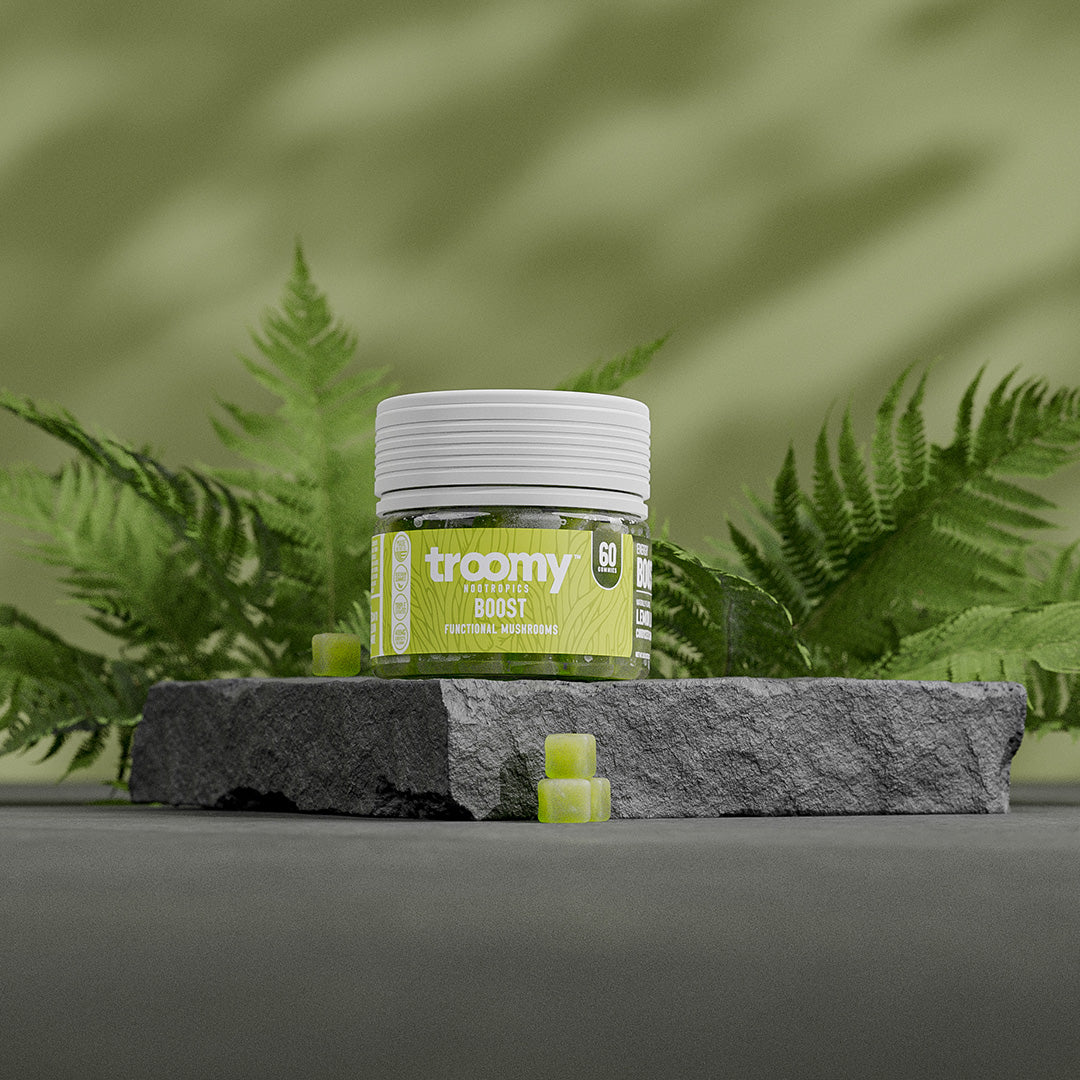
For people who want sustained energy without the tradeoffs of stimulants, Troomy's Boost Cordyceps Gummies offer a convenient, consistently dosed approach to daily cordyceps support. Triple-extracted, made in the USA, and vegetarian, they are designed to make the habit easy to maintain. The Troomy Energy Collection includes the full range of energy-focused products for different daily needs.
For people whose energy problem shows up less as physical fatigue and more as difficulty sustaining motivation, cognitive drive, and output through a demanding day, the same cellular energy mechanism is what explains both outcomes.
The full mechanics of why cordyceps builds energy so differently from caffeine, including what happens at the adenosine receptor versus the mitochondria, why there is no crash, and why consistent use matters more than a single dose, are covered in detail in the dedicated energy guide.
What Are the Benefits of Cordyceps for Athletes?
Cordyceps is particularly relevant for athletes and active individuals because of the direct evidence linking it to VO2max improvement and extended time to exhaustion. Both of these measures have immediate practical implications for any sport or training discipline that demands sustained aerobic output. Cyclists, runners, swimmers, and team sport athletes who rely on aerobic capacity as a limiting factor will find the most directly applicable research on how cordyceps applies to VO2max, endurance, and recovery for active individuals covered in full.
How Long Does Cordyceps Take to Work?
Cordyceps is not a stimulant and does not produce an immediate energy effect. The human research on cordyceps and physical performance used supplementation periods of three to four weeks before measuring outcomes. This is consistent with the adaptogenic model, where benefits develop through consistent daily use rather than appearing with a single acute dose. Many users notice subtle improvements in sustained energy and endurance within two to three weeks. The adaptogenic and immune benefits tend to develop on a similar timeline. The key is consistent daily use rather than intermittent supplementation.
How Should You Take Cordyceps?
Choosing the Right Form
Cordyceps comes as raw powder, extract powder, capsules, and gummies. The most important variable is not the delivery format but the extraction method. Raw mushroom powder has poor bioavailability because the bioactive compounds are locked behind fungal cell walls. A quality cordyceps supplement uses triple extraction or dual extraction to break down those cell walls and make the cordycepin and polysaccharides available for absorption. Gummies have the practical advantage of being a format people actually enjoy taking every day, which matters for habit consistency. Capsules are convenient and travel well. Powder is flexible for mixing into drinks. The bioavailability differences between formats, what to check in an extraction method, and how to read a label to confirm you are getting a clinically relevant product are covered in the full comparison of cordyceps gummies, capsules, and powder.
Dosage
Human clinical research on cordyceps and physical performance has used dosages ranging from approximately 1,000 to 3,000mg of extract daily. The word extract matters. A product labeling 1,000mg of raw cordyceps powder delivers a fundamentally different amount of active compound than 1,000mg of concentrated extract, because raw powder has not undergone the cell wall breakdown that releases the bioactive constituents. Troomy's Boost Cordyceps Gummies deliver a standardized serving of triple-extracted Cordyceps militaris within the clinically relevant range. For best results, most protocols support taking cordyceps in the morning or before physical activity, though daily consistency matters more than precise timing. The complete dosage guide covers the extract vs powder distinction, clinical dose ranges, and timing protocols in considerably more depth.
Stacking Cordyceps with Other Mushrooms
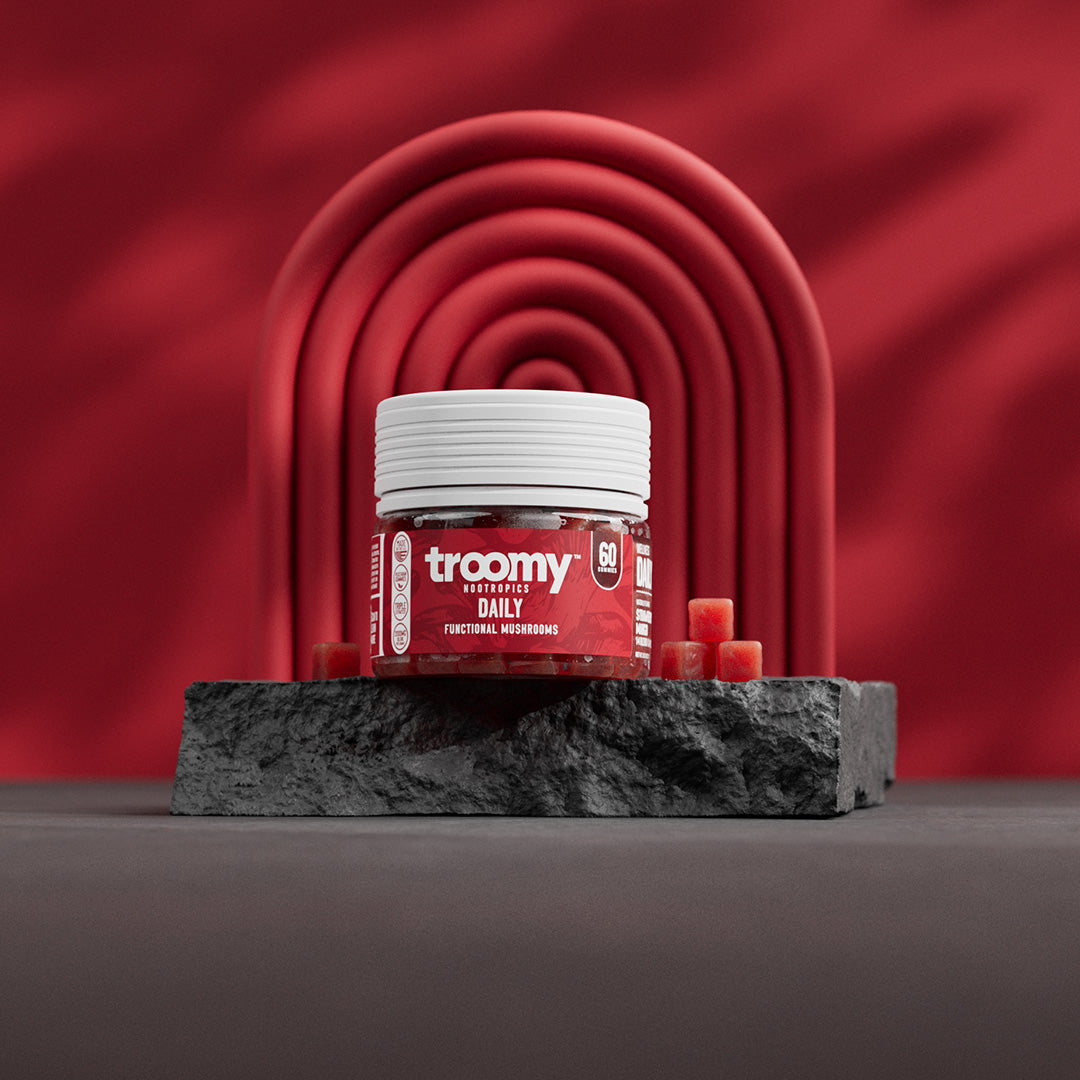
Cordyceps pairs naturally with other functional mushrooms. The most popular combination is pairing cordyceps with Lion's Mane for energy, endurance, and cognitive clarity, because the two mushrooms address entirely different mechanisms, making them complementary rather than redundant. For a comprehensive approach that includes both, Troomy's Daily 14 Mushroom Blend Gummies combines cordyceps with 13 other functional mushrooms in a single daily serving.
Is Cordyceps Safe?
Cordyceps has a strong safety profile based on over a thousand years of traditional use and decades of modern supplementation research. Human clinical trials have not identified significant adverse effects at standard supplementation dosages. Cordyceps does not build tolerance, is not habit-forming, and does not carry the adrenal concerns associated with long-term stimulant use. As with any supplement, individuals who are pregnant, nursing, or taking prescription medications should consult with a healthcare provider before starting. Women navigating the specific energy and hormonal considerations of menstrual cycling, adrenal load, or perimenopause will find those considerations addressed directly, as the mitochondrial energy and adaptogenic mechanisms cordyceps supports are particularly relevant in those contexts.
Are Cordyceps Psychedelic?
No. Cordyceps are functional mushrooms, not psychedelic mushrooms. They contain no psilocybin, produce no psychoactive effects, and are federally legal in all 50 states. The full explanation of why cordyceps and psilocybin mushrooms are entirely different categories of fungi, covering the differences in organisms, active compounds, mechanisms, and legal status, and is available for anyone who has encountered this question.
Frequently Asked Questions
What does cordyceps do for the body?
Cordyceps supports energy production at the cellular level through its influence on ATP synthesis, improves aerobic endurance and oxygen utilization, demonstrates adaptogenic stress response properties, and provides immune support through its polysaccharide content. Human clinical research has specifically documented improvements in VO2max and exercise endurance.
How long does cordyceps take to work?
Most human research on cordyceps and physical performance used supplementation periods of three to four weeks. Some people notice subtle improvements in sustained energy within one to two weeks of daily use, but the most meaningful results tend to develop over three to four weeks of consistent supplementation.
Is cordyceps safe to take every day?
Yes. Cordyceps has a well-established safety profile from over a thousand years of traditional use and modern clinical research. Human trials have not identified adverse effects at standard supplement dosages. Consult a healthcare provider if you are pregnant, nursing, or on prescription medications.
Does cordyceps give you energy?
Yes, but through a fundamentally different mechanism than stimulants like caffeine. Cordyceps supports the cellular pathways involved in ATP production, meaning it supports the body's own energy-generation machinery rather than overriding fatigue signals or stimulating the adrenal glands. The result is a more sustained, crash-free form of energy support.
What is cordyceps good for?
Cordyceps is best supported by evidence for physical endurance and aerobic capacity, cellular energy production, adaptogenic stress management, and immune support. It is one of the most researched functional mushrooms for energy and athletic performance specifically.
These statements have not been evaluated by the Food and Drug Administration. This product is not intended to diagnose, treat, cure, or prevent any disease.


