



Search "mushroom vitamins" and you will find two very different things wearing the same name. One is the vitamins and minerals that live inside the mushroom you sauté for dinner. The other is a functional mushroom supplement, the gummies and capsules made from Lion's Mane, Reishi, and Cordyceps that people reach for to support focus, calm, sleep, and energy. They overlap, but they are not the same product, and confusing them is how people end up disappointed.
So let's clear it up in plain language. Mushrooms genuinely carry a real nutrient profile: B vitamins, vitamin D (under the right conditions), selenium, copper, potassium, and antioxidants you will not find in most other foods. Functional mushroom supplements, on the other hand, are built to concentrate the bioactive compounds that make these mushrooms functional in the first place, especially beta-glucans. This guide walks through both, honestly, so you know exactly what you are getting when you shop. And because Troomy makes triple-extracted functional mushroom gummies and capsules for a living, we will also show you where each mushroom fits into everyday life.
Are Mushroom Vitamins the Same as Functional Mushroom Supplements?
Short answer: not quite, and the difference matters. When nutritionists talk about the vitamins in mushrooms, they usually mean the nutrient content of whole culinary mushrooms, the kind you eat as food. When wellness shoppers talk about mushroom supplements, they usually mean concentrated extracts of functional mushrooms taken for a specific benefit like clarity, calm, or clean energy.
Here is the honest nuance most brands skip. Extracts and powders concentrate specific compounds like beta-glucans, but they do not automatically deliver the same vitamin and mineral profile as eating the whole mushroom. In other words, a Lion's Mane focus gummy is not a multivitamin, and it was never meant to be. It is a targeted functional supplement. If you want the food-level nutrients, you eat the mushroom. If you want a concentrated, convenient dose of the functional compounds, you take the supplement. Both are valid. They just do different jobs.
That is exactly why Troomy is built around triple-extracted, full-spectrum functional mushroom supplements. Triple extraction pulls a broader range of the beneficial compounds out of the mushroom than the single or double extraction most brands use, so you get more of what makes these fungi worth taking. If you are new to the category, our overview of what mushroom supplements actually are is a good place to start.
What Vitamins and Minerals Are Actually in Mushrooms?
Whole mushrooms punch above their weight nutritionally while staying remarkably low in calories. A one-cup serving of raw white mushrooms has roughly 15 calories, about 2 grams of protein, and a spread of B vitamins and minerals that is genuinely hard to find elsewhere in the produce aisle. According to nutrient data compiled by the University of Connecticut's agricultural extension, mushrooms are a good source of B vitamins (B2, B3, folate, and B5), phosphorus, vitamin D, selenium, copper, and potassium.
Let's break down the headline nutrients, because "mushroom vitamins" is really shorthand for a handful of specific ones.
Do Mushrooms Have B Vitamins?
Yes, and this is where mushrooms genuinely shine. They are a reliable source of several B vitamins, especially riboflavin (B2), niacin (B3), and pantothenic acid (B5). These are the vitamins your body leans on to turn food into usable energy and to keep your nervous system running smoothly. Research using national nutrition survey data found that adding a single serving of mushrooms to the diet meaningfully increased intake of riboflavin, niacin, copper, phosphorus, potassium, and selenium, without adding meaningful calories, fat, or sodium (published in the journal Food Science and Nutrition). More mature varieties like cremini and portobello tend to carry higher B vitamin concentrations than young white buttons, since they are simply older versions of the same species.
Do Mushrooms Have Vitamin B12?
This is the question that trips people up, so here is the careful answer. Most common mushrooms, including white button and portobello, contain negligible vitamin B12. A few specific mushrooms, most notably dried shiitake and some wild species like chanterelles, do contain measurable B12. But as Vegan Health's review of plant B12 sources explains, much of the B12 measured in mushrooms appears as inactive analogues rather than the biologically active form your body can use, and the amount varies wildly from batch to batch. The practical takeaway: mushrooms are not a reliable primary source of B12, and if you follow a vegan or vegetarian diet, you should still get your B12 from fortified foods or a dedicated supplement. Do not rely on a mushroom gummy to cover it.
Where Does the Vitamin D in Mushrooms Come From?
Mushrooms are the only significant plant-source of vitamin D in the produce department, but there is a catch, and it is a fascinating one. Mushrooms naturally contain ergosterol, a compound that acts as a precursor to vitamin D. When mushrooms are exposed to UV light, whether from sunlight or a UV lamp, that ergosterol converts into vitamin D2 (ergocalciferol). It is the same basic process your own skin uses to make vitamin D3 from sunlight. According to a review of mushrooms as a dietary vitamin D source published in the journal Nutrients, mushrooms grown in the dark have undetectable levels of vitamin D2 before UV exposure, but UV treatment can raise those levels dramatically. That is why some grocery mushrooms are labeled "UV-treated" or "high in vitamin D," while conventional ones grown in the dark carry very little. If vitamin D is your goal, the label matters more than the mushroom.
Do Mushrooms Have Selenium and Other Minerals?
They do, and this is another real strength. Mushrooms are a standout source of selenium and copper, two minerals that are surprisingly hard to get from other vegetables. Selenium acts as an antioxidant that helps protect your cells, while copper supports red blood cell production and keeps bones and nerves healthy, per the Mushroom Council's nutrition breakdown. Mushrooms also carry potassium, phosphorus, and zinc in smaller amounts, plus two antioxidants, ergothioneine and glutathione, that show up at higher levels in mushrooms than in almost any other food. So when people say mushrooms are a "superfood," the mineral and antioxidant profile is a big part of why.
What's Actually in a Functional Mushroom Supplement?
Now for the other half of the "mushroom vitamins" search. When you pick up a Troomy gummy or capsule, you are not buying a vitamin tablet dressed up as a mushroom. You are buying a concentrated dose of the compounds that make functional mushrooms functional. The star of the show is beta-glucans, a type of fiber found in mushroom cell walls that a large body of research connects to immune support. Alongside beta-glucans, functional mushrooms carry triterpenes, polysaccharides, and antioxidants, and each mushroom species brings its own signature compounds to the table.
This is where the difference between a whole mushroom and an extract really shows up. Extraction concentrates the beneficial compounds so you can get a meaningful dose without eating a plateful of mushrooms every day. The trade-off is that a concentrated extract does not carry the full food-level vitamin and mineral matrix of the raw mushroom. That is not a flaw, it is the entire point: you take the supplement for the concentrated functional compounds, and you eat mushrooms (or a balanced diet) for the everyday nutrients.
Troomy triple-extracts from both the fruiting body and the mycelium for a genuinely full-spectrum result, and everything is made in the USA in a GMP-certified facility, third-party tested, vegetarian certified, and made with real fruit flavors instead of the earthy, dirt-like taste most mushroom products carry. If you have ever choked down a mushroom powder, you already know why that last part matters.
Which Functional Mushrooms Support Which Everyday Problems?
Every functional mushroom has a personality. Matching the right one to what you actually need is the whole game, so here is the practical map. A 2019 systematic review published in the Journal of the American Nutrition Association looked at Lion's Mane, Reishi, and Cordyceps and concluded that supplementation may have a beneficial effect on cognitive outcomes, while noting that human research is still developing. We will keep the claims grounded and let the mushrooms speak for what they are known for.
Lion's Mane for Focus and Mental Clarity
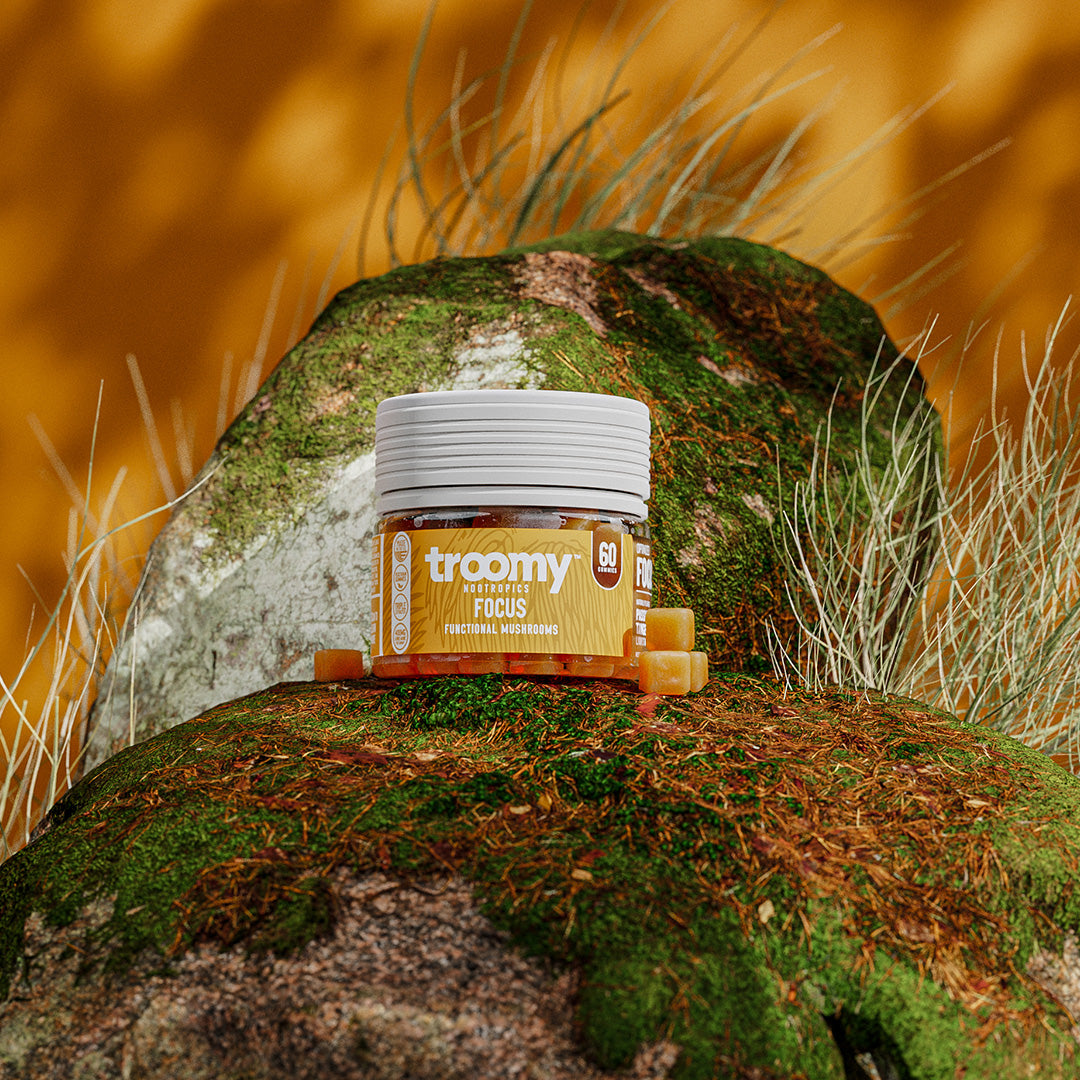
Lion's Mane is the brain mushroom. It is best known for supporting mental clarity, steady focus, and memory, which is why it is the go-to for anyone fighting a foggy head at 2pm or a to-do list they keep avoiding. It contains unique compounds called hericenones and erinacines that researchers have studied for their relationship to nerve health. If focus without the jitters is what you are after, this is your mushroom. Troomy puts it front and center in our Focus Lion's Mane gummies, and you can go deeper in our complete Lion's Mane guide. For anyone stacking cognitive support, the full brain health collection is worth a look.
Cordyceps for Clean, Caffeine-Free Energy
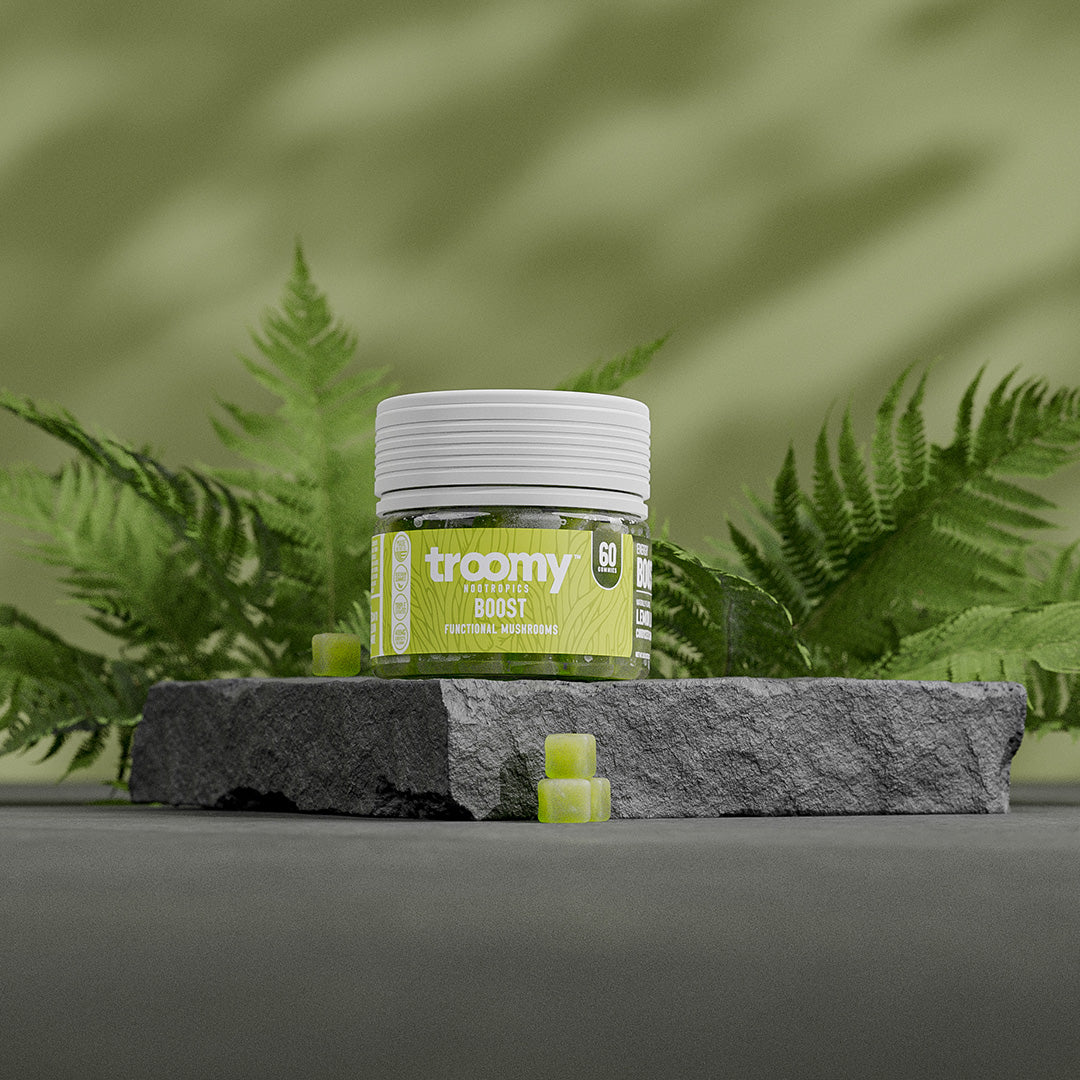
Cordyceps is the energy mushroom, and it is the answer to the 3pm crash and the three-to-four-cup coffee habit. It is traditionally associated with stamina, endurance, and cellular energy, which is why it shows up in pre-workout routines and long workdays alike. The best part: it supports energy without caffeine, so there is no jittery spike followed by a hard crash. Our Boost Cordyceps gummies are built exactly for that clean-energy moment, and the wider energy collection rounds it out. If you want the science, our Cordyceps benefits guide covers it.
Reishi for Calm, Sleep, and Immune Support
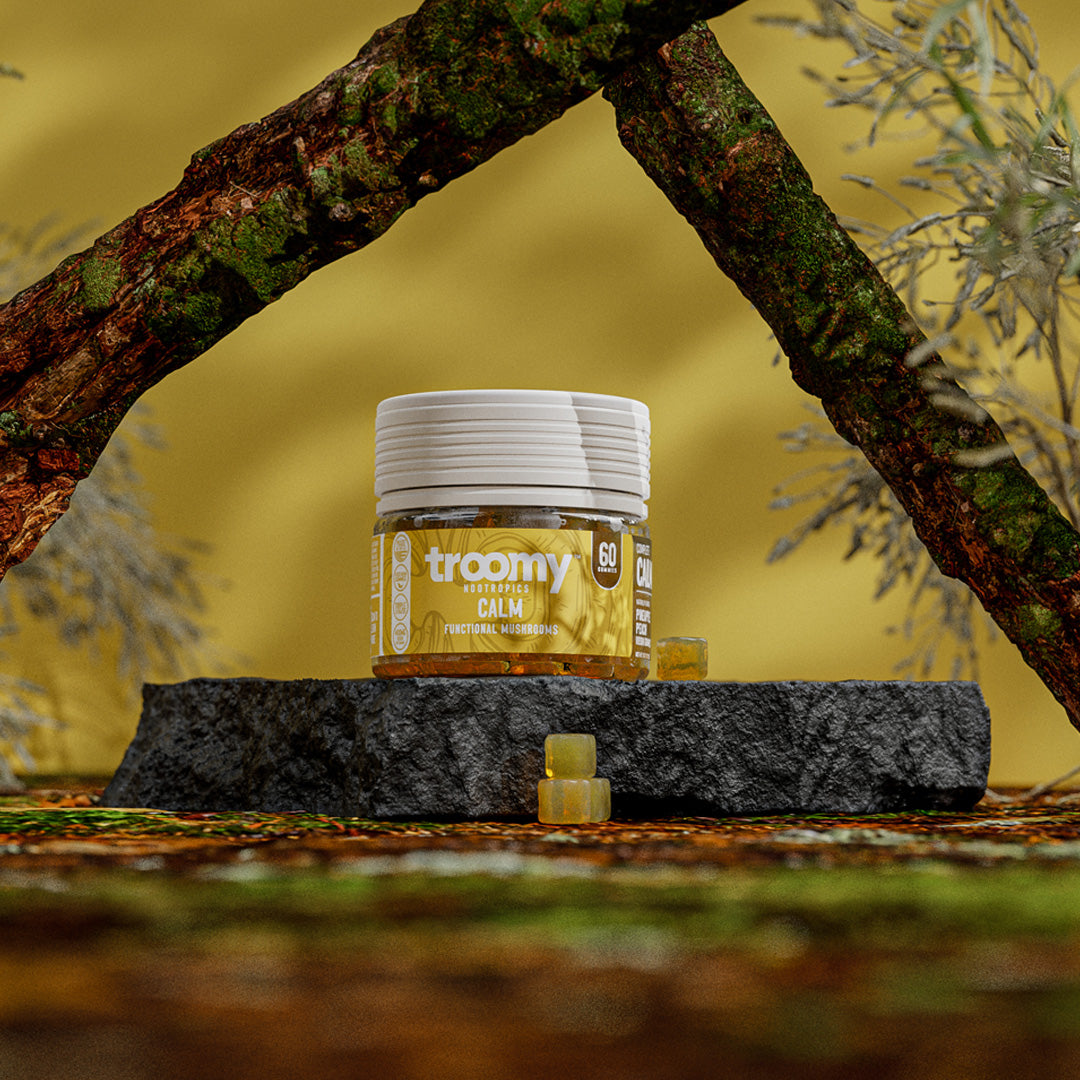
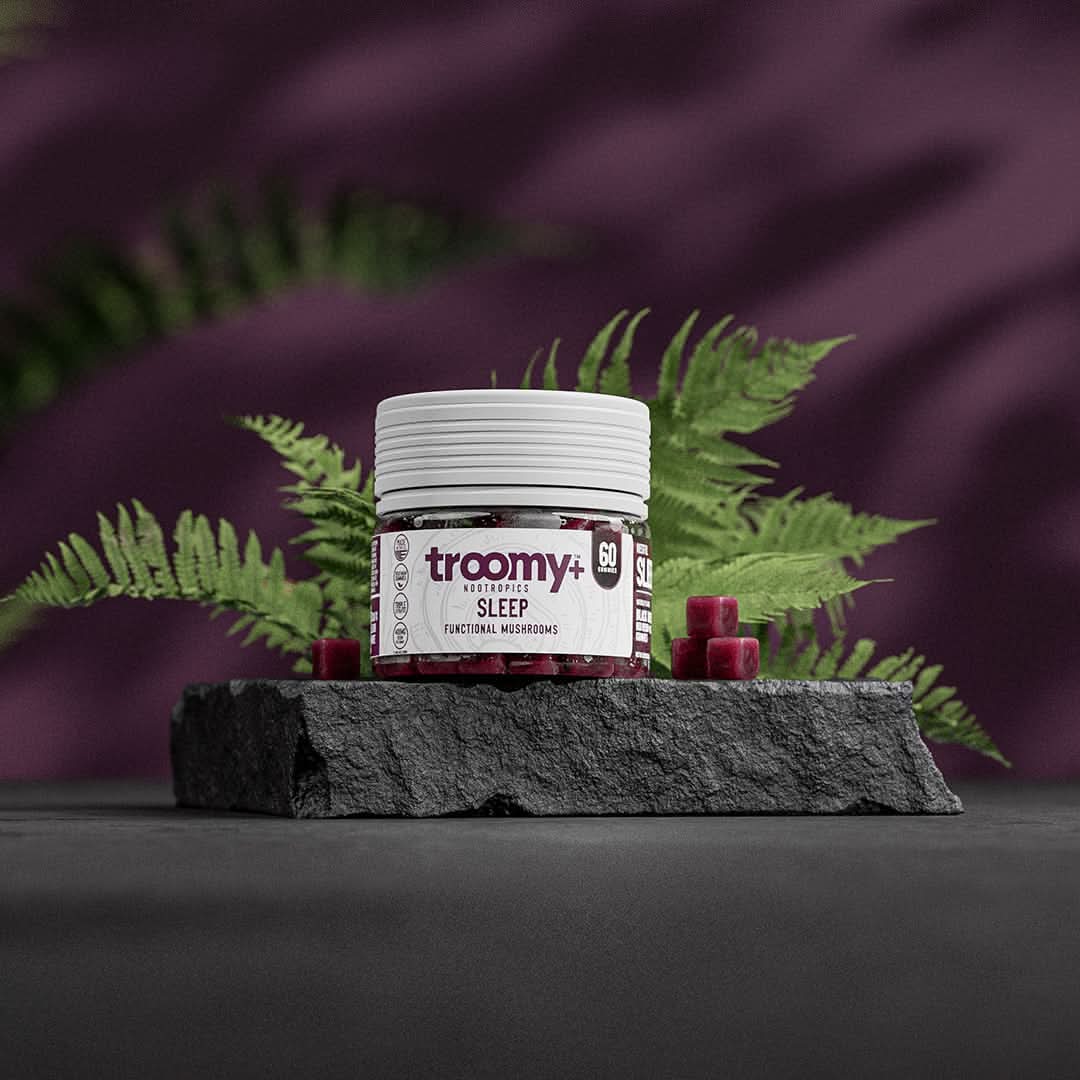
Reishi is the versatile one, and it earns its "queen of mushrooms" nickname. It is traditionally used to take the edge off daily stress, to help you wind down at night, and to support a balanced immune system thanks to its beta-glucans and triterpenes. That is why Reishi anchors more than one Troomy blend. For the after-work brain that will not switch off, there is Calm Reishi gummies. For trouble falling asleep, Sleep gummies pair Reishi with a low dose of melatonin. And for immune season, the immunity collection leans on Reishi's strengths, which we break down in our Reishi immune support article. Curious how Reishi stacks up overall? Our Reishi benefits and uses guide has the full picture.
Tremella, Ashwagandha, and the Rest of the Lineup
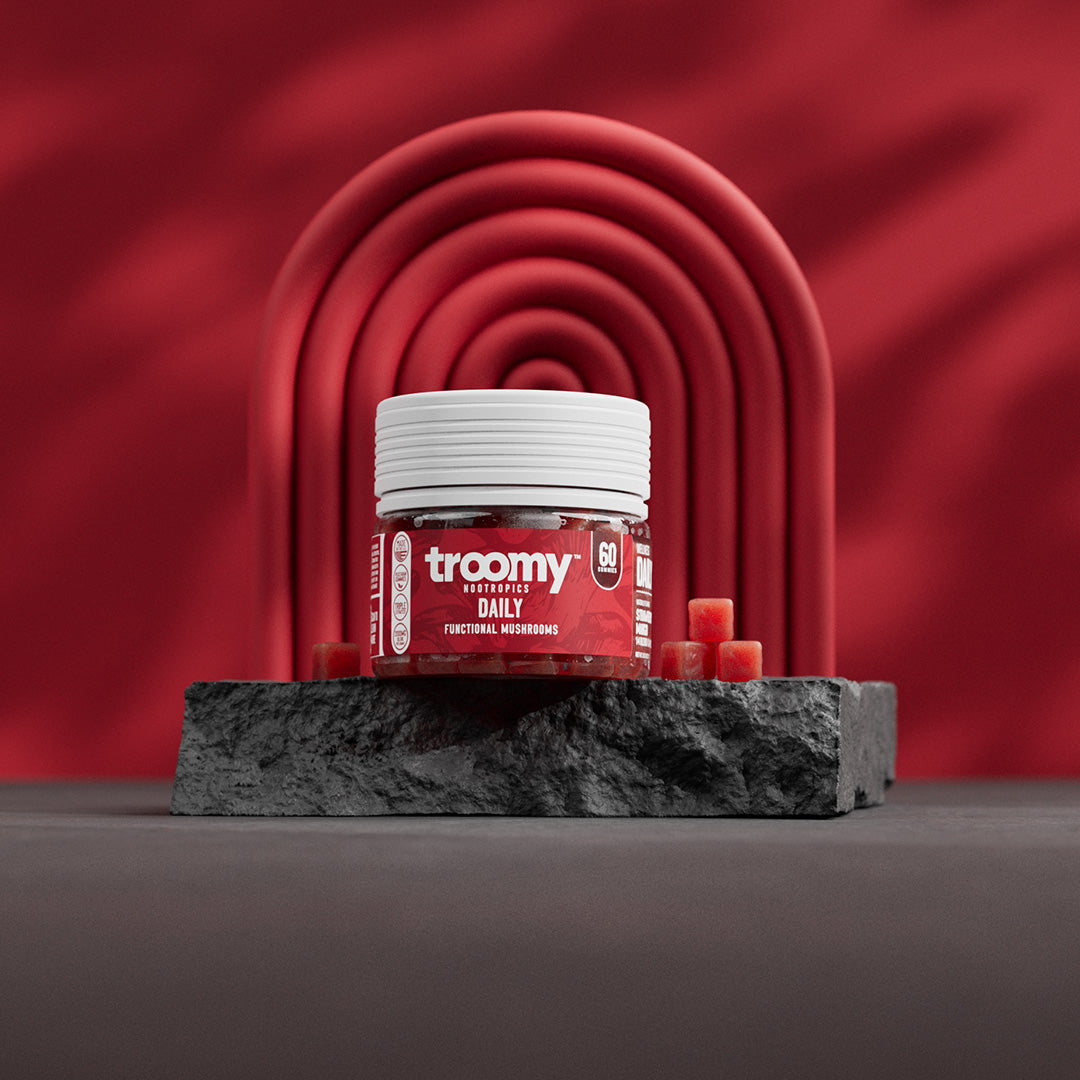
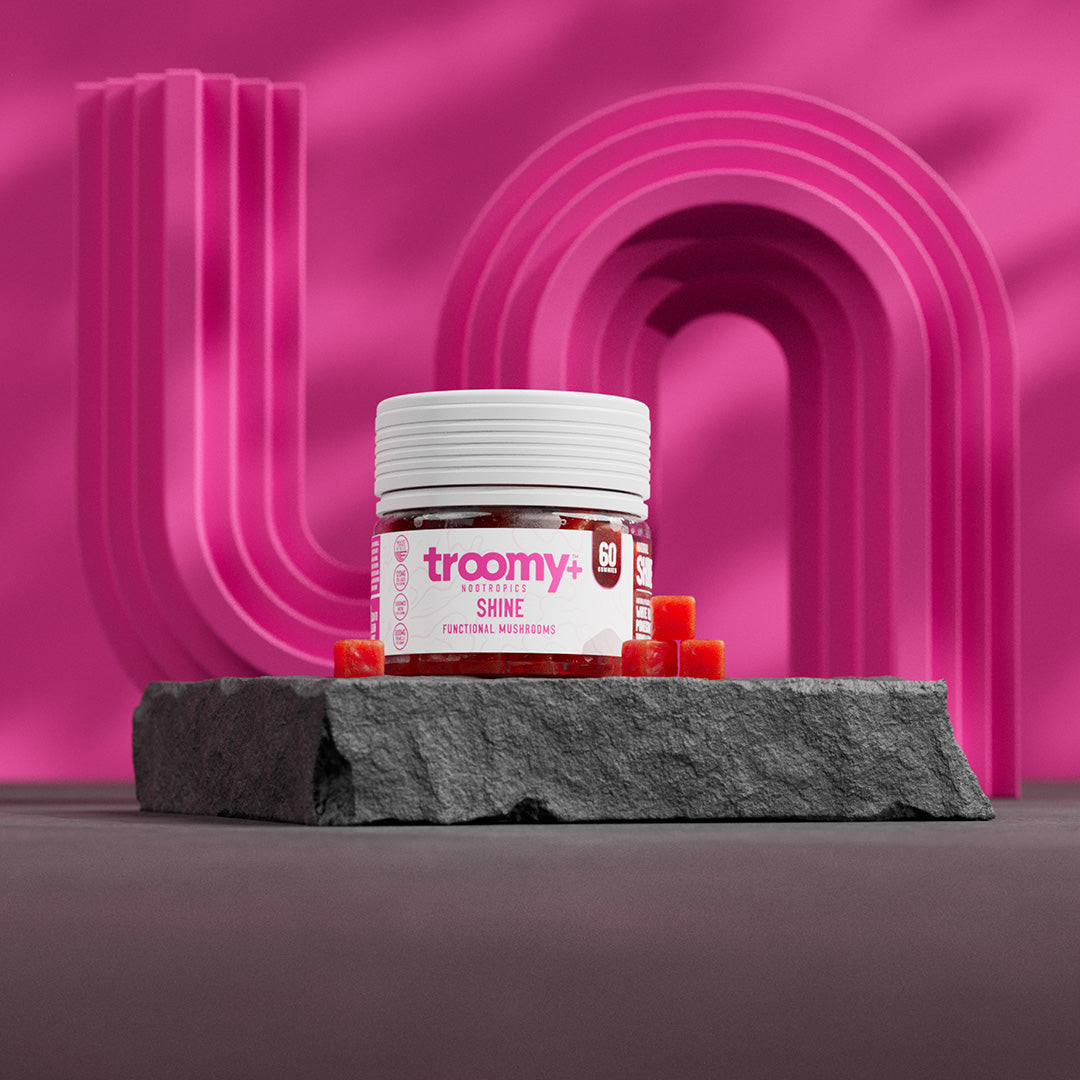
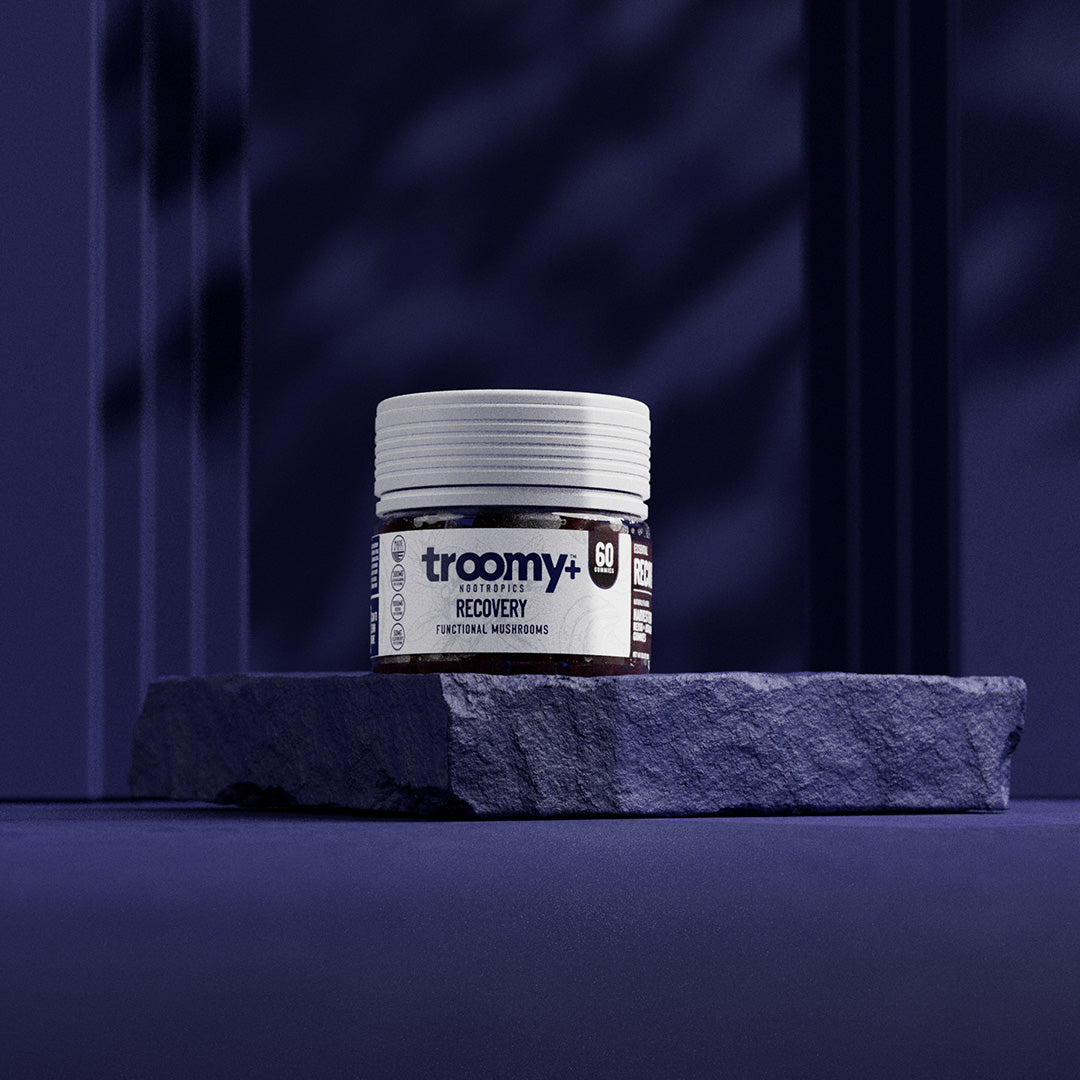
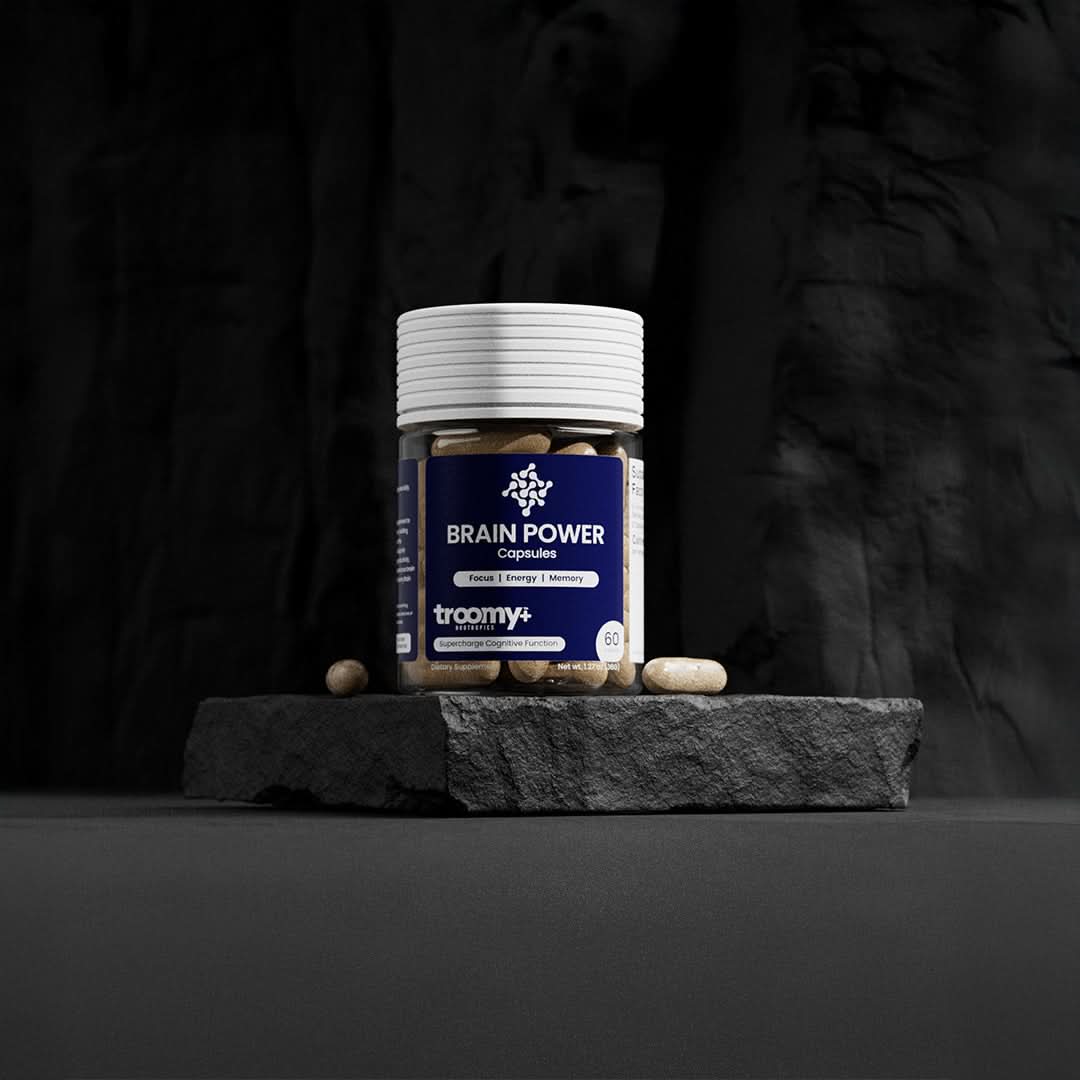
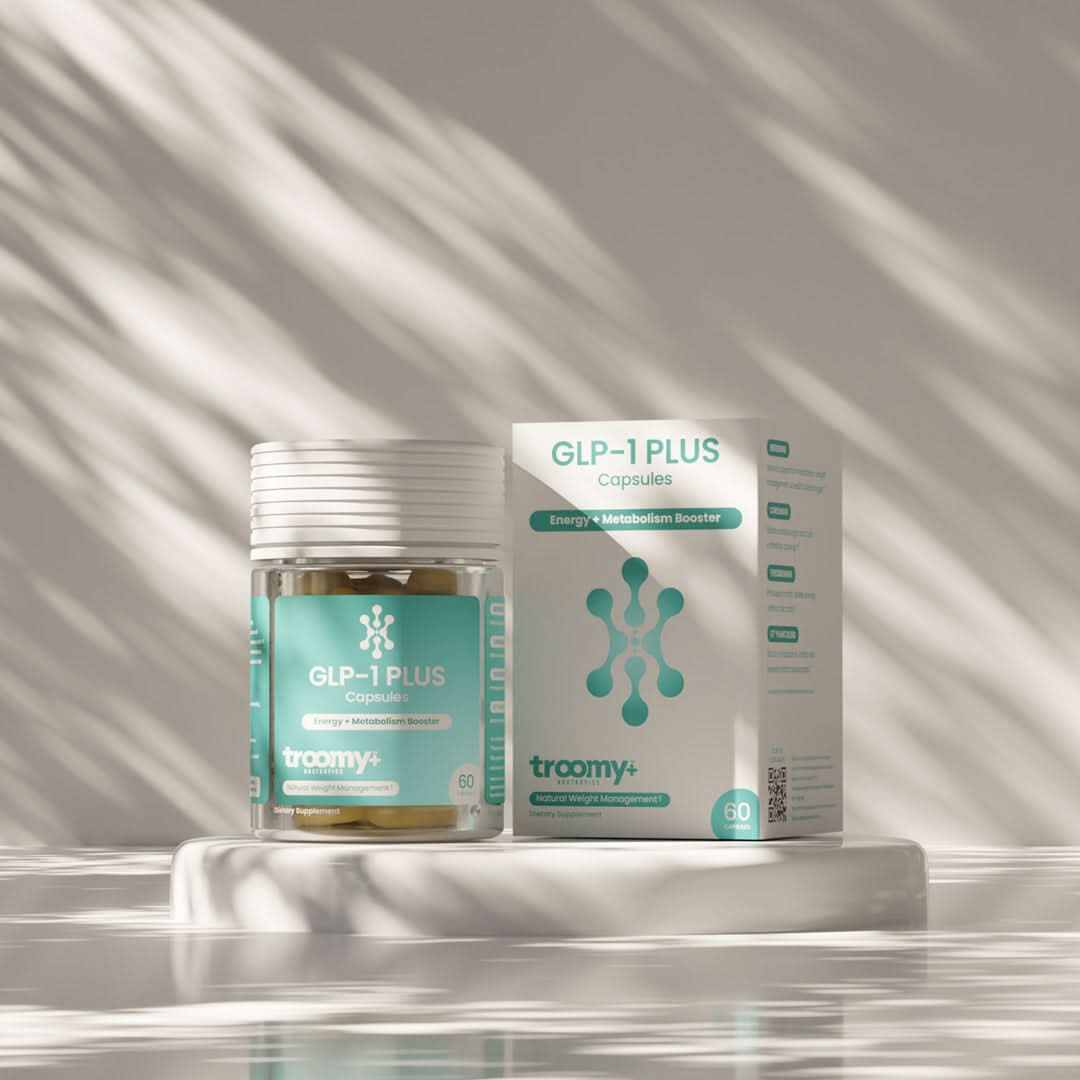
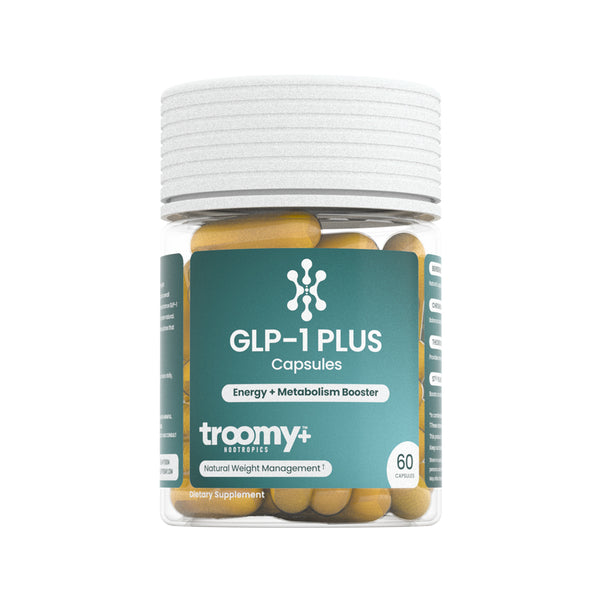
Functional wellness is not only about the brain. Tremella, often called the beauty mushroom, is prized for hydration and skin support and pairs beautifully with collagen and biotin in our Shine gummies and the broader beauty collection. Ashwagandha and Reishi team up in Recovery gummies for bouncing back after demanding days. If you would rather keep it simple, our Daily 14-mushroom blend covers whole-body wellness in a single gummy, and Brain Power capsules bring sharp, sustained focus for long days (a heads-up: Brain Power is the one Troomy product that contains caffeine, about one cup of coffee's worth, so take it earlier in the day). There is even GLP-1 Plus for appetite and metabolism support when used alongside a healthy diet and exercise. You can learn more about tremella specifically in our tremella mushroom benefits guide.
Should You Get Your Mushroom Nutrients From Food or a Supplement?
Here is the honest framework. If your goal is broad, everyday nutrition, the B vitamins, the selenium, the copper, then cooking with real mushrooms is a fantastic, affordable habit, and pairing it with UV-treated mushrooms is the easiest way to add vitamin D. If your goal is a specific functional outcome, like calmer evenings, sharper focus, or clean energy without caffeine, then a concentrated functional supplement is the more practical path, because you would have to eat an unrealistic amount of raw mushroom to match the dose of active compounds in a well-made extract.
For most people, the smartest move is both. Eat mushrooms as food when you can, and use a targeted supplement for the functional support you are actually after. If you go the supplement route, the format matters more than people expect. Gummies are easy to stick with because they taste good and require no water, no measuring, and no earthy aftertaste, which is a big reason routines actually last. We compare the formats in our gummies versus powder versus coffee breakdown, and if you are wondering about timing, our guide on when to take mushroom supplements maps it to your day.
What Should You Look For in a Mushroom Supplement?
Not all mushroom products are created equal, and the label tells you almost everything. A few things worth checking before you buy:
-
Extraction method. Triple extraction pulls a fuller spectrum of beneficial compounds than the single or double extraction most brands stop at.
-
Fruiting body and mycelium. Full-spectrum products use both parts of the mushroom rather than grain-grown filler.
-
Where it is made and tested. Made in the USA, GMP-certified, and third-party tested is the standard you want.
-
Clean ingredients. Real fruit flavors and no artificial dyes or fillers, so you are taking a supplement, not a candy bar's worth of additives.
Troomy checks every one of those boxes, which is the entire reason the brand exists: functional wellness that people actually enjoy and stick with. If you want to explore a routine rather than a single product, our mushroom gummy bundles make it easy to build a morning-to-night lineup. And for anyone who cares about sourcing, here is our take on why made in the USA matters for mushroom supplements.
Frequently Asked Questions
Do mushroom supplements count as a daily vitamin?
Not exactly. Functional mushroom supplements are designed to concentrate bioactive compounds like beta-glucans for a specific kind of support, such as focus, calm, or energy. They do not automatically provide the full vitamin and mineral profile of a whole-food mushroom, and they are not a replacement for a multivitamin. Think of them as targeted functional support, and get your everyday nutrients from a balanced diet.
Which mushroom has the most vitamins?
Among common culinary mushrooms, more mature varieties like cremini and portobello tend to carry higher concentrations of B vitamins, and UV-treated mushrooms are the standout source of vitamin D. Shiitake is notable for containing some active B12, unlike most other mushrooms. For functional supplements, the value is less about vitamins and more about the specific bioactive compounds in mushrooms like Lion's Mane, Reishi, and Cordyceps.
Do mushrooms really contain vitamin D?
They can, but only under the right conditions. Mushrooms contain ergosterol, a vitamin D precursor that converts to vitamin D2 when exposed to UV light from sunlight or a lamp. Mushrooms grown in the dark contain very little vitamin D, while UV-treated ones can contain a significant amount. Check the label for a "UV-treated" or "high in vitamin D" note if that is your goal.
Are functional mushrooms a good source of B12 for vegans?
Generally, no. Most mushrooms contain negligible B12, and the B12 that does appear in a few species like dried shiitake is often present as inactive analogues in highly variable amounts. Vegans and vegetarians should get B12 from fortified foods or a dedicated supplement rather than relying on mushrooms.
What makes Troomy mushroom supplements different?
Troomy gummies and capsules are triple-extracted and full-spectrum, using both the fruiting body and mycelium, and they are made in the USA in a GMP-certified facility, third-party tested, and vegetarian certified. They come in real fruit flavors instead of an earthy mushroom taste, which is a big reason people actually keep up with their routine. Each blend is matched to a specific everyday need, from focus to sleep to clean energy.
Can I take more than one functional mushroom at a time?
Yes, many people build a routine that pairs mushrooms for different times of day, such as an energizing blend in the morning and a calming one at night. If you take medication or have a health condition, it is always smart to talk to your healthcare provider before starting any new supplement.


