



The functional mushroom aisle has exploded in the last few years. Walk down the wellness section of any grocery store, scroll through Amazon for ten seconds, or open TikTok and you will see a dozen brands promising focus, calm, energy, or glow in a gummy. Most of them look similar on the shelf. A few of them are actually similar in the bottle.
When people ask us how to find the best mushroom supplements, the answer almost always comes down to two things: where the product is made, and what is actually on the label. Both of those questions lead you back to the same place. Made in the USA is not just a flag sticker. It is a signal about quality control, supply chain transparency, ingredient sourcing, and regulatory oversight, and it is one of the clearest ways to tell a serious supplement brand from a shelf-filler.
This is a practical guide to why domestic manufacturing matters in the functional mushroom category, what separates a legitimate clean-label product from a lookalike, and exactly what to check on a mushroom gummy label before you buy.
Why Does Made in the USA Matter for Mushroom Supplements?
Supplements in the United States are regulated under the Dietary Supplement Health and Education Act, with manufacturing oversight handled by the Food and Drug Administration. U.S.-based supplement facilities are required to follow Current Good Manufacturing Practices (cGMP), a specific set of quality control standards that covers everything from raw ingredient testing to facility sanitation to finished product verification. Those standards are not optional, and the FDA actively inspects domestic manufacturing facilities to enforce them.
That level of oversight simply does not apply the same way to products manufactured overseas. Imported supplements can be flagged at the border, but the day-to-day quality controls at the manufacturing facility are not within FDA jurisdiction. That is a massive difference for a category where potency, purity, and contamination are all real risks.
For functional mushrooms specifically, this matters even more. Mushrooms are bioaccumulators, which means they absorb whatever is in their growing environment, including heavy metals, pesticides, and industrial contaminants. A facility that is not transparent about sourcing or that does not third-party test finished batches is a gamble. A U.S. facility operating under cGMP standards is required to test for contaminants before the product ever hits a shelf.

What Are the Risks of Mushroom Supplements Made Overseas?
Overseas manufacturing is not inherently bad. Many legitimate brands use international suppliers for raw material sourcing and finish the product in the United States. The problem comes when the entire manufacturing process happens outside of U.S. oversight without transparent third-party testing or traceable sourcing.
The most common risks in that scenario are inconsistent potency, heavy metal contamination, mycelium-on-grain filler masquerading as fruiting body extract, and labels that simply do not match what is in the bottle. A 2018 investigation by the New York Attorney General found that several major retailers' store-brand herbal supplements contained little or none of the ingredients listed on the label. The category has cleaned up since then, but the cautionary tale still applies. Quality has to be verifiable.
This is why domestic manufacturing is a starting point, not the end of the quality conversation. It gets you inside a regulated framework. The rest comes down to the specific brand and what they are willing to put on the label.

Is the Mushroom Supplement Market Really Growing That Fast?
Yes, and the growth is pushing more brands into the space, which is exactly why label literacy matters more than ever. According to Future Market Insights, the global functional mushroom market is projected to grow from $11.23 billion in 2025 to $25.65 billion by 2035, driven largely by consumer demand for natural, plant-based wellness solutions. The broader nootropic supplement market hit $6.5 billion in 2025 and is expected to grow at an 8.7 percent compound annual rate through 2035.
Fast-growing categories attract a lot of new entrants, and not all of them are playing at the same level. The brands that stick around long-term are the ones built on transparent sourcing, real quality standards, and a supply chain that does not disappear when you start asking questions. Made in the USA is one of the easiest shortcuts for identifying those brands at a glance.
What Should You Look For On a Mushroom Supplement Label?
Even within the Made in the USA category, not every mushroom supplement is built the same way. Here is exactly what to check on the label before you commit to a bottle. This is the real separator between a serious product and a shelf-filler, and it is the same checklist retail buyers, practitioners, and clued-in consumers are using right now.
Fruiting Body vs. Mycelium
This is the single biggest quality lever in the functional mushroom category. The fruiting body is the part of the mushroom that grows above ground, and it contains the highest concentration of beta-glucans, triterpenes, and polysaccharides, the compounds most associated with the benefits you are actually buying the supplement for.
Mycelium is the root-like structure that grows underground. Some brands cut costs by using mycelium cultivated on grain, which delivers a weaker final product and often ends up being mostly grain starch by weight. A legitimate label will specifically call out fruiting body sourcing. If the label just says mushroom extract without clarifying, assume it is mycelium on grain. Troomy uses fruiting body extracts across the entire gummy lineup.
Extraction Method
Mushroom compounds are locked inside tough cell walls that the human digestive system cannot fully break down on its own. Extraction is the process that pulls those compounds out so your body can actually use them. Different compounds require different solvents. Beta-glucans are water-soluble. Triterpenes are alcohol-soluble. A hot water extraction alone will miss half the active compounds in the mushroom.
Triple extraction uses water, alcohol, and a third heat step to pull the full spectrum of compounds out of the mushroom in one process. It is slower and more expensive than single-step extraction, which is exactly why most brands skip it. Troomy triple-extracts every gummy in the lineup. Our guide on what triple extraction is and why most brands skip it goes deeper on why this matters.
Active Ingredient Dosage in Milligrams
A real label lists the exact milligram dosage of every active ingredient per serving. If the label says proprietary blend and groups the mushrooms together without individual dosages, that is a red flag. Proprietary blends are a common tactic for hiding underwhelming doses behind a big-sounding total number.
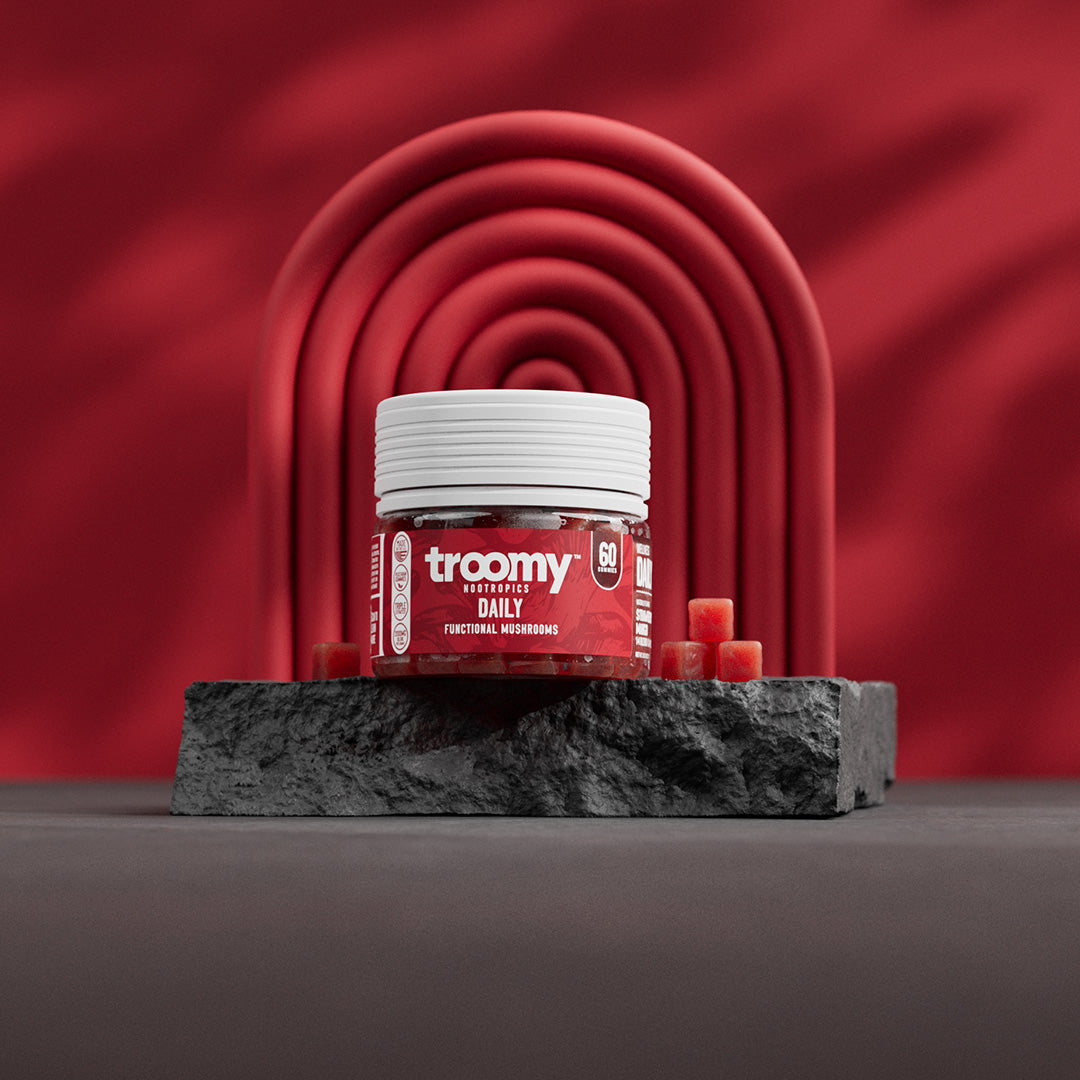
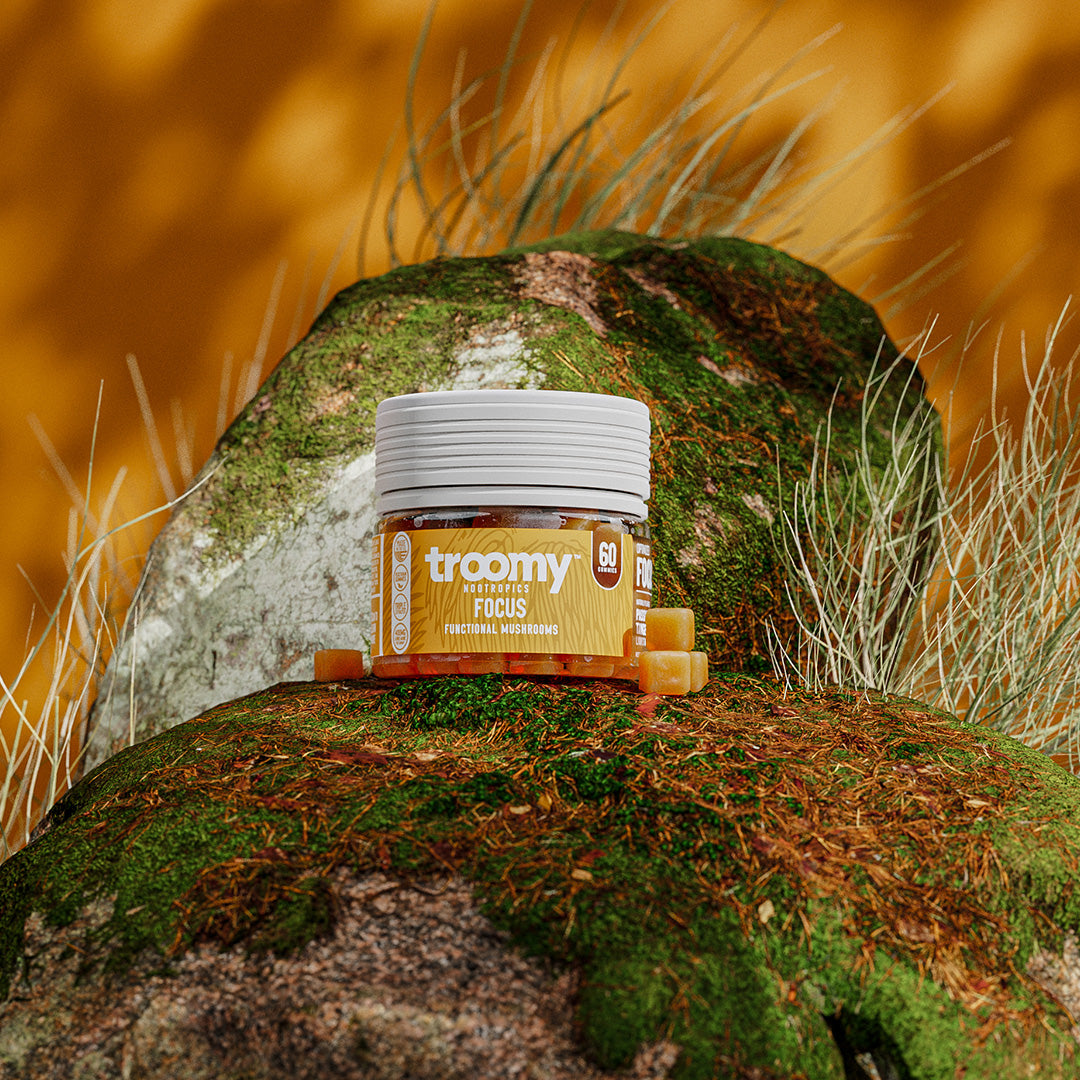
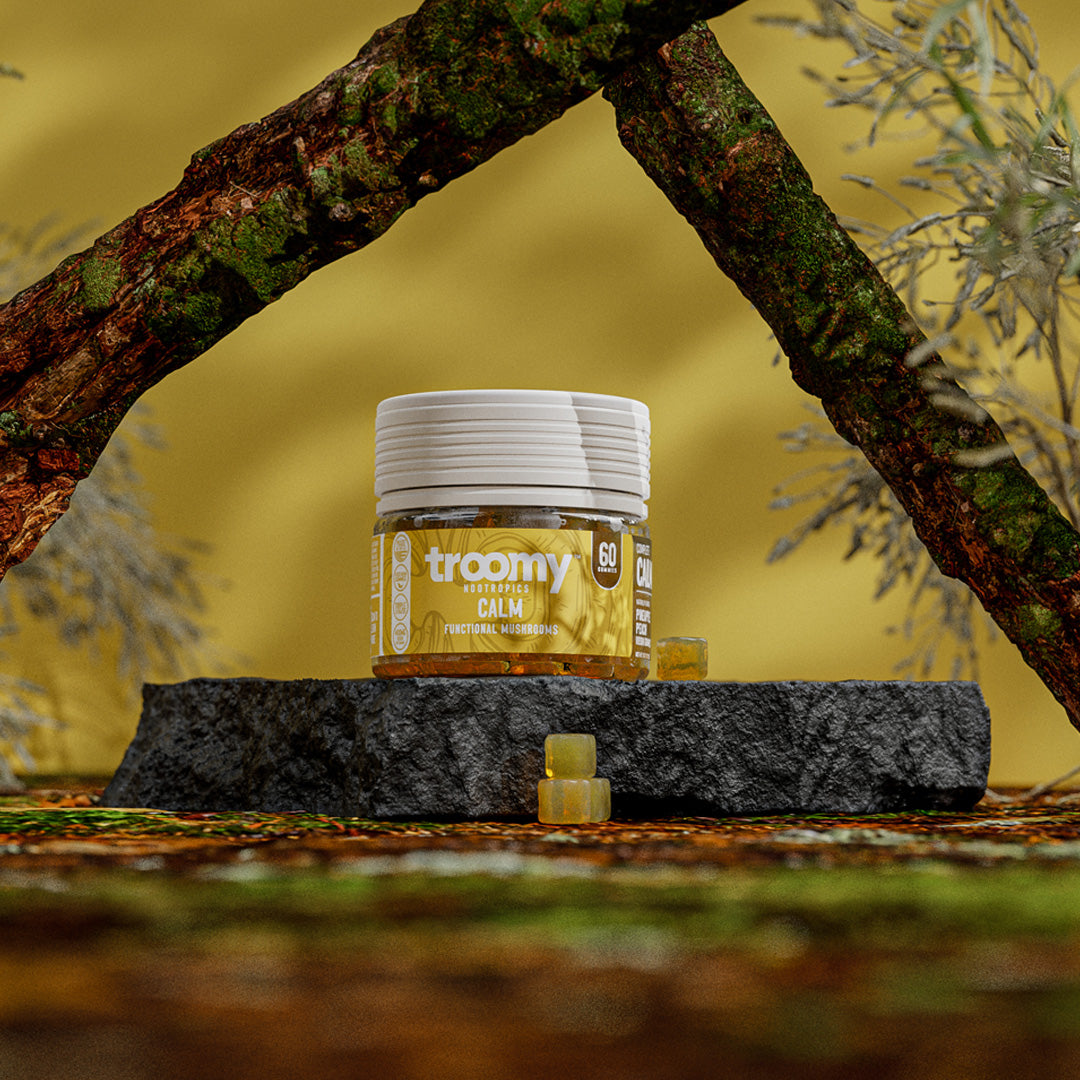
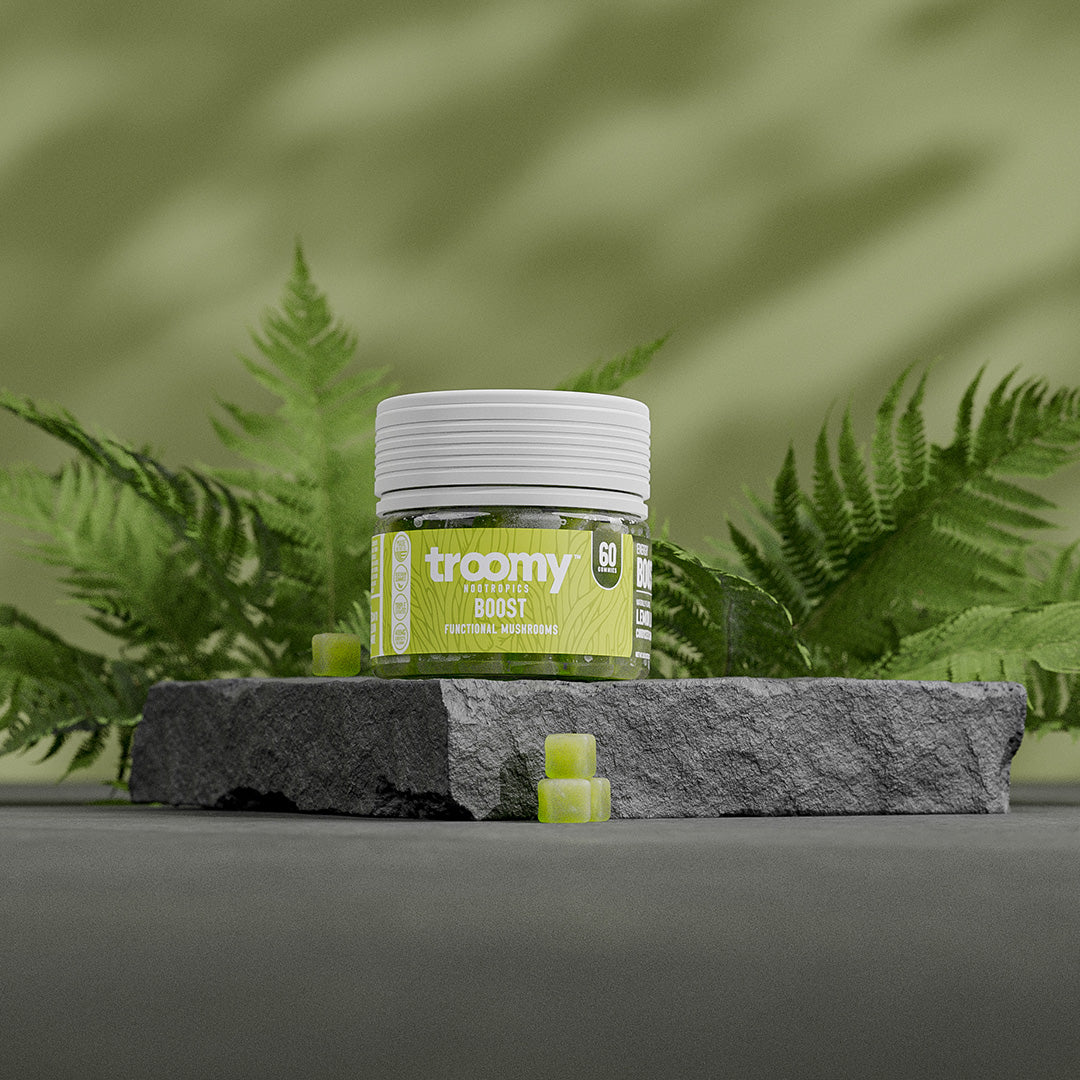
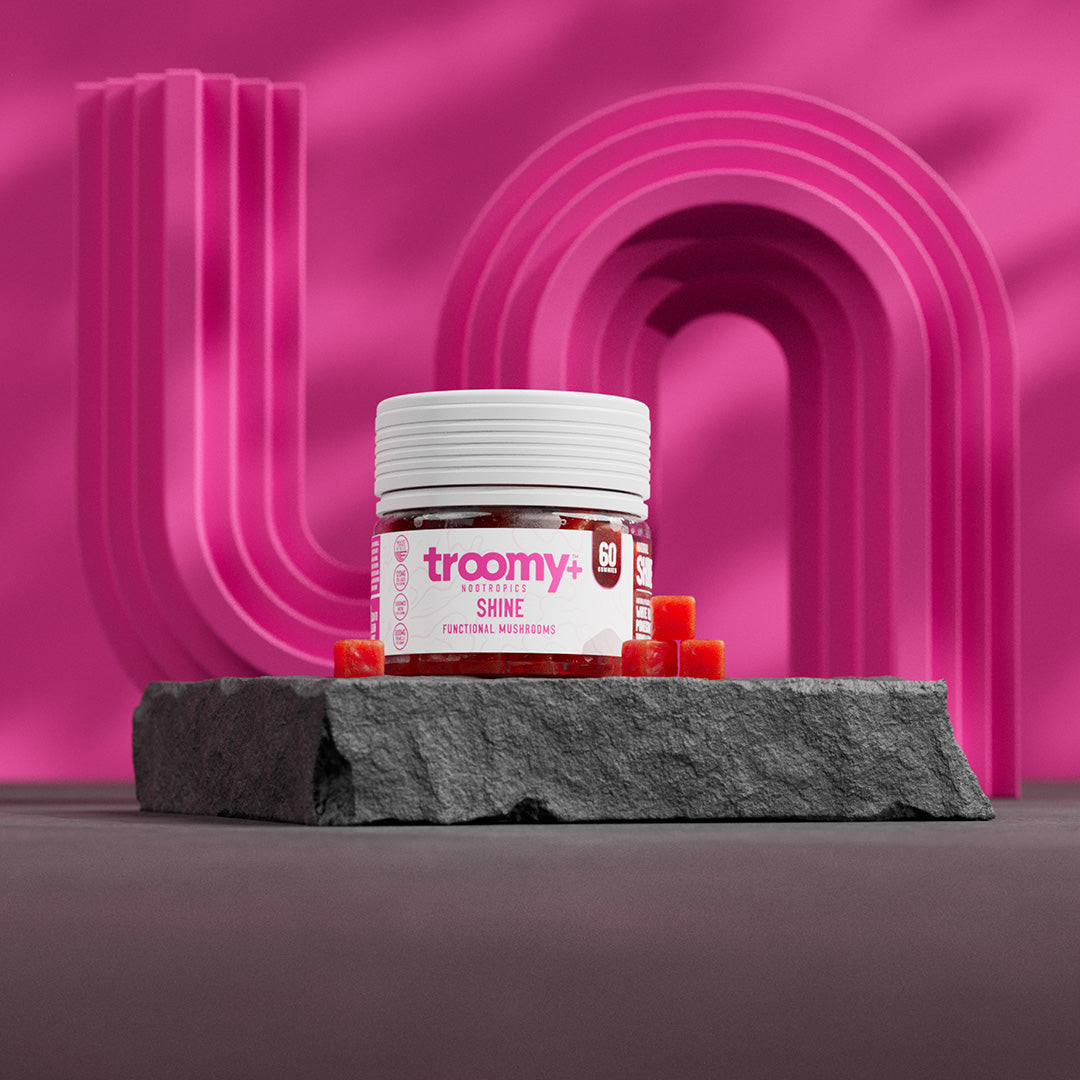
For reference, Troomy's core lineup lists exact dosages on every label. Focus delivers 400mg of Lion's Mane per gummy. Boost delivers 400mg of Cordyceps. Calm delivers 400mg of Reishi. Shine delivers 800mg of Tremella, 120mg of collagen, and 5,000mcg of biotin. Daily delivers 2,000mg of a 14-mushroom proprietary blend with every species disclosed on the label. No hiding, no hand-waving.
Third-Party Testing and Certificates of Analysis
Third-party testing is the practice of sending finished batches to an independent lab to verify potency, purity, and safety. It catches contamination issues, confirms the product contains what the label says it contains, and adds a layer of accountability beyond what the brand can claim on its own. Serious brands will either publish certificates of analysis on request or work with facilities that issue them as standard. If a brand refuses to confirm third-party testing, that is its own answer.
Country of Manufacture
This should be stated clearly on the label or the bottle. Look for language like Made in the USA, Manufactured in the USA, or Produced in the USA, along with the specific facility certification if available. Distributed by a U.S. company is not the same as Made in the USA. That is a distinction that retail buyers pay close attention to, and it is worth paying attention to as a consumer too.
Clean Ingredient Deck
No artificial colors, no unnecessary fillers, no synthetic stimulants, and no ingredients you would not recognize from a grocery store. Real mushroom gummies contain mushroom extract, a pectin-based gummy base, natural flavoring, and maybe a handful of supporting nutrients. A long list of unpronounceable additives is a sign the brand is compensating for weak sourcing or cheap manufacturing.

What Makes Troomy One of the Best Mushroom Supplement Brands?
Troomy checks every box in the list above. The entire lineup is manufactured in the United States in cGMP-compliant facilities, triple-extracted, fruiting body sourced, and labeled with exact milligram dosages for every active ingredient. No proprietary blends hiding dosages, no mycelium on grain, no artificial colors, no synthetic fillers.
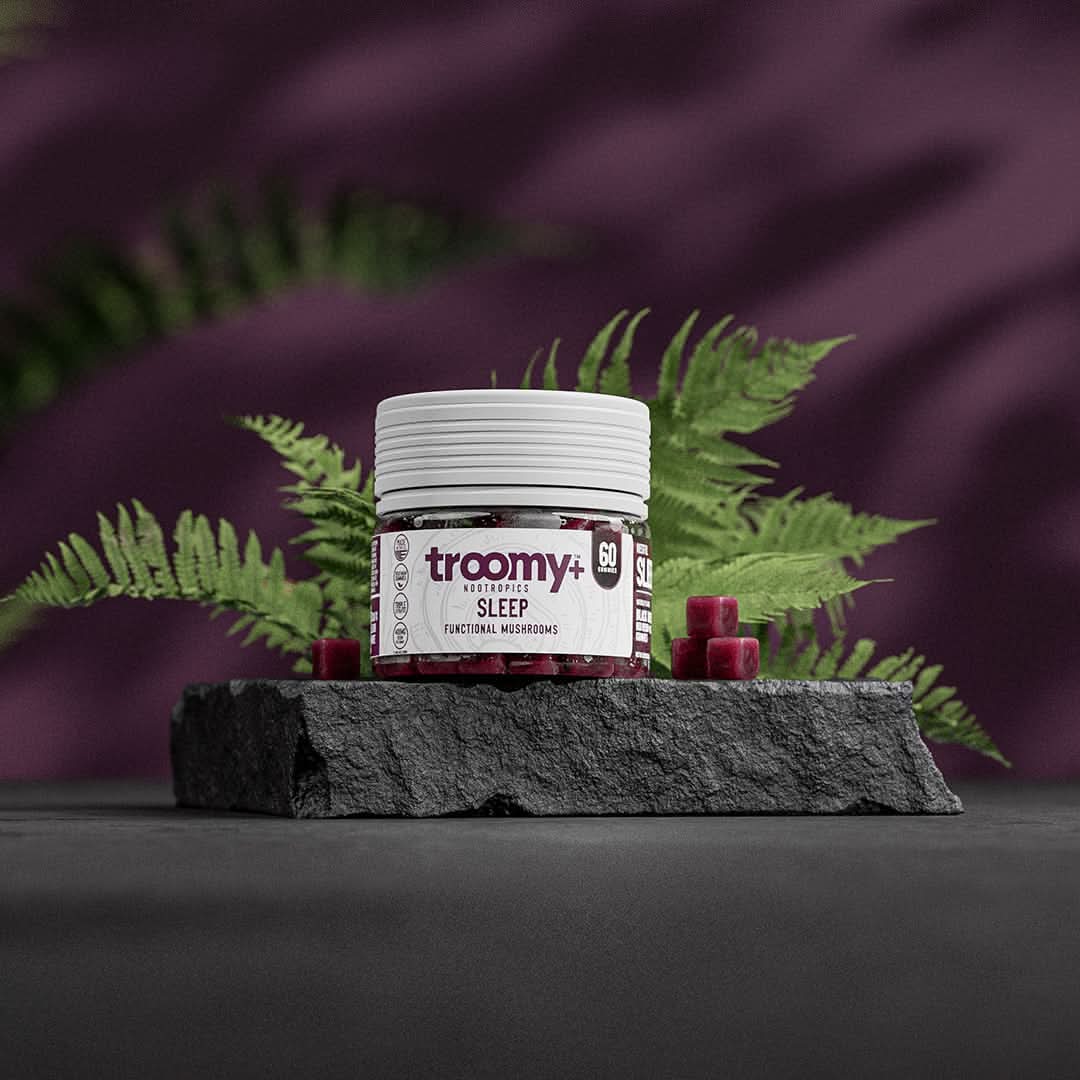
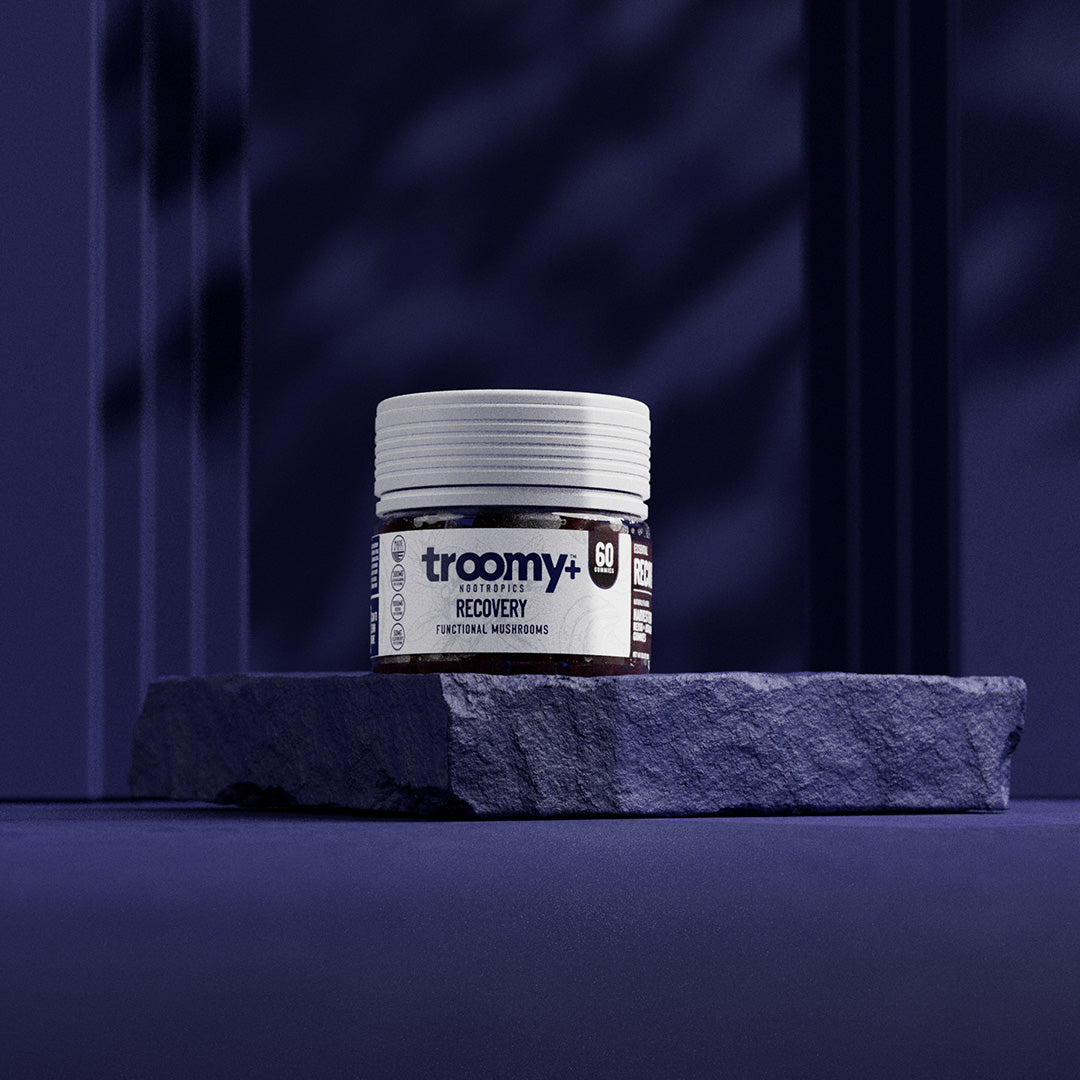
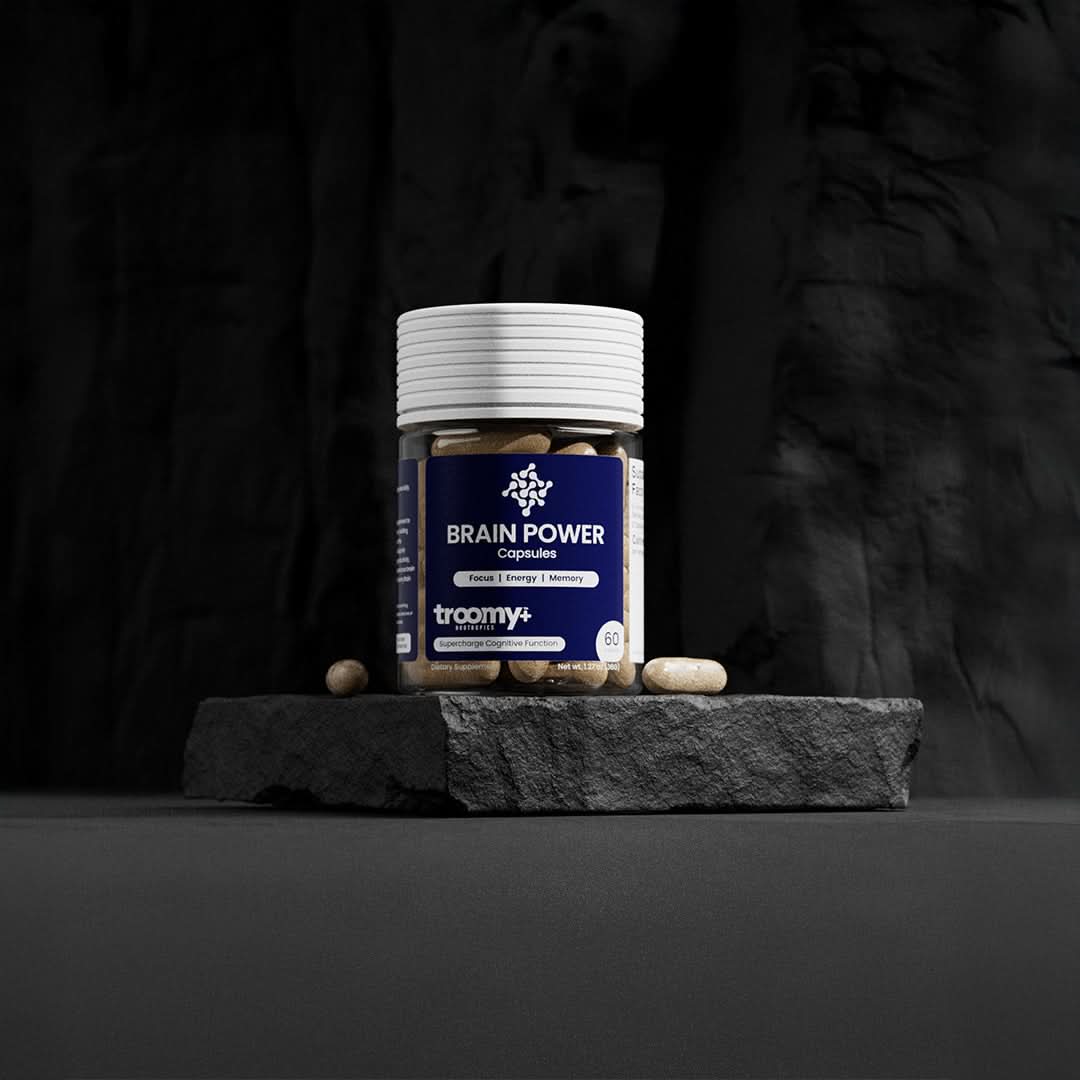
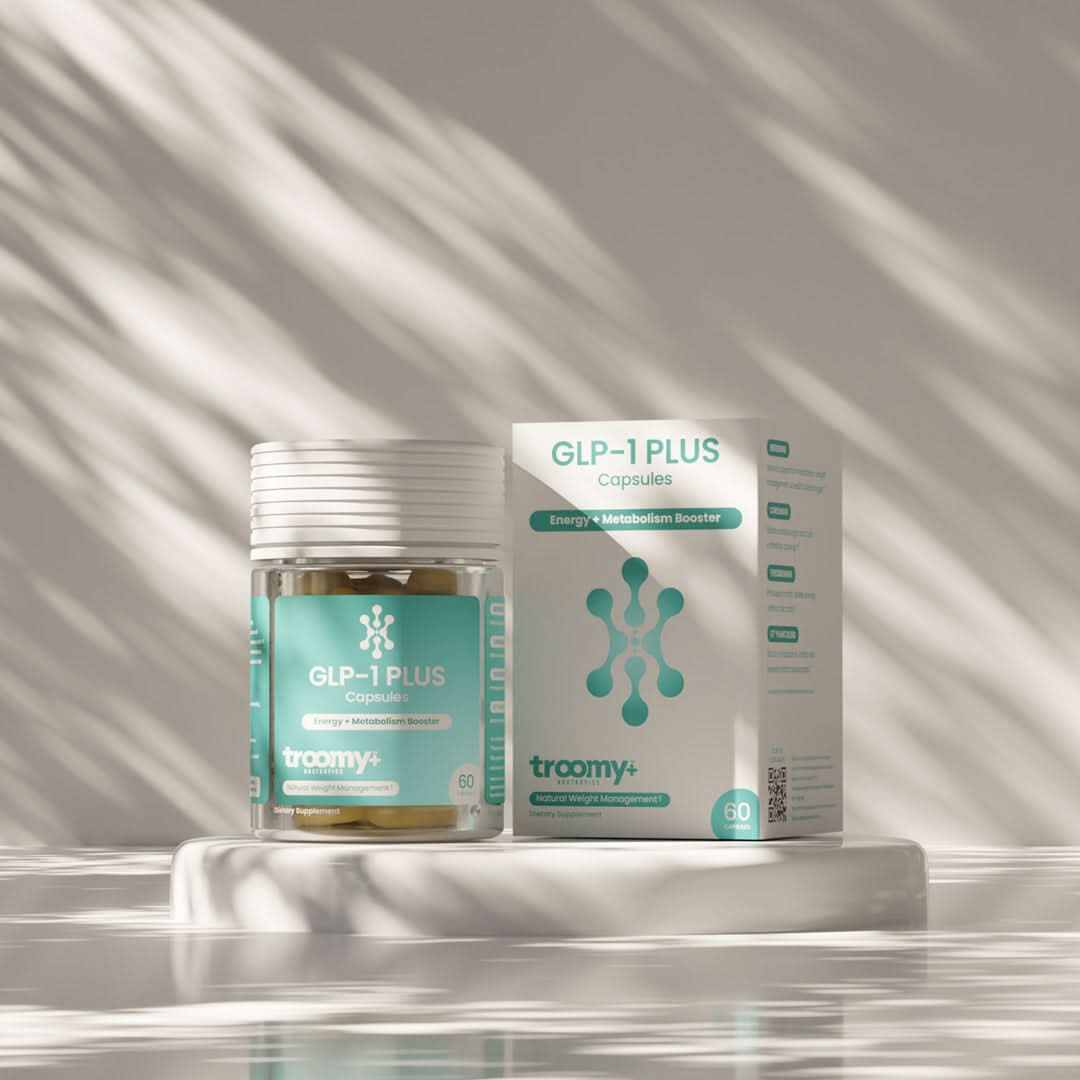
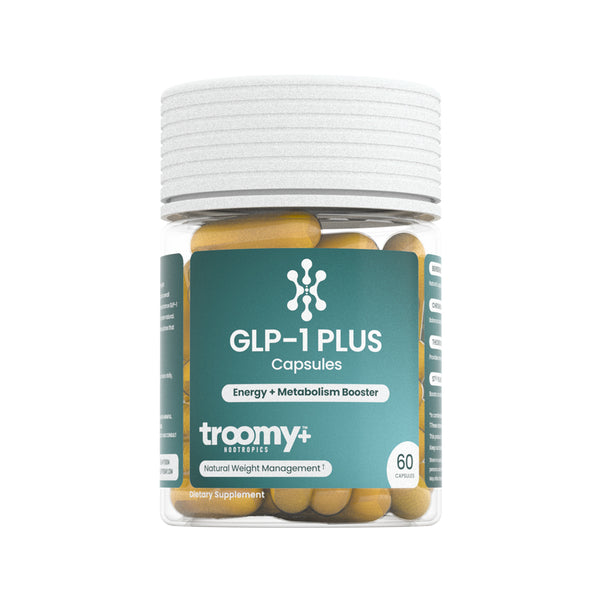
Every gummy is vegetarian, plant-based, and formulated around a specific functional goal rather than a trend. The full lineup includes Focus Lion's Mane Gummies for cognitive support, Boost Cordyceps Gummies for natural energy, Calm Reishi Gummies and Sleep Reishi and Melatonin Gummies for mood and rest, Recovery Ashwagandha and Reishi Gummies, the Daily 14 Mushroom Blend, and Shine Biotin, Collagen, and Tremella Mushroom Gummies for beauty-from-within. Two capsule products round out the higher-potency end of the lineup: Brain Power capsules and GLP-1 Plus Energy and Metabolism Booster capsules.
You can browse everything at once in our bundles collection, or shop by goal across the brain health, energy, mood, bedtime, immunity, and beauty collections.
How Can You Spot the Best Mushroom Supplement in 30 Seconds?
If you are standing in a store with a bottle in your hand or scrolling a PDP on your phone and you want a fast gut-check, this is the checklist to run through.
-
Does the label say Made in the USA, not just distributed by a U.S. company?
-
Does it specifically say fruiting body extract, not just mushroom extract?
-
Does it list the exact milligram dose of every active ingredient, or is it hidden inside a proprietary blend?
-
Does it mention triple extraction or full-spectrum extraction?
-
Is the ingredient deck short and readable, with natural flavors and no artificial colors?
-
Is the brand transparent about third-party testing, either on the site or on request?
If the answer to any of those is no, put it back. If the answer is yes across the board, you are looking at a brand that is actually built for results. Troomy answers yes to every one. That is the whole point.
Why Consistency and Sourcing Matter More Than Hype
Functional mushrooms work on a long timeline. The effects build with consistent daily use, usually compounding around weeks three to four and continuing from there. That only works if the product you are taking is actually potent, clean, and consistent from batch to batch. A domestic manufacturing facility with real quality control delivers that. An untraceable overseas supplier with an aggressive marketing budget does not.
If you want to go deeper on the long-game mindset, our pieces on why adaptogenic mushrooms work best when your routine is boring and what mushroom gummies teach you about patience in wellness are both good next reads. For a beginner-friendly overview, our ultimate guide to mushroom gummies and how to choose the right Chaga mushroom supplement also cover the label-literacy basics from different angles.

Frequently Asked Questions About Choosing the Best Mushroom Supplements
What makes the best mushroom supplement?
The best mushroom supplements are manufactured in the United States in cGMP-compliant facilities, use fruiting body extracts rather than mycelium on grain, employ triple extraction to capture the full spectrum of active compounds, list exact milligram dosages on the label, and offer third-party testing for potency and purity. Clean ingredient decks without artificial colors or fillers are another key marker.
Why does Made in the USA matter for supplements?
Supplements manufactured in the United States are regulated under the Dietary Supplement Health and Education Act and must meet Current Good Manufacturing Practices enforced by the FDA. Those standards cover raw ingredient testing, facility sanitation, and finished product verification. Overseas manufacturing is not held to the same day-to-day oversight, which introduces higher risk of potency variation, contamination, or mislabeling.
What is the difference between fruiting body and mycelium mushroom extract?
The fruiting body is the part of the mushroom that grows above ground and contains the highest concentration of beta-glucans, triterpenes, and polysaccharides, the compounds most associated with the benefits of functional mushrooms. Mycelium is the underground root-like structure, often cultivated on grain, which dilutes the final product and delivers a weaker dose of active compounds.
What is triple extraction in mushroom supplements?
Triple extraction is a process that uses water, alcohol, and a third heat step to pull both water-soluble and alcohol-soluble compounds out of the mushroom in one extract. It captures the full spectrum of beta-glucans, polysaccharides, and triterpenes, which single-step extraction methods miss. It is slower and more expensive than basic extraction, which is why many brands skip it.
Are proprietary blends on mushroom supplement labels a red flag?
Not always, but often. A proprietary blend that groups ingredients together without listing individual milligram dosages can hide weak doses behind a larger total number. Legitimate brands tend to disclose the dose of each active ingredient, even when those ingredients are part of a blend. Troomy's Daily 14 Mushroom Blend lists a total of 2,000mg and discloses every species in the blend on the label.
How do I know if a mushroom supplement is third-party tested?
Look for language on the brand website or packaging confirming that finished batches are tested by an independent lab for potency, heavy metals, and microbial contamination. Some brands publish certificates of analysis directly on their site. Others will provide them on request. If a brand will not confirm third-party testing at all, that is typically a sign to look elsewhere.
Are Troomy's mushroom gummies made in the USA?
Yes. Every Troomy product is manufactured in the United States in cGMP-compliant facilities, uses fruiting body extracts, is triple-extracted, and lists exact dosages of every active ingredient on the label. The lineup is vegetarian, plant-based, and free from artificial colors and unnecessary fillers.
These statements have not been evaluated by the Food and Drug Administration. This product is not intended to diagnose, treat, cure, or prevent any disease.


