



If you have been looking for a way to support your energy levels that does not come with the anxiety, jitteriness, or mid-afternoon crash that caffeine delivers, cordyceps mushroom deserves serious attention. This remarkable fungus has been used for centuries in Tibetan and Chinese traditional medicine for its energizing and stamina-building properties, and modern research is providing increasingly compelling explanations for why it works.
Whether you are an athlete pushing your aerobic threshold, a professional trying to sustain mental output through a long workday, or simply someone who is tired of being tired, cordyceps offers a different kind of energy support, one that works with your body rather than against it. If you have ever wondered why you feel drained despite getting enough sleep, the answer may lie in cellular energy production, and that is exactly where cordyceps earns its reputation.
What Is Cordyceps Mushroom?
Cordyceps is a genus of parasitic fungi with hundreds of known species, but the two most relevant to human supplementation are Cordyceps sinensis and Cordyceps militaris. Cordyceps sinensis grows naturally in the high-altitude grasslands of Tibet, Nepal, and Bhutan, where it parasitizes caterpillar larvae, a detail that makes the fungus endlessly fascinating to researchers and slightly alarming to everyone else. Today, most cordyceps supplements use Cordyceps militaris, which can be cultivated without a caterpillar host, making it more sustainable and consistent for production. Research comparing the two species has found that Cordyceps militaris can contain equal or higher levels of the key active compound, cordycepin, making it the better-studied and more accessible option for supplementation.
Troomy uses triple-extracted Cordyceps militaris fruiting body, meaning the beneficial compounds are concentrated and bioavailable in every serving, not diluted with mycelium or grain filler. It is a meaningful quality distinction that affects how much of the active ingredient you actually absorb.
How Does Cordyceps Support Energy?
The primary mechanism behind cordyceps' energizing effects is its influence on adenosine triphosphate (ATP) production. ATP is the fundamental energy currency of every cell in your body. Without adequate ATP, your muscles fatigue, your brain slows down, and your motivation stalls. Cordyceps contains adenosine and its derivative compound cordycepin, which appear to support mitochondrial efficiency and promote more effective oxygen utilization at the cellular level.
Research has shown that cordyceps supplementation can improve cellular energy production, translating into more stamina, better recovery, and reduced physical fatigue during exercise. Supporting the body's own energy systems at the mitochondrial level is a more foundational approach than simply masking tiredness with a stimulant. That distinction matters when you are choosing between a quick fix and a supplement that actually compounds over time.
Cordyceps vs Caffeine: Why the Comparison Matters
This is where things get genuinely interesting. Caffeine and cordyceps both support wakefulness and performance, but they do so in fundamentally different ways, with fundamentally different side effects.
Caffeine works by blocking adenosine receptors. Adenosine is a compound that accumulates throughout the day as a natural byproduct of cellular activity, and when enough of it builds up, you feel tired. Caffeine does not reduce adenosine; it simply prevents you from feeling it. When caffeine wears off, the accumulated adenosine floods the receptors all at once, producing the familiar afternoon crash that drives most people toward a second or third cup.
Cordyceps, by contrast, supports actual ATP synthesis and mitochondrial efficiency. Rather than borrowing energy from later in the day, it supports the underlying machinery that produces energy in the first place. There are no blocked receptors, no accumulated adenosine debt, and no crash. For a direct side-by-side breakdown of how the two approaches compare for performance, pre-workout vs cordyceps covers the trade-offs in full.
This does not mean caffeine is inherently bad. Many people use both together effectively. But for those experiencing caffeine sensitivity, sleep disruption, or mid-day energy crashes, cordyceps offers a way to support energy without those trade-offs. For anyone actively searching for a natural alternative to energy drinks, cordyceps is one of the most well-supported options available.
If you want to experience what that difference actually feels like day to day, Troomy's cordyceps gummies for clean, sustained energy are triple-extracted from Cordyceps militaris fruiting body and formulated without stimulants, so what you feel is the real mechanism at work, not borrowed alertness.
Cordyceps and Athletic Endurance: What Does the Research Say?
For athletes and active individuals, the case for cordyceps goes beyond anecdote. A study published in the Journal of Alternative and Complementary Medicine found that older adults who took a cordyceps-containing supplement for 12 weeks showed significant improvements in VO2 max compared to a placebo group. VO2 max is one of the most reliable predictors of aerobic endurance and cardiovascular health, measuring how efficiently your body can take in and utilize oxygen during sustained exercise. By supporting more efficient oxygen utilization at the cellular level, cordyceps allows the body to sustain aerobic activity for longer before reaching the anaerobic threshold.
For endurance athletes in particular, this matters. Running, cycling, swimming, and hiking all depend on sustained aerobic output, and anything that extends the time before lactic acid builds up and performance declines has real value. For a practical look at how to apply this research to your training, cordyceps as a sports nutrition boost breaks down timing, dosage, and real-world application in depth.
Cordyceps for Motivation: The Mental Energy Connection
Energy and motivation are more connected physiologically than many people realize. The dopamine system, which drives motivation and goal-directed behavior, is highly sensitive to metabolic state. When cellular energy production is compromised, dopamine signaling suffers, manifesting as reduced motivation, procrastination, and difficulty initiating effortful tasks. This is why genuine fatigue, not just tiredness but cellular energy depletion, so often looks like a motivation problem rather than an energy one. Understanding the difference between focus, energy, and motivation is a useful starting point for anyone trying to optimize all three.
By supporting cellular energy production and mitochondrial efficiency, cordyceps creates the metabolic conditions in which dopaminergic activity can function more effectively. The result is not a stimulant-driven push to work. It is the removal of a physiological barrier to motivation that was already there.
Are Cordyceps Psychedelic?
This question comes up frequently, and it deserves a clear answer. Cordyceps, like all functional mushrooms including lion's mane, reishi, chaga, and turkey tail, does not contain psilocybin or any psychoactive compound. The confusion often arises from a general cultural association between mushrooms and psychedelic effects, an association that simply does not apply to functional or medicinal mushrooms. The full comparison between psychedelic and functional mushrooms addresses the distinction thoroughly for anyone who wants to go deeper on the science.
Cordyceps is a legal dietary supplement in the United States and most countries worldwide. It will not alter your perception, produce a high, or appear on any drug test. Its effects are entirely physiological: supporting cellular energy production, oxygen utilization, and mitochondrial function. That is a meaningful distinction for anyone researching supplements for work, sport, or daily wellness.
How to Stack Cordyceps With Other Functional Mushrooms
One of the advantages of cordyceps as a supplement is how naturally it integrates with other functional mushrooms depending on your goals.
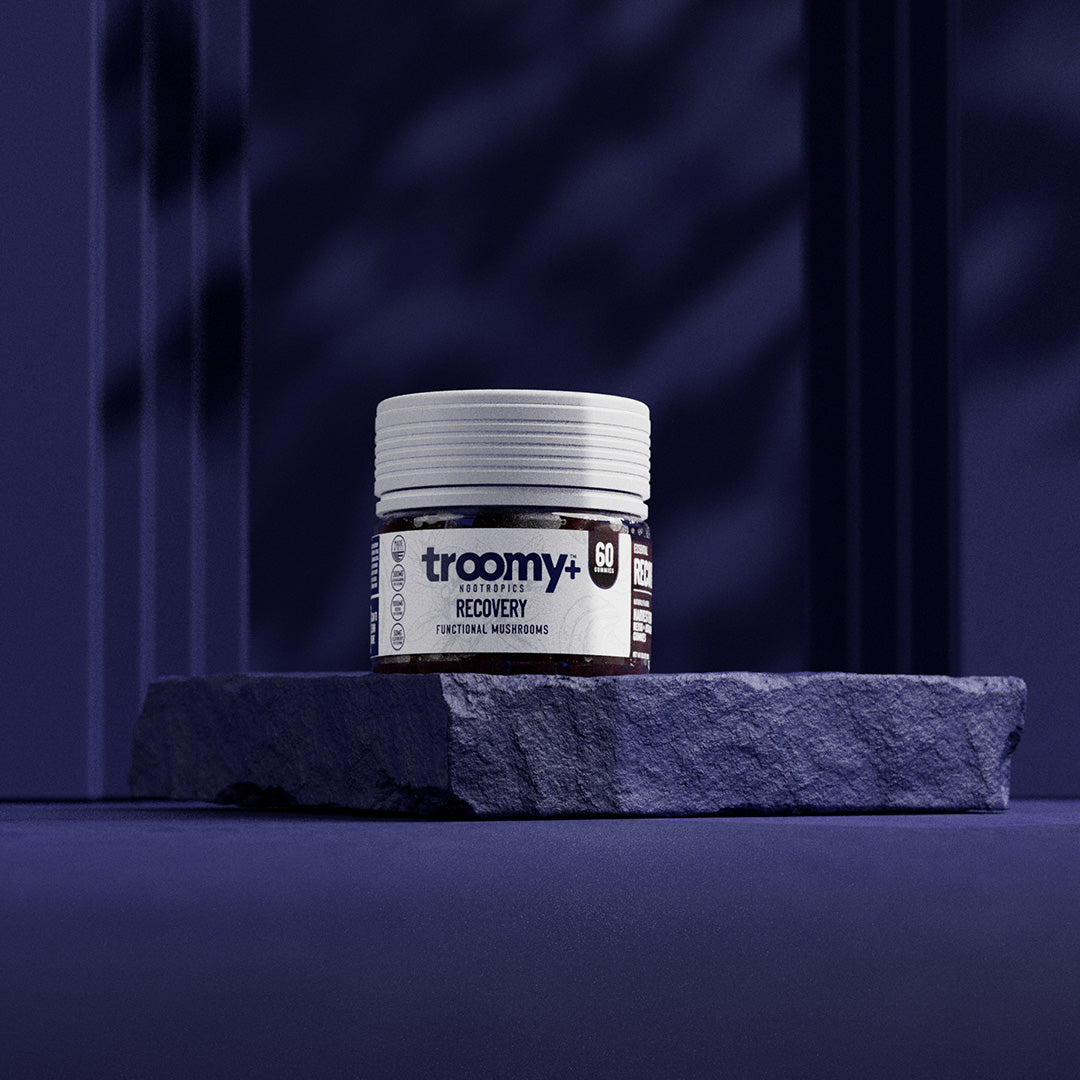
For athletes who prioritize both performance and recovery, pairing cordyceps with reishi is a well-established combination. Cordyceps supports energy and endurance during activity, while reishi provides adaptogenic support that aids recovery and stress regulation after training. Troomy's Recovery Ashwagandha Reishi Mushroom Gummies complement the Boost Cordyceps Gummies for a complete training support stack that addresses both output and restoration.
For those interested in cognitive performance alongside energy, combining cordyceps with lion's mane provides dual support: lion's mane for focus and neurological clarity, cordyceps for the underlying energy that makes sustained cognitive work possible. It is one of the most popular functional mushroom combinations for good reason.
The key principle in stacking functional mushrooms is targeting different physiological systems rather than doubling down on the same mechanism. For a broader look at how to build effective mushroom supplement routines, Mushroom Stacks 101 covers the core principles and most useful combinations in full.
Cordyceps for Athletes: Practical Applications
For athletes and active individuals, cordyceps fits naturally into a pre-workout supplementation routine as a non-stimulant energy support. Unlike traditional pre-workouts, which typically rely on caffeine, beta-alanine, or synthetic stimulants, cordyceps supports performance without affecting sleep, increasing anxiety, or requiring cycling off. It can be taken daily without tolerance concerns or dependency.
The effects on endurance, oxygen utilization, and recovery make cordyceps particularly well suited for aerobic sports and activities that require sustained output over time. Strength athletes can also benefit, particularly in improving work capacity and reducing fatigue between sets. For anyone focused on athletic training, the case for making cordyceps part of a daily supplement routine is straightforward: it supports the systems that performance actually depends on, without the trade-offs that come with stimulant-based alternatives.
When and How to Take Cordyceps
Morning is the ideal time to take cordyceps for most people. For pre-workout use, taking cordyceps 30 to 60 minutes before exercise maximizes its support for aerobic performance. Unlike adaptogens that require weeks to build up meaningful effects, many cordyceps users report noticeable energy improvement within the first week of consistent use, with full performance benefits typically emerging after two to four weeks of daily supplementation.
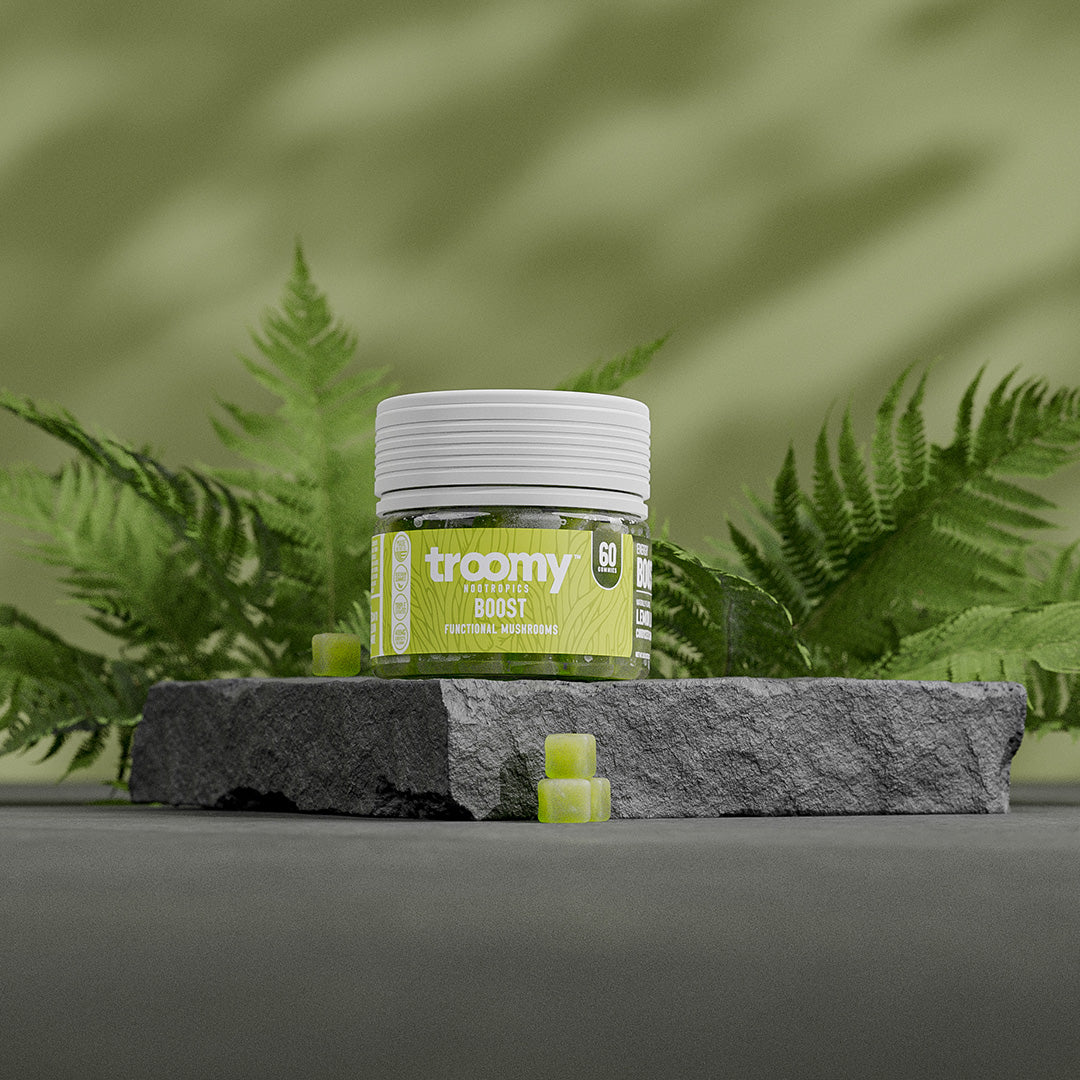
Cordyceps gummies make it easy to build this kind of consistent daily habit. Troomy's Boost Cordyceps Gummies are made in the USA, vegetarian, and formulated in natural flavors that make the daily routine something you actually look forward to. Whether you are new to functional mushrooms or building on an existing supplement stack, they are a clean, reliable starting point for cordyceps-based energy support. For those who want to explore the full range of what Troomy offers in this space, the Energy Collection brings together every product built around natural, stimulant-free energy support.
Frequently Asked Questions
What does cordyceps mushroom do?
Cordyceps supports cellular energy production by influencing ATP synthesis and mitochondrial efficiency. This translates to improved physical endurance, reduced fatigue, and more sustained mental and physical energy throughout the day.
Is cordyceps a stimulant?
No. Cordyceps does not block adenosine receptors like caffeine. Its energizing effects come from supporting cellular ATP production, providing genuine metabolic energy rather than borrowed alertness that leads to a crash later in the day.
Are cordyceps psychedelic?
No. Cordyceps does not contain psilocybin or any psychoactive compounds. It is a legal dietary supplement whose effects are entirely physiological, not psychoactive, and it will not affect your perception or appear on a drug test.
Can cordyceps improve athletic performance?
Research supports cordyceps' potential to improve aerobic endurance and VO2 max. A study published in the Journal of Alternative and Complementary Medicine found significant VO2 max improvements in adults taking a cordyceps-containing supplement for 12 weeks. The benefits are most meaningful for endurance-based activities.
How long does it take for cordyceps to work?
Many people notice improved physical energy and endurance within the first one to two weeks of consistent use. Full performance benefits typically emerge after two to four weeks of daily supplementation.
Do cordyceps help with motivation?
Yes, indirectly. Because motivation is closely tied to the dopamine system, which is sensitive to metabolic state, supporting cellular energy production through cordyceps can remove the physiological barrier that often shows up as low motivation or difficulty initiating tasks.
Can I take cordyceps every day?
Yes. Cordyceps does not cause tolerance buildup or dependency the way stimulants can. It is designed for daily, consistent use and is most effective when taken as part of a regular routine rather than occasionally.
These statements have not been evaluated by the Food and Drug Administration. This product is not intended to diagnose, treat, cure, or prevent any disease.


