



Tired but Wired: Why Melatonin Alone Isn't Enough for Everyone
You're tired but you can't wind down. You've tried melatonin, and it either doesn't do much of anything or it leaves you groggy and foggy for half the next morning. You're not necessarily looking for something stronger. You're looking for something that actually helps you fall asleep and stay asleep, without the hungover feeling the next day. If that sounds like you, you're not doing anything wrong, and you're far from alone. This is exactly the gap that the best mushroom gummies for sleep are designed to close, and reishi is the reason why.
This particular kind of tired has a name among people who study sleep: tired but wired. The body is worn out, but the mind hasn't gotten the message. Melatonin is a hormone your body already produces to help regulate your sleep-wake cycle, and taking it as a supplement can nudge that cycle in the right direction. But melatonin is a single lever. It doesn't address the racing-mind side of the problem, and for a lot of people, that's the piece that's actually keeping them up at night.
It's also why so many people bounce between sleep products without finding one that sticks. A stronger dose of melatonin isn't the answer if the real obstacle is a nervous system that hasn't had a chance to settle down. This is where mushroom gummies for sleep, and reishi specifically, come in. Reishi is one of the most studied adaptogenic mushrooms, and it works on a different part of the sleep problem than melatonin does. Understanding that difference is the key to choosing a sleep mushroom gummy that actually helps, instead of just another bottle that sits half-used in a cabinet.
How Does Reishi Support Sleep Differently Than Melatonin?
Melatonin is a direct sleep signal. It tells your body it's time to wind down, and for a lot of people that's genuinely helpful, especially when your natural rhythm is disrupted by screens, travel, or an inconsistent schedule. Think of it as adjusting the clock itself.
Reishi works differently. It's classified as an adaptogen, which means it's traditionally used to help the body manage and adapt to stress rather than to sedate it outright. Reishi has a long history in traditional wellness practices as a calming mushroom, often referred to as the 'mushroom of immortality' for its broad reputation in supporting relaxation and balance. The idea isn't that reishi forces sleep the way a sedative would. It's that reishi helps calm the nervous system enough that sleep can happen naturally, which is exactly the piece that's often missing for people who are tired but wired.
That distinction is also why reishi gummies for sleep tend to feel different from a standard sleep aid. A sedative works on you. An adaptogen is meant to work with you, supporting the body's own ability to downshift out of a stressed or overstimulated state. Put simply: melatonin adjusts your internal clock. Reishi helps quiet the mental noise that keeps the clock from mattering. That's why the two work well together instead of competing with each other.
What Does the Research Say About Reishi and Sleep?
Reishi has been used in traditional wellness practices for centuries, and modern interest in its calming properties has grown alongside broader research into adaptogens and stress management. Much of the available research on reishi focuses on its traditional use for relaxation and its role in supporting the body's stress response, rather than on sleep as a single isolated outcome.
As with many botanicals, the research picture is still developing, and it's honest to say that reishi is not a clinically proven sleep aid in the way that a prescription sedative is. What the traditional-use evidence and early research consistently point to is reishi's role in supporting a calmer, more relaxed state, which is a meaningful piece of the sleep puzzle for people whose main obstacle is a mind that won't switch off. That's why reishi is best understood as a support for winding down, working alongside melatonin rather than replacing it.
The Combination That Works: Reishi Plus Melatonin
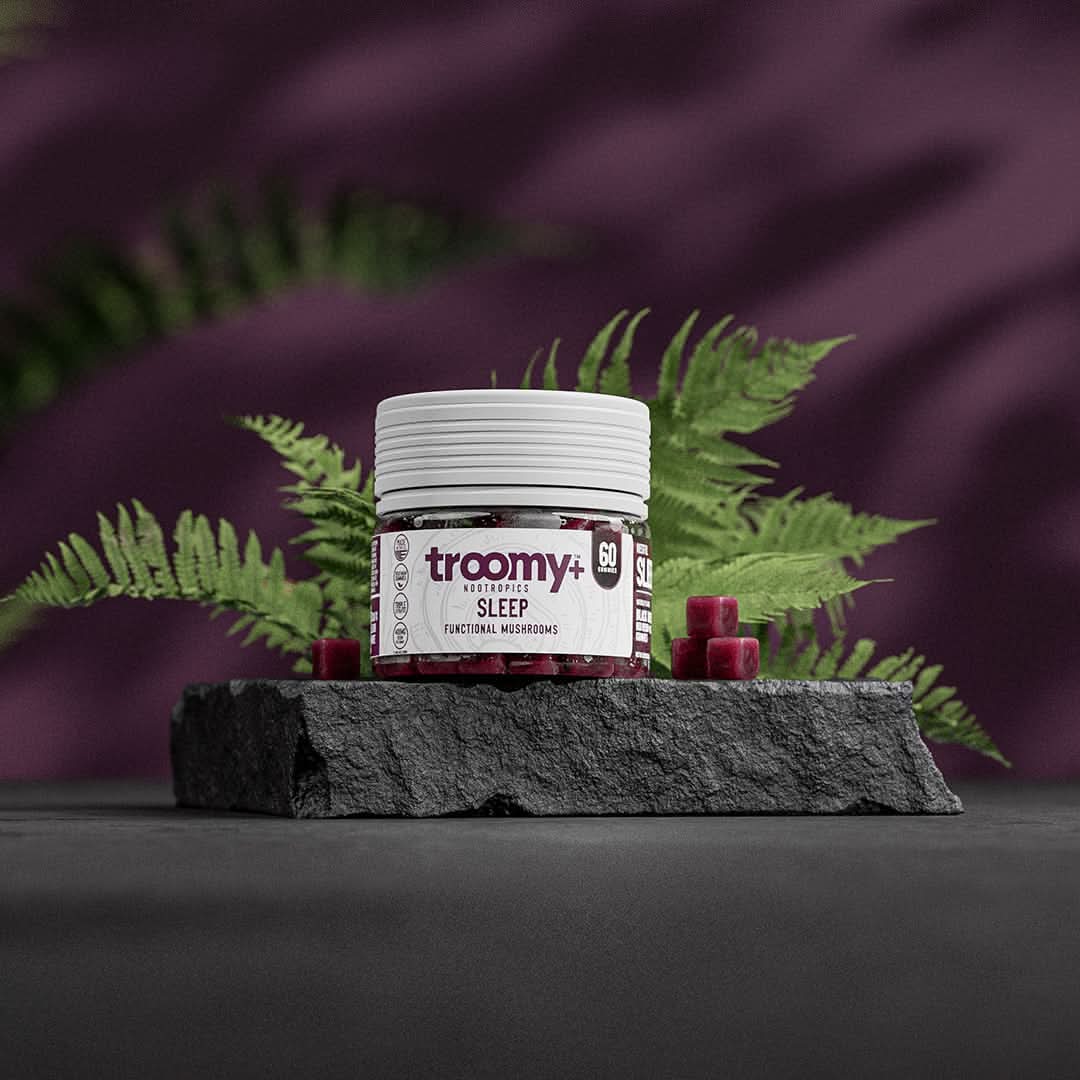
This is exactly why Troomy's Sleep Reishi Gummies combine triple-extracted reishi with melatonin, passionflower, and lemon balm rather than relying on a single ingredient. Reishi and passionflower work on the calming, wind-down side of the equation, while melatonin gives your body the direct signal that it's time to sleep.
Passionflower has its own long history of traditional use for relaxation, and pairing it with reishi reinforces the calming side of the formula rather than duplicating what melatonin already does. Lemon balm rounds things out with its own traditional reputation for easing a busy mind before bed. None of these ingredients is doing the whole job alone. Together, they're built to feel like a full wind-down stack rather than a single-note sedative, which is the whole point of choosing mushroom sleep gummies over a plain melatonin tablet in the first place.
This is the stack-as-value approach: no single ingredient does all the work, but together they address both halves of the tired-but-wired problem. That combination is also why this format tends to feel different from taking melatonin alone. It's not just about falling asleep faster. It's about actually feeling calm enough to let sleep happen, and staying asleep once you get there, without the groggy trade-off that comes with just cranking up the melatonin dose.
How to Choose the Best Mushroom Gummies for Sleep
Not every sleep gummy on the shelf is built the same way, and this is where a lot of people get burned. Many mushroom gummies for sleep are made with whole mushroom powder rather than a real extract, which means a much lower concentration of the compounds that actually support relaxation, no matter how large the milligram number on the label looks. Before buying any sleep mushroom gummy, it's worth checking three things: whether the reishi is extracted rather than raw powder, whether it comes from the fruiting body rather than mycelium grown on grain, and whether the product is third-party tested to confirm what's actually in the bottle. Troomy's Sleep Reishi Gummies check all three boxes, which is why it's the sleep mushroom gummy we'd point you to first if you're trying to sort the ones that work from the ones that don't. Our Mushroom Gummies Buyer's Guide covers this quality checklist in full detail and is worth reading before you buy any mushroom gummy, sleep-focused or otherwise.
How to Take Sleep Mushroom Gummies for Best Results
Timing matters more than people expect. Reishi sleep gummies are generally most effective when taken thirty to sixty minutes before bed, giving the ingredients time to take effect as you start your wind-down routine rather than the moment your head hits the pillow. Taking it with or without food doesn't make a major difference for most people, though a light snack beforehand can help if you find supplements upset your stomach on an empty one. If you want the full breakdown on timing by mushroom type, including why morning mushrooms like lion's mane work differently than evening mushrooms like reishi, our guide to the best time to take mushroom gummies walks through it in detail.
Consistency also matters, arguably more than timing does. Taking a sleep gummy occasionally on the nights you feel wired isn't likely to build the same results as taking it every night as part of a routine. Reishi in particular tends to work cumulatively, supporting a calmer baseline over time rather than acting as an on-demand switch you flip only on the rough nights.
What Should You Expect in the First Week vs the First Month?
In the first week, most people notice subtle changes rather than a dramatic shift. You might find it a little easier to settle down at night, or notice you're not lying awake running through your day the way you used to. These early changes are foundational. They're the nervous system adjusting to a calmer nightly pattern, even if it doesn't feel dramatic yet.
By the third and fourth week, most people report a more noticeable difference, both in how quickly they fall asleep and in how rested they feel in the morning. This lines up with how adaptogens generally work: cumulatively, not instantly. It's also why a thirty-day trial is a more honest way to judge whether a sleep mushroom gummy is working than judging it after a single night.
If you're someone who has tried a sleep supplement for three or four nights and given up because you didn't feel an immediate difference, that's a completely reasonable reaction, but it's also probably why it didn't seem to work. Give a nightly routine the full month before deciding whether reishi gummies for sleep are right for you.
Better Sleep for Under $1 a Night
Troomy's Sleep Reishi Gummies combine triple-extracted reishi with 2.5mg melatonin, passionflower, and lemon balm. At $34.99 for sixty gummies, that works out to under a dollar a night, a daily habit that costs less than a coffee, in exchange for a wind-down routine that's actually built to help you fall asleep and stay asleep, not just knock you out. Like every Troomy gummy, it's made in the USA, vegetarian, and comes in a natural flavor that doesn't taste like a supplement. Try it for thirty days. If you don't feel the difference, it's on us.
For a full breakdown of what separates a well-made mushroom gummy from the whole-powder products that often do nothing, our Mushroom Gummies Buyer's Guide covers extraction method, fruiting body versus mycelium, and third-party testing, and how to match the right mushroom to your specific problem, whether that's sleep, focus, or energy.
Frequently Asked Questions
What mushroom gummy is best for sleep?
Reishi is the mushroom most associated with calm and relaxation, which makes it the standard choice for a sleep-focused gummy. Look for a reishi gummy that's triple-extracted and pairs reishi with a direct sleep signal like melatonin, since the combination addresses both the racing-mind side of sleeplessness and the body's internal clock.
Do reishi gummies help you sleep?
Reishi is traditionally used to support relaxation and a calmer stress response rather than to sedate you directly. For people whose main obstacle to sleep is a mind that won't switch off, that calming support can make falling and staying asleep noticeably easier, especially when reishi is combined with melatonin.
Are mushroom gummies better than melatonin for sleep?
It's not really an either-or question. Melatonin gives your body a direct signal that it's time to sleep, while reishi supports the calm state that lets sleep actually happen. A combination of the two tends to address more of the problem than melatonin alone, which is why many sleep gummies, including Troomy's, pair reishi with melatonin rather than relying on just one ingredient.
How long before bed should I take a sleep mushroom gummy?
Thirty to sixty minutes before bed is generally the sweet spot, giving the ingredients time to take effect as you begin winding down rather than the moment you get into bed.
Will mushroom sleep gummies make me groggy in the morning?
A well-formulated reishi and melatonin gummy at a reasonable dose is designed to support a natural wind-down rather than sedate you, which is why grogginess is less common than with high-dose melatonin alone. Everyone responds a little differently, so it's worth paying attention to how your body reacts and adjusting timing if needed.
These statements have not been evaluated by the Food and Drug Administration. This product is not intended to diagnose, treat, cure, or prevent any disease.


