



There are hundreds of mushroom gummies on the market. Most of them are whole mushroom powder dressed up in a trendy bottle. Here's the three-question checklist that separates the ones that actually work from the ones that don't.
If you have ever wondered how to choose a mushroom supplement that is actually worth your money, the answer is not about finding the fanciest label or the longest ingredient list. It comes down to a short list of the best mushroom supplement standards, the ones most products on the shelf quietly fail. Once you know what those standards are, checking mushroom gummy quality takes less than five minutes, and it works for any brand, not just Troomy.
This matters because the wrong choice is not just a wasted twenty dollars. It is weeks of taking a gummy every morning, wondering why you feel nothing, and eventually deciding functional mushrooms just are not for you. That is rarely true. More often it is the product, not the mushroom, that let you down. The three questions below fix that, and by the end you will be able to glance at any label, in any store, and know within seconds whether it is worth your money.
Why Most Mushroom Gummies Don't Work
The most common reason people feel nothing from a mushroom gummy has nothing to do with the mushroom itself. It comes down to how that mushroom was processed before it ever reached the gummy. Mushrooms contain tough cell walls made of chitin, and the beneficial compounds inside, things like beta-glucans, triterpenes, and other bioactive compounds, are locked behind those walls. Simply grinding a mushroom into powder and dropping it into a gummy does not break those walls open. Your body absorbs very little of it. This is the whole powder problem, and it is the single biggest quality gap in the mushroom supplement market.
The good news is that this problem is easy to check for, as long as you know which mushroom gummies ingredients to look for on the label. That is what the rest of this checklist covers.
Question 1: Is It Extracted?
Extraction is the process that breaks down those tough cell walls, usually through a hot water extraction, an alcohol extraction, or both together in what is called a dual or triple extraction. Each method pulls out a different set of beneficial compounds. Hot water extraction is effective for water-soluble compounds like beta-glucans. Alcohol extraction pulls out compounds like triterpenes that water alone cannot access. A triple-extracted mushroom gummy has gone through multiple extraction passes to capture a broader spectrum of what the mushroom actually has to offer.
When you are checking a label, look for the words 'extract' or 'dual-extract' or 'triple-extract' next to the mushroom name. If the label just says 'mushroom powder' or 'mushroom blend' with no mention of extraction at all, that is a strong signal you are looking at whole powder, not extract. A triple-extracted gummy will consistently outperform an unextracted capsule, even if the capsule lists a higher milligram count on the label. The extraction method matters more than the raw dose.
This is also why two gummies can list the exact same mushroom, at what looks like the exact same dose, and produce completely different experiences. A 500mg serving of triple-extracted lion's mane and a 500mg serving of whole ground lion's mane powder are not the same product, even though the label makes them look identical at a glance. Only one of them has actually broken down the cell wall so your body can use what is inside.
Question 2: Is It Fruiting Body or Mycelium?
This is the second place where labels can be misleading. Mycelium is the root-like network a mushroom grows from, and it is often grown on a bed of grain. Fruiting body is the actual mushroom, the visible part most people picture when they think of lion's mane, reishi, or cordyceps. Fruiting body material generally carries a meaningfully higher concentration of the bioactive compounds people are looking for, while mycelium-on-grain products can end up diluted with starch from the grain substrate.
Some labels will specify 'fruiting body' directly. Others will list ingredients as simply 'mycelium' or 'organic mushroom mycelium,' which is worth a second look. If a label does not specify which part of the mushroom was used, that omission is itself useful information.
A simple way to think about it: the fruiting body is the part of the mushroom doing the work you are actually buying it for. Mycelium is more like the root system, useful to the organism but far less concentrated in the compounds people are shopping for. Some mycelium products even list the grain substrate itself as part of the total ingredient weight, which is another reason the same milligram number on two different labels can mean very different things.
Question 3: Is It Third-Party Tested?
Third-party testing means an independent lab, not the supplement company itself, has verified what is actually in the gummy and confirmed it is free of contaminants like heavy metals, pesticides, or microbial residue. The document that lab produces is called a Certificate of Analysis, or COA. A brand that is confident in its product should be able to provide a COA on request, and many publish theirs directly on the product page. Third-party testing does not just protect you from what should not be in the gummy. It also confirms that what the label claims is actually there. If you cannot find any mention of third-party testing on a brand's product page, it is fair to ask. If you are ready to see how a properly tested gummy stacks up, Troomy's Daily 14 Mushroom Blend Gummies are third-party tested, so you are not just taking a label's word for it.
The Dose Question: What's a Meaningful Amount of Extract?
Even a properly extracted, fruiting body, third-party tested gummy still needs to contain a meaningful amount of that extract per serving. There is no single universal number that applies to every mushroom, since different species and different extraction ratios change what counts as an effective dose. But as a general rule, a gummy that lists a specific milligram amount alongside a specific extraction ratio, for example a stated concentration on the label, gives you far more confidence than a proprietary blend that hides the actual amounts behind a single combined number. If a label will not tell you how much of any one mushroom is actually in the gummy, that is worth asking about before you buy.
How Troomy Answers All Three
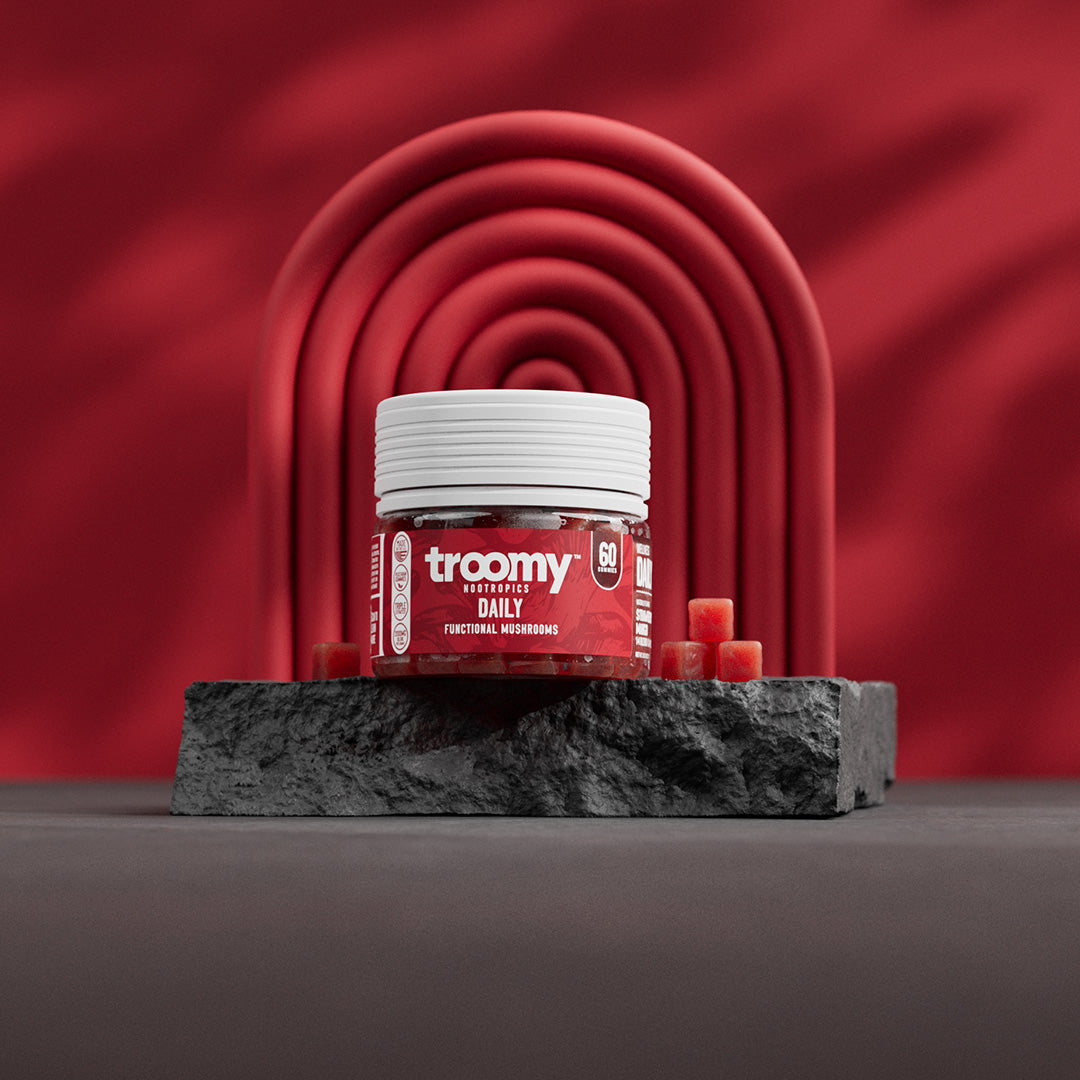
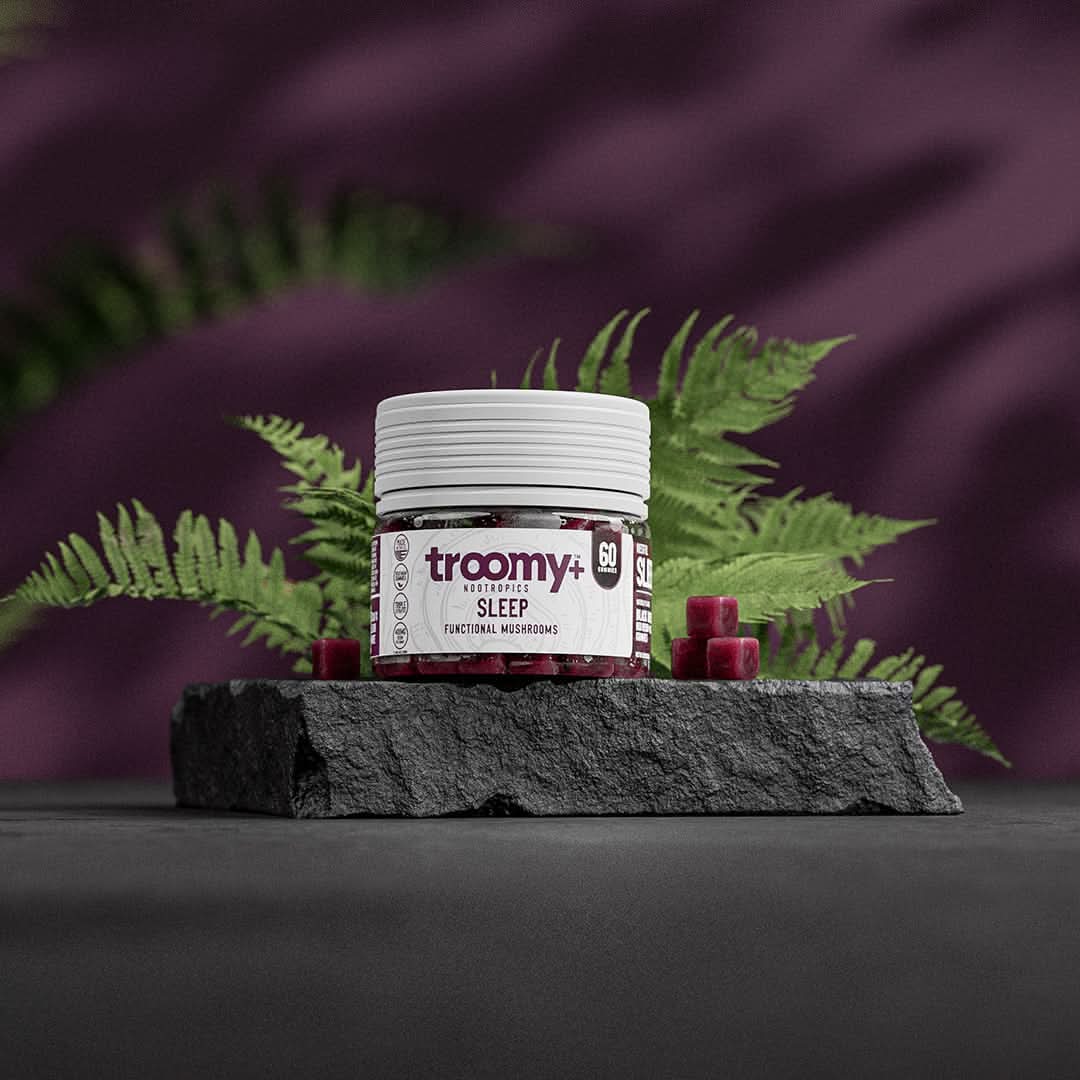
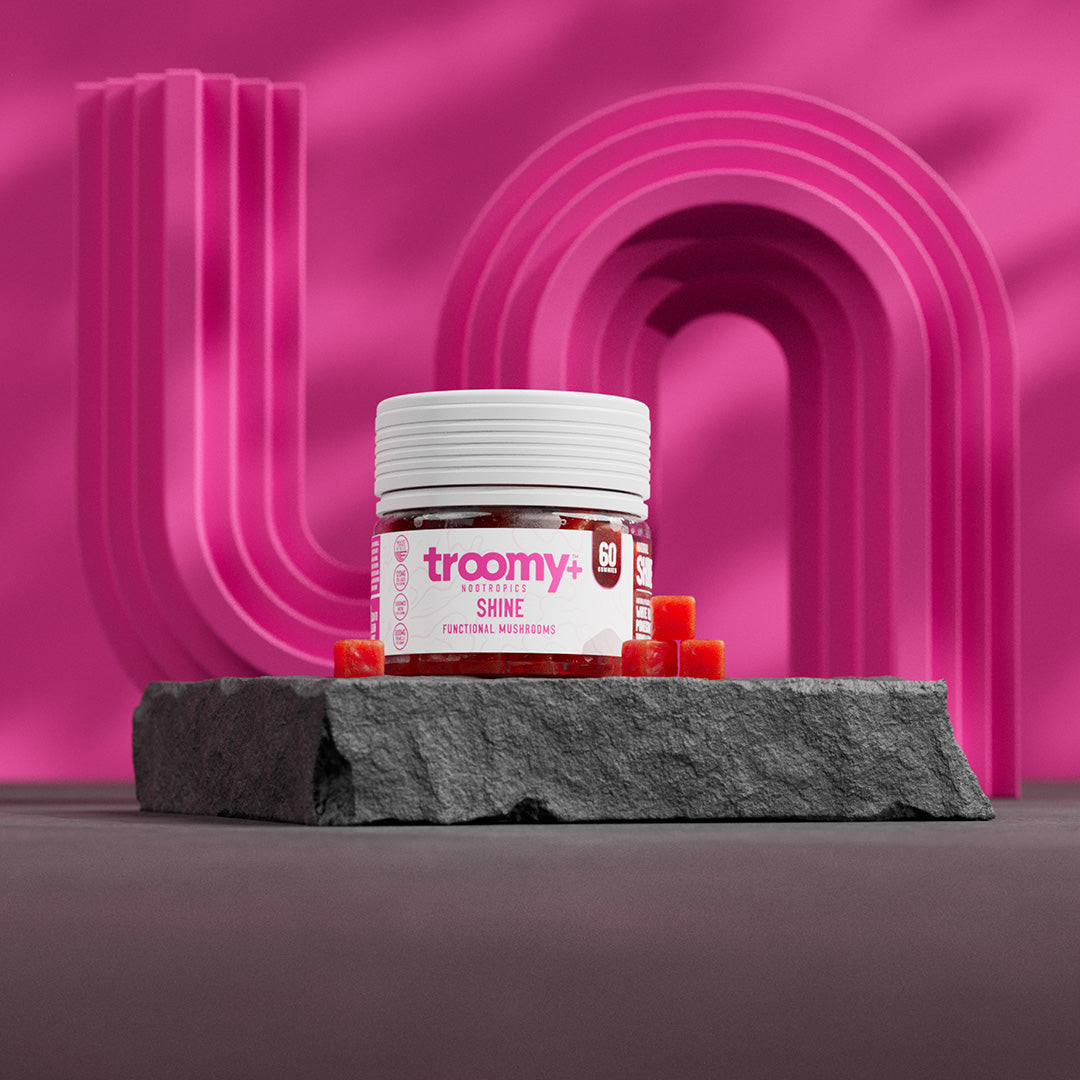
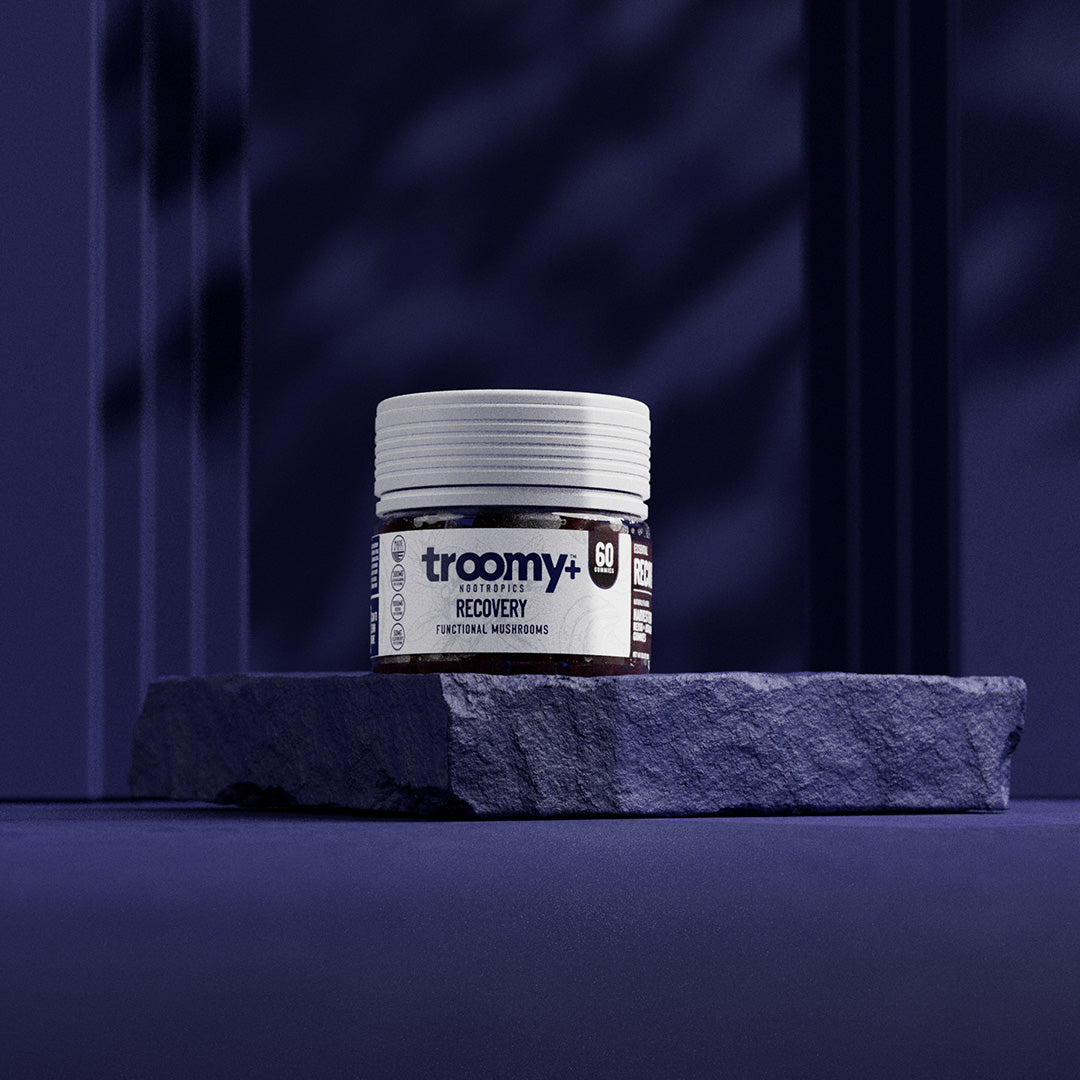
This checklist is not theoretical for us. It is how we built our own gummies in the first place. Every Troomy mushroom gummy is triple-extracted, made from fruiting body material, and third-party tested, and the Daily 14 Mushroom Blend was built specifically around this checklist from the start. It uses fourteen mushroom varieties, each triple-extracted, each sourced from fruiting body, and each batch third-party tested for purity. Every gummy is also made in the USA, vegetarian, and flavored naturally, so ticking the quality boxes does not mean choking down something that tastes like a supplement.
Tired of taking a mushroom gummy every morning and wondering if it is actually doing anything? Troomy's Daily 14 Mushroom Blend passes all three checks, triple-extracted, fruiting body, third-party tested, so instead of guessing, you can actually feel it working.
Not sure which problem you are solving for first? Troomy's mushroom gummy bundles let you try more than one blend, matched to sleep, focus, or energy, without committing to a single product before you know what your body responds to.
This checklist is also the backbone of the Best Mushroom Gummies: The Complete Buyer's Guide, which walks through how to match the right mushroom to your specific problem once you know what quality standards to look for. And if you are still on the fence about whether any of this is worth it, Are Mushroom Gummies Worth It? An Honest Answer digs into what the research actually shows.
Run any mushroom gummy through these three questions before you buy, Troomy's or anyone else's, and you will know within seconds whether it is worth your money. Get it right and you stop wondering whether the gummy is working. You just feel it.
Frequently Asked Questions
How do I know if a mushroom gummy is good quality?
Check the label for three things: whether the mushroom is extracted rather than raw powder, whether it comes from fruiting body rather than mycelium grown on grain, and whether the batch is third-party tested. A gummy that can answer yes to all three is generally a well-made product.
What does triple-extracted mean?
Triple-extracted means the mushroom has gone through multiple extraction passes, typically combining hot water and alcohol extraction methods, to pull out a broader range of the mushroom's beneficial compounds than a single extraction method could capture on its own.
Is fruiting body better than mycelium?
Fruiting body is the mushroom itself and generally contains a higher concentration of the compounds people are seeking out, like beta-glucans and triterpenes. Mycelium is the root-like structure a mushroom grows from and is sometimes grown on a bed of grain, which can dilute the final product with starch.
How much lion's mane should be in a gummy?
There is no single universal number, since the right amount depends on the extraction ratio and concentration used. Look for a label that states both a specific milligram amount and a specific extraction method, rather than a proprietary blend that hides the actual amount of any single ingredient.
What is a certificate of analysis for supplements?
A certificate of analysis, or COA, is a report from an independent lab confirming what is actually in a supplement and verifying it is free from contaminants such as heavy metals, pesticides, or microbial residue. Reputable brands can typically provide a COA on request or publish it directly on the product page.
These statements have not been evaluated by the Food and Drug Administration. This product is not intended to diagnose, treat, cure, or prevent any disease.


