



Reishi mushroom has a 2,000-year track record in traditional medicine, and unlike many wellness trends that come and go, reishi has only grown more credible as modern science has started examining what is actually happening inside this remarkable fungus. Known in China as Lingzhi, reishi is one of the most studied natural substances in the world. The full range of reishi mushroom benefits spans three distinct categories: sleep quality, stress and anxiety resilience, and immune function — plus meaningful contributions to skin health that are often overlooked.
Whether you are new to functional mushrooms or looking to understand what makes reishi different from the rest of the stack, this guide covers the research, the mechanisms, and the practical steps to use reishi effectively. If you want a broader comparison of how reishi sits among other functional mushrooms, see our guide to the best mushroom gummies for sleep. For the full science behind every benefit covered in this guide, see our reishi mushroom health benefits guide.
What Is Reishi Mushroom?
Reishi (Ganoderma lucidum) is a hard, shelf-like mushroom that grows on the base of hardwood trees across Asia, North America, and parts of Europe. In Chinese medicine it was revered as the mushroom of immortality, reserved for emperors and nobility. That reverence, it turns out, was not without scientific basis.
The bioactive compounds in reishi that have attracted the most scientific attention fall into two main categories. The first is polysaccharides, particularly beta-glucans, which are linked to reishi's immune-modulating properties. The second is triterpenes — over 200 different triterpenes have been identified in reishi alone — which appear to drive its adaptogenic, anti-inflammatory, and sleep-supporting effects. Understanding these two compound classes is the key to understanding every reishi mushroom benefit discussed in this guide.
Reishi and Sleep: What the Research Shows
One of the most well-documented reishi mushroom benefits is its ability to support sleep quality — not by sedating you, but by working with your body's own sleep regulation systems. This makes it a compelling option for anyone exploring natural approaches to reishi for sleep support.
Research published in the Journal of Ethnopharmacology found that reishi polysaccharides significantly increased total sleep time and non-REM sleep in animal models. The mechanism involved modulation of the gut microbiota and an increase in serotonin levels in the gut-brain axis, which plays a central role in sleep regulation. Human studies have shown significant improvements in sleep quality scores and reduced fatigue after eight weeks of consistent reishi supplementation.
The triterpenes in reishi also appear to play a role by interacting with the nervous system and potentially influencing GABA receptors — the same receptors targeted by many prescription sleep medications, but through a much gentler, indirect pathway. This is why consistent nightly use tends to produce better results than a single large dose. For a closer look at how this mechanism works over time, see our article on how long it takes for reishi to work for sleep.
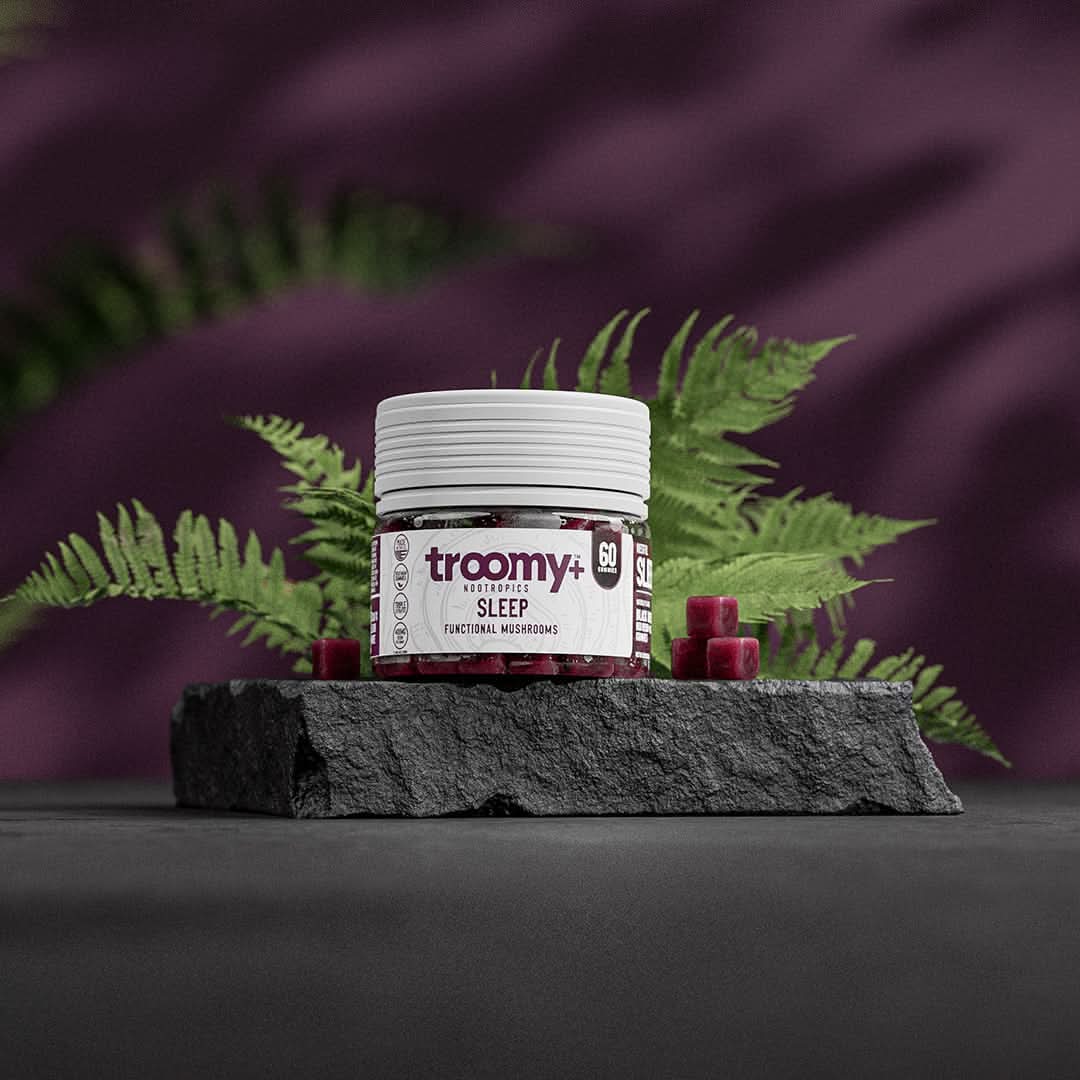
If you are looking to support better sleep with reishi, Troomy's Sleep Reishi Gummies are a convenient, great-tasting way to make reishi a nightly habit. Browse the full bedtime collection for more options.
Reishi vs Melatonin: Understanding the Difference
A common question for anyone exploring natural sleep support is how reishi stacks up against melatonin. They work through completely different mechanisms, and understanding that difference matters. For a detailed side-by-side breakdown, read our full guide on reishi vs melatonin for sleep.
Melatonin is a hormone your body produces naturally in response to darkness. Taking melatonin as a supplement directly raises circulating melatonin levels, which can help signal to your body that it is time to sleep. It works quickly and is most effective for circadian rhythm disruptions like jet lag or shift work. However, some people find that regular melatonin supplementation can reduce their body's own melatonin output over time, and it does not address the underlying quality or architecture of sleep.
Reishi does not raise any specific sleep hormone directly. Instead, it works upstream: modulating the nervous system, reducing inflammatory signalling that can disrupt sleep, and supporting the serotonin pathways that feed into melatonin production naturally. The result is not sedation but a gradual improvement in sleep depth and quality that builds over weeks of consistent use.
For people who feel groggy after melatonin or find it becomes less effective over time, reishi represents a fundamentally different approach. Some people combine both: melatonin for acute circadian adjustment and reishi as a nightly baseline for long-term sleep quality.
Reishi for Stress and Anxiety: The Adaptogen Angle
Reishi is classified as an adaptogen, meaning it helps the body maintain homeostasis when under stress. The research on reishi for stress has focused primarily on its triterpenes, which appear to modulate the HPA (hypothalamic-pituitary-adrenal) axis — the system that governs your cortisol response to stress — and influence the sympathetic nervous system response.
A study published in the American Journal of Chinese Medicine found that reishi supplementation was associated with reduced fatigue and significant improvements in quality of life in participants experiencing neurasthenia, a condition characterised by chronic stress-related exhaustion. Unlike stimulant-based remedies that create alertness by pushing the sympathetic nervous system harder, reishi works by helping calibrate the body's stress response — activating it when needed and dialling it back appropriately when the stressor has passed. We cover the full body of evidence in our deep-dive on reishi for stress and anxiety.
This makes reishi particularly useful for people dealing with persistent, low-grade stress rather than acute anxiety episodes. Over several weeks of daily use, many people report a greater sense of evenness throughout the day — less reactive to stressors, faster to recover emotionally, and better able to sleep at night despite a demanding schedule.
Troomy's Calm Reishi Gummies are formulated specifically for daily stress support. The Mood Collection has additional options for comprehensive emotional resilience.
Reishi and Immune Health: Beta-Glucans and Beyond
Reishi immune support is among the most extensively researched areas of functional mushroom science. The beta-glucans in reishi interact with Dectin-1 receptors on macrophages, dendritic cells, and other innate immune cells in a way that modulates immune activity — helping calibrate the immune response rather than simply pushing it in one direction. To understand the mechanism in depth, see our article on how reishi beta-glucans support immunity.
This distinction matters. A purely stimulated immune system is not always a healthier one. Reishi's immune modulation helps the immune system respond appropriately to actual threats while avoiding the kind of chronic, low-grade inflammation that is linked to a wide range of health problems. Multiple peer-reviewed studies have shown that reishi polysaccharides enhanced natural killer cell activity and lymphocyte proliferation in healthy adults. Natural killer cells are a front-line defence in the innate immune system, responsible for identifying and eliminating infected or abnormal cells before the adaptive immune response is even needed.
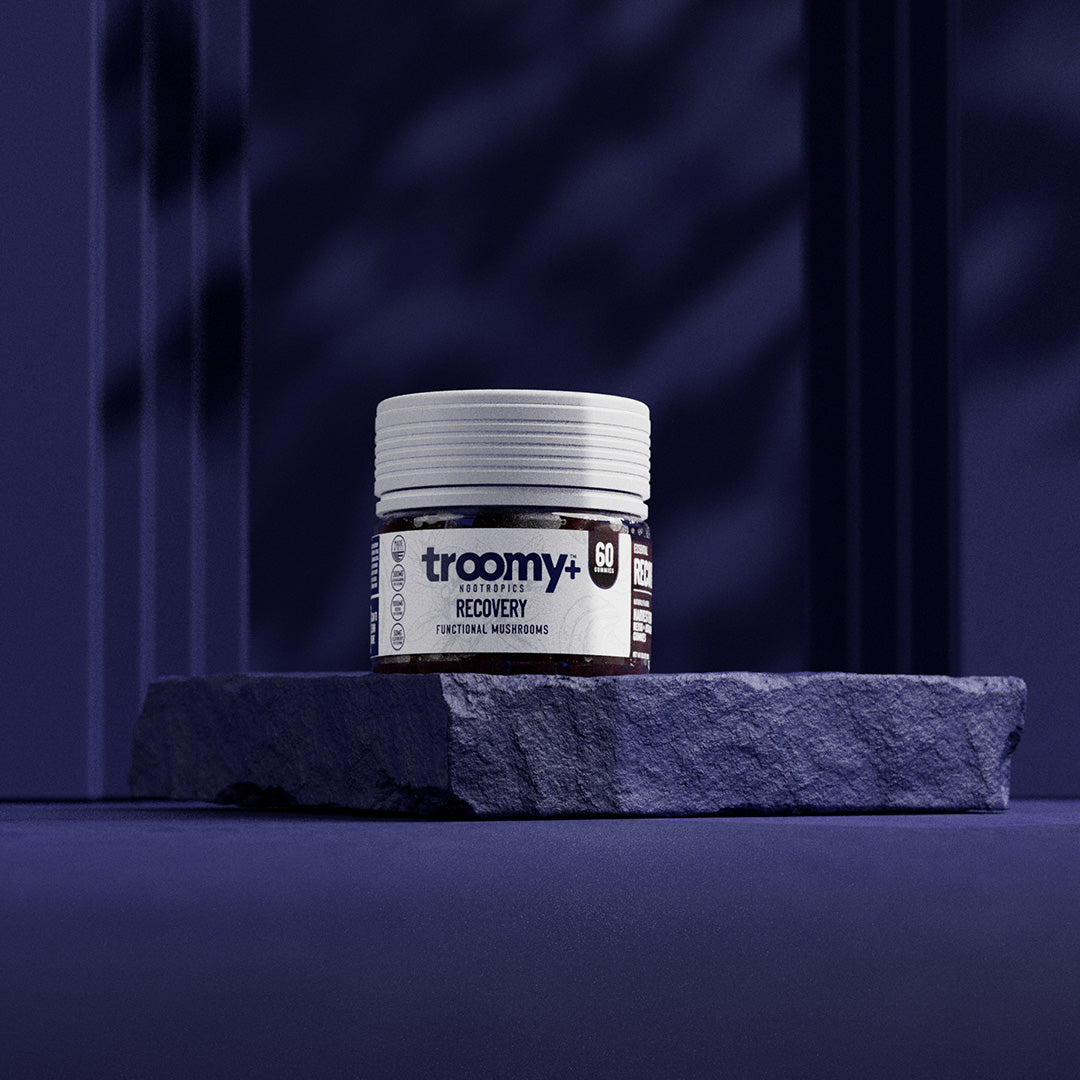
Reishi is a key ingredient in Troomy's Daily 14 Mushroom Blend Gummies, which pairs it with 13 other functional mushrooms for comprehensive daily immune and wellness support. The full Immunity Collection is also available. For additional recovery support alongside immune health, Troomy's Recovery Gummies combine reishi with ashwagandha — a combination we explore further in our guide to what to stack with reishi for recovery and resilience.
Reishi and Skin Health
Reishi's contribution to skin health tends to be underappreciated relative to its sleep and immune benefits, but the underlying mechanisms are well-founded. Reishi's triterpenes have been studied for their anti-inflammatory and antioxidant properties, both of which contribute to skin health by reducing oxidative stress and calming inflammatory responses at the cellular level.
Oxidative stress is one of the primary drivers of visible skin ageing — it degrades collagen, disrupts the skin barrier, and contributes to uneven tone and texture. By reducing the systemic inflammatory load, reishi creates conditions in which the skin can function more effectively and repair itself more readily. Beta-glucans, whether applied topically or consumed as a supplement, are also known to support skin barrier function and hydration retention.
Reishi is not a single-ingredient beauty supplement in the way tremella is, but its systemic anti-inflammatory and antioxidant effects make it a meaningful contributor to a skin-from-within approach, particularly when combined with a consistent daily wellness routine. For a closer look at how this works, see our article on the sleep–skin connection and how reishi supports healthy skin. Troomy's Daily 14 Mushroom Blend Gummies includes reishi alongside 13 other functional mushrooms, making it a straightforward way to bring reishi's skin and systemic benefits into a daily routine.
How to Take Reishi: Forms, Dosage, and Timing
Reishi is available as a powder, capsule, tincture, and increasingly as gummies. Each format has trade-offs in terms of bioavailability, convenience, and taste, but the most important consideration regardless of format is extraction quality.
Extraction Quality
Reishi's triterpenes are fat-soluble and require alcohol extraction to be bioavailable. Its polysaccharides are water-soluble and require hot water extraction. A product that uses only one extraction method is leaving significant bioactive content behind. When evaluating any reishi supplement, look for dual-extraction or full-spectrum formulations.
Dosage
Research studies have used doses ranging from 1,000mg to 5,000mg of dried mushroom equivalent per day. Most commercial supplements sit in the 1,000mg to 2,000mg range for daily maintenance use. Higher doses have been used therapeutically in clinical settings but are generally not necessary for everyday wellness support.
Timing
For sleep support, taking reishi in the evening — ideally 30 to 60 minutes before bed — allows the compounds to begin working as your body transitions into its nighttime mode. For stress and immune support, morning or midday dosing works well, since you are building systemic levels over time rather than targeting a specific physiological window.
Consistency Is the Key Variable
Reishi's benefits are cumulative. Most people begin to notice sleep improvements after two to four weeks of nightly use, with immune and stress benefits emerging over a longer horizon of consistent daily supplementation. Unlike melatonin or sedatives, reishi is building something — not just covering a symptom.
Which Reishi Product Is Right for You?
Troomy offers several products built around reishi, each formulated for a specific goal:
| Sleep support | Sleep Reishi Gummies │ Bedtime Collection |
| Stress & calm | Calm Reishi Gummies │ Mood Collection |
| Recovery | Recovery Gummies |
| Immune support | Daily 14 Mushroom Blend │ Immunity Collection |
Frequently Asked Questions
What is reishi mushroom good for?
Reishi mushroom benefits include three primary areas: sleep quality, stress resilience, and immune function. Its polysaccharides support immune modulation through beta-glucan activity on innate immune cells, its triterpenes contribute to adaptogenic and anti-inflammatory effects, and both compound classes work together to support deeper, more restorative sleep with consistent use.
Does reishi make you sleepy?
Reishi does not cause immediate drowsiness. It supports sleep quality over time by modulating the nervous system and supporting serotonin pathways that feed into the body's natural melatonin production. Most people notice improved sleep quality after two to four weeks of consistent nightly use. This is one of the clearest contrasts in the reishi vs melatonin comparison — melatonin works acutely, reishi works cumulatively.
How long does it take for reishi to work?
Reishi effects typically build over two to four weeks of consistent daily use. Sleep quality improvements are often the first things people notice, followed by immune and stress benefits over a longer period of supplementation.
Can I take reishi every day?
Yes. Reishi has an excellent long-term safety profile and is well-suited to daily use. In traditional Chinese medicine it was used as a daily longevity tonic. Consult a healthcare provider if you are pregnant, nursing, taking medications, or managing a chronic health condition.
What is the difference between reishi for sleep versus reishi for immunity?
Reishi provides both sleep and immune support from the same mushroom through different compounds. Its polysaccharides primarily drive reishi immune support through beta-glucan activity, while its triterpenes contribute more to sleep and stress effects. A high-quality full-spectrum reishi extract delivers both benefit pathways simultaneously.
Is reishi an adaptogen?
Yes. Reishi is classified as an adaptogen because it helps the body maintain balance under stress. It modulates the HPA axis and sympathetic nervous system response, supporting resilience to physical and mental stress without causing overstimulation or sedation.
How does reishi compare to melatonin for sleep?
Reishi and melatonin work through different mechanisms. Melatonin directly raises circulating hormone levels for a more immediate sleep-onset effect. Reishi works upstream through nervous system modulation and serotonin pathway support, producing cumulative improvements in sleep depth and quality. Many people use both: melatonin for situational needs like jet lag, and reishi as a nightly baseline for ongoing sleep quality.
These statements have not been evaluated by the Food and Drug Administration. This product is not intended to diagnose, treat, cure, or prevent any disease.


