



Reishi has been called the mushroom of immortality for over two thousand years, and for most of that time it has been prescribed for one thing above all else: rest. Traditional Chinese medicine used it to ease restlessness, quiet the mind, and help the body return to calm. What has changed in the last two decades is that modern science is finally catching up to what practitioners have been saying the whole time. Peer-reviewed research now shows that reishi, known scientifically as Ganoderma lucidum, supports sleep through measurable biological pathways including serotonin signaling, the gut-brain axis, and GABA-adjacent mechanisms.
This is the pillar guide to everything you need to know about reishi and sleep. We are going to cover what reishi actually is, what the research says, why it works, how to use it effectively, how it compares to other sleep aids, and where it fits inside a daily routine. If you only read one article on this topic, make it this one. If you want to go deeper on any specific piece, every section links out to more focused resources in the Troomy Bedtime collection and our sleep education library.

What Is Reishi Mushroom?
Reishi, or Ganoderma lucidum, is a woody, kidney-shaped fungus that grows on hardwood trees in warm, humid parts of Asia and North America. In China it is called lingzhi, which roughly translates to the herb of spiritual potency. In Japan it has been called mannentake, or the ten-thousand-year mushroom. These are not marketing names. They reflect how seriously reishi has been taken in traditional wellness systems for a very, very long time.
What makes reishi interesting from a modern standpoint is what is inside it. The mushroom is packed with bioactive compounds including triterpenoids (the compounds responsible for its signature bitter taste), beta-glucans and other polysaccharides, sterols, and peptidoglycans. Research published in the Frontiers in Pharmacology has identified over 400 bioactive compounds across the fruiting body, mycelia, and spores of reishi, with pharmacological properties spanning sleep support, antioxidant activity, immune modulation, and more.
If you want a broader primer on reishi beyond its sleep-specific role, our full red reishi mushroom information and benefits guide walks through the history, chemistry, and traditional uses in more detail.
Why Is Reishi Considered a Sleep-Supporting Mushroom?
Reishi is classified as an adaptogen. Adaptogens are a category of plants and fungi that help the body adapt to stress and return to a balanced state, rather than forcing one particular response. That distinction matters for sleep. Most sleep aids work by sedating you or by hitting a single receptor. Reishi does something different. It helps your body move into the calm, low-arousal state that sleep actually requires, without knocking you out.
In traditional Chinese medicine, reishi is described as having an An-Shen effect, which loosely translates to quieting the spirit. It has been used for restlessness, insomnia, and palpitations for centuries. This is not a new claim. What is new is that we can now explain the mechanism. For a more accessible overview of how reishi shows up across a wellness routine, our guide to reishi mushroom benefits and a natural sense of calm is a great companion to this section.

What Does the Peer-Reviewed Research Say About Reishi and Sleep?
This is the section that usually gets skimmed over in wellness content. Here we are going to give it the space it deserves, because the research on reishi and sleep is genuinely interesting.
Does Reishi Actually Improve Sleep in Studies?
Yes. Multiple peer-reviewed animal studies have shown measurable sleep-supporting effects from reishi extract. A study published in the Journal of Ethnopharmacology found that three days of oral Ganoderma lucidum extract administration significantly increased total sleep time and non-REM sleep time in freely moving rats at a dose of 80 mg/kg. The researchers connected the effect primarily to the modulation of cytokines such as TNF-alpha, which plays a known role in sleep regulation.
An earlier study published in Pharmacology Biochemistry and Behavior examined reishi extract in pentobarbital-treated rats and found it significantly decreased sleep latency (the time it takes to fall asleep), increased total sleeping time, and extended non-REM sleep and light sleep. Importantly, the sleep-supporting effect was partially blocked by flumazenil, a benzodiazepine receptor antagonist, suggesting that reishi interacts with GABAergic pathways, which are the same calming brain pathways targeted by many prescription sleep medications, but through natural compounds.
How Does Reishi Promote Sleep at a Biological Level?
The most revealing recent research comes from a 2021 study published in Scientific Reports, which investigated how reishi promotes sleep through the gut-brain axis. Researchers administered a specific acidic extract of reishi mycelia to mice for 28 days and observed shortened sleep latency and prolonged sleeping time. The study identified three major mechanisms at work. First, reishi raised levels of the sleep-promoting neurotransmitter 5-hydroxytryptamine (serotonin) in the hypothalamus. Second, it altered gene expression in the serotonergic synapse pathway that regulates sleep. Third, it enriched beneficial gut bacteria like Bifidobacterium and shifted the balance of gut metabolites in ways associated with better sleep.
In plain terms: reishi appears to support sleep from multiple directions at once. It nudges your brain chemistry toward calm. It supports the gut microbiome, which is increasingly understood to influence sleep through the gut-brain connection. And it helps modulate the immune signaling pathways that regulate the sleep-wake cycle. That is a very different profile from something like melatonin, which only addresses the timing signal.
Does Reishi Help With Insomnia Specifically?
The literature is encouraging but still developing. A study published in BMC Complementary Medicine and Therapies used a systems pharmacology approach to explore reishi's anti-insomnia mechanisms and identified multiple active compounds including beta-sitosterol, adenosine, and ganoderic acids that interact with sedative-hypnotic target pathways. The researchers concluded that reishi appears to address insomnia through multi-level interactions, including effects on biological rhythms, synaptic signaling, and G-protein-coupled receptor pathways.
Human clinical research on reishi for insomnia is still limited compared to animal and mechanistic studies, and no supplement should be presented as a substitute for medical care. If you have chronic insomnia or a diagnosed sleep disorder, you should work with a healthcare provider. What the existing research does support is that reishi has real, measurable effects on the pathways that control sleep, which is why it has earned its place in natural sleep routines.

How Does Reishi Work Alongside Melatonin and Other Sleep Ingredients?
Reishi and melatonin are often paired together in functional sleep products for a reason. They address different parts of the sleep equation. Melatonin is a hormone your body naturally produces as evening approaches, and its main job is timing. A supplemental dose reinforces the signal to your brain that it is time to wind down. Reishi addresses calm, stress response, and the underlying physiology that makes sleep possible. Together, they cover both the when and the how.
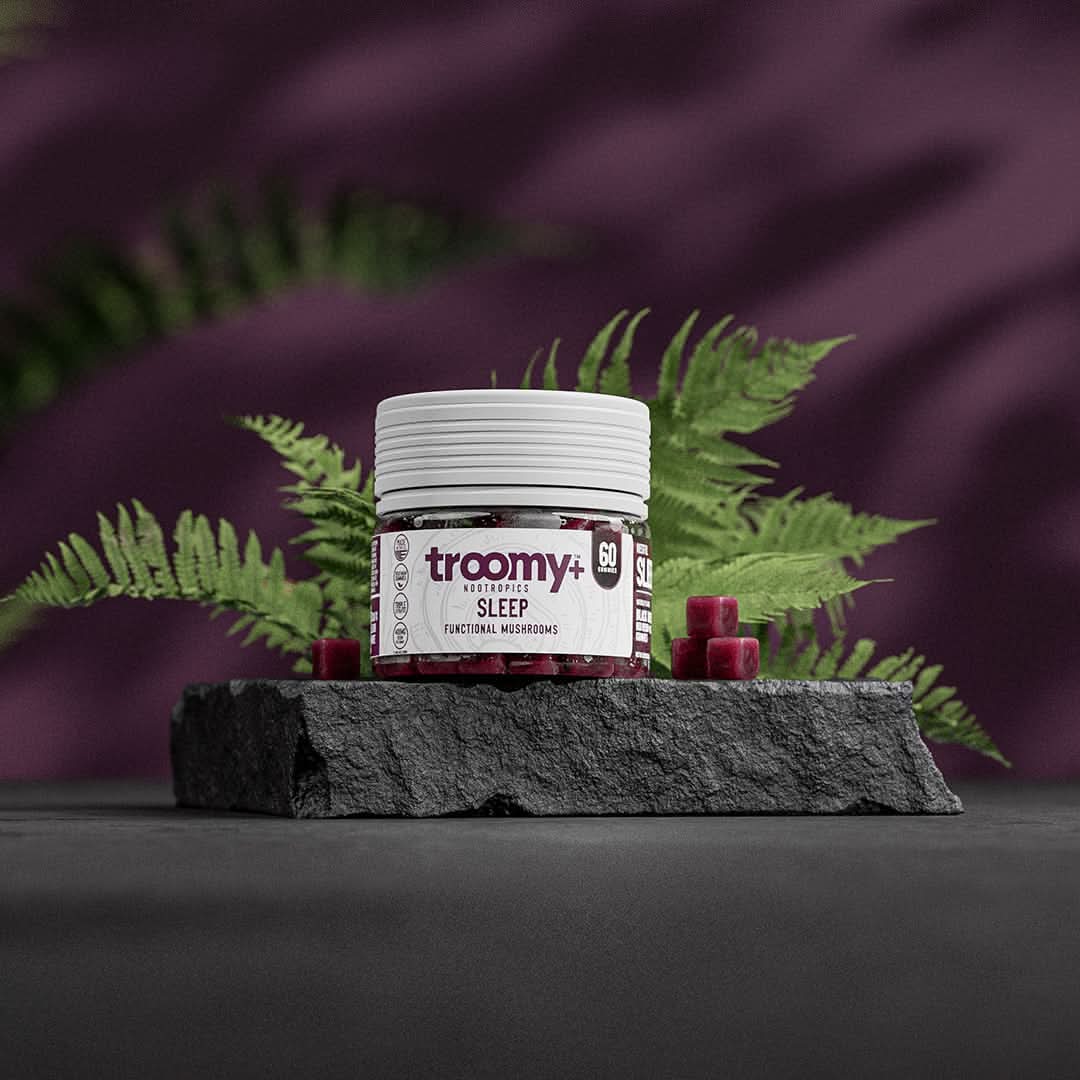
Troomy Sleep is built on exactly this pairing. The formula combines reishi mushroom extract with melatonin and three classic calming botanicals: passionflower, lemon balm, and chamomile. These herbs have long been used in teas and tinctures to support relaxation. Our deeper dive on how reishi mushroom and melatonin work together for sleep support breaks down the synergy in more detail.
If you are someone who has tried plain melatonin and found it underwhelming, the combination approach is often the missing piece. We cover that experience in why sleep gummies are the easiest way to fall asleep faster, which is a good companion piece for anyone in the early stages of figuring out what works for them.
What Are the Main Benefits of Taking Reishi for Sleep?
Drawing from the research above and from the long traditional use of reishi, the primary sleep-related benefits people look for fall into a handful of categories.
Does Reishi Help You Fall Asleep Faster?
This is one of the most consistently supported findings in the literature. Multiple animal studies have shown that reishi extract shortens sleep latency, meaning the time it takes to transition from lying down to actually sleeping. This effect is also one of the most commonly reported experiences among people who take reishi-based sleep supplements consistently. For a practical overview of what that looks like in a real routine, see our guide on supporting better sleep habits with reishi mushrooms.
Can Reishi Support Deeper, Longer Sleep?
Research suggests yes. The studies referenced above showed increases in total sleep time and, in some cases, specific increases in non-REM sleep, which is the restorative deep sleep phase. Reishi does not appear to simply extend light sleep. It appears to support the kind of sleep that actually recovers you. Our article on reishi mushrooms as a powerful sleep health support supplement expands on this.
Does Reishi Help With Nighttime Stress and Racing Thoughts?
This is where reishi really differentiates itself from other sleep aids. Because it is an adaptogen, its action on the stress response is part of why it supports sleep rather than a separate benefit. By helping modulate cortisol and supporting a calmer baseline, reishi can make it easier to wind down at the end of the day. We go deeper on that angle in our piece on reishi mushrooms in nootropics for stress relief.
Are There Morning Benefits to Reishi-Based Sleep Aids?
Yes, and this is one of the most under-discussed benefits. Because reishi supports natural sleep rather than sedating you, most users report feeling clearer in the morning rather than groggy. Better sleep also compounds into better daytime function: steadier mood, sharper focus, calmer reactions to stress, and better recovery from workouts. Reishi's broader adaptogen profile also supports immune function and cardiovascular health, which is why it is so often used as a daily tonic rather than an as-needed aid. More on that in 4 reasons why reishi should be your next superfood supplement.

How Should You Take Reishi for Sleep?
The research is clear on one thing: reishi rewards consistency. Animal studies showing the strongest effects used daily dosing over periods ranging from three days to 28 days. In practical terms, this means reishi is not a grab-it-when-you-need-it product. It is a nightly habit, and it is built for people who are willing to show up for 60 to 90 days to see what their body does with consistent support.
When Is the Best Time to Take Reishi Before Bed?
For sleep support specifically, the sweet spot is roughly 30 minutes before you want to be asleep. That gives the compounds a window to start working and gives your evening wind-down a ritual to anchor to. The two gummy serving of Troomy Sleep is designed to be taken at this point in the evening, ideally at the same time every night so your body can start to anticipate the signal.
How Long Does It Take for Reishi to Work?
Some people notice a faster wind-down within the first week. The deeper benefits (more consistent sleep architecture, steadier mornings, better daytime function) typically show up over four to eight weeks of consistent use. That aligns with both the 28-day Scientific Reports study window and with broader habit-formation research, which finds that new behaviors become automatic somewhere around the 60-day mark on average. Our guide on what you can expect from using Sleep gummies with Troomy lays out what to look for week by week.
Is It Okay to Take Reishi Every Night?
Reishi has a long history of daily use in traditional wellness systems and a strong modern safety profile in supplement form. It is not habit-forming and does not build a tolerance in the way some pharmaceutical sleep aids do. That said, as with any supplement, if you are pregnant, breastfeeding, taking medications, or managing a medical condition, check with your healthcare provider before starting.
How Does Reishi Compare to Other Natural Sleep Ingredients?
Reishi is one piece of a much larger ecosystem of natural sleep support. Here is how it compares to other options you have probably come across.
Reishi vs. Melatonin
Melatonin tells your body it is time for sleep. Reishi helps your body be ready when that signal arrives. They are complements, not substitutes. Many people who find melatonin alone underwhelming do much better with a combination approach.
Reishi vs. Chaga
Chaga is another powerful medicinal mushroom, but its primary benefits skew toward immunity and anti-inflammatory support rather than sleep. Reishi is the more targeted sleep option, though chaga can still play a supporting role in a broader wellness routine. Our comparison piece chaga vs reishi: which mushroom is right for you walks through the differences in detail.
Reishi vs. Ashwagandha
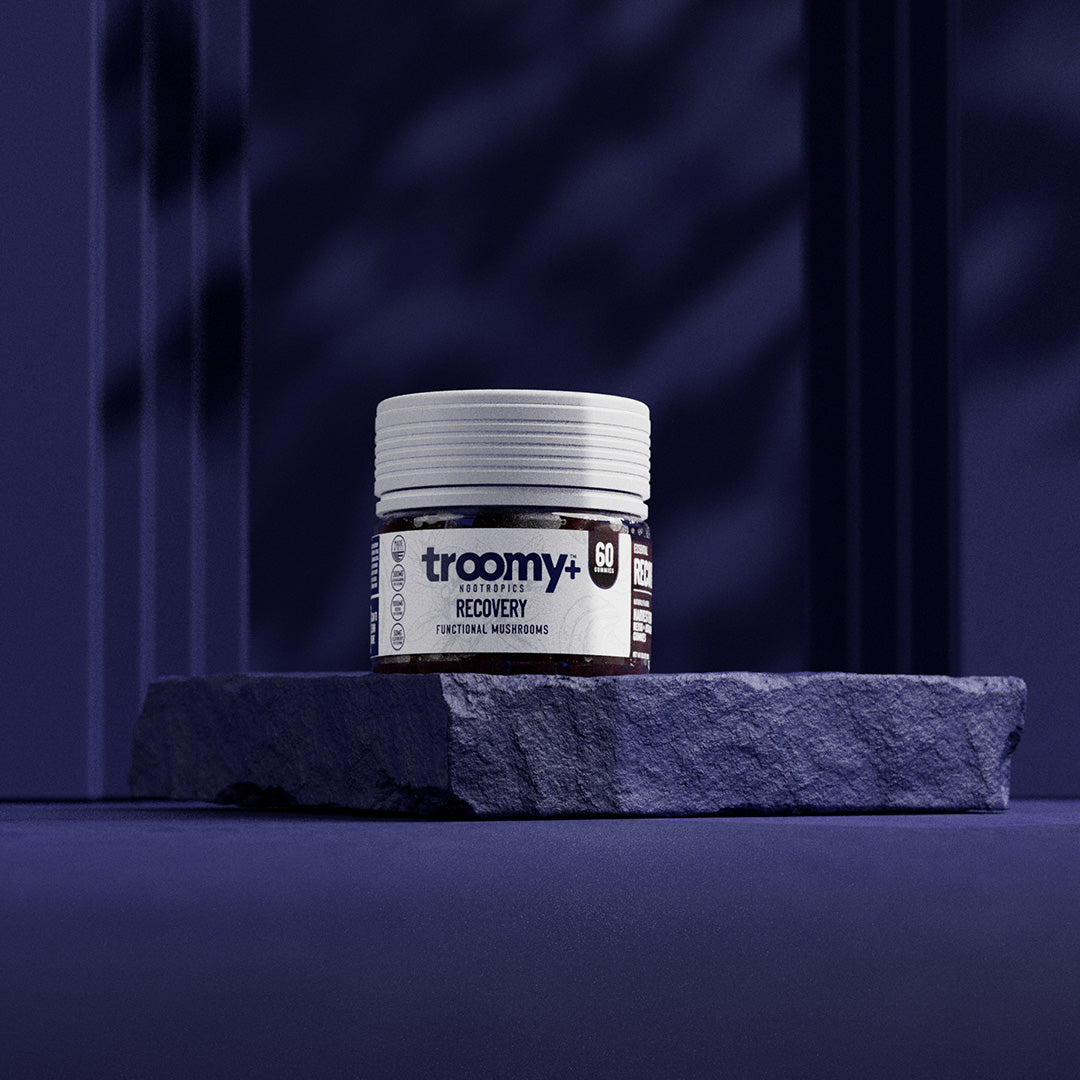
Both are adaptogens and both support the stress-sleep connection, but they approach it differently. Ashwagandha is more commonly used for daytime stress regulation and athletic recovery. Reishi is more commonly used as a nighttime calm and sleep support. Many people use them together in a multi-product routine. You can find ashwagandha in our Recovery ashwagandha plus reishi gummies, which pairs both mushrooms for a combined recovery and rest formula.
Reishi vs. Other Functional Mushrooms for Sleep
Reishi is the most researched and most widely used functional mushroom for sleep. Lion's mane is primarily cognitive, cordyceps is primarily energy, and tremella is primarily beauty and skin. For a broader look at the functional mushroom landscape in the context of rest, see what are the best functional mushrooms for sleep and our companion guide pairing great sleep habits with medicinal mushrooms for sleep health support.
How Does Reishi Fit Into a Full Daily Wellness Routine?
Sleep is the recovery phase of the 24-hour wellness cycle, which means reishi is often one piece of a broader daily routine. A typical daily stack might look like Focus lion's mane gummies in the morning for cognitive clarity, Boost cordyceps gummies for midday energy without caffeine, Calm reishi gummies during stressful afternoons, and Sleep reishi plus melatonin gummies 30 minutes before bed. For a walkthrough of how to actually build that out, see how to build a 24-hour wellness routine with mushroom gummies.
Another option is our Daily 14-mushroom blend gummies, which combines reishi, cordyceps, chaga, lion's mane, and ten other functional mushrooms into a single daytime base, with Sleep used at night as the dedicated bedtime layer. If you want curated combinations rather than picking products individually, the Troomy bundles collection has multi-product options built around specific goals.
For the broader Troomy approach to rest beyond just supplementation, our piece on functional mushrooms and the art of doing nothing makes a strong case for treating rest as a productive habit rather than a failure to be busy.
Where Can You Learn More About Reishi and Sleep?
This article is designed to be the starting point. If you want to go deeper on any specific angle, the Troomy sleep education library has dedicated pieces for each layer of the conversation.
For the fundamentals of reishi itself: what is reishi mushroom good for is the best entry point, and an introduction to functional mushrooms: Lion's Mane, Chaga, Reishi and more gives you the broader context.
For sleep-habit building: improving sleep habits with mushroom gummies, mushrooms for sleeping, and 4 key tips on how to sleep better each tackle a different angle of the nighttime routine.
For layered wellness: the sleep-skin connection: how reishi mushrooms support calm, healthy skin and can you take Lion's Mane and Reishi together? A beginner's stack guide are both worth a read.
Or, to explore every sleep-supportive product in one place, browse the full Troomy Bedtime collection.

Frequently Asked Questions
Is reishi mushroom safe to take every night for sleep?
Reishi has a long history of daily use in traditional wellness systems and a strong modern safety profile in supplement form. It is not habit-forming and is commonly used as a long-term nightly routine. As with any supplement, if you are pregnant, breastfeeding, taking medications, or managing a medical condition, check with your healthcare provider before adding it to your routine.
How long does it take to see results from reishi for sleep?
Some benefits show up in the first week, particularly a faster wind-down and easier time falling asleep. Deeper benefits, like more consistent sleep architecture and noticeably better mornings, typically show up over four to eight weeks of daily use. Research showing measurable sleep improvements has used dosing windows ranging from a few days to 28 days or more.
Does reishi make you feel groggy in the morning?
Most users report the opposite. Because reishi supports natural sleep rather than sedating you, mornings typically feel clearer than they do with many pharmaceutical or high-dose melatonin-based sleep aids. If you do feel groggy with any sleep aid, taking it slightly earlier in the evening or lowering the dose usually helps.
Can reishi be combined with melatonin?
Yes, and the combination is common in functional sleep products for exactly that reason. Reishi and melatonin address different parts of the sleep equation. Melatonin reinforces the timing signal, while reishi supports the underlying calm and stress response that make sleep easier to achieve. Troomy Sleep is built around this pairing.
What is the difference between reishi fruiting body and reishi mycelium?
Fruiting body is the above-ground mushroom itself, while mycelium is the root-like network beneath it. Both contain bioactive compounds, but their compositions differ. Quality reishi supplements often use full-spectrum extracts that include both, processed through triple-extraction methods to make the compounds bioavailable. All Troomy mushroom ingredients are triple extracted.
What does the research specifically show about reishi and sleep?
Peer-reviewed research has shown that reishi extract can shorten sleep latency, increase total sleep time and non-REM sleep time, interact with GABAergic pathways similar to those targeted by benzodiazepines but through natural compounds, and promote sleep through the gut-brain axis by increasing serotonin in the hypothalamus and supporting beneficial gut bacteria. These findings come from studies published in Scientific Reports, the Journal of Ethnopharmacology, and Pharmacology Biochemistry and Behavior, among others.
Is reishi better than prescription sleep medication?
This is not a question reishi is designed to answer, and no supplement should be presented as a substitute for medical care. Reishi is a natural adaptogen that supports sleep through multiple mild, complementary mechanisms. Prescription sleep medications are pharmaceutical tools used under medical supervision for specific conditions. If you are dealing with chronic insomnia or a diagnosed sleep disorder, work with a healthcare provider. Many people use reishi as part of a broader, lifestyle-first approach to sleep wellness.
Can I take reishi without melatonin?
Yes. Reishi has real sleep-supporting effects on its own, and many people take it as part of a daytime calm routine rather than specifically as a bedtime supplement. Troomy Calm, for example, uses reishi for daytime stress and calm support. For bedtime specifically, pairing it with melatonin provides more complete coverage, which is why Troomy Sleep includes both.
These statements have not been evaluated by the Food and Drug Administration. This product is not intended to diagnose, treat, cure, or prevent any disease.


