



Reishi and melatonin work differently for sleep, and that distinction matters more than most people realize. Melatonin is a hormone your body already produces on its own. It signals your brain that it is time to wind down, which is why it can feel like a light switch for drowsiness. Reishi mushroom operates at an entirely different level. It is an adaptogen, meaning it works upstream of sleep by helping your body regulate stress and cortisol so that falling asleep becomes more natural over time. Neither is a sleeping pill, and neither is a replacement for good sleep habits. But understanding how each one works is the key to deciding which belongs in your routine, or whether the answer might actually be both.
At Troomy, we built our Sleep gummies around the combination of reishi and melatonin because we believe in giving your body every natural advantage it has. Before we get into how those two work together, it helps to understand what each one is actually doing on its own.
What Is Reishi Mushroom and Why Does It Matter for Sleep?
Reishi (Ganoderma lucidum) has been used in traditional Eastern medicine for over 2,000 years, often called the "mushroom of immortality" for its wide range of wellness applications. Modern research has begun to explore what traditional practitioners observed for centuries: that reishi appears to have a calming, regulatory effect on the body that touches several systems at once, including the nervous system, immune function, and stress response.
The primary active compounds in reishi are beta-glucans and triterpenes. Beta-glucans are polysaccharides that support immune function. Triterpenes are the compounds most associated with reishi's adaptogenic and stress-modulating effects. Together, they contribute to what researchers describe as a bidirectional regulatory action, helping the body find balance rather than pushing it in one extreme direction.
When it comes to sleep specifically, reishi's value is not in sedation. It does not knock you out. What it does is help reduce the physiological arousal and mental tension that keep so many people from falling asleep in the first place. If your mind is still running at full speed when your head hits the pillow, that is a stress problem, not a melatonin deficiency.
How Does Reishi Support Sleep Differently Than Melatonin?
Melatonin is a direct signaling hormone. Your pineal gland releases it in response to darkness, telling your circadian rhythm that it is nighttime and sleep should follow. When melatonin levels are disrupted, whether from shift work, travel, excessive screen time, or irregular schedules, supplementing with melatonin can help recalibrate that signal. It is a targeted, time-specific tool.
Reishi works upstream of all of that. Rather than directly triggering a sleep signal, reishi supports the conditions under which quality sleep can happen naturally. Research suggests it may help regulate the hypothalamic-pituitary-adrenal (HPA) axis, which is the system that governs your cortisol response. When cortisol stays elevated into the evening, melatonin production is suppressed and sleep quality suffers regardless of how tired you feel. By helping to moderate that stress response, reishi creates a more favorable internal environment for sleep.
In practical terms: if your sleep problem is circadian misalignment, melatonin addresses it directly. If your sleep problem is chronic stress, an overactive mind, or a body that never fully comes down from the day, reishi may be the more relevant support. For many people, the combination of both within a single supplement addresses both lanes at once.
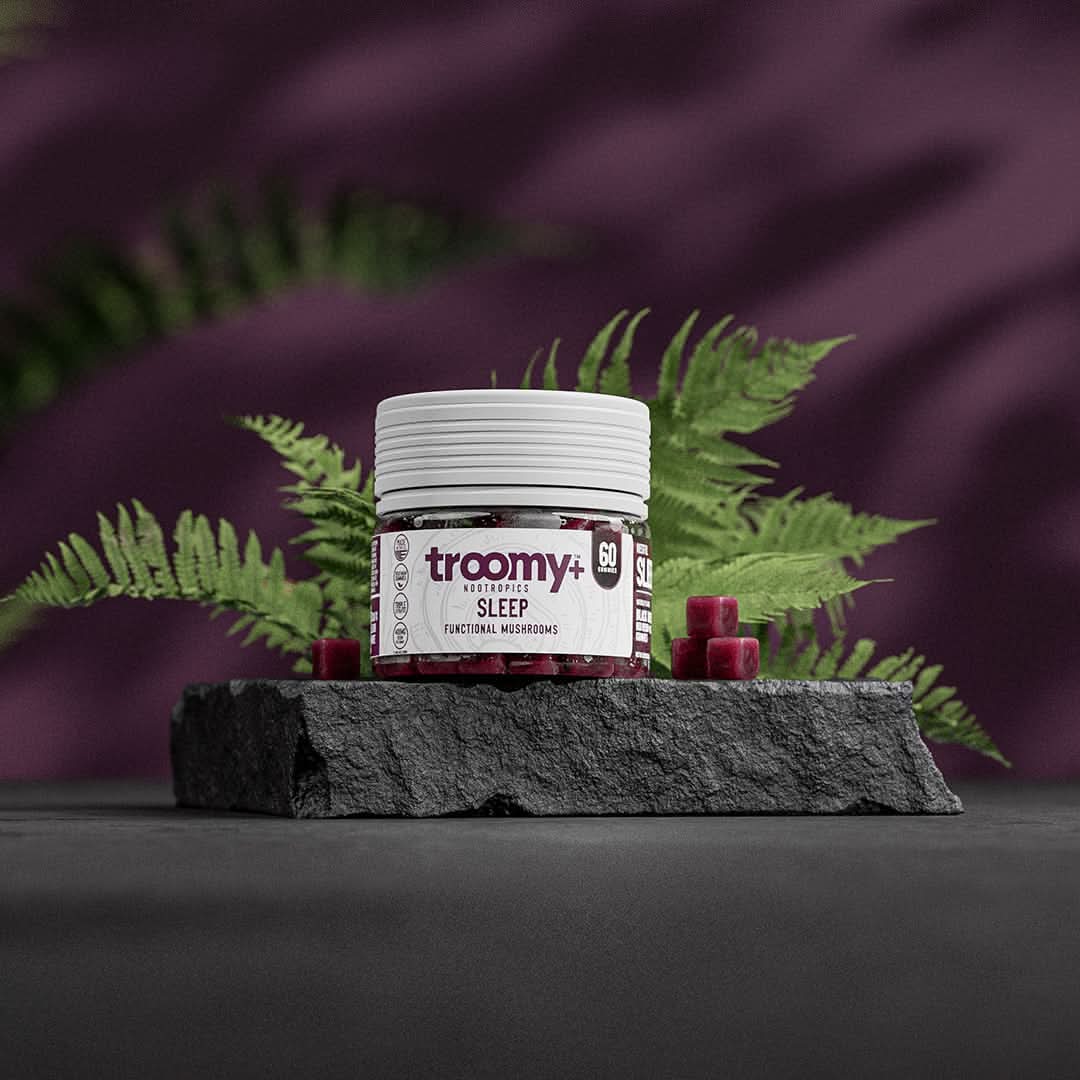
That is exactly the approach behind Troomy's Sleep Reishi Gummies, which pair reishi extract with melatonin in a low-sugar gummy format designed for nightly use. Instead of choosing one or the other, you get both working together in a single convenient serving.
What Factors Are Actually Holding Your Sleep Back?
Before any supplement can do its job, it helps to understand what is working against you. Sleep is not just about the hours you spend in bed. It is the sum of dozens of daily decisions that either set you up for rest or undermine it. A few of the most impactful factors include:
Diet plays a more significant role in sleep quality than most people credit. Eating high-protein, nutrient-balanced meals throughout the day gives your body the building blocks it needs for neurotransmitter production, including serotonin, which is a precursor to melatonin. Eating heavily right before bed, on the other hand, can disrupt the digestive calm your body needs to transition into sleep.
Stress and mental load are among the most common drivers of poor sleep in modern life. When your nervous system stays in a heightened state throughout the day, winding down at night becomes physiologically difficult. This is where reishi's adaptogenic properties become directly relevant, as supporting your stress response during the day has downstream effects on how easily your body transitions to rest at night.
Exercise is one of the most evidence-backed tools for improving sleep quality and duration. Regular physical activity helps regulate circadian rhythms, reduce anxiety, and promote the kind of physical tiredness that leads to deep, restorative sleep. The timing matters too: vigorous exercise too close to bedtime can be stimulating for some people, so finding your personal window is worth paying attention to.
Screen exposure in the hours before bed suppresses melatonin production by exposing your eyes to blue light wavelengths that mimic daylight. Even modest reductions in evening screen time can have a measurable effect on how quickly you fall asleep and how deeply you sleep.
Consistency is perhaps the most underestimated factor of all. Your body runs on a circadian clock, and that clock is calibrated by regularity. Going to bed and waking up at approximately the same time each day, even on weekends, reinforces your natural sleep-wake cycle in ways that no supplement can fully replace.
Can You Take Reishi and Melatonin Together?
Yes, and for many people the combination is more effective than either alone. Reishi and melatonin have complementary, not overlapping, mechanisms. Melatonin provides the direct sleep-onset signal. Reishi supports the stress regulation and nervous system calm that allows that signal to land properly. There is no known interaction between the two, and the combination is generally considered safe for healthy adults.
The more important question is dosage. Melatonin is commonly over-dosed in supplement form. Research consistently shows that low doses, often in the 0.5 to 1 mg range, can be as effective as the 5 to 10 mg doses found in many over-the-counter products, with fewer next-day effects. At Troomy, we formulate with this in mind, keeping doses within ranges that support your natural rhythms rather than overwhelming them.
If you are currently taking prescription sleep medications or managing a diagnosed sleep disorder, consult your healthcare provider before adding any new supplement to your routine. For general wellness support, reishi and melatonin together represent one of the most sensible natural sleep stacks available.
What Are the Key Benefits of Reishi Mushroom for Sleep?
The benefits most consistently associated with reishi in the context of sleep and rest include the following. Reishi has been linked to improvements in the ability to fall asleep and stay asleep through its calming effect on the nervous system. Users frequently report waking feeling more rested, which suggests an improvement in sleep quality, not just duration.
Reishi's influence on anxiety and stress reduction is one of its most researched properties. By moderating the stress response, it may reduce the racing thoughts and physical tension that are common barriers to sleep onset. This effect tends to build over time, which is why consistent daily use is recommended rather than taking it only on nights when sleep feels difficult.
Beyond sleep, reishi is associated with immune support through its beta-glucan content, overall antioxidative activity that supports cellular health, and a general sense of well-being that many users describe as feeling more even-keeled throughout the day. Better days naturally contribute to better nights.
It is worth noting that reishi, like all functional mushrooms, does not produce sedative effects or any hallucinogenic properties. It is safe for regular daily use and is generally well-tolerated by healthy adults. Minor side effects reported in some cases include digestive sensitivity, which is best addressed by taking it with food.
How Do You Start Using Reishi for Better Sleep?
The most straightforward way to add reishi to your routine is through a consistently dosed, daily supplement. Troomy's Sleep Reishi Gummies deliver triple-extracted reishi mushroom alongside melatonin in a black raspberry flavored gummy that actually tastes like something you want to eat at the end of the day. Made in the USA, vegetarian, and low in sugar, they are designed to fit into a real routine without the prep or mess of tea or powder.
The recommended starting point is one to two gummies taken approximately 30 minutes before bed. Consistency matters more than any single night's dose. Most people begin to notice a shift in how easily they wind down within the first week of regular use, with more meaningful changes in sleep quality developing over two to four weeks. Explore Troomy's Sleep Reishi Gummies to get started, or browse the full bedtime collection if you want to see the complete range of rest-focused options.
Pairing your supplement with good sleep hygiene gives it the best possible environment to work in. Keep a consistent bedtime. Reduce screen exposure in the hour before bed. Avoid large meals late in the evening. These habits do not replace what reishi does, but they work in the same direction, and together they create a compounding effect on your sleep quality over time.
Sleep is one of the highest-leverage investments you can make in your daily performance, your mood, and your long-term health. Reishi is one of the most thoughtful, well-researched tools available for supporting it naturally.
Frequently Asked Questions
Does reishi mushroom make you sleepy?
Reishi does not cause sedation the way a sleep aid or antihistamine would. It is an adaptogen, meaning it works by supporting the body's stress regulation rather than directly inducing drowsiness. Over time and with consistent use, many people find it easier to wind down at the end of the day and fall asleep more naturally. The effect is subtle and cumulative rather than immediate.
Can you take reishi and melatonin together?
Yes. Reishi and melatonin have complementary mechanisms and no known interaction. Melatonin provides a direct signal to the brain that it is time to sleep. Reishi supports the underlying stress and cortisol regulation that allows sleep to come naturally. Taking both together, as in Troomy's Sleep Reishi Gummies, addresses sleep from two different angles simultaneously.
How much reishi should I take for sleep?
Most functional mushroom products, including Troomy's, are formulated at doses in the range of 250 to 500 mg of triple-extracted reishi per serving, which aligns with what is commonly used in research on sleep and stress. One to two gummies approximately 30 minutes before bed is the standard starting recommendation. As with any supplement, give it several weeks of consistent use before adjusting.
How long does reishi take to work for sleep?
Reishi is not an overnight fix, and it is not designed to be. Most users begin to notice changes in how easily they wind down within the first one to two weeks of consistent daily use. More meaningful improvements in overall sleep quality, including feeling more rested in the morning and waking less frequently at night, typically develop over two to four weeks. The key is daily consistency rather than taking it only when sleep is a struggle.
Does reishi work like melatonin?
No. Reishi and melatonin work through entirely different mechanisms. Melatonin is a hormone that directly signals your brain to initiate sleep. Reishi is an adaptogenic mushroom that supports the body's stress response and nervous system regulation, creating better conditions for sleep without directly triggering it. They are complementary tools that address different parts of the sleep equation.
These statements have not been evaluated by the Food and Drug Administration. This product is not intended to diagnose, treat, cure, or prevent any disease.


