



Sleep is having a moment. Not the elusive, overworked kind that most of us know too well, but the real, restorative kind that people are actively searching for. And as more wellness-curious people look beyond conventional sleep aids, one ingredient keeps showing up: reishi mushroom.
Reishi has been used in traditional Eastern medicine for centuries, prized for its calming, adaptogenic properties. Today, it is finding a new audience among people who want to support healthy sleep without relying on hormones or habit-forming supplements. And of all the ways to take reishi, gummies have quickly become the most popular. They are easy, consistent, and actually enjoyable to take.
This guide breaks down everything you need to know about reishi mushroom gummies for sleep: what reishi does, how it compares to melatonin, and how to use it effectively as part of your nightly routine.
What Is Reishi Mushroom?
Reishi (Ganoderma lucidum) is a functional mushroom that has earned its reputation as one of the most revered adaptogens in the world. Known in traditional Chinese wellness as the "mushroom of immortality," reishi has been used for thousands of years to support the body's response to stress, promote calm, and support overall vitality.
What makes reishi particularly interesting for modern wellness is its classification as an adaptogen. Adaptogens are natural compounds that help the body maintain balance, particularly in response to stress. Rather than forcing a single outcome, they work with your system, nudging it toward equilibrium.
Reishi contains a range of bioactive compounds, including polysaccharides and triterpenes, which researchers have studied for their potential role in supporting immune function, reducing oxidative stress, and promoting relaxation. The triterpenes in particular are thought to contribute to reishi's calming, slightly bitter character, which is why raw reishi tea is notoriously hard to drink. Gummies solve that problem entirely.
Reishi Mushroom Benefits for Sleep
Reishi does not knock you out. That is an important distinction, and one worth making clearly. Instead, it works upstream of sleep, targeting the conditions that make falling and staying asleep difficult in the first place.
The most significant way reishi supports sleep is through its effect on stress and nervous system tension. Stress is one of the most common disruptors of sleep quality. When your body and mind are stuck in a heightened state, winding down becomes a battle. Reishi, as an adaptogen, helps regulate how your body responds to stress signals, supporting a more relaxed state without sedating you.
Many people who use reishi at night report feeling a subtle shift toward calm, the kind that makes it easier to slow down, stop scrolling, and actually let sleep come. It supports your nervous system in transitioning into a rest-ready state, which is different from forcing you into one.
This makes reishi particularly appealing for people who do not struggle to stay asleep once they are out but who find the transition into sleep difficult. It also appeals to those who want a daily, sustainable routine rather than something they only take when feeling desperate.
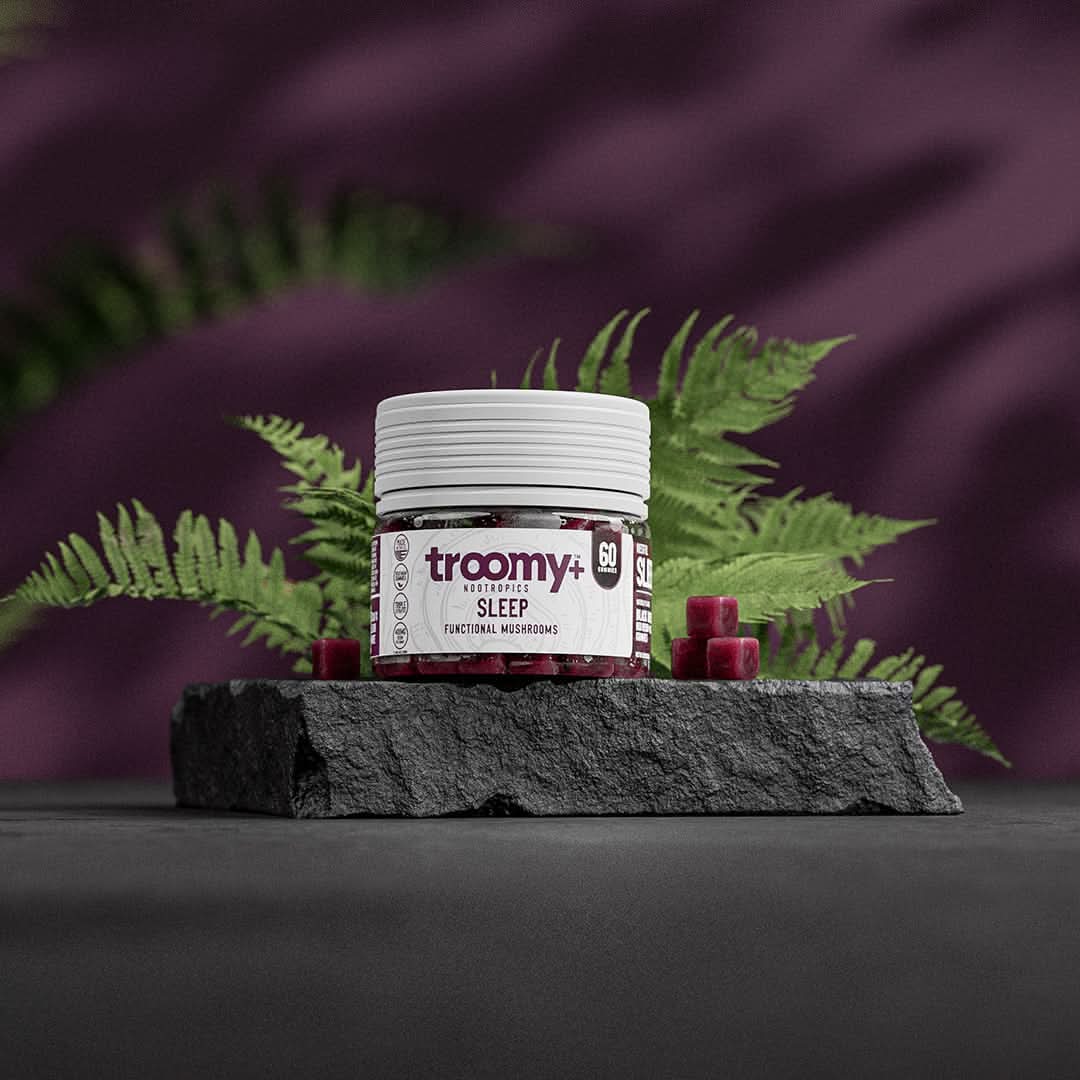
If you are looking for a place to start, Troomy's Sleep Reishi Gummies are formulated specifically for nighttime use, combining triple-extracted reishi with a clean, simple ingredient list. Made in the USA and vegetarian-friendly, they are built for the people who want natural sleep support that fits a real life.
Does Reishi Make You Sleepy?
This is one of the most common questions people have before trying reishi, and the honest answer is: not in the way melatonin does.
Reishi does not act as a sedative. You will not take a reishi gummy and feel your eyelids getting heavy within the hour. What reishi does is support your body's natural ability to relax and transition toward rest. It is a facilitator, not a force.
Think of it this way: if stress and mental tension are the walls between you and sleep, reishi helps lower those walls. It does not carry you over them. That subtlety is actually a feature for many users, who find that melatonin leaves them feeling groggy the next morning or causes vivid, disruptive dreams.
Reishi's effects tend to be gentler and build with consistent use. Most people find the biggest benefits after taking it regularly for a few weeks, as the adaptogenic compounds accumulate and help normalize the body's stress response over time. For night-to-night relief that feels immediate, the effects are subtler, but the experience of winding down becomes noticeably easier for many people.
Reishi vs Melatonin for Sleep: Which Is Right for You?
Both reishi and melatonin are popular tools for sleep support, but they work very differently. Understanding those differences helps you choose based on your actual needs rather than what is trending.
Melatonin is a hormone your body already produces in response to darkness. Supplemental melatonin signals to your brain that it is time to sleep by mimicking that hormonal cue. It can be effective for short-term issues like jet lag or a disrupted sleep schedule, but it is not designed for long-term, nightly use. Some users report that the body adapts to supplemental melatonin over time, requiring higher doses, and side effects like morning grogginess, headaches, and unusual dreams are commonly reported.
Reishi, by contrast, is not a hormone. It does not tell your body it is time to sleep in the same direct way. Instead, it supports the conditions that allow sleep to happen naturally, primarily by helping manage the stress and nervous system activation that keeps you awake. Because it works with your body's own systems rather than introducing a hormone, many people find it easier to use nightly without concerns about dependency or grogginess.
Who is melatonin best for? People dealing with acute sleep disruptions, time zone shifts, or those who need fast, reliable help on a short-term basis. Who is reishi best for? People looking for a sustainable, nightly sleep support ritual that supports relaxation and helps manage the stress that interferes with their rest.
For many people, the two do not have to be mutually exclusive. Some use melatonin for travel or occasional disruption and reishi as their everyday wind-down tool.
Explore Troomy's full bedtime collection for more sleep-focused options, including formulations with reishi and complementary ingredients built for nightly use.
Why Choose Reishi Mushroom Gummies for Sleep?
Reishi is available in many formats: raw powder, capsules, tinctures, teas, and now gummies. Each has its place, but gummies have pulled ahead for one simple reason: people actually use them consistently.
Consistency is the most important variable in any supplement routine, especially one built around adaptogens. Reishi works better when taken regularly, not sporadically. And the supplement that gets used every night is always the better supplement, regardless of format.
Gummies make this easy. They do not require measuring powder, brewing anything, or swallowing large capsules. You take one as part of your wind-down routine, the same way you might brush your teeth or dim your lights. That ritualistic simplicity is surprisingly powerful for habit formation.
Beyond convenience, gummies also offer consistent dosing. Every gummy contains the same amount of reishi extract, so you are not guessing about how much you are getting. For Troomy gummies specifically, the reishi is triple-extracted to maximize the bioavailability of the key compounds, meaning what you are getting is potent and bioavailable, not just a large number on the label.
Taste matters too. Raw reishi is bitter and earthy in a way that takes commitment to tolerate. Reishi gummies, done well, taste nothing like that. They make nightly supplementation something you might actually look forward to, which is not a small thing when you are trying to build a lasting habit.
What Do Reishi Gummies Taste Like?
If you have ever tried reishi in its raw or powdered form, your expectations might need an update. Raw reishi is intensely bitter, with a woody, earthy flavor profile that is genuinely challenging to enjoy. This is largely due to the triterpenes present in the mushroom, which are beneficial compounds but not exactly crowd-pleasers on the palate.
Reishi gummies are a different experience entirely. A well-made reishi gummy masks the bitterness almost entirely and offers a flavor profile that ranges from fruity to mildly tart, depending on the brand and formulation. Troomy gummies are made in natural flavors that actually taste good, which is part of why the daily habit sticks for people who have tried other formats and given up.
The texture is similar to most gummy supplements: soft, slightly chewy, and easy to take without water. If you can enjoy a standard gummy vitamin, you will have no trouble with reishi gummies.
This contrast with powder and tea is meaningful for sleep support specifically. A bitter tea right before bed is not exactly a calming ritual. A great-tasting gummy that takes ten seconds and tastes good? That is something you look forward to.
What to Look for in the Best Mushroom Gummies for Sleep
Not all mushroom gummies are created equal. As functional mushrooms have grown in popularity, the market has filled with products that use low-quality mushroom mycelium (the root-like structure), underdosed extracts, or mushroom powders with minimal active compound content. Here is what to look for when evaluating your options.
-
Extraction method: Look for triple-extracted or dual-extracted products. Extraction determines how much of the beneficial compounds (triterpenes and polysaccharides) are actually bioavailable. Many budget products skip this step and use raw mushroom powder, which has significantly less potency.
-
Fruiting body vs mycelium: The fruiting body of the mushroom, the part that looks like a mushroom, contains the highest concentration of beneficial compounds. Some products use grain-grown mycelium, which contains more starch and less active content. Look for fruiting body-based products or products that disclose what they are using.
-
Ingredient transparency: A clean label matters. Avoid products with unnecessary fillers, artificial colors, or additives that undercut the quality of the supplement.
-
USA-made and third-party tested: Manufacturing standards vary globally. USA-made products are subject to stricter quality controls. Third-party testing adds another layer of confidence.
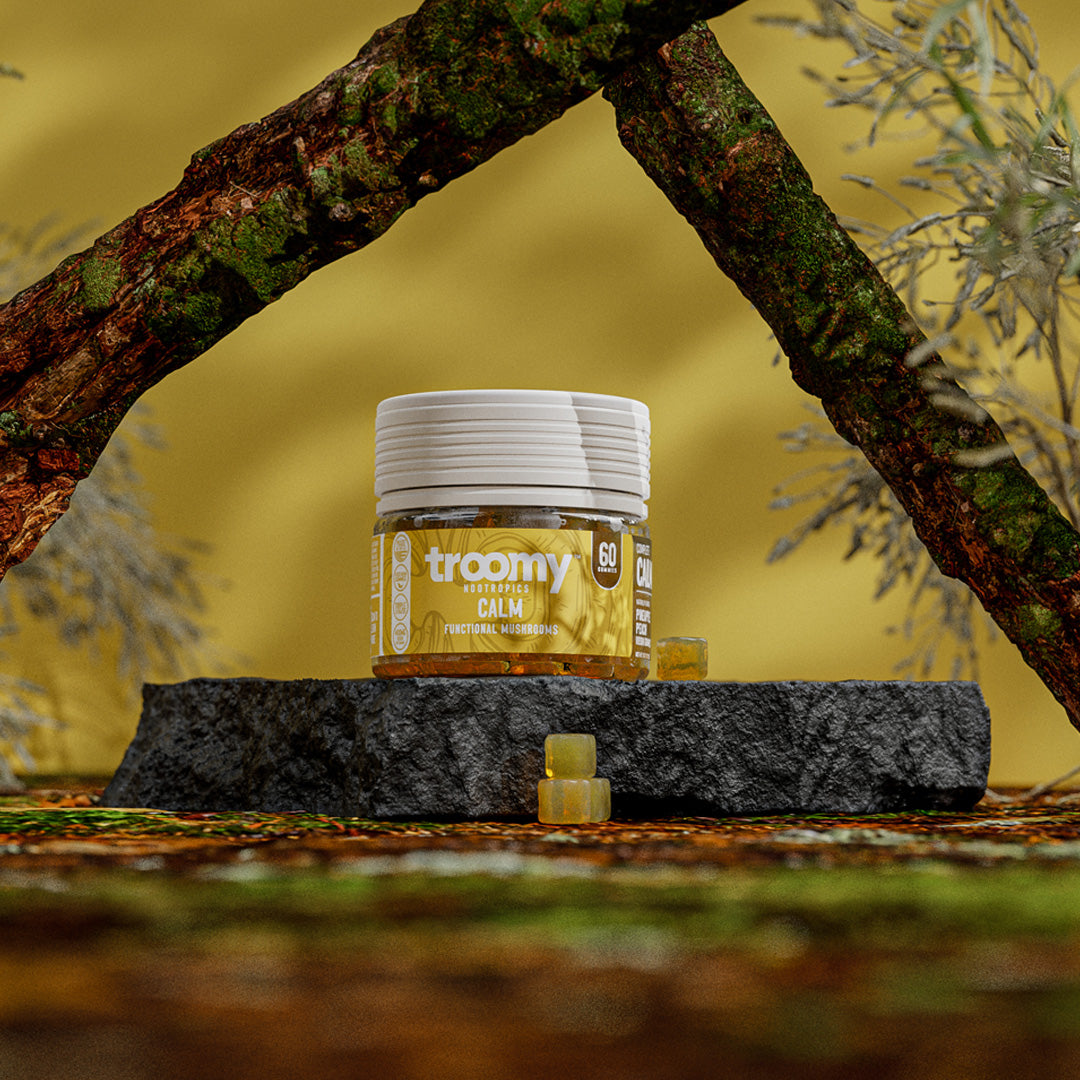
Troomy's Sleep Reishi Gummies and Calm Reishi Gummies check all of these boxes: triple-extracted, fruiting body reishi, made in the USA, vegetarian-friendly, and formulated without unnecessary additives. The Calm Reishi Gummies are a great daytime or early evening option, while the Sleep formula is designed specifically for bedtime use.
How to Use Reishi Gummies for Sleep
Using reishi gummies effectively is less about getting the perfect dose on the perfect night and more about building a reliable routine.
Timing: Most people find reishi gummies most effective when taken 30 to 60 minutes before bed. This allows the compounds to begin working as you move through your wind-down routine, whether that involves reading, stretching, or simply stepping away from screens.
Consistency: Adaptogens work best when taken regularly. Think of reishi less like an as-needed sleep aid and more like a nightly wellness practice. The benefits compound with time, and your body's stress response tends to become better regulated over weeks of consistent use.
Pairing with a wind-down ritual: Reishi gummies work well as an anchor for a larger bedtime routine. Dimming lights, reducing screen exposure, and taking your reishi at the same time each night all reinforce the body's cues that it is time to rest.
Starting point: If you are new to reishi, start with the suggested serving size on your product and give it at least two to three weeks before evaluating results. Many people expect immediate sedation and miss the subtler, cumulative benefits that reishi actually provides.
Frequently Asked Questions
Does reishi mushroom make you sleepy?
Reishi does not cause sedation the way melatonin or other sleep aids do. Instead, it supports relaxation by helping regulate your body's stress response. Most people describe the effect as a general sense of calm that makes it easier to fall asleep naturally, rather than feeling drowsy or forced into sleep.
How long does reishi take to work for sleep?
Some people notice a calming effect within the first few nights of use. However, reishi's full benefits for sleep and stress regulation tend to become more consistent and noticeable after two to four weeks of regular use. Adaptogens build in effect over time, so consistency matters more than any single dose.
Are reishi gummies better than capsules for sleep?
Both deliver the same active compounds, but gummies tend to win on consistency. They are easier and more enjoyable to take nightly, which makes habit formation more likely. If you have struggled to maintain a capsule or powder routine in the past, gummies are worth trying for that reason alone.
Can you take reishi every night?
Yes. Reishi is an adaptogen that is generally considered safe for daily use. Unlike melatonin, it is not a hormone and does not work by overriding your body's natural processes. That said, it is always a good idea to review any new supplement with a healthcare professional, especially if you have existing health conditions or take medications.
Reishi vs melatonin: which is better for sleep?
It depends on what you need. Melatonin is better suited for short-term sleep disruptions like jet lag or irregular schedules, where a hormonal cue is useful. Reishi is better suited for people who want a nightly, sustainable support tool that addresses the stress and tension underlying their sleep difficulty. For long-term, regular use, many people find reishi more aligned with their goals.
Are mushroom gummies safe for daily use?
Reishi gummies from a reputable brand are generally considered safe for daily use. Troomy's gummies are made in the USA, triple-extracted, and use vegetarian ingredients without unnecessary additives. As with any supplement, consult a healthcare professional if you are pregnant, nursing, or managing a health condition.
What is the difference between Calm and Sleep Reishi Gummies?
Troomy offers two reishi-based options with slightly different positioning. The Calm Reishi Gummies are designed for everyday stress and relaxation support and work well throughout the day or early evening. The Sleep Reishi Gummies are specifically formulated for bedtime use, making them the better choice if sleep support is your primary goal.
These statements have not been evaluated by the Food and Drug Administration. This product is not intended to diagnose, treat, cure, or prevent any disease.


