



Two functional mushrooms dominate wellness conversations right now: cordyceps and Lion's Mane. Both have serious research behind them. Both are available in convenient supplement formats. Both have grown dedicated followings among people who care about what they put in their bodies. But they are not interchangeable, and choosing between them, or deciding whether to take both, depends entirely on what you are actually trying to support.
This article breaks down the science, mechanisms, and real-world use cases for each mushroom so you can make an informed decision. Whether you are chasing better physical endurance, sharper mental clarity, or a combination of both, the answer is in the biology.
What Is the Difference Between Cordyceps and Lion's Mane?
The fundamental difference comes down to what each mushroom does in the body and which system it primarily supports.
Cordyceps is an energy and endurance mushroom. Its most well-documented mechanisms involve supporting cellular ATP production and oxygen utilization, which translates to more sustained physical energy, improved aerobic capacity, and reduced fatigue during demanding activity. It works at the mitochondrial level, supporting the body's own energy machinery rather than stimulating the nervous system the way caffeine does.
Lion's Mane is a cognitive support mushroom. Its most well-documented mechanisms involve stimulating the synthesis of Nerve Growth Factor, a protein that plays a central role in the growth, maintenance, and function of neurons. The result is support for focus, memory, and cognitive clarity over time.
Both are adaptogens with broad wellness applications. But when it comes to their most distinctive and evidence-supported benefits, they occupy two different lanes, and knowing which lane matters most to you is the starting point for every other decision.
Cordyceps: The Energy and Endurance Mushroom
Cordyceps militaris is the species used in modern supplements and the subject of the most clinically relevant human research in the energy and endurance category. A 2016 randomized controlled trial published in the Journal of Dietary Supplements found that three weeks of Cordyceps militaris supplementation improved VO2max and time to exhaustion in healthy adults (DOI: 10.1080/19390211.2016.1203386). VO2max is the gold standard measure of aerobic capacity, and improving it has direct implications for anyone who demands sustained physical effort, whether that means competitive athletics, demanding training, or simply getting through long, physically taxing days without fading.
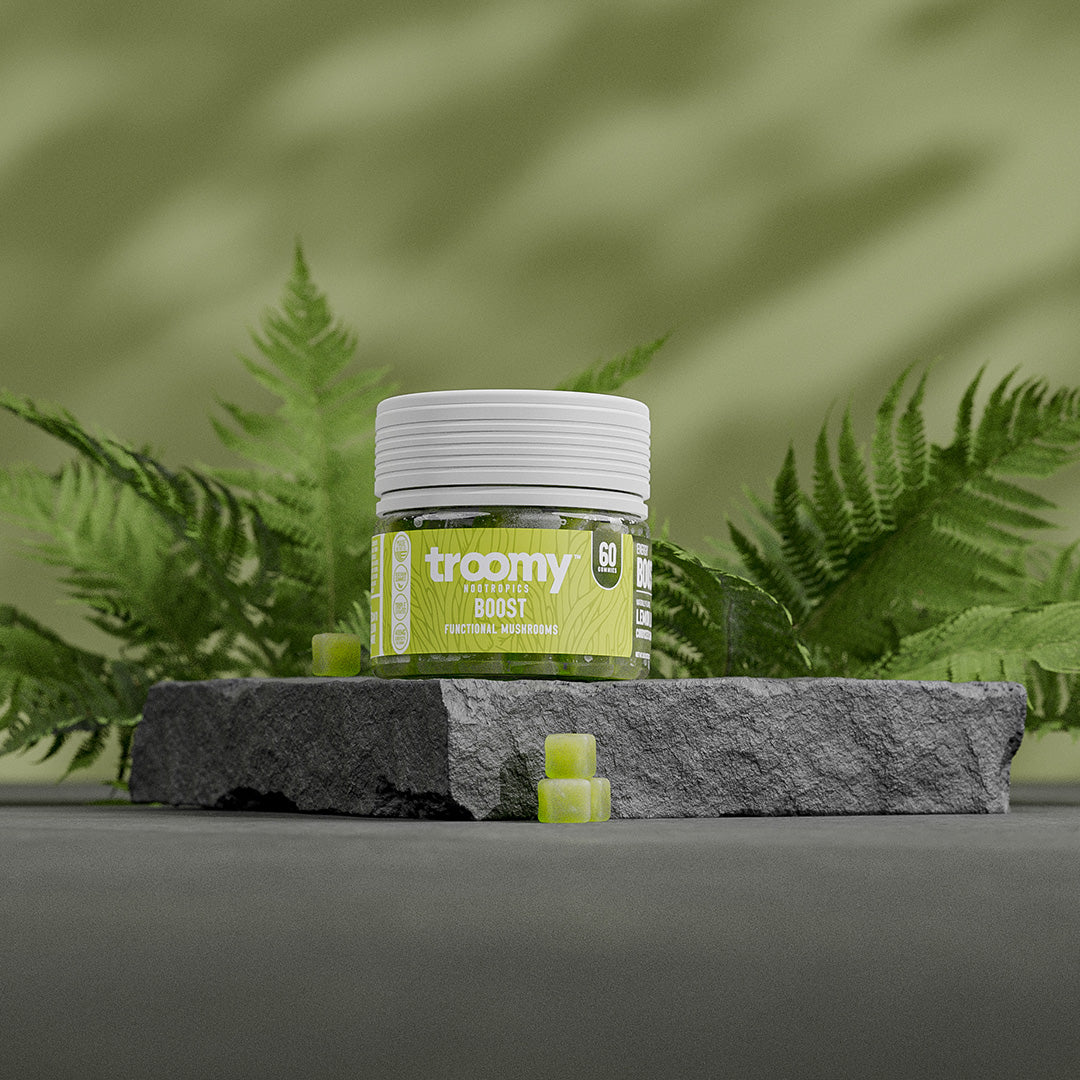
The mechanism behind these results centers on cordycepin, the primary bioactive compound in Cordyceps militaris. Research published in Cellular and Molecular Biology found that cordycepin supports cellular ATP production through mitochondrial pathways (DOI: 10.14715/cmb/2020.66.6.2). ATP is the body's primary energy currency, and supporting its production at the mitochondrial level means the energy cordyceps provides comes from within, not from borrowed stimulant activity. No crash. No jitter. No tolerance buildup. Troomy's Boost Cordyceps Gummies use triple-extracted Cordyceps militaris to deliver these same bioactive compounds in a consistent daily format.
A 2021 review in Phytotherapy Research further summarized the adaptogenic properties of Cordyceps militaris across multiple studies, highlighting cordycepin and polysaccharides as the key compounds responsible for supporting oxygen utilization and reducing exercise-induced fatigue markers (DOI: 10.1002/ptr.6911). The consistency of these findings across different study designs strengthens the case for cordyceps as a legitimate endurance and energy support tool.
Cordyceps also has a long history in Traditional Chinese and Tibetan medicine, where it was prescribed for fatigue, respiratory weakness, and recovery after illness. Modern supplementation uses Cordyceps militaris, the commercially cultivated species that contains the same primary bioactive compounds and forms the basis for the current clinical research.
Lion's Mane: The Focus and Cognitive Support Mushroom
Lion's Mane (Hericium erinaceus) has earned its reputation in the functional mushroom world through a well-established mechanism that sets it apart from every other mushroom in the category: its ability to stimulate Nerve Growth Factor synthesis. NGF is a neurotrophin, a class of proteins that regulate the survival, development, and maintenance of neurons. Supporting NGF production is not a vague wellness claim; it speaks directly to how neurons function and how cognitive ability is maintained over time.
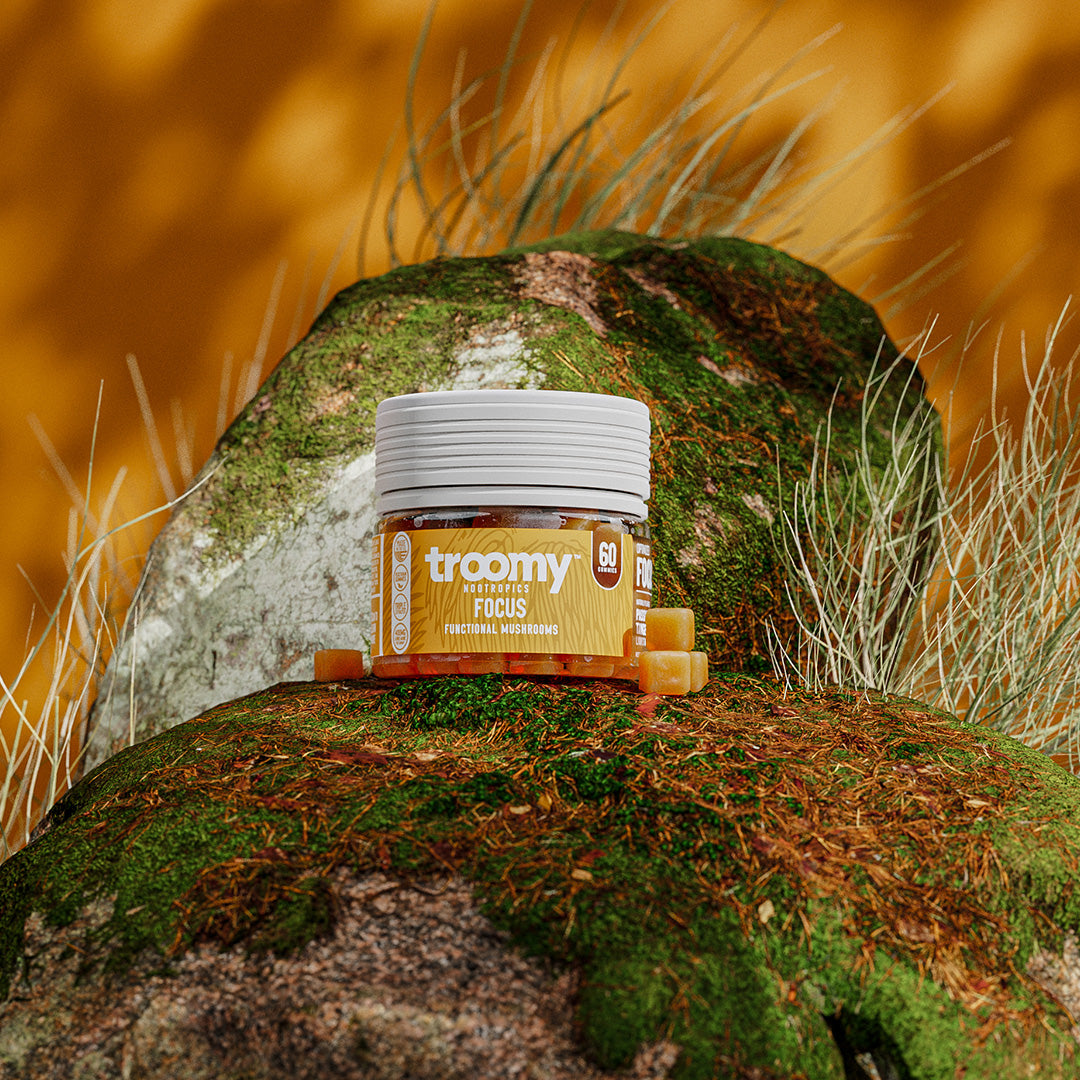
The compounds responsible are hericenones, found in the fruiting body, and erinacines, found in the mycelium. Both have been shown in research to cross the blood-brain barrier and stimulate NGF production. A landmark double-blind, placebo-controlled trial published in Phytotherapy Research in 2009 found that older adults with mild cognitive impairment who consumed Lion's Mane for 16 weeks showed significantly improved scores on cognitive function tests compared to the placebo group (DOI: 10.1002/ptr.2634). The improvement disappeared after supplementation stopped, reinforcing the idea that consistent, ongoing use is the model for Lion's Mane — which is exactly how Troomy's Focus Lion's Mane Gummies are designed to be taken, with triple-extracted Lion's Mane in a daily-habit format.
Beyond the cognitive impairment research, Lion's Mane has been examined for mood support, sustained concentration, and neuroprotective properties. For people who are healthy and performing cognitively demanding work, the NGF pathway still matters: neurons benefit from ongoing support regardless of age, and the cumulative effects of consistent Lion's Mane use are one of the more compelling stories in the functional mushroom category.
Should You Take Cordyceps or Lion's Mane?
The honest answer is that neither mushroom is universally better. They are optimized for different things, and the right choice depends on your primary wellness goal.
If your main objective is more physical energy, better endurance, improved exercise performance, or less fatigue during demanding days, cordyceps is the more directly applicable choice based on the available research. The human clinical data on VO2max improvement and the mechanistic evidence for mitochondrial ATP production support point clearly in the direction of cordyceps for anyone whose challenges are primarily physical.
If your main objective is sharper focus, better memory, improved cognitive clarity, or long-term support for brain health, Lion's Mane is the more directly applicable choice. The NGF pathway is fundamental to how neurons function, and the clinical evidence for cognitive support, particularly the 16-week human trial, is among the strongest in the functional mushroom category for cognitive applications.
The important thing to recognize is that these are not competing options for people with complex needs. Physical energy and cognitive performance are not the same thing, and most adults are asking something of both systems on any given day.
Can You Take Cordyceps and Lion's Mane Together?
Yes, and many people do for exactly this reason. The two mushrooms have entirely different mechanisms and address entirely different systems. Cordyceps operates primarily at the mitochondrial and cardiovascular level, supporting energy production and oxygen utilization. Lion's Mane operates primarily at the neurological level, supporting NGF synthesis and neuron function. There is no overlap, no competition for the same receptor sites, and no known negative interaction between them.
The combination has become a staple for people who need to perform at a high level across both physical and cognitive dimensions at the same time: athletes who require endurance during training and mental focus during competition, professionals with demanding workdays that require both physical presence and sustained concentration, and students facing long study sessions who cannot afford to sacrifice mental sharpness just because they are physically tired.
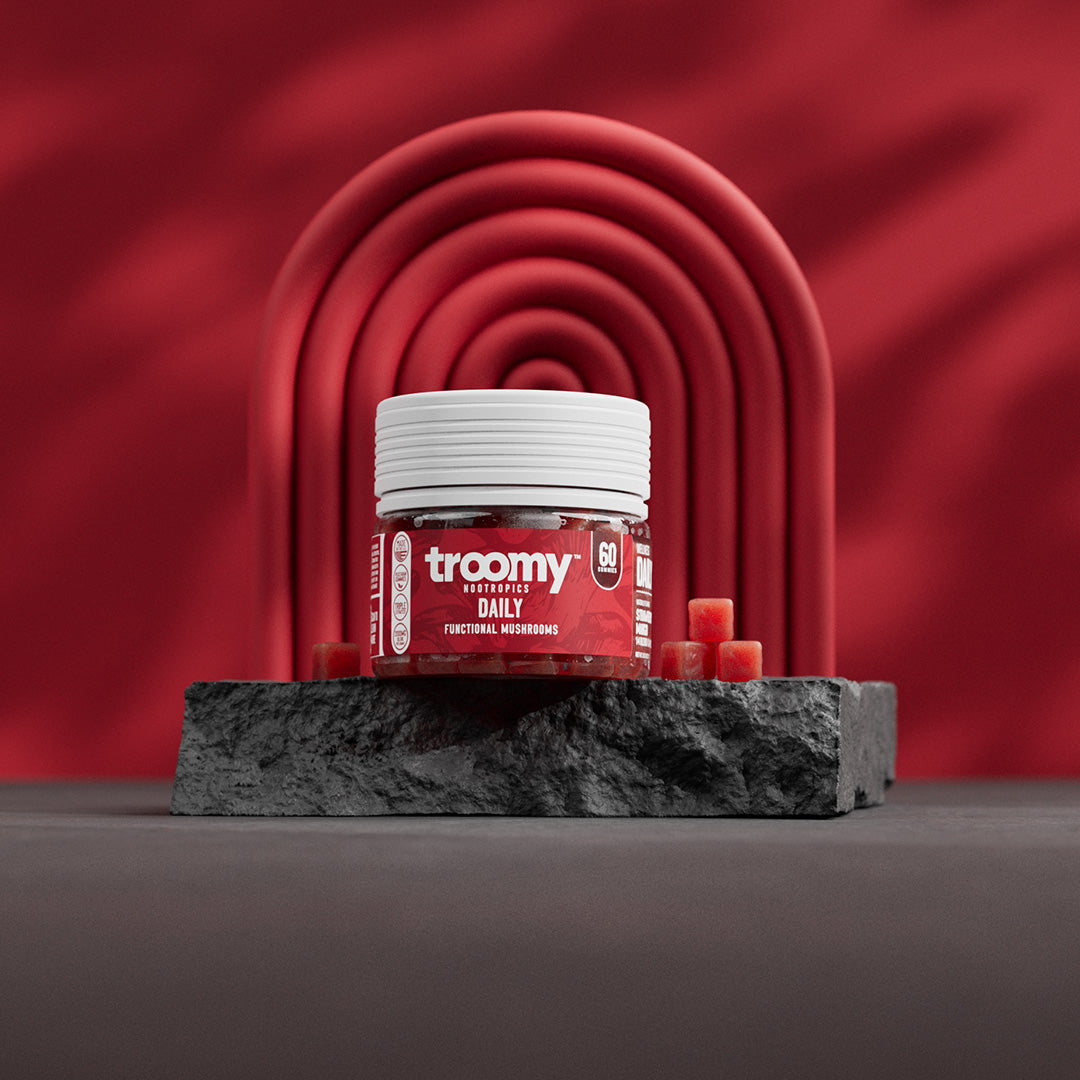
The logic is straightforward: cordyceps handles the energy and physical endurance side while Lion's Mane handles the focus and cognitive side. For people who want the broadest single-product coverage, Troomy's Daily 14 Mushroom Blend Gummies bring cordyceps, Lion's Mane, and 12 additional functional mushrooms into one daily serving, covering both performance dimensions simultaneously.
Which Mushroom Is Better for Energy?
For physical energy and endurance specifically, cordyceps has the stronger and more direct evidence base. The VO2max and time-to-exhaustion improvements documented in the 2016 Journal of Dietary Supplements RCT, combined with the mechanistic evidence for ATP production support at the mitochondrial level, make cordyceps the more targeted and evidence-grounded choice for anyone whose primary goal is energy.
Lion's Mane can support what you might call cognitive energy and mental stamina through its NGF-related benefits: better-functioning neurons contribute to clearer thinking and reduced mental fatigue under sustained cognitive load. But it does not have direct evidence for physical endurance or aerobic performance. For physical energy, cordyceps is the answer. For cognitive energy and mental staying power, Lion's Mane earns its place.
Which Mushroom Is Better for Focus?
Lion's Mane has the stronger and more direct evidence base for cognitive function, focus, and mental clarity. The NGF pathway through which it operates is fundamentally relevant to how neurons function, which directly affects concentration, memory formation, and the ability to sustain cognitive effort over time. The clinical evidence, including the 16-week double-blind trial, puts it in a different category from most supplements that use the word "focus" loosely.
Cordyceps supports focus indirectly: better cellular energy means more fuel available for mental function, and reduced physical fatigue means cognitive performance does not degrade as quickly under prolonged effort. For someone whose primary goal is cognitive performance, sustained concentration, and mental clarity as standalone objectives, Lion's Mane is the right choice — and for a deeper look at what cordyceps specifically brings to the table, the cordyceps mushroom benefits and uses guide covers the full picture.
Frequently Asked Questions
Should I take cordyceps or Lion's Mane?
It depends on your primary goal. For physical energy, endurance, and athletic performance, cordyceps is the more directly evidence-supported choice based on human clinical data. For cognitive function, focus, and mental clarity, Lion's Mane is the more appropriate choice based on its NGF mechanism and the clinical research on cognitive outcomes. Many people take both because the two mushrooms address different systems and complement each other without overlap.
Can you take cordyceps and Lion's Mane together?
Yes. The two mushrooms operate through completely different mechanisms and address different physiological systems. Cordyceps supports cellular energy production and aerobic endurance. Lion's Mane supports neuronal health and cognitive function through Nerve Growth Factor stimulation. There is no known negative interaction between them, and combining both is a well-established approach for people who want comprehensive coverage of energy and cognitive performance.
What is the difference between cordyceps and Lion's Mane?
Cordyceps supports cellular energy production and aerobic endurance through ATP synthesis and improved oxygen utilization, with the primary bioactive compound being cordycepin. Lion's Mane supports cognitive function and neuronal health through stimulation of Nerve Growth Factor, with the primary bioactive compounds being hericenones and erinacines. Both are adaptogens, but their most distinctive and evidence-supported benefits operate in two separate areas: physical performance for cordyceps and cognitive function for Lion's Mane.
Which mushroom is best for energy?
Cordyceps has the strongest and most direct evidence base for physical energy and endurance. Human clinical research has documented improvements in VO2max and time to exhaustion following consistent supplementation, and the mechanistic research points to mitochondrial ATP production as the underlying driver. Lion's Mane supports cognitive energy and mental stamina through its neurological benefits, but it is not the primary choice for physical energy or aerobic performance support.
These statements have not been evaluated by the Food and Drug Administration. This product is not intended to diagnose, treat, cure, or prevent any disease.


