



Dosage is one of the most common questions for anyone new to functional mushroom supplementation, and with cordyceps specifically it deserves a thorough answer. The right dose depends on what you are trying to achieve, whether you are using raw powder or a concentrated extract, and what the research actually used in clinical trials. This article covers the science-backed dosage range, how to interpret the numbers on a supplement label, timing considerations, and what realistic results look like at different dosage levels.
What Dosage of Cordyceps Do Clinical Studies Use?
The most frequently cited human clinical study on cordyceps and physical performance is a 2016 randomized controlled trial published in the Journal of Dietary Supplements, which used Cordyceps militaris extract and documented improvements in VO2max and time to exhaustion over a three-week supplementation period (DOI: 10.1080/19390211.2016.1203386). Most human research on cordyceps for energy and endurance has used dosages in the range of 1,000 to 3,000mg of extract per day.
A 2021 review in Phytotherapy Research that synthesized findings across multiple studies confirmed that cordyceps supports oxygen utilization, reduces fatigue biomarkers, and demonstrates adaptogenic properties, with the research base generally using dosages in this same range (DOI: 10.1002/ptr.6911).
It is important to note that optimal dosage for cordyceps is still being studied. Individual variation exists, and the research base, while growing, does not yet support definitive dose-response curves for every application.
Is 500mg of Cordyceps Enough?
At 500mg per day of raw powder, you are unlikely to be getting a meaningful dose of the active compounds based on the clinical research. At 500mg of a concentrated extract, particularly a 10:1 or higher extraction ratio, you may be closer to a functional dose. The critical variable is whether the ingredient is raw powder or a standardized extract, and if an extract, what the concentration ratio is.
Most quality cordyceps supplements on the market are moving toward doses of 750mg to 1,500mg of extract per serving precisely because the research supports this range. If you see a product with a very low dose claim, look carefully at whether it is an extract or raw powder.
Does Cordyceps Dosage Differ Between Powder and Extract?
Yes, significantly. This is one of the most important and most overlooked variables in cordyceps supplementation. Raw cordyceps mushroom powder contains the full range of compounds present in the mushroom, including cellulose and chitin from the fungal cell walls, which the human digestive tract cannot break down. The bioactive compounds, cordycepin and polysaccharides, are sequestered behind those cell walls and largely pass through unabsorbed.
Cordyceps extract has been processed to break down those cell walls and concentrate the active compounds. A 10:1 extract, for example, has concentrated 10 grams of raw mushroom into 1 gram of extract, resulting in a product with 10 times the active compound density of raw powder by weight. This means a 500mg dose of a 10:1 extract is roughly equivalent in active compound content to 5,000mg of raw powder.
When comparing products or evaluating dosage, always determine whether you are looking at raw powder or extract dosage. They are not interchangeable numbers.
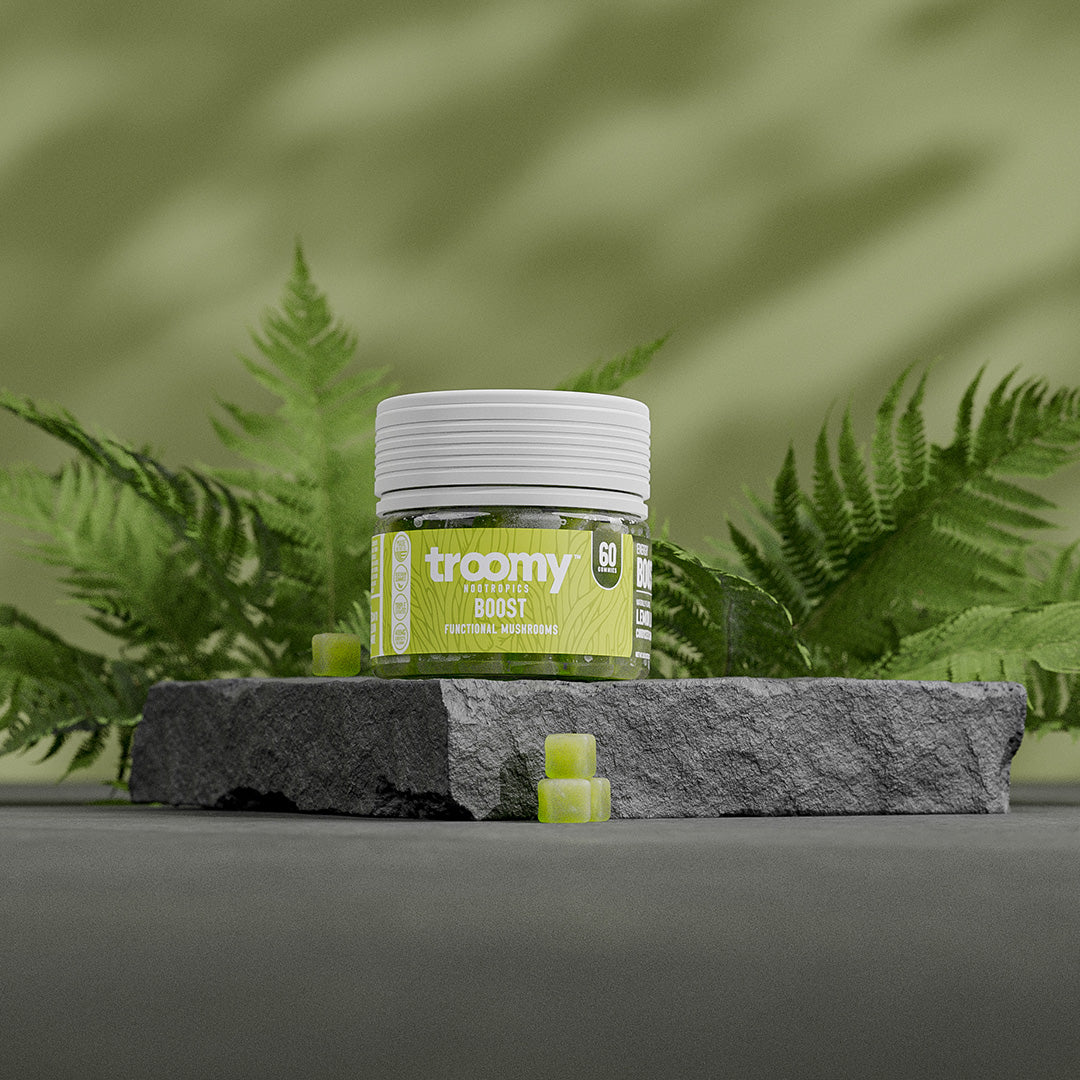
If you are looking for a cordyceps supplement that takes the powder-versus-extract guesswork off the table entirely, Troomy's Boost Cordyceps Gummies deliver a consistent, pre-measured serving of triple-extracted Cordyceps militaris in every piece, made in the USA, vegetarian, and formulated with natural flavors.
When Is the Best Time to Take Cordyceps?
The most common timing choices for cordyceps are morning, pre-exercise, and with food. None is definitively superior based on the research, and daily consistency is more important than any specific window. That said, each option aligns naturally with different goals.
Morning dosing integrates cordyceps into a daily supplement routine and supports the underlying cellular energy and adaptogenic benefits throughout the day. If your goal is general energy support and daily wellness, morning is the natural choice.
Pre-exercise dosing, taking cordyceps 30 to 60 minutes before training, aligns with the oxygen utilization and endurance mechanisms documented in the clinical research. If your primary interest is in the VO2max and time-to-exhaustion improvements, pre-workout dosing is a logical approach.
Taking cordyceps with food is a sensible option for anyone who experiences mild digestive sensitivity with supplements on an empty stomach. There is no evidence that food meaningfully affects the absorption of cordyceps extract, so pairing it with a meal is a straightforward way to build the habit without any tradeoff in efficacy.
Unlike caffeine and other stimulants, there is no concern about cordyceps interfering with sleep if taken at any point during the day. It does not stimulate the nervous system and carries no risk of sleep disruption.
How Long Does It Take for Cordyceps to Work?
Cordyceps is not an acute supplement and does not produce an immediate effect. The human research on endurance and VO2max improvement used three-week supplementation protocols. For the adaptogenic and immune benefits, the timeline is similar. Most people who take cordyceps consistently report beginning to notice improvements in sustained energy and endurance within two to four weeks. The full benefit profile tends to become apparent after four to six weeks of daily use.
This timeline underscores why consistency matters more than any other dosage variable. Taking a high dose sporadically is less effective than taking a moderate dose every single day, a principle covered in depth in the cordyceps mushroom benefits and how to take it guide alongside the full overview of what cordyceps does in the body.
Can You Take Too Much Cordyceps?
Cordyceps has a wide safety margin and no documented toxicity at supplement dosages. Human clinical trials have not identified adverse effects from standard supplementation. Taking more than the recommended serving on a given day is not known to cause harm, but it is also unlikely to deliver meaningfully better results, since the research-supported benefits develop through consistent daily use rather than high acute doses.
More is not necessarily better with cordyceps. Staying within the 1,000 to 3,000mg extract range that the research supports and focusing on daily consistency is the more evidence-aligned approach than taking excessive doses hoping for faster results.
Athletes looking at how dosage maps specifically to VO2max and endurance outcomes can find that breakdown in the cordyceps for athletes article, where the clinical timing and performance data are covered in detail. For daily supplementation built around the research-supported range, Troomy's Boost Cordyceps Gummies make it easy to stay consistent without measuring powders or converting ratios.
Cordyceps is one piece of a broader natural energy toolkit, and the Troomy Energy Collection brings together the full range of Troomy's energy-focused products for those who want to build a more complete daily routine.
Those who want to explore how cordyceps stacks with other functional ingredients will find several options within the Troomy Energy Collection designed to support sustained vitality without stimulants.
Frequently Asked Questions
How much cordyceps should I take?
Human clinical research on cordyceps and energy or performance typically uses dosages in the range of 1,000 to 3,000mg of extract per day. The appropriate dose depends on whether you are using raw powder or a concentrated extract. Consult the specific product's label for serving size guidance.
Is 500mg of cordyceps enough?
At 500mg of raw powder, probably not. At 500mg of a concentrated 10:1 or higher extract, you may be within a functional range. The key question is whether the ingredient is raw powder or a standardized extract. Look for this information on the supplement facts label.
Can you take too much cordyceps?
Cordyceps has not demonstrated toxicity at supplement dosages in human research. However, taking more than the research-supported range is unlikely to improve results and represents a waste of product. Consistent daily dosing within the 1,000 to 3,000mg extract range is the approach supported by the evidence.
When is the best time to take cordyceps?
Morning, pre-exercise, and with food are the three most practical timing choices. Morning dosing supports the adaptogenic and daily energy benefits. Pre-exercise dosing 30 to 60 minutes before activity aligns with the oxygen utilization and endurance research. Taking cordyceps with food is a good option for anyone sensitive to supplements on an empty stomach. Cordyceps does not disrupt sleep regardless of when it is taken.
How long does it take for cordyceps to work?
Most research protocols run three to four weeks before measuring outcomes. Many people notice improvements in sustained energy and endurance within two to three weeks of daily use. The full benefit profile tends to develop over four to six weeks of consistent supplementation.
These statements have not been evaluated by the Food and Drug Administration. This product is not intended to diagnose, treat, cure, or prevent any disease.


