



If you've ever opened ten tabs, started three tasks, and finished none of them, you already know what attention struggles feel like. For people living with ADHD, that feeling is not an occasional Tuesday. It's the baseline. And while medication and therapy are the foundation of clinical ADHD care, more people are asking a fair question: are there natural tools that can support focus alongside the standard playbook?
One name keeps coming up in that conversation: lion's mane. The shaggy white mushroom has become a favorite in the functional wellness world, especially for anyone who wants steadier focus without the jitters, crashes, or 3 p.m. fog. But hype is not the same as evidence, and ADHD is too important a topic to handwave. So let's get into it. What does the research actually say about lion's mane and ADHD, how does the mushroom work in the brain, and what does a smart, realistic routine look like?
Before we dig in, one quick frame. According to the CDC's 2024 Morbidity and Mortality Weekly Report, about 6 percent of U.S. adults (roughly 15.5 million people) have a current ADHD diagnosis, and roughly one half were diagnosed as adults. That's a lot of people looking for tools that fit real life. Functional mushrooms aren't a treatment. They're a supportive ingredient. With that frame set, let's get into the science.
What is lion's mane and why is it called the focus mushroom?
Lion's mane (Hericium erinaceus) is a functional mushroom with a distinctive cascading white appearance that looks a little like a sea anemone. It's been used in traditional East Asian wellness practices for centuries, and it has gained traction in the modern wellness world because of one big reason: its potential to support brain and nerve health.

What makes lion's mane stand out are two families of compounds it produces: hericenones (found in the fruiting body) and erinacines (found in the mycelium). Both have been studied for their ability to stimulate Nerve Growth Factor, or NGF, a protein that supports the growth, maintenance, and survival of neurons. Researchers point to NGF as one of the most interesting reasons lion's mane keeps showing up in cognitive support conversations.
If you want to go deeper on the basics, our guide to the proven health benefits of the lion's mane mushroom walks through the full picture. The short version: lion's mane is the mushroom people reach for when they want clearer thinking, better memory support, and steady focus.
How does the ADHD brain actually work?
To talk honestly about whether lion's mane can help with ADHD, it helps to understand what's going on under the hood. ADHD is a neurodevelopmental condition, not a focus shortage you can willpower your way out of. It involves real differences in how the brain handles attention, impulse control, and executive function (the mental skills that help you plan, prioritize, and follow through).
Two brain chemicals get most of the attention in ADHD research: dopamine and norepinephrine. These neurotransmitters help your brain regulate motivation, task switching, and the ability to stay locked into something that isn't immediately rewarding. People with ADHD tend to have differences in how these chemicals signal in regions like the prefrontal cortex (the brain's command center for planning and self-regulation).
That's why stimulant medications, which boost dopamine and norepinephrine activity, are the standard first-line treatment. They are evidence-based and, for many people, life-changing. But they aren't a fit for everyone, and even people who do well on medication often build a broader toolkit around it: therapy, sleep hygiene, exercise, nutrition, and sometimes supplements that support general cognitive function. That last category is where functional mushrooms enter the chat.

What does the science say about lion's mane and ADHD?
Let's be upfront. There are currently no large-scale, placebo-controlled human clinical trials studying lion's mane specifically for ADHD. Anyone who tells you otherwise is overstating the research. What we do have is a growing body of evidence on lion's mane and general cognitive function, plus animal studies that explore mechanisms relevant to attention and executive function.
Here's a useful summary of what the research currently supports:
In a 2023 pilot study published in Nutrients, researchers gave healthy young adults 1.8 grams of lion's mane and tested their performance on cognitive tasks. After a single dose, participants completed the Stroop task (a classic measure of processing speed and attentional control) significantly faster than the placebo group. After 28 days, there was also a trend toward reduced subjective stress. The sample was small, so the authors urged caution, but the direction of the findings is interesting for anyone curious about focus support.
Earlier work in older adults with mild cognitive impairment, including a widely cited Mori et al. study, showed improved scores on cognitive function scales after 16 weeks of lion's mane supplementation. Animal research, including studies summarized in a 2023 review in the International Journal of Molecular Sciences, suggests lion's mane extracts may support neurogenesis (the growth of new neurons) and reduce markers of stress and depressive-like behavior, both of which can indirectly affect attention.
So what does this mean for ADHD? It means lion's mane is best understood as a general cognitive support ingredient, not an ADHD treatment. It may help create better conditions for focus, especially when paired with the rest of a healthy routine, but it's not a swap for clinical care. If you have an ADHD diagnosis or suspect you might, the right move is to work with a healthcare provider on a complete plan and treat any supplement as one piece of a bigger picture.
For a broader look at how mushrooms fit into the ADHD support conversation, we have a companion article on nootropics for ADHD that covers the wider category, and a more focused piece on lion's mane as a natural supplement for ADHD support if you want to keep going.
How does lion's mane work in the brain?
The mechanism is what makes lion's mane interesting to neuroscientists. Most cognitive supplements work by gently nudging neurotransmitter activity. Lion's mane is doing something a little different. It's interacting with the systems that maintain and grow your neurons over time.
The hericenones and erinacines in lion's mane have been shown to stimulate the production of NGF and Brain-Derived Neurotrophic Factor (BDNF), two proteins your brain uses to keep neurons healthy and to form new connections. Think of NGF as fertilizer for your brain cells. The more support those cells have, the better your brain can adapt, learn, and recover from everyday stress.
There's also a calming side to this story. Lion's mane appears to support a balanced stress response, and that matters more than people realize when it comes to attention. Stress and focus are deeply linked. When you're anxious or burned out, your brain has fewer resources to put toward executive function. So even if lion's mane isn't directly cranking up dopamine like a stimulant, it may help by lowering the noise that gets in the way of focus.
If brain fog is one of your biggest struggles, our deep dive on how to get rid of brain fog with lion's mane mushrooms goes further into the mechanism and what to expect.

What can you actually expect to feel?
This is where expectations matter. Lion's mane is not caffeine. It doesn't kick in 20 minutes after you take it and turn your brain into a search engine. The effects tend to be subtle and stack up with consistent use. People often describe it as feeling a little more present, a little less foggy, and a little better able to follow a train of thought without veering off into Reddit, the fridge, or whatever else.
Most people who add lion's mane to their routine notice the most meaningful changes after about two to four weeks of daily use. Some feel a gentle lift earlier, especially in mental clarity. Others find the bigger shift is in how they feel at the end of a long workday, with less of that drained, scrambled-brain feeling that usually shows up around 4 p.m.
If you want a more detailed walk-through, we cover this in what happens to your body when you try lion's mane mushrooms.
How can Troomy's Focus gummies fit into a routine for ADHD-style attention struggles?
If you've decided to try lion's mane, you have a few format choices: powders, tinctures, capsules, or gummies. We're biased, but we built Troomy around gummies for a reason. The number one reason supplements stop working is that people stop taking them. A daily routine you actually enjoy is the routine that delivers results.
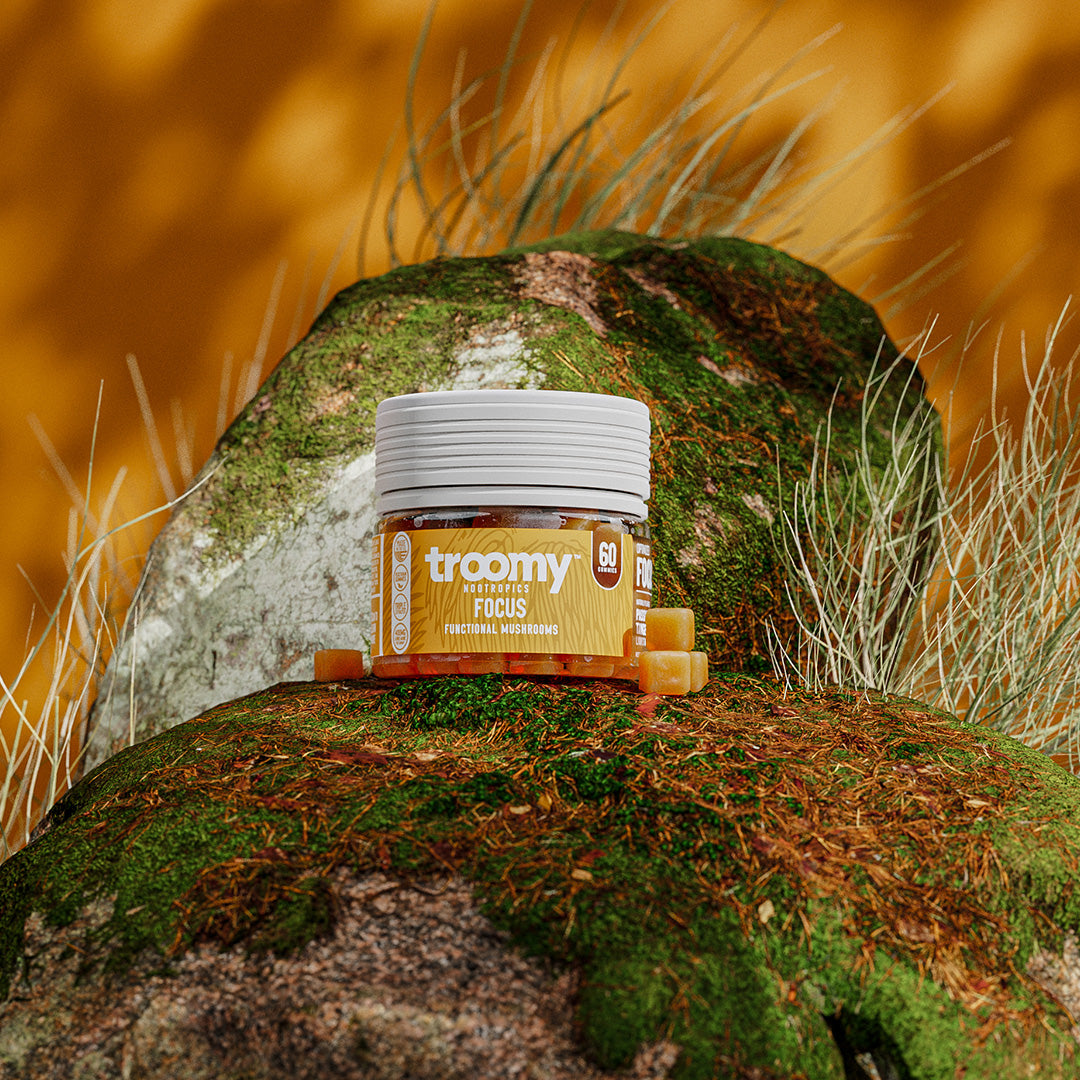
Our Focus lion's mane mushroom gummies deliver 800mg of organic, triple-extracted lion's mane per serving in a passionfruit-tangerine gummy that doesn't taste like the forest floor. Triple extraction matters because it captures the full spectrum of beneficial compounds (water-soluble, alcohol-soluble, and beyond), which not every brand bothers to do. Each bottle gives you 60 gummies, which is roughly a 30-day supply at two per day, so it's easy to build a consistent rhythm.
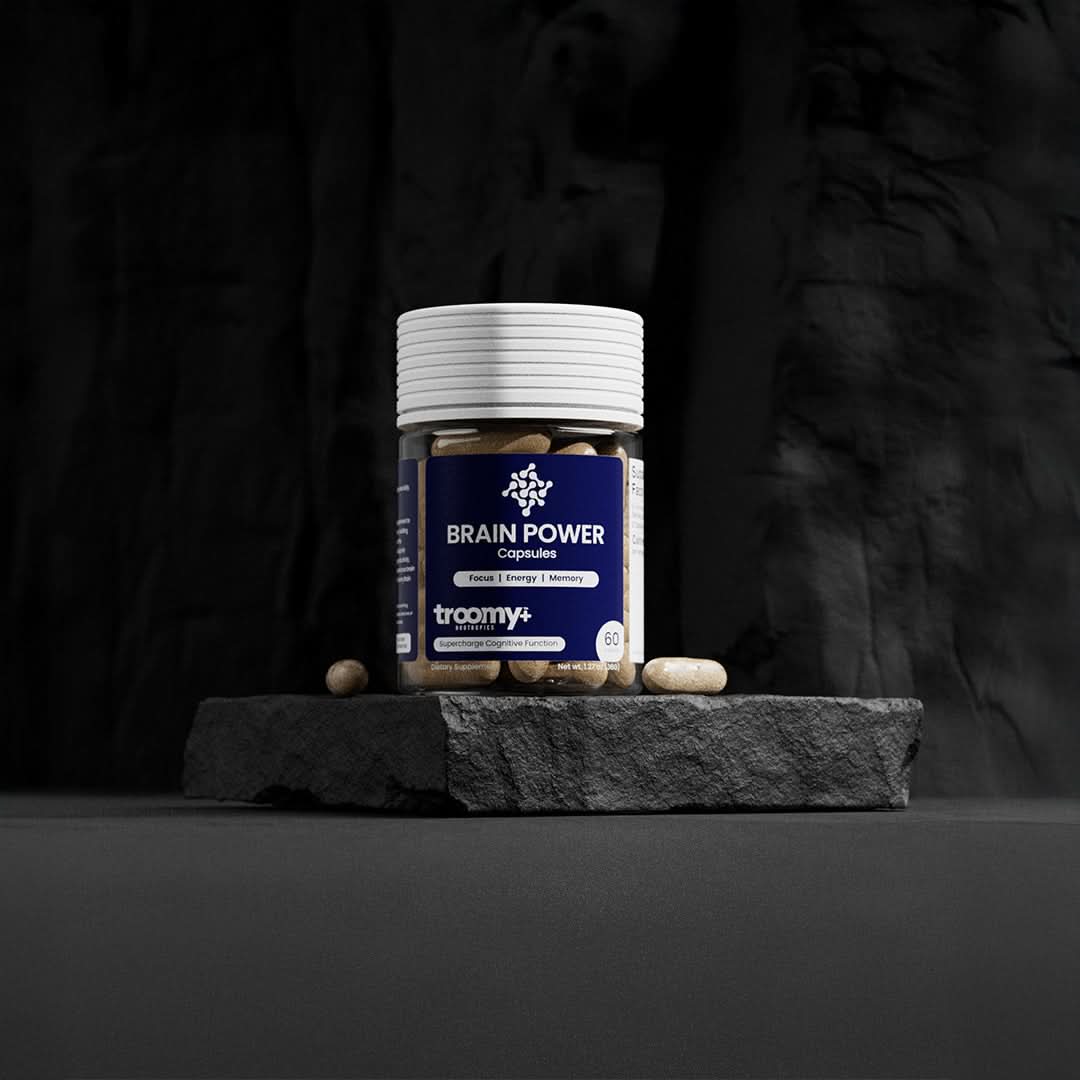
Focus is caffeine-free, which is a feature, not a bug. A lot of people with ADHD already have a complicated relationship with stimulants and energy drinks. Lion's mane lets you support attention without piling more caffeine onto your nervous system. If you do want a little gentle energy with your focus support, we also offer Brain Power cognitive function capsules, which pair lion's mane with L-theanine, citicoline, cordyceps, and a small amount of natural caffeine from green tea (about the equivalent of a cup of coffee). It's designed for long focus sessions where you want sustained clarity without the jitters.
You can also browse our full brain health collection if you want to see how Focus fits alongside our other cognitive support products.
Should you stack lion's mane with other functional mushrooms?
Stacking just means combining more than one functional mushroom or nootropic to target different parts of your day. It's a common move in the wellness world, and for people with ADHD, it can be especially useful because attention struggles rarely show up alone. Sleep issues, anxiety, restlessness, and energy crashes tend to travel in packs.
Here are a few combinations that pair well with lion's mane, depending on what else you're navigating:
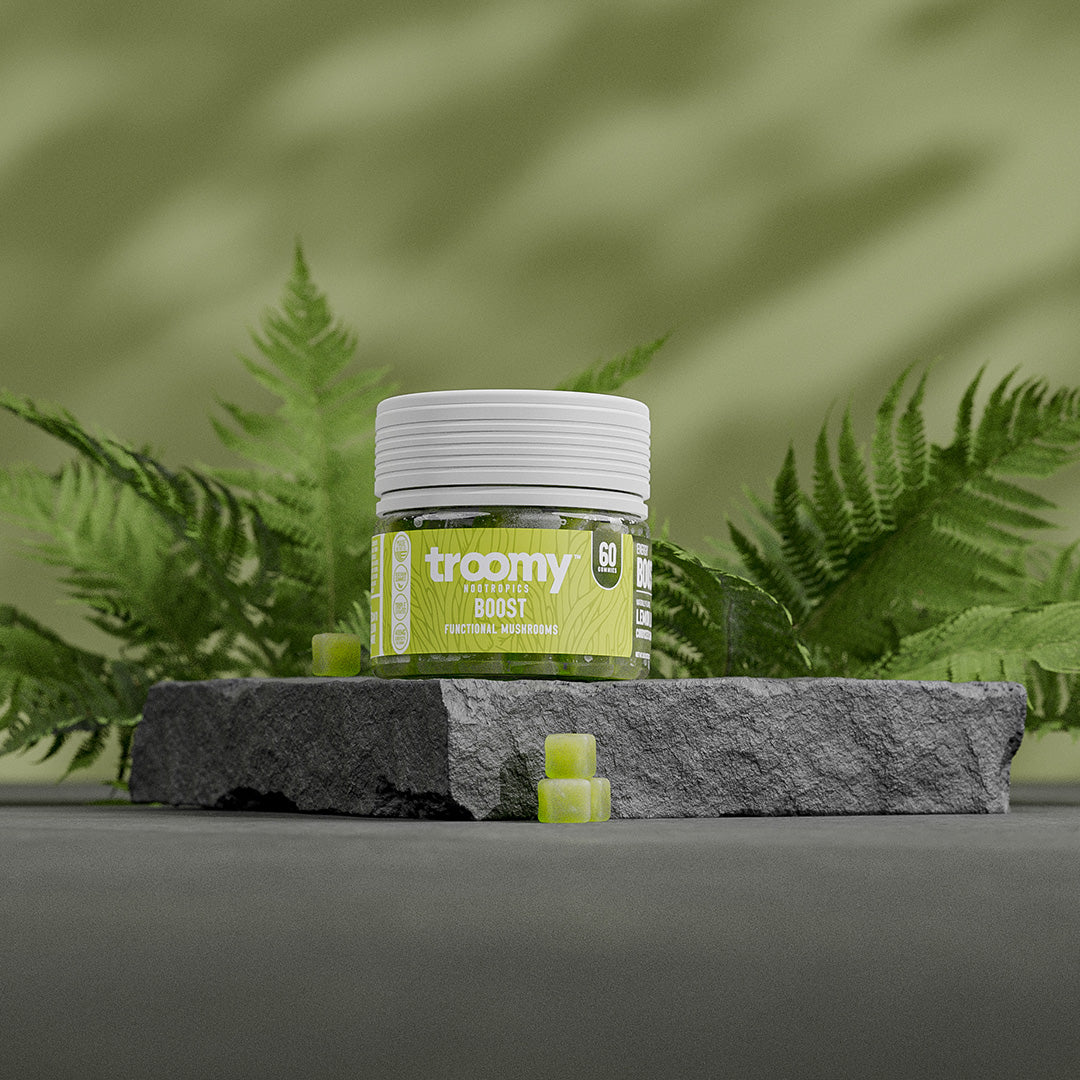
Lion's mane plus cordyceps. If low energy or motivation is part of your struggle, cordyceps is the functional mushroom known for supporting natural stamina and physical performance without caffeine. Our Boost cordyceps gummies stack naturally with Focus for a morning energy and clarity combo.
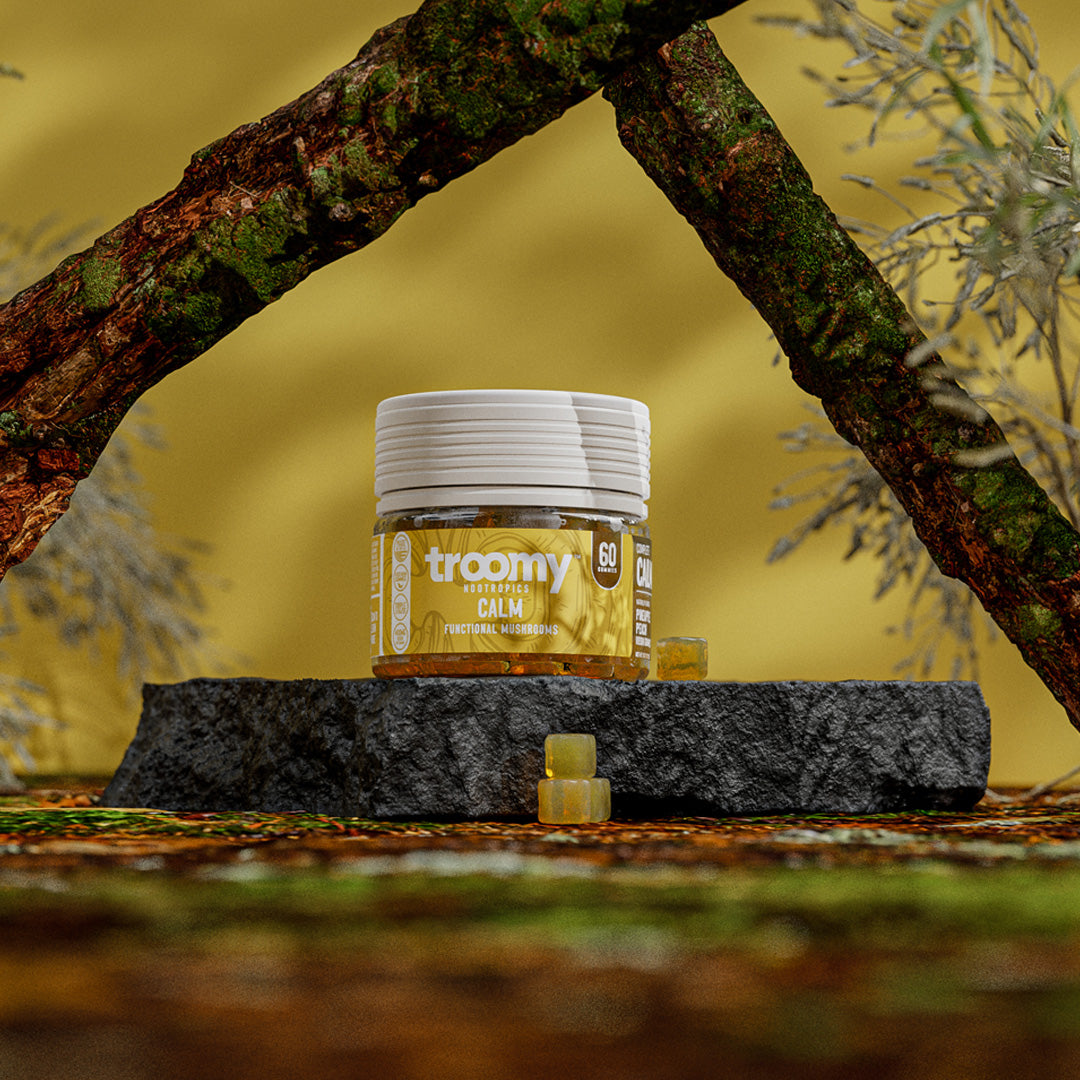
Lion's mane plus reishi. If your attention struggles are tangled up with stress or an overactive mind, reishi is the calm-supporting counterpart. We cover this stack in detail in our guide on taking lion's mane and reishi together. Our Calm reishi gummies pair well with Focus when stress is part of what's making it hard to concentrate.
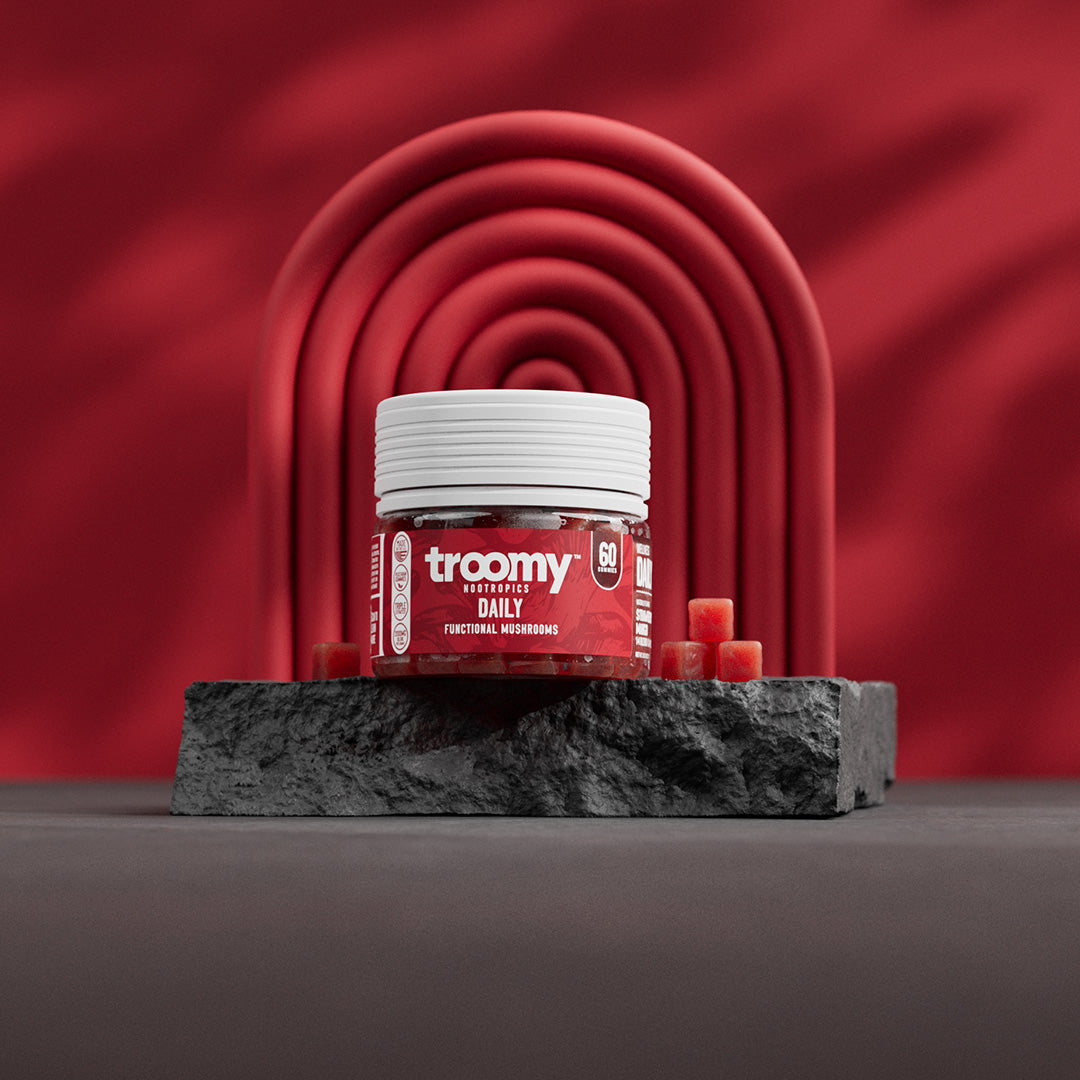
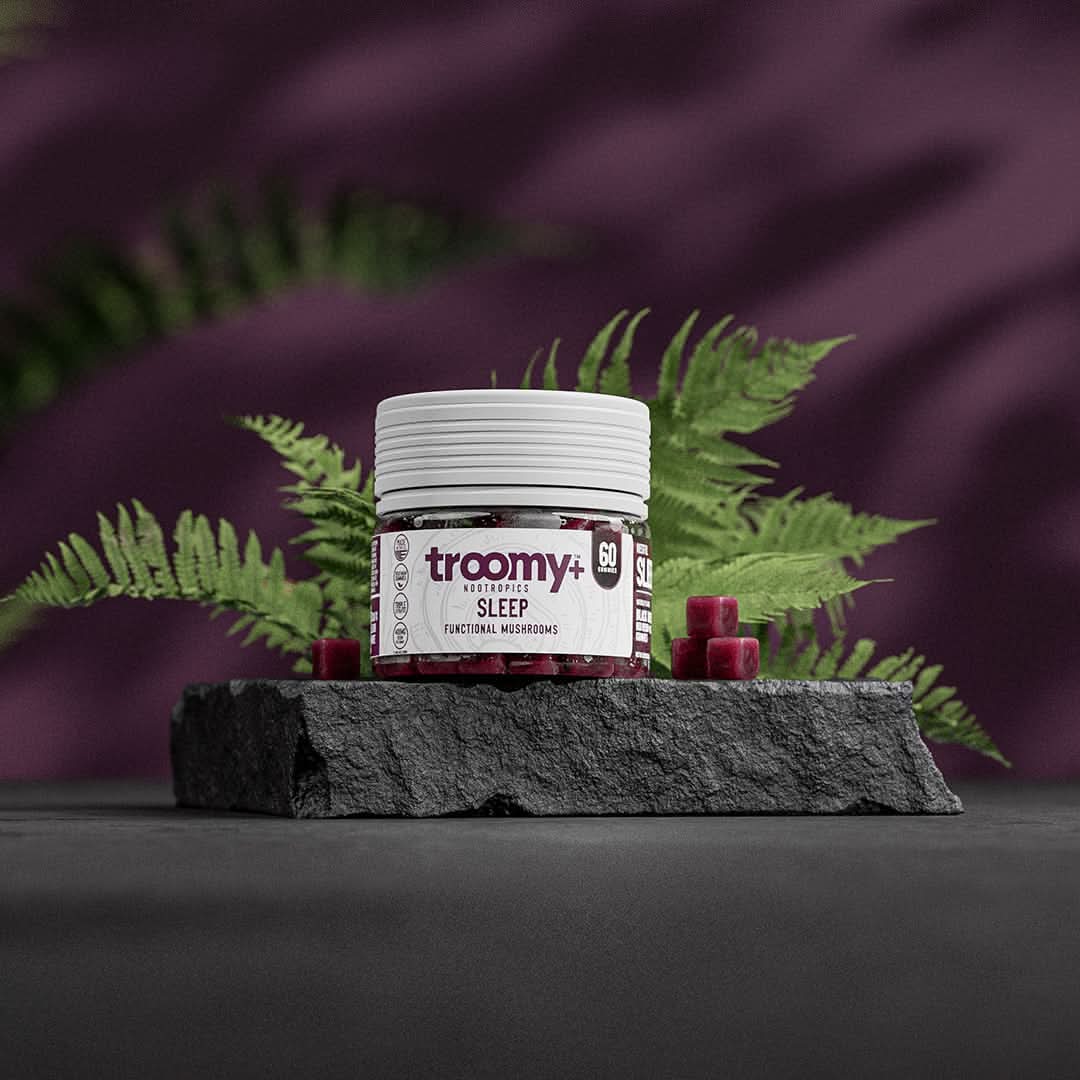
Lion's mane plus better sleep. This one is underrated. People with ADHD frequently struggle with sleep, and poor sleep is one of the biggest hidden drivers of focus problems. Adding Sleep reishi and melatonin gummies to a nighttime routine can support the kind of deep rest that makes your daytime brain work better. Or if you want a one-stop approach, our Daily 14-mushroom blend gummies cover broad-spectrum mushroom support in a single gummy.
For a deeper look at building a multi-product routine, our article on navigating nootropic stacks lays out a framework. You can also explore our supplement bundles if you want a pre-built combo at a better price.
How do you use lion's mane effectively?
Three things make the biggest difference: consistency, timing, and quality. Let's break each one down.
Consistency is everything. Lion's mane works through cumulative support, not a single-dose lift. Daily use for at least four weeks is the realistic timeframe to evaluate whether it's making a difference for you. Skipping days or only taking it when you remember will leave you wondering if it actually does anything, which is the most common reason people give up on supplements too soon.
Timing depends on your goal. If you want focus support during the workday or study sessions, take it in the morning. Many people pair it with breakfast so they don't forget. If you're using it more for general cognitive support and brain fog, you have flexibility. Lion's mane is not stimulating, so taking it later in the day won't interfere with sleep.
Quality is where a lot of brands cut corners. Look for products that use the full fruiting body, not just mycelium grown on grain (which dilutes the active compounds). Triple-extracted lion's mane gives you more of the beneficial compounds in every dose. Made-in-the-USA manufacturing, third-party testing, and clean ingredient labels are non-negotiable. Our guide to finding the best lion's mane supplement walks through what to look for in more detail.

Is lion's mane safe to take with ADHD medication?
This is the most important question in this article, and the answer is: ask your healthcare provider first. Lion's mane is generally well-tolerated, and most people don't experience side effects beyond occasional mild digestive adjustment when first starting. But if you're taking stimulant medication, antidepressants, or anything else that affects brain chemistry, you should not start a new supplement without talking to your prescriber.
This isn't a warning meant to scare you. It's just standard care. Functional mushrooms are food-derived, but anything you take consistently deserves a quick check with someone who knows your full health picture. People with mushroom allergies, those who are pregnant or nursing, and anyone with autoimmune conditions should be especially careful and consult a provider before starting.
For a more detailed safety overview, see our article on using lion's mane safely.
The honest bottom line
Lion's mane is one of the most promising functional mushrooms for general cognitive support, and the research, while early, is pointing in directions that matter for anyone who struggles with focus. But it is not a replacement for ADHD treatment, and anyone telling you otherwise is selling you something they shouldn't be.
What lion's mane can do is support a healthier baseline for your brain. Clearer thinking, less fog, a steadier stress response, and a more resilient nervous system over time. Stack that with sleep, movement, nutrition, professional care if you need it, and a routine you can actually stick with, and you have something that adds up.
If you're ready to try it, Focus lion's mane gummies are an easy place to start. They taste like candy, take 30 seconds, and fit into any routine. That's the point. The best supplement is the one you actually take.

FAQs
Can lion's mane replace ADHD medication?
No. Lion's mane is a dietary supplement, not a treatment for ADHD. Stimulant and non-stimulant medications prescribed by a healthcare provider are the standard evidence-based approach for ADHD. Lion's mane may support general cognitive function and focus as part of a broader wellness routine, but it should not be used as a replacement for prescribed care. Always talk to your healthcare provider before changing or stopping any medication.
How long does it take for lion's mane to work for focus?
Most people notice benefits after two to four weeks of consistent daily use. Lion's mane works through cumulative support of brain health rather than an instant effect like caffeine. Some people report feeling a subtle improvement in mental clarity earlier, but the more meaningful shifts in focus and reduced brain fog tend to show up with steady use over a month or longer.
How much lion's mane should I take for focus?
Most research on cognitive support has used doses in the range of 500mg to 3,000mg of lion's mane extract per day. Our Focus gummies provide 800mg per serving, which sits within that range. The right dose depends on the form of lion's mane, the extraction method, and your individual goals. Start with the recommended serving on the label and stay consistent before adjusting.
Is lion's mane safe to take every day?
Lion's mane is generally considered safe for daily use, and consistency is actually how it works best. Most people tolerate it well with no side effects. Some report mild digestive adjustment when first starting. If you have a mushroom allergy, are pregnant or nursing, or take prescription medications, talk to your healthcare provider before starting.
Can kids with ADHD take lion's mane?
Troomy products are formulated for general adult wellness and are not positioned for younger demographics. If you're considering lion's mane for a child with ADHD, that decision should be made with a pediatric healthcare provider who knows the child's full medical history. Do not give supplements to children without professional guidance.
Does lion's mane have caffeine?
No. Lion's mane on its own is naturally caffeine-free. Our Focus gummies are caffeine-free as well, which makes them a good fit for people who want focus support without stimulants. If you want gentle natural caffeine paired with lion's mane and other nootropics, our Brain Power capsules include 125mg of natural caffeine derived from green tea, roughly the equivalent of one cup of coffee.
Will lion's mane make me feel high or trip out?
No. Lion's mane is a functional mushroom, not a psychedelic one. It contains zero hallucinogenic properties. It supports brain health and focus through compounds like hericenones and erinacines, which work on nerve health and cognitive function, not on perception or mood-altering pathways.
Can I take lion's mane and reishi together?
Yes, and many people do. Lion's mane supports focus and cognitive function, while reishi supports calm and stress balance. The two work well together for anyone whose attention struggles include a heavy stress component. You can read more in our guide on taking lion's mane and reishi together.


