



Chaga has quietly become one of the most talked about functional mushrooms in the wellness world, and for good reason. This dark, knobby growth that clings to birch trees in the coldest forests on earth has been used for centuries in traditional Russian and Siberian medicine, and modern research is finally catching up to what those cold-climate cultures figured out a long time ago. If you have been hearing the name chaga and wondering what the fuss is about, this is your complete guide to what it is, what it does, and how to actually get it into your routine.
At Troomy, we believe natural wellness should fit your real life, not the other way around. So we are going to keep this practical, honest about what the science does and does not say, and clear about how chaga can support the way you already want to feel.
What Is Chaga Mushroom?
Chaga (scientifically known as Inonotus obliquus) is a parasitic fungus that grows primarily on living birch trees in cold northern climates across Russia, Northern Europe, Canada, and parts of the northern United States. Here is the first surprising fact: chaga is not technically a mushroom in the way most people picture one. It does not have the familiar cap and stem. Instead, it forms a hard, irregular black mass called a sclerotium that looks a lot like burnt charcoal on the outside, with a striking orange interior. It is classified among the medicinal mushrooms because of its bioactive compound profile, even though botanically it behaves more like a woody conk.
That dark exterior is not dirt or rot. It is concentrated melanin, the same family of pigments that protects human skin from sun damage, and it is one of the reasons chaga is so rich in antioxidants. Chaga grows slowly, drawing nutrients from its host birch over many years, and that long, patient growth is part of why it concentrates such a dense profile of compounds. The orange interior you find when you crack one open is sometimes called the sterile conk, and it is the part traditionally prized for tea and extracts. For a deeper dive into its origins and folklore, our guide on what chaga is and why it earned the title King of Mushrooms breaks down the full story.
What Are the Main Benefits of Chaga Mushroom?
Chaga earns its reputation through four primary classes of bioactive compounds, each contributing something different. A comprehensive 2023 review in Frontiers in Pharmacology by Fordjour et al. examined this full profile and documented chaga's antioxidant, anti-inflammatory, antiviral, and antitumor activities across laboratory and animal studies. Here is what each compound class brings to the table.
Beta-Glucans for Immune Modulation
Beta-glucans are the headline compounds in nearly every medicinal mushroom, and chaga is loaded with them. These polysaccharides interact with immune cells and help the body modulate its immune response, meaning they can help support the immune system when it needs a nudge and help calm it when it is overactive. A 2024 review of chaga published in the journal Heliyon described these polysaccharides, alongside chaga's melanin and triterpenes, as central to the mushroom's immunomodulatory and anti-inflammatory activity. It is worth being precise here: beta-glucans as a broad class, including those from yeast and other mushrooms, carry the strongest human research behind their immune-supporting role, while the clinical evidence for chaga's own beta-glucans is still developing and rests mostly on laboratory and animal work. If immune support is your main goal, our dedicated breakdown of chaga mushroom benefits for immune support goes deeper into the mechanisms.
Polyphenols and Melanin for Antioxidant Protection
Chaga is one of the most antioxidant-dense natural ingredients you can find. Its polyphenols and that signature melanin pigment help neutralize free radicals, the unstable molecules that contribute to oxidative stress and accelerate visible aging. Laboratory testing has repeatedly placed chaga among the highest-scoring natural sources on common antioxidant capacity measures, which is a big part of why it became such a sought-after daily supplement in the first place. This antioxidant capacity is the foundation for many of chaga's downstream benefits, from cellular protection to skin health. Because oxidative stress is one of the recognized drivers of visible aging, this is also why chaga keeps coming up in conversations about skin and beauty support, not just internal wellness. For a deeper look at this connection, our guide to chaga mushroom skin benefits covers the antioxidant and anti-inflammatory compounds that support healthy skin from the inside out.
Betulinic Acid and Triterpenes for Anti-Inflammatory Support
Because chaga grows on birch trees, it absorbs and concentrates betulin and betulinic acid, compounds the birch produces. Together with chaga's triterpenes, including inotodiol, these contribute to its anti-inflammatory profile, and several of these compounds are being studied for how they influence the body's inflammatory signaling. This is also a good example of why source and extraction matter so much with chaga, since these particular compounds are fat-soluble and do not transfer well into a simple water-based preparation. Chronic low-grade inflammation sits behind a lot of how we feel day to day, from stiff joints to sluggish energy, so compounds that support a balanced inflammatory response are a meaningful part of chaga's appeal.
Adaptogenic Properties for Stress Response
Chaga is often grouped with adaptogens, the category of natural compounds that help the body adapt to physical, chemical, and biological stress. The idea behind an adaptogen is balance rather than stimulation. Instead of pushing your system in one direction the way caffeine does, it supports your body's own ability to stay steady under pressure. While reishi tends to get more attention as the calming adaptogen, chaga's antioxidant and anti-inflammatory activity supports the body's resilience in its own quiet way. If you are weighing the two, our side-by-side comparison of chaga versus reishi explains when each one makes sense.
Is the Science Behind Chaga Solid?
Here is where we keep it honest, because that is how Troomy talks to you. Chaga has a genuinely impressive bioactive profile and centuries of traditional use behind it, and the modern research is encouraging. But most of the existing evidence comes from laboratory and animal studies rather than large-scale human clinical trials. A 2023 review of the therapeutic research on Inonotus obliquus by Ern et al., published in the journal Mycology, reached the same conclusion, documenting consistent anti-inflammatory, antioxidant, and immunomodulating activity while emphasizing that well-designed human trials are still needed to confirm dosing and real-world effects.
What that means for you is simple. Chaga is best understood as a wellness supplement that supports your body's natural systems over time, not a quick fix or a medicine. Taken consistently as part of a healthy routine, it is a smart, low-effort way to add antioxidant and immune support to your day. Treat any source promising overnight or dramatic results with healthy skepticism, because that is not how functional mushrooms work.
Wild Chaga vs Cultivated Chaga: Does It Matter?
Most chaga on the market is still wild-harvested from birch forests, and that creates two real problems. The first is sustainability. Wild chaga grows slowly, often taking years to mature, and rising demand has led to overharvesting in some regions, where growths are stripped from trees faster than they can regenerate. The second is consistency. Wild chaga varies enormously in potency depending on the tree, the climate, and the age of the growth, so the dose you get from one batch is rarely the dose you get from the next.
This is exactly why standardized, extracted chaga in a supplement is the more reliable choice for most people. You get a consistent dose every time, without foraging, identifying the right fungus, or risking look-alikes that grow on other trees and contain none of the beneficial compounds. If you want to know exactly what sets real chaga apart from impostors, our guide to false chaga and how to spot imitation mushrooms breaks down the key differences. A quality extract concentrates the bioactives and delivers them in a form your body can actually absorb, which matters far more than the romance of harvesting your own. It is worth knowing that chaga is notoriously difficult to farm the way you would grow button mushrooms, because the wild fungus depends on a living birch host, so most cultivated chaga is grown as mycelium under controlled conditions. The practical takeaway for shoppers is to look for a product that is transparent about how it is extracted and dosed rather than one that simply leans on the word wild as a selling point.
How Do You Take Chaga? Tea vs Supplement vs Gummies
Chaga has traditionally been consumed as a tea, simmered slowly for hours to pull the water-soluble compounds out of the tough fungus. That method still works and has centuries of history behind it. The catch is chemical: hot water extracts the beta-glucans and water-soluble polyphenols well, but it does not efficiently pull out the lipid-soluble triterpenes and betulinic acid, which need an alcohol-based extraction to release. So a cup of chaga tea, pleasant as it is, only captures part of what the fungus has to offer. We cover this trade-off in detail in our guides to chaga tea benefits and chaga coffee.
That brewing limitation is the reason triple-extracted supplements exist. A triple extraction uses water, alcohol, and heat to capture the full spectrum of chaga's compounds, both water-soluble and fat-soluble, in one consistent dose. From there, the format you choose comes down to lifestyle. Capsules and powders suit people who want a clinical, no-frills routine, while gummies are the easiest way to stay consistent because they taste good and require zero preparation. The best format is always the one you will actually remember to take.
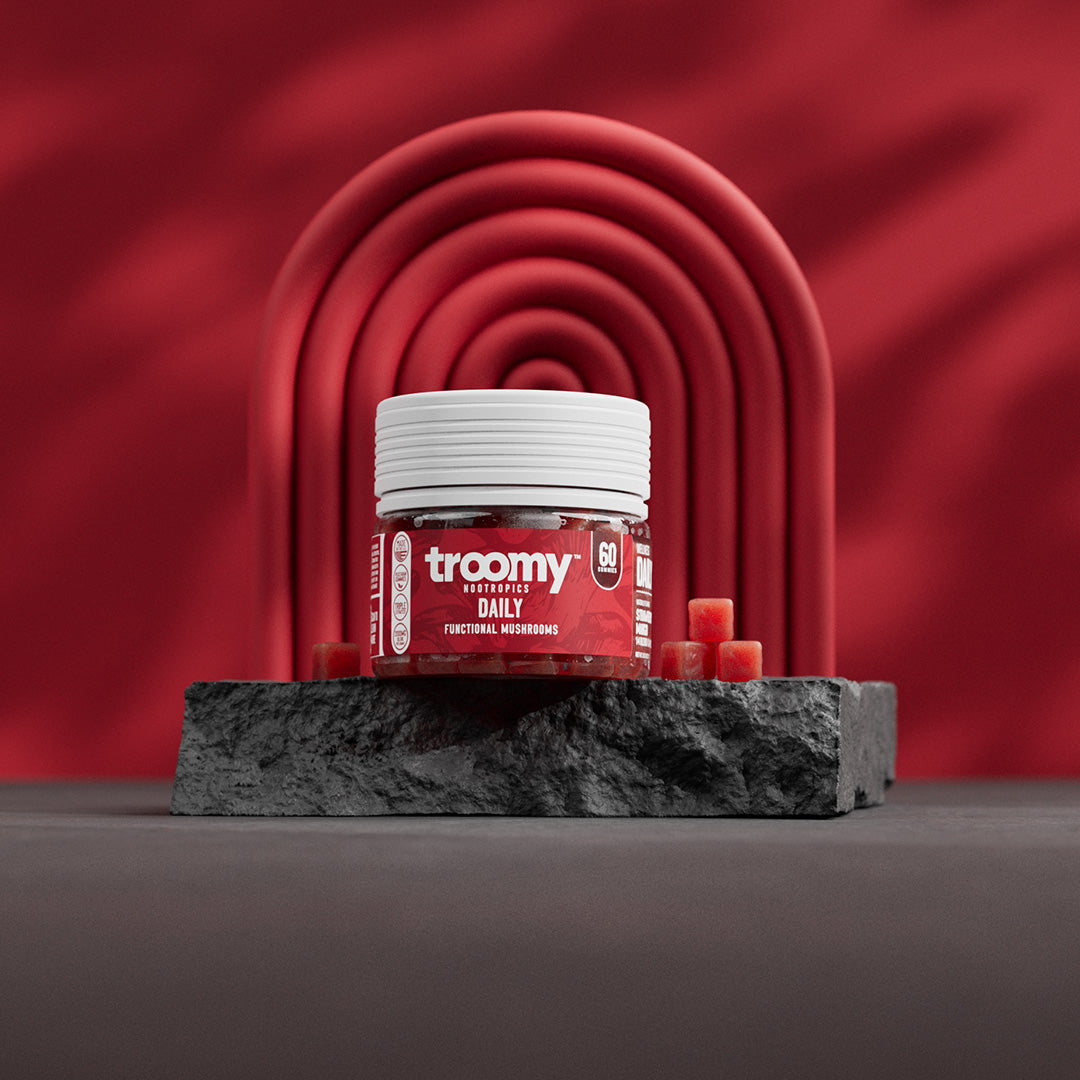
Our Daily 14 Mushroom Blend Gummies include triple-extracted chaga alongside thirteen other functional mushrooms, giving you broad-spectrum antioxidant and immune support in a single strawberry mango gummy. They are made in the USA, vegetarian, and dosed at 2,000mg per serving, so you get real chaga without the foraging, simmering, or guesswork. If you want to layer it into a wider routine, the Immunity Collection brings together our most immune-focused formulas in one place.
Is Chaga Safe to Take Daily?
For most healthy adults, chaga is well tolerated as a daily supplement, and traditional use spans generations of daily tea drinkers. That said, a few groups should check with a healthcare provider first. Chaga contains oxalates, so anyone with a history of kidney stones or kidney issues should be cautious. It may also interact with blood-thinning and blood-sugar medications, and there is not enough research to recommend it during pregnancy or breastfeeding. A sensible approach for anyone new to it is to start with a single daily serving and pay attention to how your body responds before settling into a routine. As with any supplement, talking to your doctor is the right move if you take medication or have an existing condition. For specifics on amounts and timing, see our chaga dosage guide.
How to Add Chaga to Your Routine
The best chaga routine is the one you will actually stick to, because consistency is what delivers results with functional mushrooms. Most people notice the benefits of antioxidant and immune support build over weeks of steady use rather than overnight. Pick a format you enjoy, attach it to a habit you already have, like your morning coffee or your daily vitamin, and give it time. There is no need to overthink timing either, since chaga is gentle and non-stimulating, which means morning or evening both work depending on what helps you stay consistent. Chaga is not a one-and-done supplement. It is a quiet, daily investment in how resilient you feel.
If you are new to functional mushrooms entirely, starting with a blend like the Daily 14 Mushroom Blend is the simplest on-ramp, since it covers chaga and a wide range of supporting mushrooms in one easy daily gummy. You can also explore curated Troomy bundles if you want to pair chaga with focus, calm, or energy support and build a routine that covers more than one goal at once.
Frequently Asked Questions
What is chaga mushroom?
Chaga (Inonotus obliquus) is a parasitic fungus that grows on living birch trees in cold northern climates. It forms a hard black mass with a bright orange interior and is classified as a medicinal mushroom because of its rich profile of beta-glucans, polyphenols, melanin, betulinic acid, and triterpenes, even though it does not look like a typical cap-and-stem mushroom.
What does chaga do for the body?
Chaga is best known for antioxidant and immune support. Its beta-glucans help modulate the immune system, its polyphenols and melanin help neutralize free radicals, and its betulinic acid and triterpenes contribute to a balanced inflammatory response. Most evidence comes from laboratory and animal studies, with chaga acting as a daily wellness supplement that supports the body's natural systems over time.
Is chaga safe to take daily?
For most healthy adults, chaga is well tolerated as a daily supplement and has a long history of daily traditional use. People with kidney stones or kidney concerns should be cautious because chaga contains oxalates, and anyone on blood-thinning or blood-sugar medication, or who is pregnant or breastfeeding, should consult a healthcare provider first.
What are the side effects of chaga?
Chaga is generally well tolerated. Potential concerns relate to its oxalate content, which matters for people prone to kidney stones, and its possible interaction with blood thinners and diabetes medication. Side effects are uncommon at typical supplemental doses, but starting low and talking to your doctor if you take medication is always sensible.
Does chaga boost the immune system?
Chaga supports the immune system primarily through its beta-glucans, which help modulate immune activity. Research has identified chaga as one of the functional mushrooms with notable immune benefits, though most of the evidence is preclinical. Think of it as immune support that builds with consistent daily use rather than an instant immune boost.
How long does chaga take to work?
Chaga is a long-game supplement. Because its benefits center on antioxidant protection and gradual immune support, most people use it consistently for several weeks before noticing how they feel. Daily consistency matters far more than dose size, which is why an easy format like a daily gummy tends to deliver the best real-world results.
These statements have not been evaluated by the Food and Drug Administration. This product is not intended to diagnose, treat, cure, or prevent any disease.


