



By late October, half your office is coughing, somebody brought something home from school, and immune support moves straight to the top of your list. So you go looking. You find elderberry, you find vitamin C, and you find lion's mane, because everyone is talking about lion's mane. The one thing that almost never makes it into the cart is turkey tail.
Which is strange, because turkey tail is one of the most researched mushrooms on the planet. It has been studied in clinical settings for decades, it grows on dead hardwood in nearly every forest in North America, and it is one of the 14 functional mushrooms in our Daily 14 Mushroom Blend gummies. It simply never got the marketing budget lion's mane did.
Here is what turkey tail is, what the research supports, what it does not, and how to fit it into a routine you will keep past week two.
What Is Turkey Tail Mushroom?
Turkey tail is a wild, fan-shaped fungus known to scientists as Trametes versicolor, and sometimes labeled Coriolus versicolor on supplement bottles. Versicolor means "of many colors," which is the whole story behind the common name. The caps grow in overlapping rows with concentric bands of brown, tan, rust, cream, and gray, and the pattern looks remarkably like the fanned tail feathers of a wild turkey.
Technically it is a woody bracket polypore, which means the underside is covered in tiny pores instead of gills, and it is a wood decomposer that grows on dead logs worldwide. You have almost certainly walked past it on a hike. It is also one of the most common mushrooms in North American woods, turning up nearly anywhere there are decomposing hardwood logs or stumps. In traditional Chinese medicine it is called yun zhi, and in Japan it is known as kawaratake, which translates to roof tile fungus.
One thing turkey tail is not: dinner. It is thin, tough, and leathery, closer to a strip of bark than a portobello, so nobody is sauteeing it in butter. For centuries people simmered it into tea instead, and today it shows up as an extract in powders, capsules, and gummies. It is also not psychedelic, and neither is any other functional mushroom. If that line still feels blurry, we sorted it out in our breakdown of functional mushrooms versus psychedelic mushrooms.
What Makes Turkey Tail Different From Other Functional Mushrooms?
Every functional mushroom has a signature compound. Lion's mane has hericenones. Cordyceps has cordycepin. Turkey tail's claim to fame is its polysaccharides, and specifically its beta-glucans.
Beta-glucans are long chains of glucose molecules that make up part of the fungal cell wall. They are not a stimulant and not a sedative, and you do not feel them arrive the way you feel caffeine. What makes them interesting is that your innate immune cells carry receptors, including one called dectin-1, that recognize and bind fungal beta-glucans and change their signaling in response. Research summarized by the National Cancer Institute attributes the immune activity of medicinal mushrooms to these high-molecular-weight polysaccharides and their effect on innate immune cells such as monocytes, natural killer cells, and dendritic cells.
That is the reason beta-glucan-rich mushrooms get described as immune modulating rather than immune boosting. The point is normal, balanced function, not revving your immune system up like an engine.
What are PSK and PSP?
Read anything about turkey tail and two acronyms show up within a paragraph. PSK, also called polysaccharide-K or Krestin, is a protein-bound beta-glucan extract developed in Japan. PSP, or polysaccharopeptide, is a closely related preparation developed in China. They are derived from different strains of the mushroom and differ slightly in sugar composition, and both are purified, standardized isolates produced under pharmaceutical conditions.
Keep that in mind whenever you see PSK research quoted on a product page, ours included. A purified prescription isolate and a full-spectrum mushroom extract in a supplement are cousins, not twins.
What Is Turkey Tail Good For?
In the United States, turkey tail is sold as a dietary supplement, so the honest word is support rather than treatment. Within that lane, there are two areas where the evidence is genuinely interesting.
How does turkey tail support the immune system?
This is the headline, and it comes back to those beta-glucans and the immune cell receptors that recognize them. Turkey tail carries one of the most studied beta-glucan profiles in the functional mushroom world, which is why it has been an immune-support staple in East Asian herbal traditions for centuries and why it keeps showing up in modern research.
Practically speaking, this is the kind of support that belongs in a daily habit heading into a season packed with travel, shared offices, school pickups, and family gatherings. It is not a rescue remedy you reach for at 9pm when your throat already hurts. For the bigger picture on how the category fits together, start with our guide to functional mushrooms for immunity, then compare what reishi brings to immune support and what chaga adds on the antioxidant side.
Does turkey tail do anything for gut health?
This is the part most people miss, and it might be the most practical reason to take it. Beta-glucans are a form of fiber your body cannot digest, so they travel intact to the lower gut where your bacteria can ferment them. That is the working definition of a prebiotic.
In a randomized clinical trial published in Gut Microbes, 24 healthy volunteers were assigned to take polysaccharopeptide from Trametes versicolor, take the antibiotic amoxicillin, or take nothing, with stool samples tracked over eight weeks. The turkey tail group showed clear and consistent microbiome changes in line with prebiotic activity, while the amoxicillin group saw substantial disruption that was still measurable weeks after the course finished. It is a small trial and the authors are careful about that, but it is a human trial, and it points somewhere real.
It also matters because a large share of your immune tissue lives in and around your gut, which is why gut health and immune support keep ending up in the same conversation.
What about the cancer research you have probably seen?
Search turkey tail and cancer headlines arrive fast, so let us be straight about it. Medicinal mushrooms including turkey tail have been used as approved adjuncts to standard cancer treatment in Japan and China for more than 30 years, and PSK is the compound behind most of that research. That pharmaceutical pathway in another country is the reason turkey tail has such a deep research file compared with almost every other mushroom on the shelf.
Here is the part that matters for you. PSK is a purified prescription isolate, it is not approved in the United States for the treatment of any condition, and the National Cancer Institute's own summary is the right place to read about that body of work rather than a supplement blog. Troomy gummies are dietary supplements for everyday wellness support. They are not treatments for anything, we will never present them that way, and anyone managing a serious health condition should be having this conversation with their doctor.
How Does Turkey Tail Compare to Lion's Mane, Reishi, and Cordyceps?
Functional mushrooms are not interchangeable, and matching the mushroom to the problem is the fastest way to get this right.
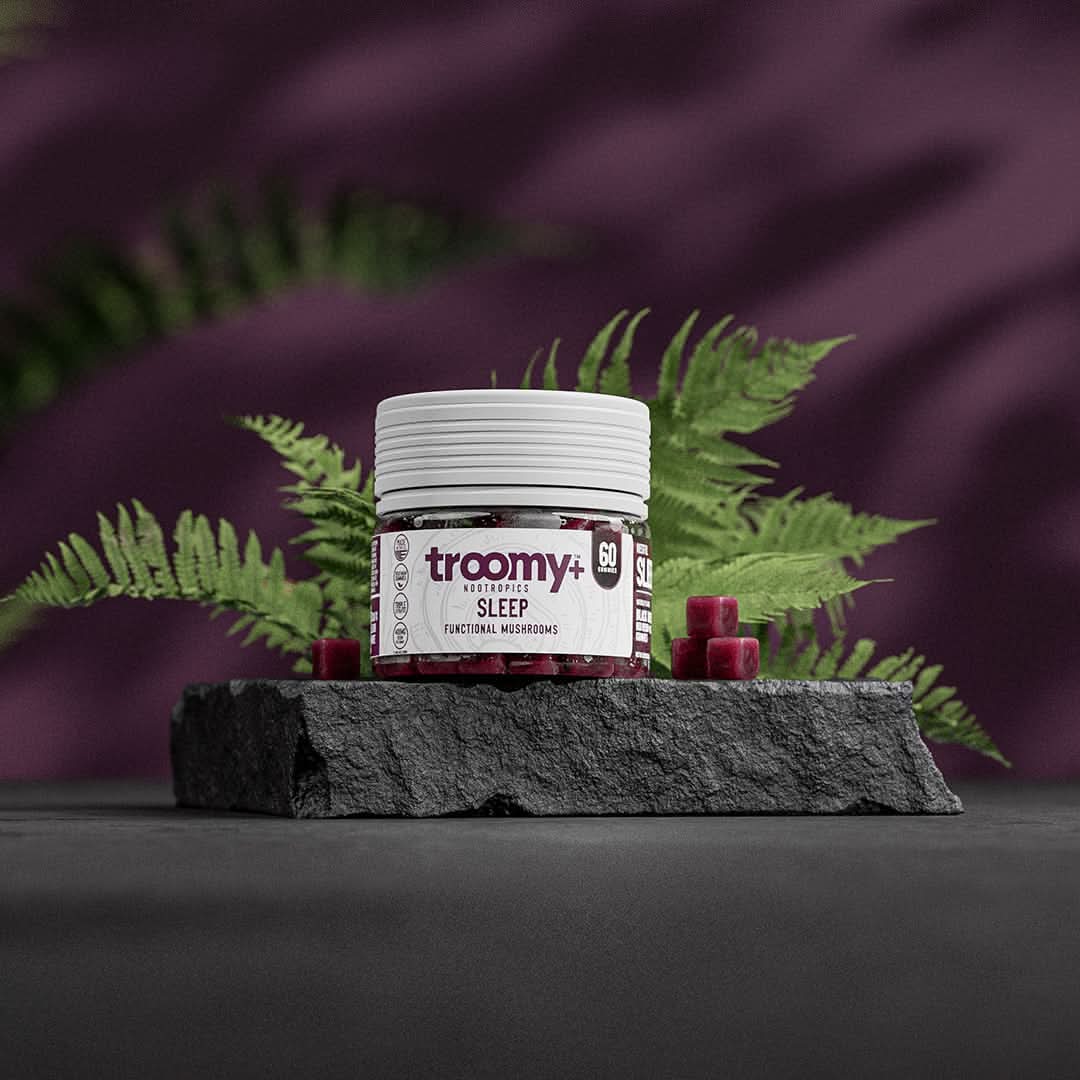
Lion's mane is the clarity one, known for supporting focus and mental sharpness, which is why it leads our Focus lion's mane gummies and the rest of the brain health collection. Reishi is the wind-down one, known for helping take the edge off in the evening, which is why it anchors both Calm and Sleep. Cordyceps is the stamina one, known for supporting natural energy without the crash that comes with a third cup of coffee, which is what Boost is built around.
Turkey tail sits in a different seat entirely. It is not the mushroom you take for a specific feeling in the next hour. It is the one working quietly in the background on immune and gut support, which makes it a foundation ingredient rather than a headliner. That is exactly why it belongs in a blend instead of standing alone, and why our Daily 14 mushroom blend pairs turkey tail with lion's mane, reishi, cordyceps, chaga, and maitake in a single gummy. If the idea of combining mushrooms on purpose appeals to you, mushroom stacks 101 is the right next read.
Why Do So Many People Skip Turkey Tail?
Three reasons, and none of them are that the mushroom is weak.
The first is taste and texture. Turkey tail is woody and bitter, and the traditional preparation is a long simmered tea that tastes like a forest floor. Straight powders are not much of an upgrade. When a supplement feels like a chore, people quietly stop taking it, and a routine you abandon in week two does nothing for you. That is the entire reason Troomy exists in gummy form.
The second is that turkey tail does not have one dramatic promise to advertise. Lion's mane promises sharper thinking. Cordyceps promises energy before a workout. Turkey tail offers steady support for systems you cannot feel working, which is a harder sell and a very real benefit.
The third is quality confusion, and this one is worth a section of its own.
Does turkey tail need to be extracted?
Yes, and this is the single most important thing to understand before you buy anything with turkey tail on the label.
Those beta-glucans sit inside cell walls made of chitin, the same tough material found in insect shells. Human digestion does not break chitin down efficiently, so raw, unextracted mushroom powder leaves a good share of the active compounds unavailable to you. Hot water extraction frees the water-soluble polysaccharides. Alcohol extraction pulls the compounds that water leaves behind. Doing both, thoroughly, is the difference between a claim on a label and something your body can use.
It is why we triple extract every mushroom we use, which is rare in this category, and why the fruiting body versus mycelium question is worth understanding before you compare two products on price alone.
How Do You Take Turkey Tail Every Day?
The most practical answer is to stop thinking of it as a standalone purchase. Turkey tail is a foundation mushroom, so it makes the most sense inside a daily blend you take without having to think about it.
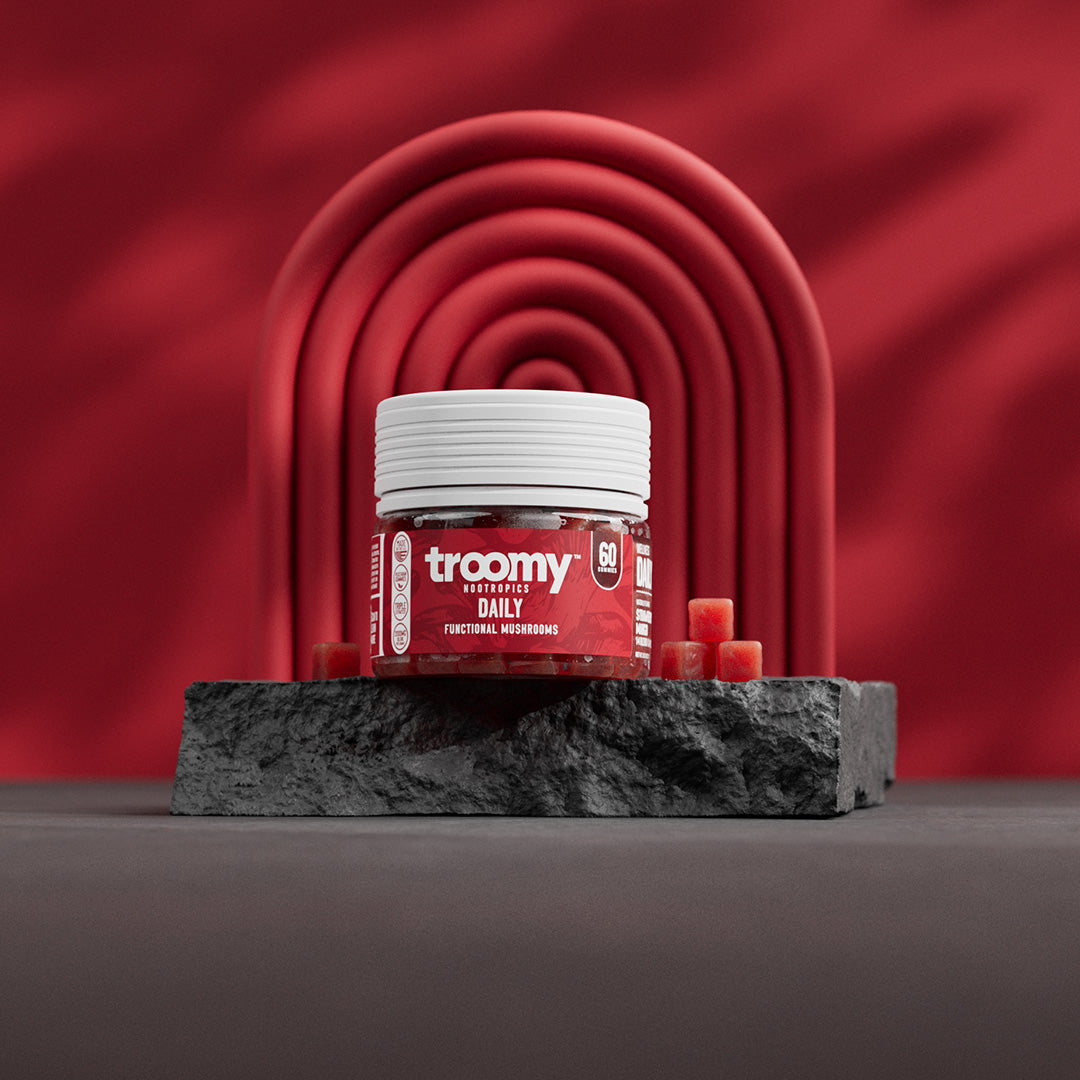
Our Daily 14 Mushroom Blend gummies deliver 2,000mg of a triple-extracted, full-spectrum mushroom blend per serving, with turkey tail alongside lion's mane, reishi, cordyceps, chaga, and maitake. They taste like strawberry mango, they are vegetarian, they are made in the USA, and on Subscribe and Save they come out to about a dollar a day. That is one small step added to your morning instead of four bottles to remember, and simple is what makes a routine survive.
Timing is flexible. Morning works well for most people, with or without food. If you are building something more deliberate across the day, when to take mushroom supplements walks through the full morning-to-night picture, and our bundles are set up around that logic.
How long does turkey tail take to work?
Set the expectation correctly and you will be much happier with it. Some of our blends are fast, and plenty of customers feel Boost, Focus, Calm, and Sleep within 30 to 60 minutes. Turkey tail is not in that group. It behaves like a daily vitamin, where the value comes from consistency across weeks rather than a same-day effect. Give it a full month of daily use, and judge it the way you would judge fiber or a multivitamin rather than a cup of coffee.
Is Turkey Tail Safe?
Turkey tail has a long track record and is generally well tolerated. Turkey tail glucan products have been consumed at doses of one gram or more per day for extended periods in clinical settings, and the side effects reported are mild and uncommon, including digestive upset, darkened stools, and darkened nail pigmentation.
A few sensible caveats. This is general adult wellness support. If you are pregnant or nursing, taking prescription medication, or managing a health condition, talk with your healthcare provider before adding any new supplement. Because immune-active compounds are, by definition, immune-active, that conversation matters more rather than less if you take medication that affects your immune system.
What Should You Look For in a Turkey Tail Supplement?
Quality varies wildly in this category, so here is the short version of what separates a real product from a label:
-
Triple-extracted, so the beta-glucans are available to you rather than locked inside chitin
-
Full spectrum, so you get the whole mushroom rather than one isolated fraction
-
Made in the USA, in a facility the brand can answer questions about
-
Third-party tested, with results the brand is willing to show you
-
A format and flavor you will still be taking on day 40, not just day 2
That last point is the one the industry keeps underrating, and it is the reason we make gummies instead of powders. If you are comparing brands right now, why made in the USA matters for mushroom supplements and our mushroom gummies buyer's guide will save you some time, and gummies versus powders covers the format question honestly. For background on the whole category, our complete guide to adaptogenic mushrooms is the long version, and our original turkey tail deep dive has more on its history.
The Everyday Win
Immune support works best as a small, boring, repeatable habit, which is exactly what it never becomes when you only think about it on the Tuesday night you are already run down. Turkey tail has earned its place in that habit, hype or not, and the easiest way to get it is inside a blend that covers the basics in one step.
Start with our Daily 14 mushroom blend gummies or browse the full immunity collection, and let consistency do the work. Try it for 30 days, and if it is not for you, get your money back.
Frequently Asked Questions About Turkey Tail
What is turkey tail mushroom used for?
Turkey tail is taken most often as a daily supplement for immune support and gut support. Its beta-glucans are a type of fiber the body cannot digest, which means immune cells recognize them and gut bacteria can ferment them. It is a consistency supplement rather than a quick fix, and in the United States it is sold as a dietary supplement, not as a treatment for any condition.
Is turkey tail the same as reishi?
No. Both are polypore mushrooms rich in beta-glucans, but they are different species with different jobs. Reishi is best known for helping you take the edge off and wind down at night, which is why it anchors Troomy Calm and Sleep. Turkey tail is known for immune and gut support and works best as a foundation ingredient inside a daily blend.
Can you take turkey tail every day?
Daily use is the normal way to take turkey tail, since the benefit comes from consistency rather than a single serving. Turkey tail glucan products have been consumed at one gram or more per day for long stretches in clinical settings. Check with your healthcare provider first if you are pregnant, nursing, taking medication, or managing a health condition.
Does turkey tail help with gut health?
Turkey tail beta-glucans behave like a prebiotic fiber. In a randomized clinical trial published in Gut Microbes, 24 healthy volunteers were assigned to take polysaccharopeptide from Trametes versicolor, the antibiotic amoxicillin, or nothing, and the polysaccharopeptide group showed consistent microbiome changes in line with prebiotic activity. It was a small study, so treat it as promising rather than settled.
Is turkey tail mushroom psychedelic?
No. Turkey tail is a functional mushroom with zero hallucinogenic properties, and the same is true of lion's mane, reishi, cordyceps, and chaga. Functional mushrooms and psychedelic mushrooms are entirely different species containing entirely different compounds.
What is the difference between PSK and PSP?
Both are protein-bound beta-glucan extracts from Trametes versicolor. PSK, also called Krestin, was developed in Japan. PSP, or polysaccharopeptide, was developed in China. They come from different strains of the mushroom and differ slightly in sugar composition. Both are purified, standardized isolates, which is not the same thing as the full-spectrum mushroom extract used in a dietary supplement.
What is the best way to take turkey tail?
Whichever form you will keep taking. Traditional turkey tail tea is bitter and takes time to simmer, and raw powders are often unextracted, which leaves the beta-glucans locked in the cell wall. A triple-extracted gummy inside a daily blend, like our Daily 14 Mushroom Blend, puts turkey tail in your routine alongside lion's mane, reishi, cordyceps, chaga, and maitake in one step.
Does turkey tail have side effects?
Turkey tail is generally well tolerated. Reported side effects are mild and uncommon and include digestive upset, darkened stools, and darkened nail pigmentation. Stop taking it and talk with your healthcare provider if anything feels off.


