



It is 9pm. Work ended hours ago, dinner is cleared, and your brain is still running through the whole day on a loop you cannot switch off. You are not looking for a prescription or a whole new lifestyle. You want something small and easy that takes the edge off before bed.
So you pick up your phone, type in gummies for anxiety, and get a wall of CBD.
CBD has owned that search for years, and it earned its place there. But a second option has been quietly gaining ground with people who want everyday stress support without cannabis in the mix: functional mushroom gummies, especially the ones built around reishi. Below is a straight comparison of what the research shows for each, where the real differences are, and how to tell whether a mushroom gummy is worth your money.
One thing to settle before we go any further. This article is about everyday stress: the wound-up feeling after a long day, the overthinking brain at bedtime, the week that will not let go. Anxiety as a clinical diagnosis is a separate matter, and no gummy of any kind, mushroom or CBD, is a treatment for it. If what you are carrying feels bigger than a stressful stretch, talk to a licensed healthcare provider. Nothing here is medical advice.
Why are so many people searching for gummies for anxiety?
Two reasons, and neither is complicated.
The first is that people are looking for something gentler than what they think their other options are. In a survey of 2,409 CBD users published in Cannabis and Cannabinoid Research, almost 62 percent said they used CBD to address a medical condition, with pain, anxiety, and depression the three most common. That is a lot of people reaching for something off a shelf because it feels lower stakes than the alternative.
The second is the format. Gummies won. Powders clump, capsules feel medicinal, tinctures require a dropper and a countdown. A gummy is two seconds and no thought, which is exactly why people actually keep taking them. Consistency is where every supplement either works or quietly dies in a cabinet.
It is worth naming what most of those searches are really describing, though. Not a diagnosis. A Tuesday. The meeting that ran long, the inbox that never emptied, the shoulders that will not come down. That is everyday stress, and it is the thing functional mushrooms are actually known for supporting.
What does the research actually say about CBD gummies?
CBD deserves a fair hearing here, so let us give it one. It is genuinely well studied compared to most things in the supplement aisle, and a purified CBD drug has been approved by the FDA for rare seizure disorders. That is real science.
The complication is not CBD the molecule. It is CBD the shelf product, and it comes down to three things.
The first is regulatory footing. The FDA has stated plainly that it is illegal under federal law to market CBD as a dietary supplement or to add it to food, and the agency has said its existing frameworks are not the right fit for the ingredient. That leaves most CBD gummies in a gray zone that mushroom gummies simply do not occupy.
The second is label accuracy. A 2017 analysis published in JAMA bought 84 CBD products online from 31 companies and tested them. Roughly 43 percent contained more CBD than the label claimed, about 26 percent contained less, and only around 31 percent were accurate within 10 percent. In other words, about two out of three products were not what the label said.
The third is what else was in them. That same analysis detected THC in roughly one in five samples. For anyone subject to workplace testing, anyone flying with their supplements, or anyone who simply does not want cannabis in their routine, that is not a small footnote.
The FDA also notes that CBD can interact with other medications you are taking, which is a real conversation to have with your provider rather than a comment section.
None of this means CBD does nothing for anyone. It means the category is inconsistent and unsettled, and that is the backdrop against which functional mushrooms are worth a serious look.
What are functional mushrooms, and how are they different from CBD?
Functional mushrooms are edible mushrooms valued for what they do in the body rather than what they do on a plate. Reishi, lion’s mane, cordyceps, chaga, turkey tail, and tremella are the ones you see most often. Many of them fall under the umbrella of adaptogens, a category of plants and fungi traditionally used to help the body respond to stress rather than to sedate it.
That distinction is the whole point. An adaptogen is not trying to flatten you. The goal is support and balance, so that a stressful afternoon feels manageable instead of overwhelming and you are still awake for your own evening. If you want the longer version of how that category works, our guide to adaptogens for stress and everyday resilience covers it in depth.
The practical differences from CBD are worth spelling out. Functional mushrooms are foods with thousands of years of culinary and traditional use behind them. They are lawful dietary supplement ingredients, which means they sit in a clear regulatory lane. They contain no cannabinoids, so there is no THC question, no drug-test question, and no cannabis in your cabinet. And they are not one ingredient doing one job. Different mushrooms are known for different kinds of support, which means you can match the mushroom to the actual problem you have.
Will mushroom gummies make me feel high?
No. This is the single most common worry and the easiest one to put down. Functional mushrooms like reishi and lion’s mane are not psilocybin mushrooms. They contain zero hallucinogenic properties, they are not psychoactive, and they are sold in grocery stores and health shops across the country. The most dramatic thing that happens when you take a reishi gummy is that you feel a little less wound up.
Which functional mushrooms are known for stress support?
Not all of them do the same job. Here is how the ones that matter for this conversation break down, along with what the human research actually found and where it stops.
Reishi: the one to know for taking the edge off
Reishi, or Ganoderma lucidum, is the mushroom most associated with calm. It has been used in East Asian traditional practice for centuries, and its active compounds are the triterpenes and polysaccharides concentrated in the fruiting body.
On the clinical side, a randomized, double-blind, placebo-controlled trial published in the Journal of Medicinal Food gave a reishi polysaccharide extract or placebo to 132 patients for eight weeks. Sense of fatigue fell 28.3 percent from baseline in the reishi group compared with 20.1 percent on placebo, and the sense of well-being improved more in the reishi group as well. Worth being honest about the limits: this was a specific extract at a clinical dose in a patient population, not a gummy in a healthy adult, and it is one study rather than a settled body of evidence.
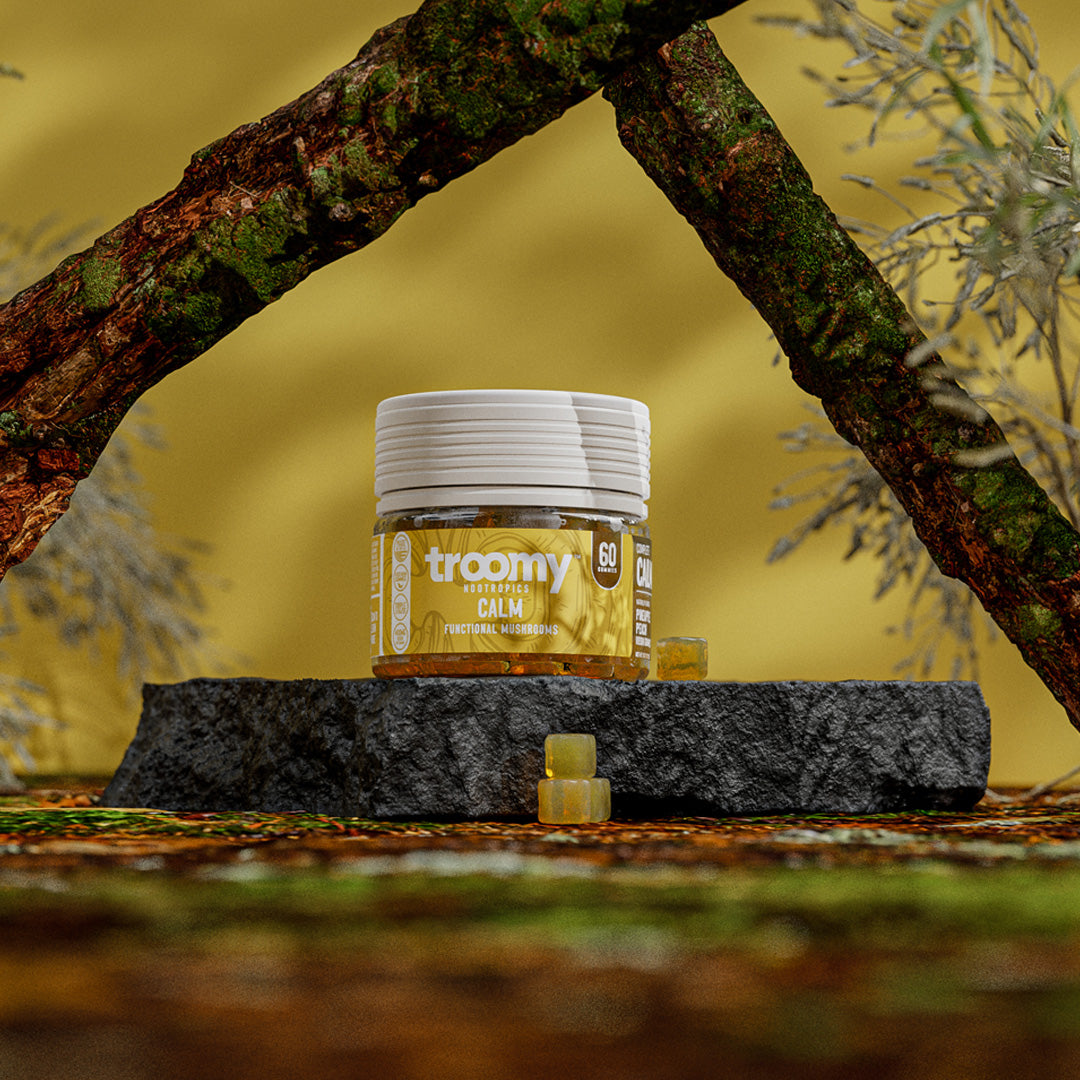
Still, it lines up with what reishi has been used for all along, and it is why reishi anchors our stress support blend. Calm reishi mushroom gummies deliver 800mg of triple-extracted reishi per serving in a pineapple peach gummy, with no caffeine and no drowsy, drugged, or hungover feeling afterward. Most people take them in the late afternoon or early evening, right when the day starts catching up with them. If you want to go deeper on the ingredient itself, we have written a full breakdown of what the research says about reishi and stress and a practical guide to reishi benefits, uses, and how to take it.
Lion’s mane: for the days stress shows up as mental static
Stress does not always feel like tension. Plenty of the time it shows up as fog: reading the same line four times, losing the thread mid-sentence, staring at a list you cannot start. Lion’s mane is the mushroom known for supporting mental clarity and focus, and its compounds have been studied for their relationship to the nervous system.
One small clinical study is often cited here. Thirty participants took either lion’s mane or placebo baked into cookies for four weeks, and the lion’s mane group scored lower on a depression scale and on a general complaints index after the four weeks. It is a small, short study and the researchers were careful about how much weight to put on it, so treat it as a promising signal rather than proof.
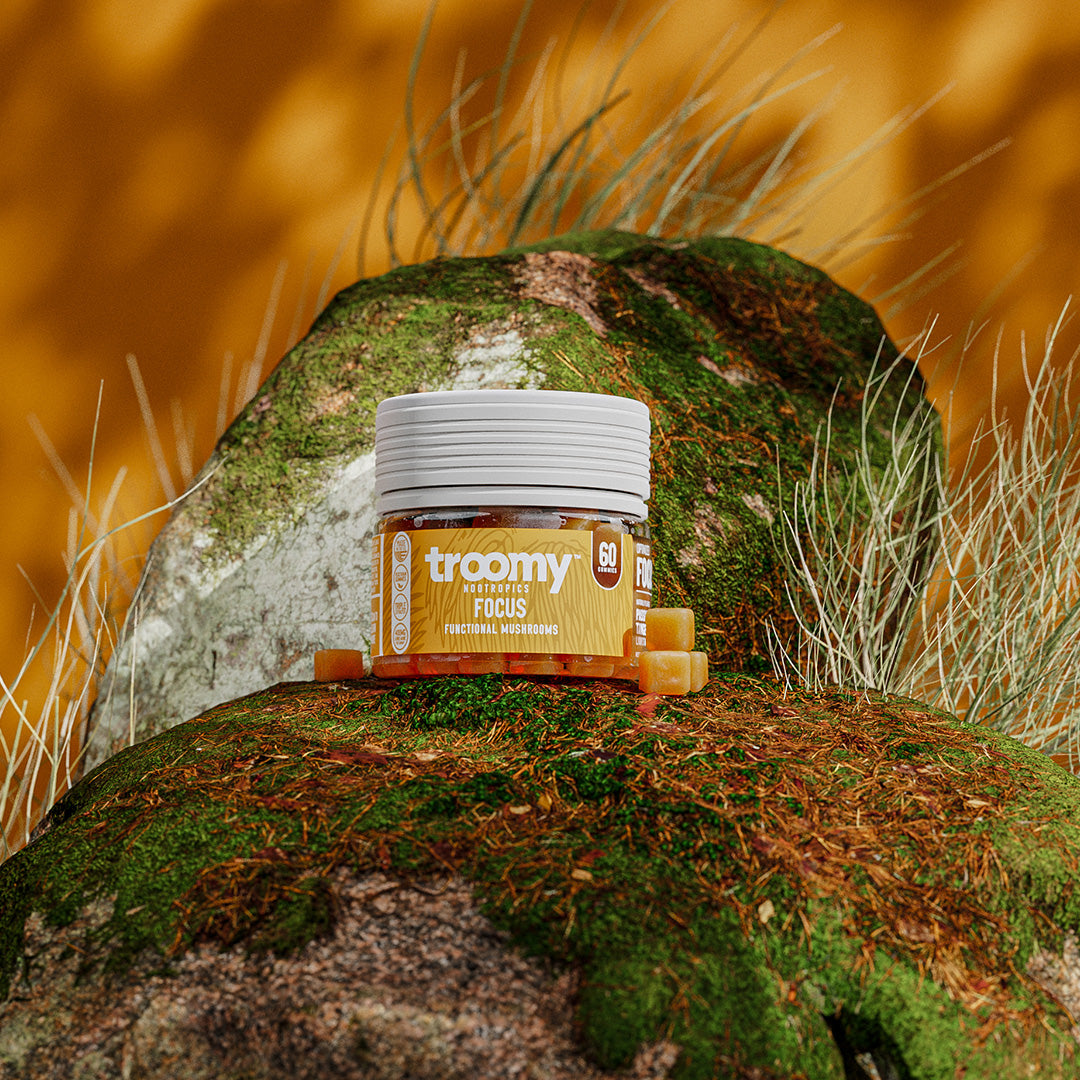
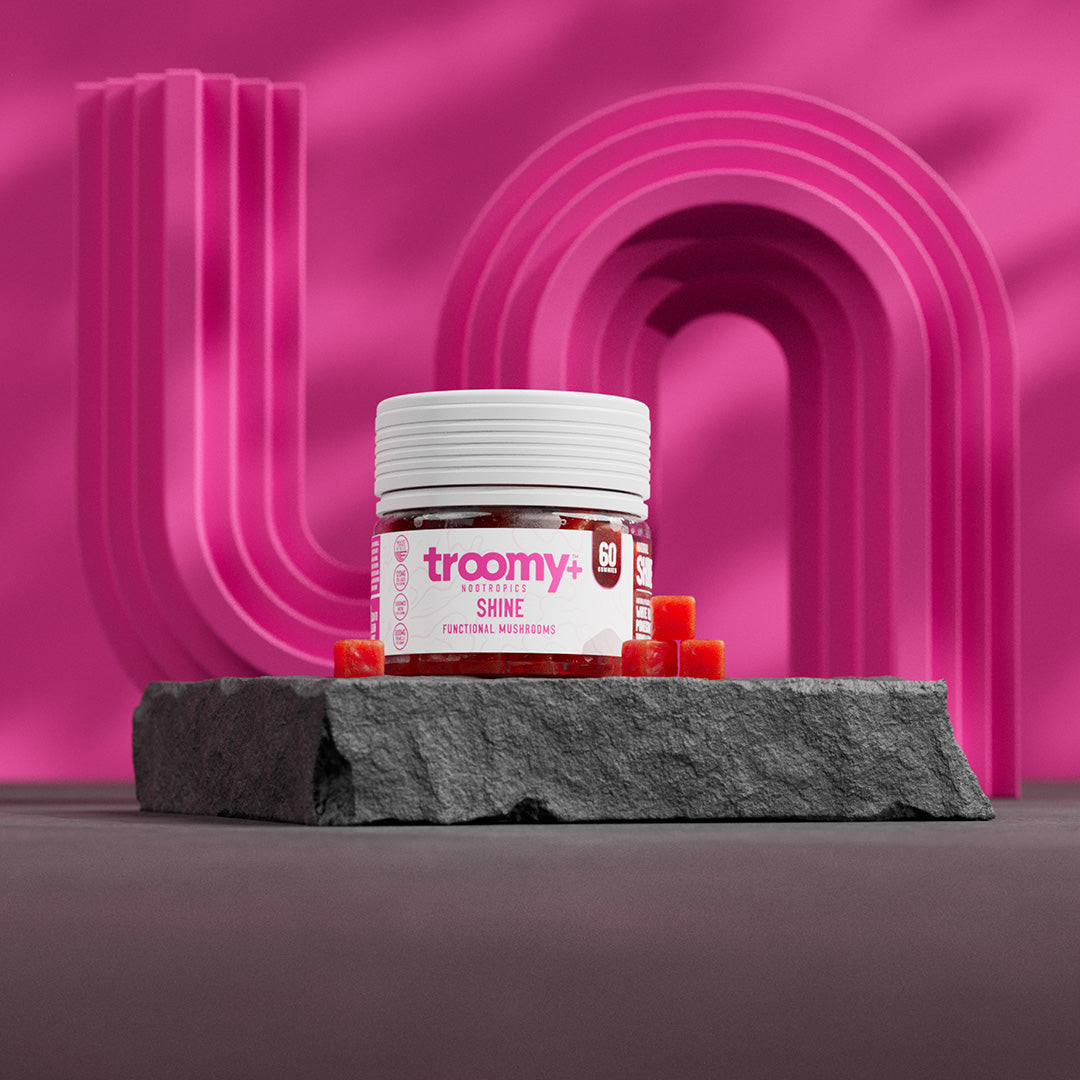
For the everyday version of that problem, Focus lion’s mane gummies deliver 800mg per serving in passionfruit tangerine, caffeine-free, taken in the morning or before something that needs your full attention. Our guide to how lion’s mane supports the nervous system goes further into the mechanism.
Ashwagandha: not a mushroom, but it belongs in this conversation
Ashwagandha is a root, not a fungus, but it is the most researched adaptogen for stress and it pairs unusually well with reishi. In a randomized, double-blind, placebo-controlled trial of 64 chronically stressed adults, participants took 300mg of a full-spectrum ashwagandha root extract twice daily for 60 days. Serum cortisol fell 27.9 percent in the ashwagandha group compared with 7.9 percent on placebo, and scores improved across every stress assessment scale used.
Cortisol is the body’s main stress hormone, so that is a meaningful marker rather than a vague one. It is also worth noting that this was 60 days, not 60 minutes, which is the honest timeline for adaptogens.
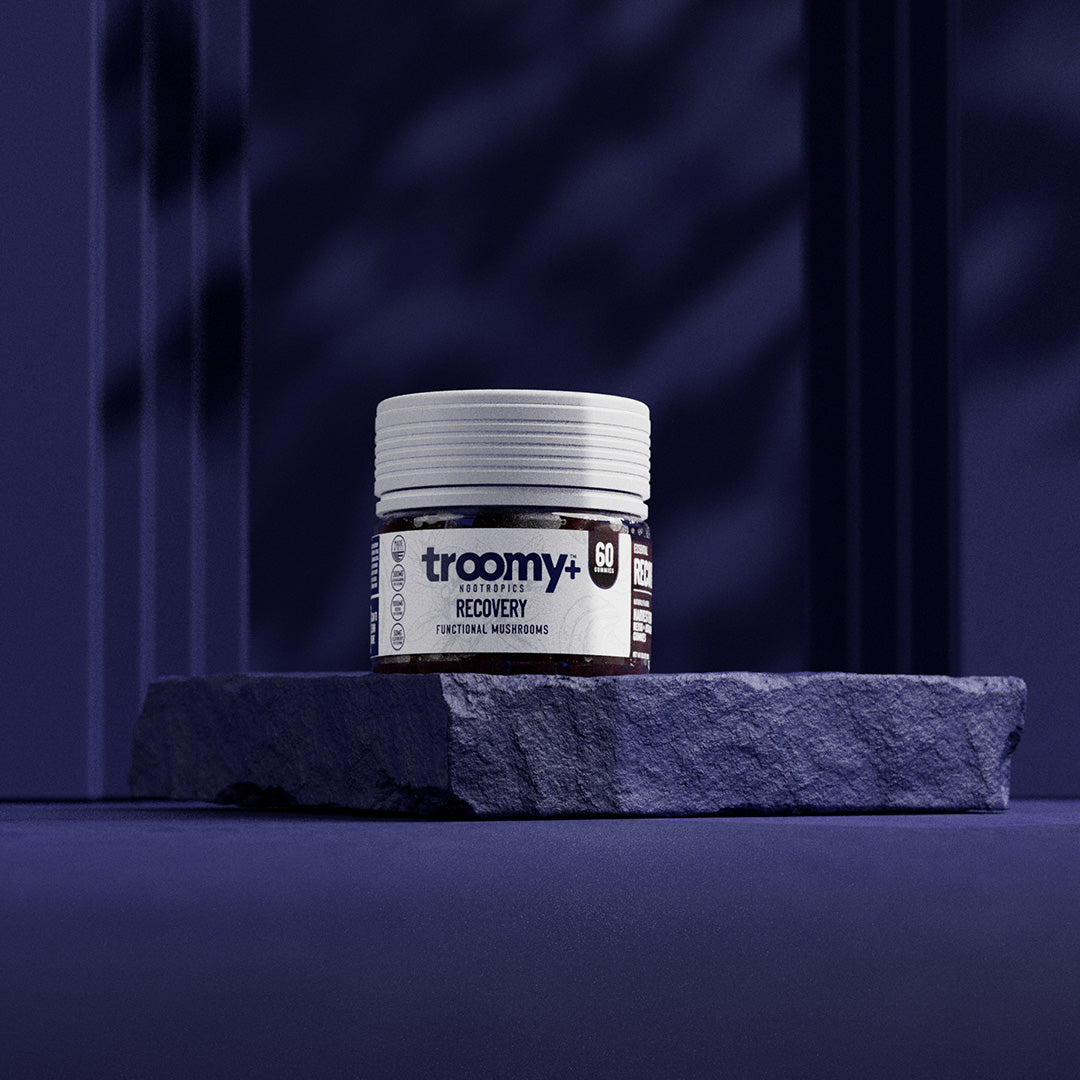
Recovery ashwagandha and reishi gummies combine 300mg of ashwagandha with 1,000mg of reishi plus chamomile, lemon balm, and passionflower in a harvest berry acai gummy. They are built for the end of a physically or mentally demanding day. More on that pairing in our guide to mushroom gummies with ashwagandha.
What if the stress mostly shows up at night?
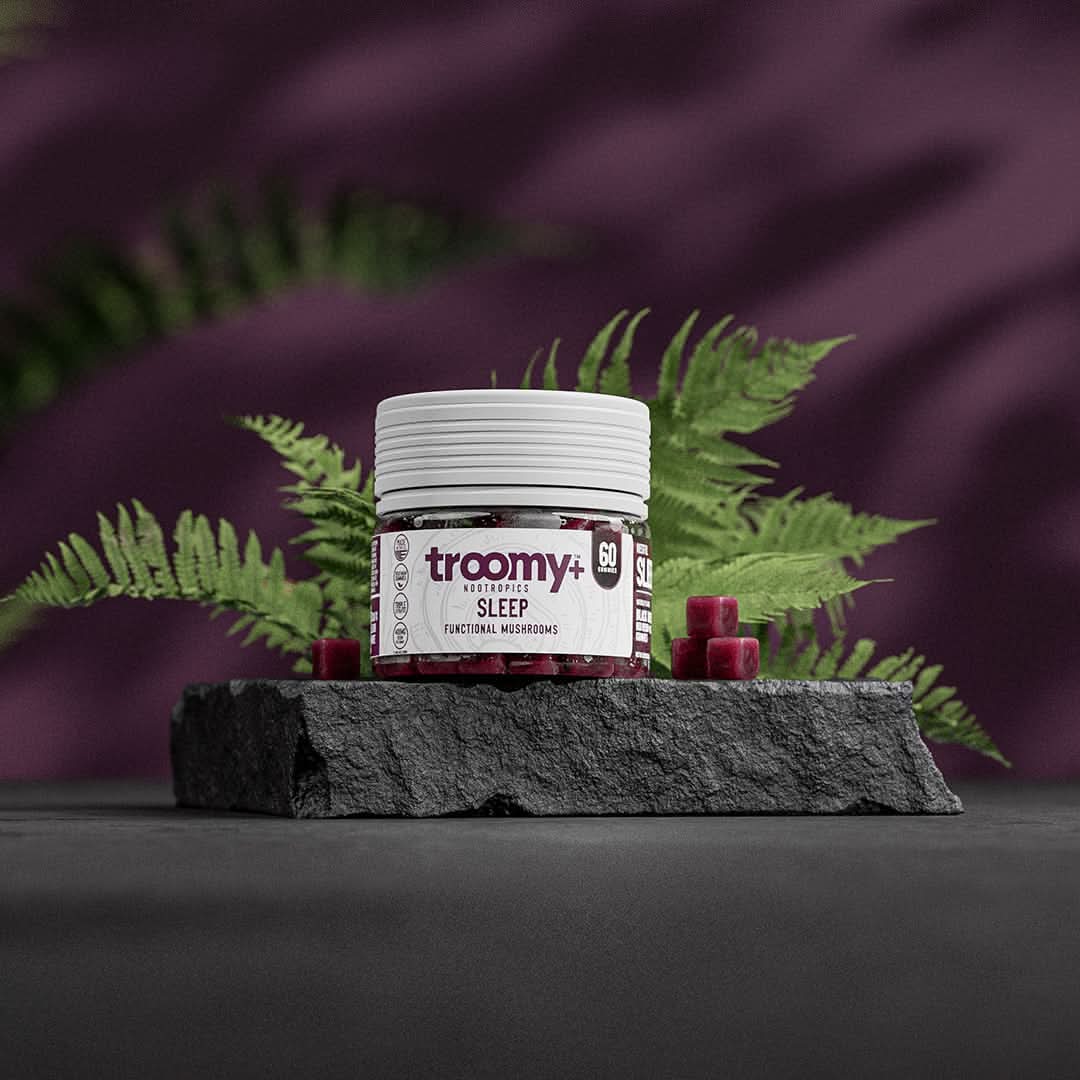
For a lot of people, the wound-up feeling only becomes a real problem when the lights go off. If that is the shape of your version, the reishi you want is the one paired with melatonin. Sleep reishi and melatonin gummies combine 400mg of reishi with 2.5mg of melatonin and calming botanicals in black raspberry, taken about 30 minutes before bed rather than while you are already lying there awake. We compared that approach with plain melatonin in our guide to mushroom gummies for sleep.
Mushroom gummies versus CBD gummies: how do they actually compare?
Set the two side by side and the differences are less about which one is stronger and more about which trade-offs you want.
On regulatory clarity, mushrooms win outright. Functional mushrooms are lawful dietary supplement ingredients. CBD, by the FDA’s own statement, is not lawful to sell as a dietary supplement or to add to food. That difference shows up in how carefully the two categories tend to be manufactured and tested.
On what is actually in the bottle, the JAMA labeling analysis is the number to remember. Mushroom supplements have their own quality problems, to be clear, which is exactly why extraction method and third-party testing matter so much and why we cover them in the next section.
On how it feels, the reports differ in a way people notice. CBD is often described as sedating at higher doses. Reishi is described as taking the edge off while leaving you functional, which is why it fits an afternoon or an evening you still plan to be present for.
On cannabis content, mushrooms remove the question entirely. No THC, no cannabinoid, nothing to explain to anyone.
And on cost, a 60-count bottle of Troomy gummies runs about $1.17 a day at two gummies a day, which is generally competitive with or below what quality CBD gummies cost per serving.
The honest summary: CBD has more human research behind the molecule itself, and functional mushrooms have far more regulatory and manufacturing clarity behind the product you actually buy. If your main goal is everyday stress support with no cannabis involved, mushrooms are a genuinely reasonable place to start.
How long do mushroom gummies take to work?
Both answers are true, and skipping either one sets people up for disappointment.
In the short term, many customers say they feel Calm, Focus, and Sleep within about 30 to 60 minutes. That is the felt, same-day layer, and it is a big part of why people stick with gummies over supplements they never notice.
In the longer term, the adaptogen story is a consistency story. Look back at the studies above and the timelines were four weeks, eight weeks, and 60 days. That is the window where the research found its effects, and it is the honest expectation to set for yourself. Take them daily for a month before you decide. Our piece on why adaptogenic mushrooms work best when your routine is boring makes the case better than a paragraph can.
How do you choose a mushroom gummy that is actually worth it?
The functional mushroom category has the same problem the CBD category has: a lot of products that technically contain the ingredient and not much else. Four things separate the real ones.
-
Extraction method. Mushroom cell walls are made of chitin, which humans do not digest well, so raw mushroom powder gives you very little. Most brands single or double extract. Triple extraction pulls the water-soluble, alcohol-soluble, and remaining compounds, which is why we use it across the line.
-
Fruiting body plus mycelium. A common industry shortcut is mycelium grown on grain, which means a meaningful share of what you are paying for is filler. Full-spectrum means both parts of the mushroom.
-
Third-party testing and a GMP-certified facility. Ask for it. Any brand worth buying will say so plainly.
-
A dose printed on the label. Proprietary blends that hide the numbers are hiding them for a reason.
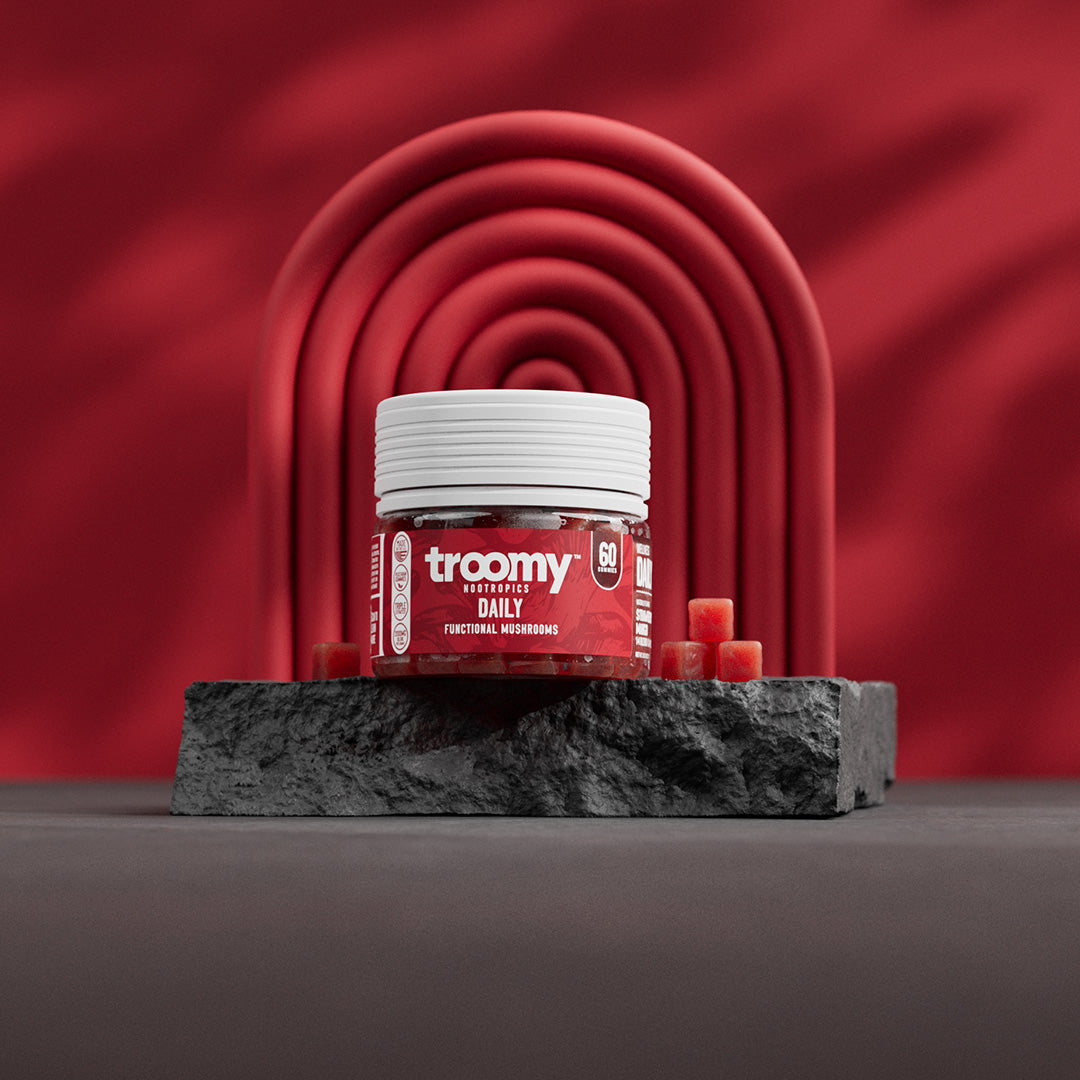
Every Troomy blend is triple-extracted and full-spectrum, made in the USA in a GMP-certified facility, third-party tested, vegetarian certified and vegan friendly, non-GMO, and flavored with real fruit rather than artificial dyes. It is also the reason our gummies taste like candy instead of dirt, which sounds like a small thing until it is the reason you actually finish the bottle. You can browse the full mood and stress support collection to see the options side by side.
What does a simple daily routine look like?
Start with one blend and one problem. Most people do not need a stack on day one, and 73 percent of our orders are a single product for exactly that reason.
If the problem is the wound-up feeling after work, take two Calm gummies in the late afternoon or early evening. If it is the fog that makes a stressful day worse, take two Focus gummies in the morning. If it is the night, take two Sleep gummies about 30 minutes before bed and browse the rest of the bedtime collection while you are there.
Once one blend is a habit, adding the next is easy. Calm in the evening plus Recovery after demanding days is a common pairing, as is Focus in the morning with Calm later on, which our lion’s mane and reishi stack guide walks through in detail.
Two gummies. That is the whole routine. And every Troomy order is backed by a 30-day money-back guarantee, so if a blend is not for you, you get your money back. For a category most people have never tried, that matters more than any claim we could make.
When should you talk to a healthcare provider?
A few situations call for a conversation rather than a purchase. If you are pregnant or nursing, talk to your provider first. If you take prescription medication, especially anything affecting blood pressure, blood sugar, or the immune system, check before adding any new supplement. If you have a known mushroom allergy or sensitivity, this category is not for you. And if your symptoms are persistent, worsening, or interfering with your daily life, that is a medical conversation and it deserves a professional, not a gummy.
Supplements support a routine. They do not replace care, and we would never suggest otherwise.
Frequently asked questions
Are mushroom gummies a real alternative to CBD gummies?
For everyday stress support, yes, they are a legitimate option worth considering. Functional mushrooms like reishi are lawful dietary supplement ingredients with a long history of traditional use, they contain no cannabinoids and no THC, and they are known for supporting a calmer, more balanced mood. CBD has more human research behind the molecule itself, while mushroom supplements have clearer regulatory footing and, in the case of triple-extracted products, more consistent manufacturing. Neither is a treatment for a diagnosed condition.
Which mushroom is best known for stress support?
Reishi. It is the mushroom most associated with calm across traditional use and modern interest, and it is the hero ingredient in Troomy Calm at 800mg per serving. Lion’s mane is the better fit if your stress shows up as mental fog, and ashwagandha, which is a root rather than a mushroom, is often paired with reishi for recovery after physically or mentally demanding days.
Will mushroom gummies make me feel high or sleepy?
No. Functional mushrooms are not psilocybin mushrooms and have zero hallucinogenic properties. Reishi in particular is known for taking the edge off without making you drowsy, which is why Calm works in the afternoon. If you want something that helps you wind down at night, that is what Sleep is for, since it pairs reishi with melatonin.
How long do mushroom gummies take to work?
Many people notice Calm, Focus, and Sleep within about 30 to 60 minutes. The deeper benefits build with consistency, and the clinical research on adaptogens generally ran four to eight weeks. Give any new blend a month of daily use before deciding whether it is working for you.
Can you take mushroom gummies every day?
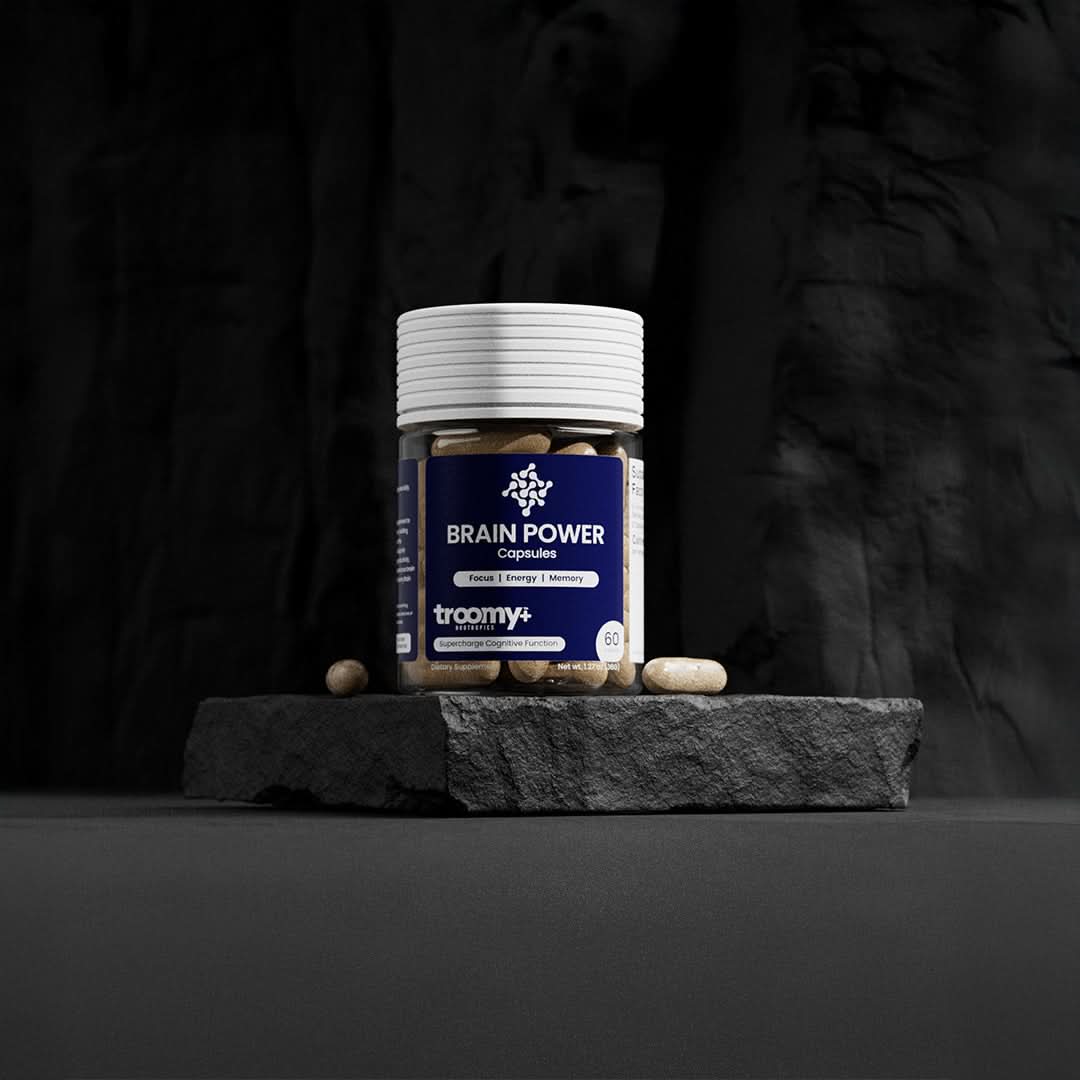
Yes. Functional mushrooms are designed for daily use, and daily use is where the research found its results. Troomy gummies are caffeine-free across the line with the single exception of our Brain Power capsules, which contain 125mg of natural caffeine, about the same as a cup of coffee, and are best taken in the morning.
Can I take mushroom gummies and CBD together?
People do, but that is a question for your healthcare provider rather than for us, particularly if you take any medication. The FDA has flagged that CBD can interact with other medicines. If you are trying to figure out whether mushrooms work for you, it is also simply easier to evaluate one thing at a time.
Do mushroom gummies work as well as mushroom tea or powder?
What matters most is the extraction, not the format. A triple-extracted, full-spectrum gummy delivers the compounds your body can actually use, and it has one advantage tea and powder do not: people keep taking it. We compared the formats directly in our guide to reishi mushroom tea versus gummies.
These statements have not been evaluated by the Food and Drug Administration. This product is not intended to diagnose, treat, cure, or prevent any disease.


