





Stress is, for most people, the entry point into the wellness supplement world. Before you start thinking about focus or sleep or immunity, you are dealing with something more immediate: the feeling that your nervous system is running at capacity, that recovery never fully happens, that the mental and physical toll of modern life is accumulating faster than you can discharge it. This is the problem adaptogens are designed to address. If you've been searching for natural stress relief supplements or the best supplements for stress that work with your body rather than against it, this guide covers the science behind which ones are actually backed by research.
What Are Adaptogens?
The concept of adaptogens was first formally proposed by Soviet pharmacologist Nikolai Lazarev in 1947. The defining criteria for a true adaptogen are that it must be non-specific, meaning it helps the body resist a broad range of stressors; it must normalize physiological function, helping the body return to balance; and it must be safe for long-term use without significant side effects. These criteria exclude stimulants, sedatives, and most pharmaceutical stress medications, which work by amplifying or suppressing a specific aspect of the stress response.
What makes adaptogens distinct from conventional supplements is that they do not push the body toward a fixed outcome. Instead, they help the system find its own equilibrium — a quality researchers describe as bidirectionality. This is why the same adaptogen can help one person feel more energized while helping another feel calmer, depending on what that individual's system needs. It is also why adaptogen effects build gradually over weeks rather than arriving all at once: the compounds are nudging the body toward a more balanced baseline, not overriding it.
How Stress Works in the Body and Why It Matters
When you encounter a stressor, your hypothalamic-pituitary-adrenal (HPA) axis activates, triggering the release of cortisol and adrenaline. This is the fight-or-flight response, and in acute situations it is lifesaving. The problem is that modern stressors are chronic and rarely fully resolved. When cortisol remains chronically elevated, the consequences accumulate: disrupted sleep, impaired immune function, memory problems, emotional dysregulation, and increased susceptibility to illness.
What makes this cycle particularly difficult to break is that the body's own recovery mechanisms become impaired under sustained cortisol exposure. The HPA axis loses its ability to accurately calibrate the stress response, meaning you become more reactive to smaller triggers over time. Returning to a resting baseline after a demanding day takes progressively longer. Physical symptoms pile on alongside the psychological ones: persistent muscle tension, fatigue that sleep does not resolve, digestive disruption, and a compromised immune response. The physical and mental costs of chronic stress are deeply intertwined, which is why addressing it effectively requires targeting both simultaneously.
The Most Effective Adaptogens for Stress Relief
Reishi Mushroom
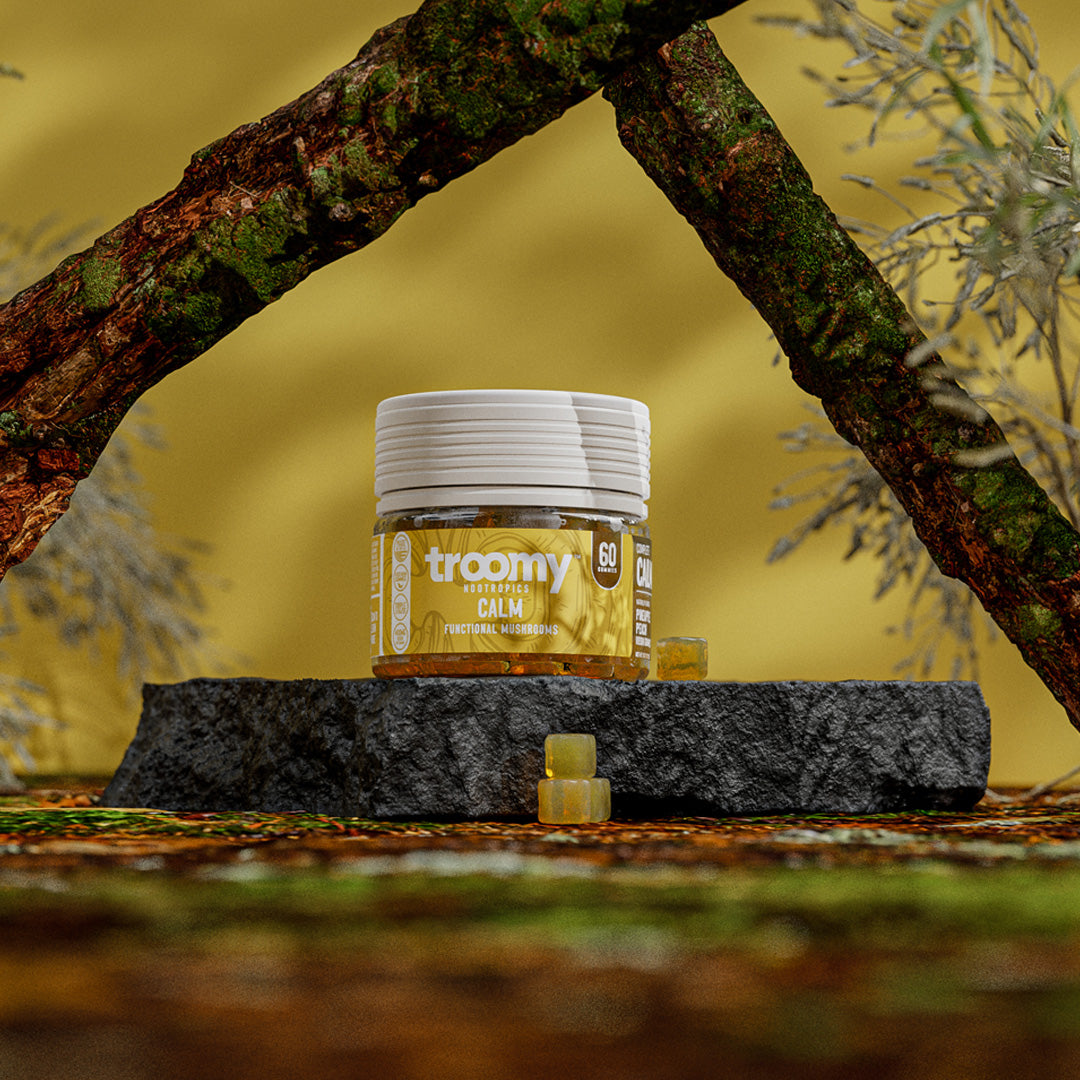
Reishi (Ganoderma lucidum) is one of the most extensively studied adaptogens for stress and nervous system support. Its triterpenes appear to modulate the HPA axis and influence the sympathetic nervous system, reducing the intensity and duration of the cortisol stress response. Reishi also supports GABA receptor activity, contributing to a sense of calm without sedation. It's one of the most well-researched mushrooms for anxiety and day-to-day stress management. Troomy's Calm Reishi Gummies deliver triple-extracted reishi for daily stress support. The Mood Collection offers additional formulations for emotional resilience. Reishi is consistently ranked among the best functional mushrooms for stress and anxiety — particularly for people who experience stress primarily as nervous system dysregulation, poor sleep, or a persistent inability to fully unwind.
Ashwagandha (Withania somnifera)
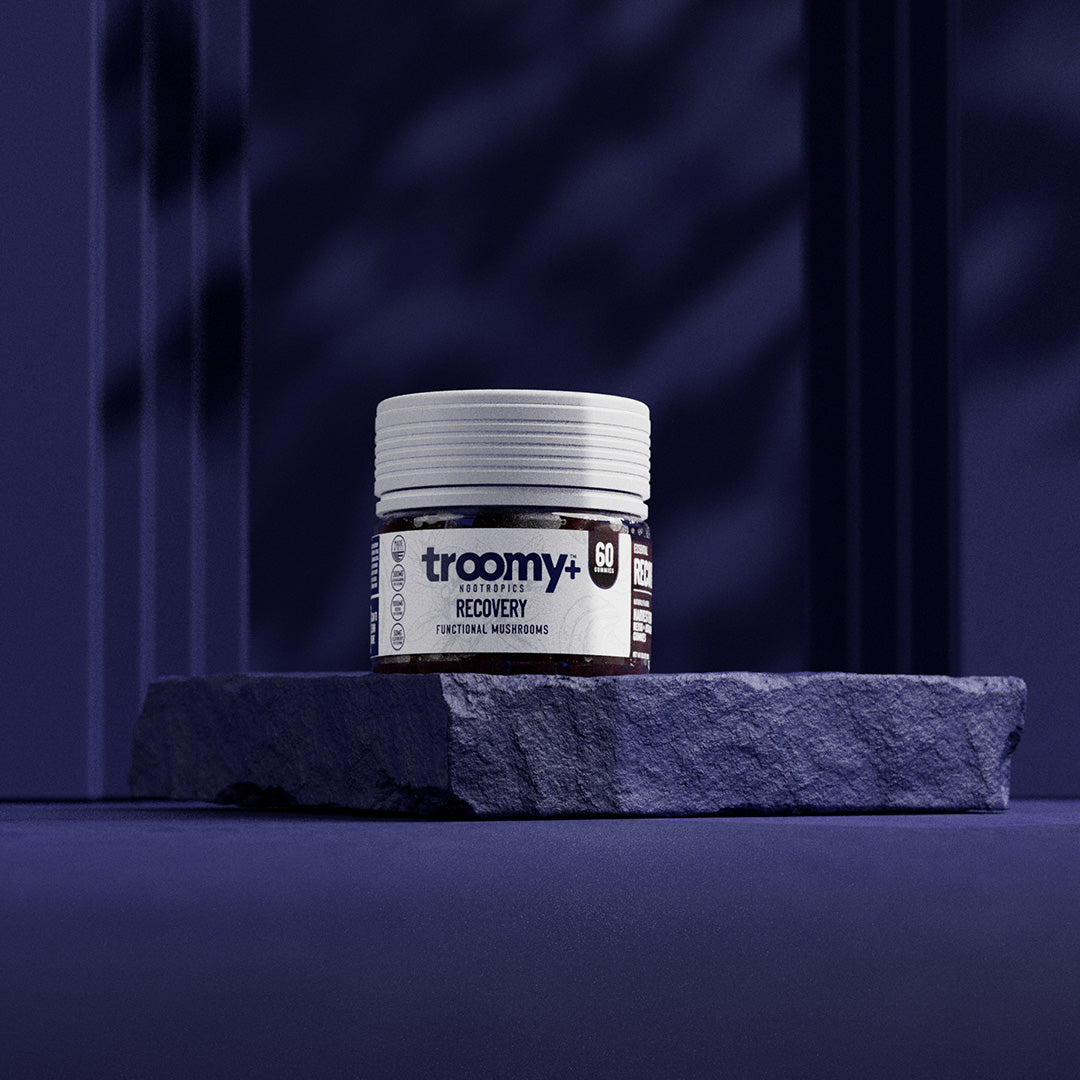
A randomized, double-blind, placebo-controlled study published in the Indian Journal of Psychological Medicine found that ashwagandha root extract significantly reduced stress and anxiety scores, cortisol levels, and measures of psychological well-being in chronically stressed adults after 60 days of supplementation. Ashwagandha is particularly effective when paired with reishi. Troomy's Recovery Ashwagandha Reishi Mushroom Gummies combine both adaptogens in a single convenient daily dose.
Beyond cortisol reduction, ashwagandha's withanolides — its primary active compounds — have been shown to support thyroid function, reduce inflammatory markers, and improve resilience to both mental and physical stressors. It is one of the few adaptogens with enough clinical trial depth to support specific efficacy claims. For people managing burnout, high-output careers, or the kind of sustained depletion that leaves you feeling emptied rather than simply tired, ashwagandha is typically the right starting point in any stress-support routine.
Cordyceps
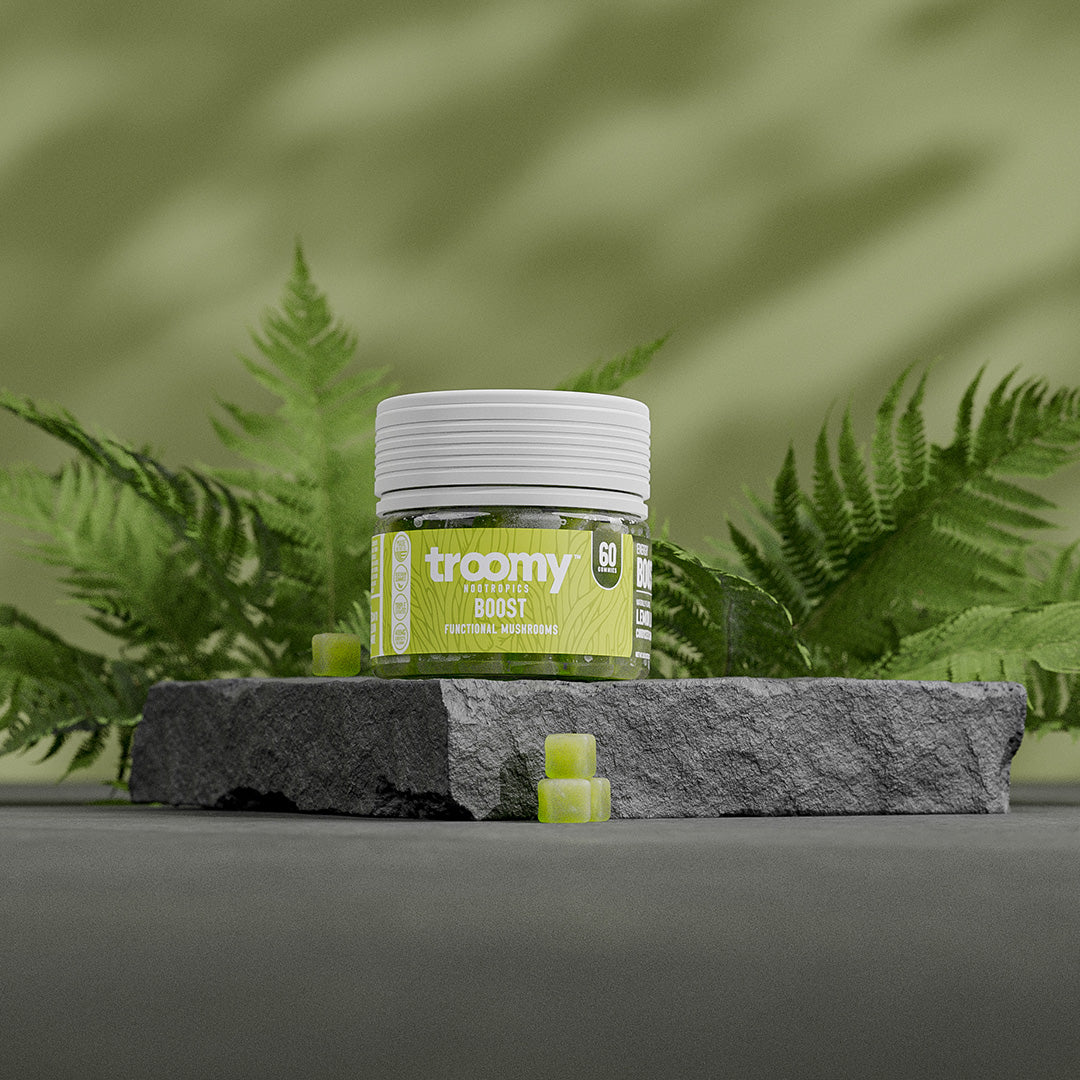
Cordyceps is less frequently discussed as a stress adaptogen but deserves inclusion because chronic stress is as much a physical phenomenon as a psychological one. Cordyceps supports ATP production and has been shown to reduce markers of physical fatigue, directly supporting the body's capacity to recover from both physical and mental stressors. Troomy's Boost Cordyceps Gummies are a great addition to any stress-support routine. Cordyceps is especially valuable for people who experience stress as primarily physical — chronic fatigue, low stamina, workouts that feel harder than they should, or a body that never quite feels replenished between days. Stress is not only a cognitive event. The sustained physical cost of elevated cortisol on cellular energy systems is real, and addressing it fully requires supporting ATP production and mitochondrial function alongside the nervous system calming that reishi and ashwagandha provide. For anyone working on managing stress productively across both mind and body, cordyceps fills a gap that the other adaptogens in this stack do not fully address.
Lion's Mane
Lion's mane contributes to stress resilience by supporting neurological health and reducing neuroinflammation. Chronic stress promotes neuroinflammatory processes that contribute to anxiety, mood dysregulation, and cognitive impairment. Lion's mane's anti-inflammatory properties and support of nerve growth factor create a neurological environment that is more resilient to stress-induced damage over time. For people exploring how mushrooms support mood alongside natural anxiety relief options, lion's mane is a powerful complement to reishi and ashwagandha in a layered daily routine.
Building a Daily Stress-Resilience Routine
The most effective approach is a layered daily routine rather than an acute intervention. A practical starting point is reishi in the evening for sleep quality and nervous system support, ashwagandha in the morning or midday for HPA axis modulation, and lion's mane in the morning to support cognitive resilience. For those who want a comprehensive approach without managing multiple products, the Troomy Bundles offer curated combinations designed around specific wellness goals.
Consistency matters more than perfection. Taking your adaptogens at roughly the same time each day — reishi with your evening wind-down, ashwagandha and lion's mane as part of your morning routine — builds the habit that makes the routine sustainable. Because adaptogens work cumulatively, a single missed day is not significant, but a pattern of inconsistency will slow your results. Those who want to go beyond a three-mushroom stack will find that combining multiple mushrooms for enhanced support starts with this foundational trio, with cordyceps being the most common addition for people whose stress has a significant physical or energy component.
Adaptogens vs Anxiety Medication: Understanding the Difference
Adaptogens are wellness supplements that support the body's natural stress response. They are not treatments for anxiety disorders, depression, or other clinical mental health conditions. If you are experiencing clinical-level anxiety or depression, please work with a qualified healthcare provider. Adaptogens can be a valuable complement to conventional care for many people, but they are not a substitute for professional mental health support when it is needed.
It is also worth understanding what adaptogens are actually doing at a physiological level. They address the underlying substrate of stress — HPA axis dysregulation, cortisol burden, chronic sympathetic nervous system activation — rather than simply masking symptoms. For many people, this makes adaptogenic mushrooms for mood, energy, and stress resilience a meaningful part of a long-term wellness foundation rather than a short-term coping tool, and it is why the effects compound in value the longer you maintain a consistent routine.
What to Expect When You Start Taking Adaptogens
Adaptogens do not produce immediate, dramatic effects on the first day. Most people report first noticing meaningful effects after two to four weeks of consistent daily use, with fuller benefits emerging at the six to eight week mark. Some people notice improved sleep quality first, particularly with reishi. Others notice reduced reactivity to stressors, a greater sense of baseline calm, or better recovery from demanding days.
The progression tends to follow a recognizable sequence. Sleep quality improvements typically come first, often within the first two weeks for those taking reishi consistently. Reduced emotional reactivity and a more stable baseline mood usually follow in weeks three and four. Cognitive clarity under pressure — the ability to think clearly when the mental load is heavy, rather than feeling like you are operating through a fog — tends to emerge last, as neurological adaptations take the longest to consolidate. Giving yourself a full eight-week window before drawing conclusions gives the compounds the time they need to work at every level.
Frequently Asked Questions
What are adaptogens?
Adaptogens are a class of natural substances that help the body adapt to stress by modulating the physiological stress response. They must be non-specific in their stress-protective effects, normalizing in their action, and safe for long-term use. Examples include reishi mushroom, ashwagandha, rhodiola rosea, and cordyceps.
Do adaptogens actually reduce stress?
Multiple clinical studies support the stress-reducing effects of specific adaptogens. Ashwagandha has the strongest and most consistent clinical evidence, with randomized controlled trials showing significant reductions in cortisol and validated stress scores. Reishi, rhodiola, and cordyceps have also been studied with positive findings.
What is the best adaptogen for anxiety?
Ashwagandha and reishi are the best-studied adaptogens for stress and anxiety in clinical settings. Clinical anxiety should be evaluated and managed by a qualified healthcare provider.
Can I take multiple adaptogens together?
Yes. Adaptogens are generally safe to combine and are often more effective when stacked because they address different aspects of the stress response. Reishi targets the nervous system and sleep quality; ashwagandha addresses the HPA axis and cortisol output; lion's mane supports the neurological resilience needed to handle mental load. Together, they cover more ground than any single adaptogen can. Reishi and ashwagandha are a particularly well-matched pairing, combined in the Recovery Ashwagandha Reishi Mushroom Gummies.
How long do adaptogens take to work?
Adaptogens generally require two to four weeks of consistent daily use before meaningful benefits emerge. Building a consistent daily habit is the most important factor in getting results.
These statements have not been evaluated by the Food and Drug Administration. This product is not intended to diagnose, treat, cure, or prevent any disease.


