



Stress has a way of accumulating quietly. A demanding week at work, a disrupted sleep schedule, a body that never fully recovers. Before long, what feels like a rough patch starts to feel like a baseline. More people are turning to mushroom supplements for stress and recovery support, and reishi keeps coming up as the one with the most science behind the calm. But what does the research actually say?
This article covers what reishi is, how it works as an adaptogen, what the current science tells us about cortisol and stress response, and what you should realistically expect if you add it to your routine. For a broader overview of everything this mushroom can do, see our complete guide to reishi mushroom benefits, uses, and how to take it.
What Is Reishi and Why Does It Belong in the Stress Conversation?
Reishi (Ganoderma lucidum) is one of the most studied functional mushrooms in the world. It has been used in traditional East Asian medicine for over 2,000 years, where it was known as lingzhi, or the "mushroom of immortality," prized not just for longevity but for its calming, grounding effects on the mind and body.
What draws modern wellness researchers to reishi is its profile of bioactive compounds, specifically triterpenes (including ganoderic acids) and beta-glucans. These compounds are responsible for many of reishi's reported benefits, and several of them interact directly with the body's stress response systems. While reishi is often discussed in the context of immunity or sleep support, its role as an adaptogen is one of its most compelling and well-documented properties.
What Does It Mean for Reishi to Be an Adaptogen?
An adaptogen is a compound that helps the body resist and adapt to physical and psychological stress without overstimulating or sedating it. Adaptogens work by modulating the HPA axis (the hypothalamic-pituitary-adrenal axis), which governs the release of cortisol, the body's primary stress hormone.
When the HPA axis is dysregulated, you get the familiar cycle: cortisol spikes, energy crashes, difficulty sleeping, a nervous system that never fully returns to a calm state. Adaptogens like reishi are thought to support a more balanced stress response, helping the body return to equilibrium more efficiently rather than sustaining that elevated state of physiological tension.
This is a fundamentally different mechanism from pharmaceutical anxiolytics or sedatives, which work by suppressing the nervous system or directly increasing GABA activity. Reishi does not sedate or blunt cognition. It works more subtly, supporting the underlying regulatory systems rather than overriding them.
What Does the Research Say About Reishi and Cortisol?
The research on reishi and cortisol regulation is promising, though it is important to be honest about where the science currently stands. The most robust studies have been conducted in preclinical and animal models, and human clinical data is still developing. That said, several findings are worth understanding in detail.
Preclinical research suggests that reishi's triterpenes, particularly the ganoderic acids, may help modulate cortisol synthesis and reduce inflammatory markers associated with chronic stress. One proposed mechanism involves the modulation of 11-beta-hydroxysteroid dehydrogenase (11-beta-HSD1), an enzyme involved in cortisol activation in tissues. This is a target that pharmaceutical researchers have explored as well, which speaks to the biological plausibility of the mechanism.
Multiple preclinical studies have reported significant anti-stress and anti-fatigue effects in animal subjects given Ganoderma lucidum extracts, with researchers attributing the effect in part to the mushroom's polysaccharide and triterpene content. Human trials examining reishi specifically for anxiety and cortisol are fewer, but research on adaptogenic formulas that include reishi alongside other botanicals has shown favorable outcomes for perceived stress reduction in human participants.
The honest takeaway: the foundational science is solid, and the traditional use record is substantial. But reishi is not a pharmaceutical compound with decades of large-scale double-blind human trials behind every claim. If you are looking for a natural, well-tolerated daily support tool for your stress response, the evidence base is real and meaningful. If you are managing a clinical anxiety disorder, reishi is not a replacement for professional care.
How Does Reishi Support the Nervous System and Anxiety?
Beyond cortisol regulation, reishi's triterpenes have been studied for their interaction with the GABAergic system. GABA (gamma-aminobutyric acid) is the brain's primary inhibitory neurotransmitter, the molecule responsible for calming neural activity. Several ganoderic acids found in reishi have shown GABA-A receptor-binding activity in laboratory studies, which may contribute to reishi's traditionally observed calming effects without the sedative downside associated with pharmaceutical GABA modulators.
There is also an indirect pathway worth noting. Chronic stress disrupts gut-brain axis communication and drives neuroinflammation, both of which can amplify anxiety responses over time. Reishi's beta-glucans support immune regulation and reduce inflammatory cytokines, which means some of its anxiolytic effect may come through reducing the inflammatory burden that makes the nervous system hypersensitive in the first place.
This is one reason why reishi pairs particularly well with ashwagandha, another adaptogen that works through overlapping but complementary mechanisms. Ashwagandha has stronger clinical data specifically for cortisol and anxiety, while reishi brings immune regulation and gut-brain support to the picture. Together, they represent one of the more evidence-backed combinations in the adaptogens for anxiety space, addressing more of the physiological contributors to stress than either does alone.
How Does Reishi Compare to Pharmaceutical Options?
Comparing adaptogens to pharmaceuticals is a question of intent. If someone is experiencing acute mental health distress or managing a diagnosed anxiety disorder, an adaptogen is not the right primary tool. Reishi is not designed to replace pharmaceutical interventions, and any responsible wellness brand will be clear about that.
What reishi offers is something different: a daily support compound that works with the body's regulatory systems over time. There is no dependency risk, no tolerance development, and no cognitive dulling associated with consistent reishi use. For the large population of people experiencing subclinical, lifestyle-driven stress from work demands, sleep disruption, or insufficient recovery, adaptogens offer a meaningful and low-risk way to support the stress response without pharmaceutical intervention.
The trade-off is time. Pharmaceuticals are fast by design. Adaptogens are cumulative. You will not feel reishi working on day one the way you might feel a sedative or anxiolytic. The effects build over two to four weeks of consistent daily use as the HPA axis gradually recalibrates and inflammatory tone decreases.
How to Take Reishi for Stress and Anxiety
Consistency is the single most important factor when using reishi for stress. It works as a sustained input to your regulatory systems, not as an on-demand response. Taking it daily, as part of an established routine, is how you get the most out of it. Sporadic use is unlikely to produce the same results.
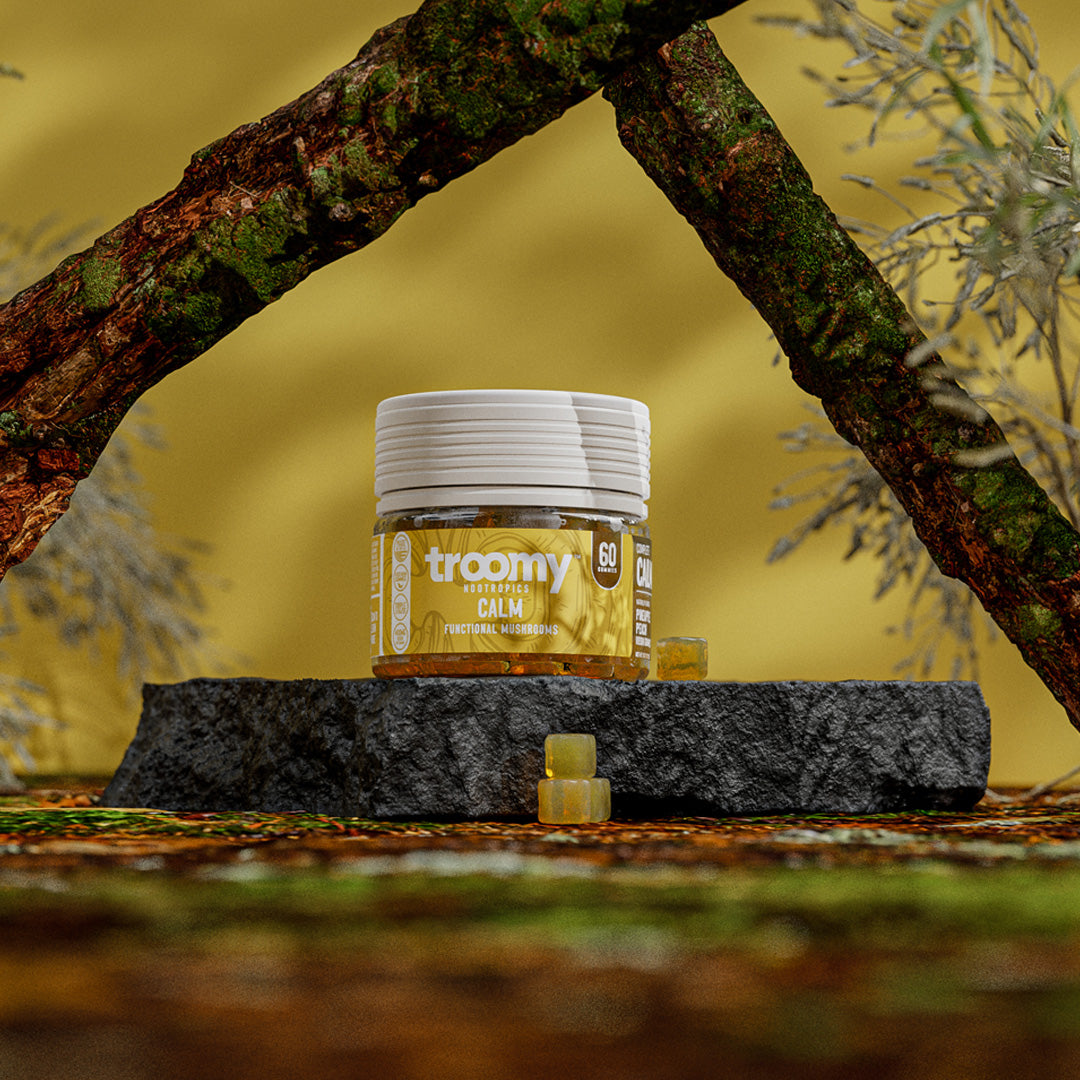
Extraction method also matters significantly. Not all reishi products deliver the same bioactive profile. Troomy's Calm Reishi Gummies are formulated with triple-extracted reishi mushroom, a process that pulls both the water-soluble beta-glucans and the alcohol-soluble triterpenes through three distinct extraction passes. That triple-extraction process is what gives you access to the full spectrum of compounds that make reishi effective for stress support. They are vegetarian, made in the USA, and available in natural flavors that make the daily habit easy to actually maintain.
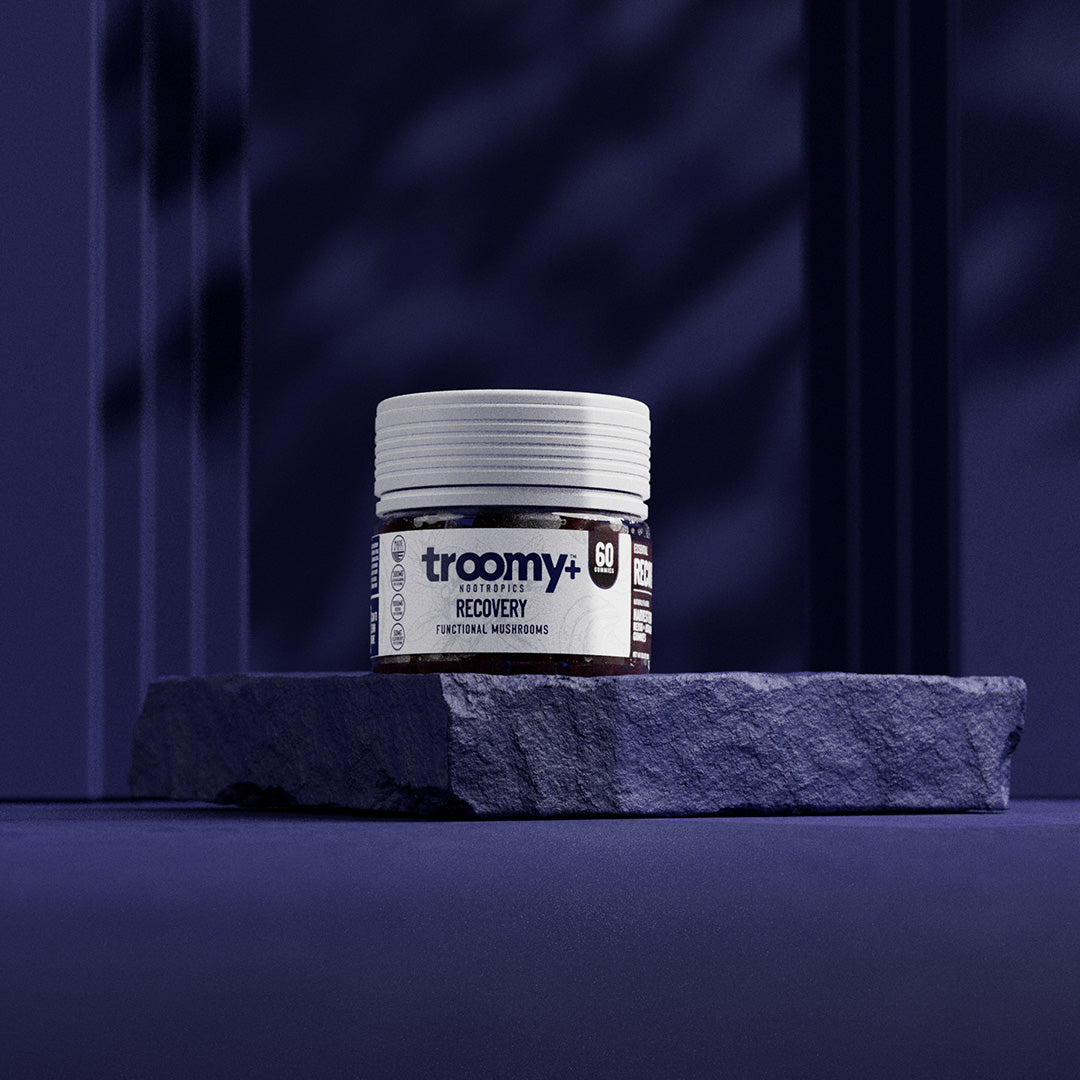
For people dealing with elevated stress alongside fatigue, recovery deficits, or hormonal disruption, the Recovery Ashwagandha Reishi Gummies combine reishi's adaptogenic support with ashwagandha's well-documented cortisol-lowering effects. This combination targets the stress response from multiple angles and is worth considering if stress is affecting your energy, sleep, or overall sense of recovery.
If you are building a broader wellness routine for stress and mood management, Troomy's mood support collection brings together the most evidence-backed natural options for a balanced, sustainable approach to daily wellbeing.
What to Realistically Expect
Most people who add reishi to a consistent daily routine report a gradual shift in how they respond to stressful situations: less reactivity, better sleep onset, a greater sense of calm without sedation. These effects are typically subtle in the first week and more noticeable by weeks two through four.
Reishi does not silence stress or eliminate its causes. It supports the body's ability to process and recover from stress more effectively. Think of it as a stabilizer rather than an off switch, something that narrows the gap between a stressful input and your nervous system's return to baseline. Combined with good sleep habits, physical activity, and a diet that supports recovery, reishi can be a meaningful part of a stress management strategy that actually works in real life.
Frequently Asked Questions
Does reishi help with anxiety?
Reishi has shown adaptogenic properties that support the body's stress response system, including effects on the HPA axis and GABAergic pathways relevant to anxiety. Preclinical research is promising, and centuries of traditional use in East Asian medicine support its calming reputation. It is not a pharmaceutical anxiolytic, and it is not a substitute for professional care in clinical anxiety. For people exploring mushroom supplements for stress and generalized tension, reishi is among the better-evidenced natural options available.
How does reishi reduce stress?
Reishi works primarily by helping regulate the HPA axis, which governs cortisol release. Its triterpene compounds, particularly ganoderic acids, are thought to modulate cortisol synthesis and reduce inflammatory markers associated with chronic stress. Some triterpenes have also shown activity at GABA receptors in laboratory settings, which may contribute to the calming effects observed in traditional use and preclinical research.
Is reishi good for cortisol?
Research suggests reishi's triterpenes may support healthier cortisol regulation, particularly in the context of chronic stress. Some studies point to mechanisms involving 11-beta-hydroxysteroid dehydrogenase modulation, which affects cortisol activation in tissue. Human clinical data is still developing. Combining reishi with ashwagandha is a popular approach among those using adaptogens for anxiety and cortisol management, given ashwagandha's stronger human-trial evidence for direct cortisol reduction.
How long does reishi take to work for stress?
Reishi is an adaptogen, meaning it works cumulatively rather than acutely. Most people notice meaningful changes after two to four weeks of consistent daily use. Consistency matters more than the specific time of day you take it. Taking reishi sporadically is unlikely to deliver the same results as a steady daily habit.
These statements have not been evaluated by the Food and Drug Administration. This product is not intended to diagnose, treat, cure, or prevent any disease.


