



Reishi and melatonin both have a place in a healthy sleep routine, but they work in completely different ways. Melatonin tells your brain it is time to sleep. Reishi helps your body actually get ready for it. The growing interest in reishi mushroom for sleep is not unfounded: research and centuries of traditional use point to a mushroom that addresses the underlying conditions that keep people awake, rather than simply forcing the sleep signal. If you have been wondering whether reishi can genuinely support better rest, or how it stacks up against melatonin, this article breaks down the science, the differences, and when it makes sense to use one, the other, or both.
What Is Reishi Mushroom and Why Does It Matter for Sleep?
Reishi (Ganoderma lucidum) is one of the most studied medicinal mushrooms in the world, with a history in traditional Eastern medicine spanning more than 2,000 years. In modern wellness, it has earned its reputation as a premier adaptogen: a natural compound that helps the body manage stress, maintain balance, and recover from the physiological toll that daily life takes on your system.
The compounds most responsible for reishi's effects are its triterpenes and beta-glucans. Triterpenes are bioactive molecules found abundantly in reishi that interact with the body's stress-response systems. Beta-glucans are complex polysaccharides that support immune regulation and overall cellular health. Together, these compounds influence the nervous system in ways that can directly affect how well you wind down at night.
Reishi is not a sedative. It does not force your body into sleep the way a pharmaceutical sleep aid does. Instead, it works upstream, targeting the conditions that prevent restful sleep in the first place: chronic stress, elevated cortisol, and an overactivated nervous system. To understand why that matters, it helps to look at how melatonin works by comparison. For a full overview of reishi's benefits beyond sleep, explore the complete guide to reishi mushroom benefits, uses, and how to take it.
How Does Melatonin Work?
Melatonin is a hormone your brain produces naturally in response to darkness. As light fades in the evening, your pineal gland releases melatonin, signaling to your body that sleep time is approaching. It does not cause sleep directly; it acts more like a biological clock alarm, letting your system know when to start winding down.
Melatonin supplements work by reinforcing or replacing this signal, which makes them most effective for specific situations: jet lag, shift work, or when your natural melatonin production is off schedule. They are fast-acting, typically taking effect within 30 to 60 minutes, and they are best used short-term. Long-term reliance on melatonin supplements can, in some cases, interfere with your body's own production over time, which is one reason many sleep specialists recommend using it sparingly and situationally rather than as a nightly habit.
Melatonin also does nothing to address the root cause of most sleep problems: the stress, anxiety, and mental activity that keep people staring at the ceiling even when they are exhausted. That is exactly where reishi steps in.
How Does Reishi Mushroom for Sleep Work Differently Than Melatonin?
Reishi's Adaptogenic Mechanism
Reishi influences sleep through its effect on the HPA axis, the hypothalamic-pituitary-adrenal system that governs your stress response and cortisol production. When the HPA axis is in overdrive, as it often is for people dealing with chronic stress, your cortisol levels can stay elevated into the evening, making it harder to relax and fall asleep even when you feel tired.
By supporting more balanced cortisol regulation, reishi helps your nervous system shift out of fight-or-flight mode and into the parasympathetic state your body needs for genuine rest. Research published in the Journal of Ethnopharmacology has indicated that reishi polysaccharides may extend non-REM sleep time and improve sleep architecture, suggesting a more direct influence on sleep quality beyond just stress reduction.
The effect is gradual. Reishi builds up in your system over time, which means it is not the supplement you reach for when you need to sleep in two hours. It is the supplement you build a habit around so that falling and staying asleep becomes easier over weeks.
The Role of Triterpenes and Calm Signaling
Reishi's triterpenes, particularly ganoderic acids, have been studied for their ability to modulate GABA receptor activity. GABA is the brain's primary inhibitory neurotransmitter, the chemical that dials down neural activity and promotes a sense of calm. Many pharmaceutical sleep aids and anti-anxiety medications work by enhancing GABA activity. Reishi's triterpenes appear to do something similar through a gentler, non-habit-forming pathway.
This is one reason reishi is often described as producing a sense of mental quiet rather than drowsiness. People who take it consistently tend to report that their minds feel less busy at bedtime and that the typical loop of stress-driven thoughts is easier to step away from. That kind of cognitive calm is a meaningful precondition for deep, restorative sleep.
Reishi vs Melatonin: Which One Is Right for You?
Choosing between reishi and melatonin is less about picking a winner and more about understanding what kind of sleep support you actually need.
Melatonin is the better choice when your sleep issue is primarily about timing: you cannot fall asleep at the right hour, you are recovering from travel, or your sleep schedule has been disrupted by shift work or a late-night lifestyle. It is targeted, fast-acting, and works best when used occasionally rather than every night.
Reishi is the better choice when your sleep issue is rooted in stress, racing thoughts, or an inability to fully unwind even when you are tired. If you wake up exhausted despite getting enough hours in bed, if stress is a constant background noise in your life, or if you are looking for a sustainable, non-habit-forming way to improve overall sleep quality over time, reishi is designed for exactly that pattern.
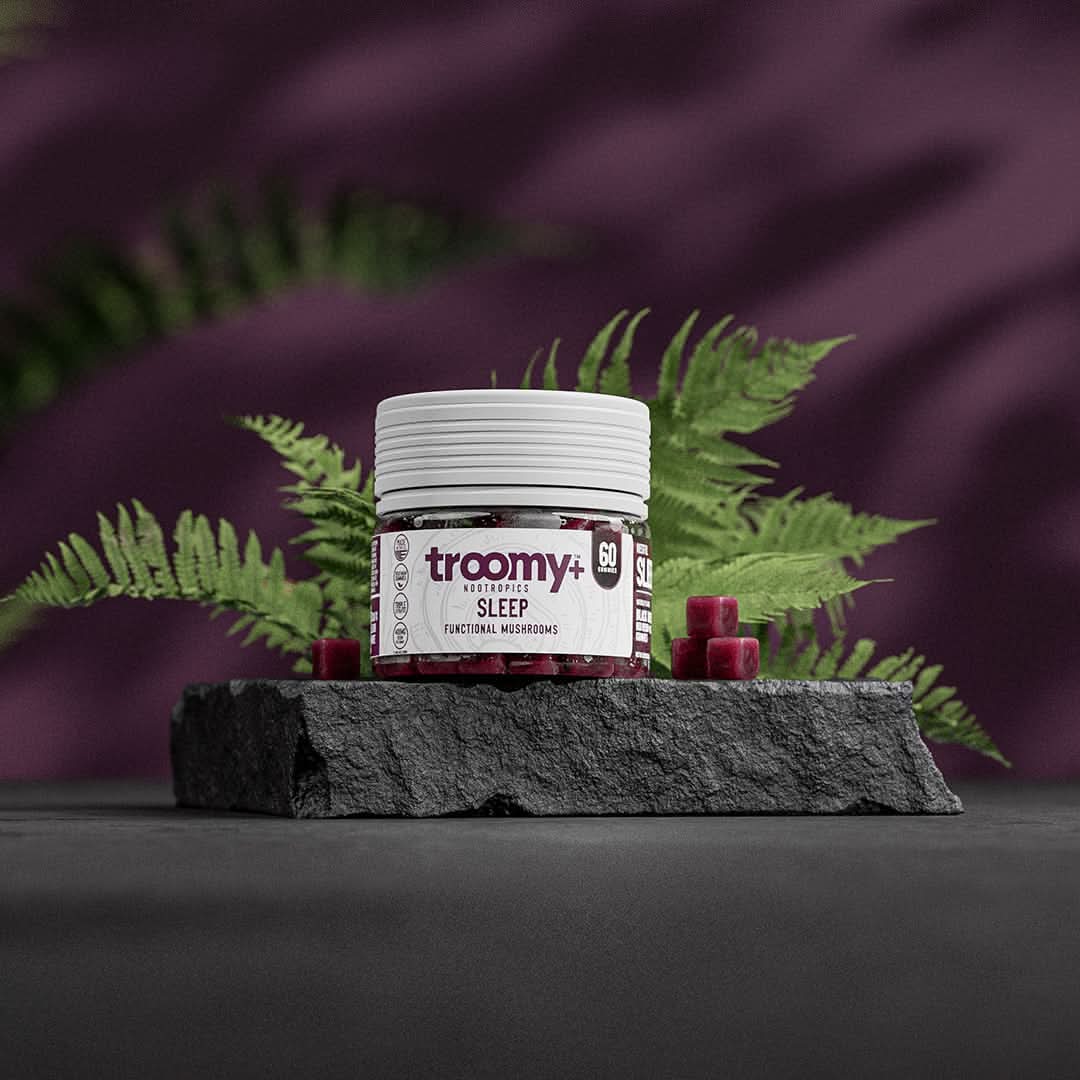
The two are also frequently paired together. Because they work through entirely different mechanisms, combining reishi and melatonin does not create redundancy. Melatonin handles the timing signal while reishi creates the underlying calm that allows the body to respond to that signal more effectively. Troomy's Sleep Reishi Gummies are formulated with triple-extracted reishi specifically to support that deeper, stress-related side of sleep quality.
When Should You Take Reishi for Sleep?
Timing matters, but not in the way it does with melatonin. Because reishi is an adaptogen that works cumulatively, the most important variable is consistency rather than precision timing. That said, taking reishi 30 to 60 minutes before bed is the most common approach for sleep support, giving the body time to absorb and respond to its calming compounds before you turn the lights off.
Some people also incorporate a morning dose to support cortisol balance throughout the day, working on the stress root cause from two angles. Morning use can help prevent the cortisol spike that often follows waking, which left unchecked can cascade into elevated stress levels and poor sleep readiness come evening.
If you are newer to reishi, starting with a single evening serving and assessing how your body responds over two to three weeks is a reasonable approach. Troomy's Calm Reishi Gummies are a good option for those who want reishi's stress-modulating benefits throughout the day, while the Sleep formula is specifically crafted for evening use.
Can You Take Reishi and Melatonin Together?
Yes, reishi and melatonin are generally considered safe to stack. Because they work through completely different pathways, there is no known interaction between them, and many people who struggle with both the timing and the quality of their sleep find that combining the two gives them more comprehensive support than either one alone.
A reasonable approach might look like this: reishi taken consistently each evening as a foundational sleep support, with melatonin added in occasionally when timing is the specific issue, such as when traveling across time zones or recovering from an unusually late night.
As with any supplement combination, if you are currently taking medications for sleep, anxiety, or any other condition, it is worth checking with your healthcare provider before adding reishi to your routine. Reishi is well-tolerated by the vast majority of healthy adults, but individual circumstances vary.
How Long Does Reishi Take to Work for Sleep?
This is one of the most common questions people have when starting reishi, and the honest answer is: give it two to four weeks. Adaptogens are not designed for overnight results. They work by gradually influencing your stress-response systems, and those systems take time to recalibrate.
In the first week, some people notice a subtle shift in how their evenings feel, particularly if stress is the primary driver of their sleep issues. By weeks two and three, the more meaningful changes tend to emerge: fewer racing thoughts at bedtime, easier time falling asleep, and a greater sense of having actually rested when they wake up.
Consistency is the single biggest variable. Reishi taken every few days will not deliver the same results as reishi taken daily. Building it into a reliable evening routine, whether as a gummy before bed, a capsule with dinner, or a wind-down ritual you look forward to, is the most effective way to experience what it can do.
The Best Mushroom Gummies for Sleep: What to Look For
Not all reishi supplements are created equal, and that matters a great deal when you are trying to get results from a functional mushroom. The potency and effectiveness of reishi depend heavily on how it is extracted. A full-spectrum product requires pulling out both water-soluble compounds (beta-glucans) and alcohol-soluble compounds (triterpenes), which is why a triple-extraction process is the standard to look for in any quality mushroom supplement.
Single-extraction products may deliver only part of the picture, potentially leaving out the very compounds that drive reishi's calming and sleep-supportive effects. Beyond extraction quality, look for mushroom gummies for sleep that are made without artificial fillers or excessive added sugar, sourced responsibly, and produced in a facility that meets US manufacturing standards.
Troomy's products check all of those boxes. Made in the USA, vegetarian, and triple-extracted for full-spectrum potency, the Sleep Reishi Gummies are specifically designed for evening use, with a natural flavor people actually enjoy as part of a nightly routine. If you want to build a broader sleep and relaxation stack, the Bedtime Collection brings together Troomy's best formulas for winding down and staying asleep.
If you are ready to stop fighting your sleep and start supporting it from the inside out, reishi is one of the most research-backed, time-tested tools available. The key is giving it enough time to do its job.
Frequently Asked Questions
Does reishi make you sleepy?
Reishi does not cause drowsiness in the way a sedative or sleep aid does. Instead, it works over time to help regulate the stress response, lower cortisol, and support the body's natural relaxation pathways. Many people report that consistent use over two to four weeks leads to noticeably calmer evenings and easier sleep onset, but it is not a knock-out supplement. Think of it as a long-game tool rather than a fast-acting pill.
Can you take reishi and melatonin together?
Yes, reishi and melatonin are generally considered safe to take together, and many people combine them successfully. They work through different pathways, so the effects are complementary rather than duplicative. Melatonin signals the brain that it is time to sleep, while reishi helps the body reach the calm state needed for that signal to land effectively. If you are taking any medications or have a health condition, check with your healthcare provider before combining any new supplements.
How much reishi for sleep?
Most research on reishi uses doses in the range of 1,000 to 3,000 mg of whole reishi extract per day, often divided across morning and evening. For sleep specifically, taking reishi 30 to 60 minutes before bed is a common approach. The right amount varies based on the form and the extract concentration, so always follow the serving guidelines on your specific product and give it at least two to four weeks of consistent use before evaluating results.
How long does reishi take to work for sleep?
Reishi is an adaptogen, which means it builds its effects gradually rather than delivering an immediate result. Most people begin noticing a difference in their sleep quality, stress levels, or overall sense of calm after two to four weeks of consistent daily use. Some people notice lighter improvements within the first week, especially if stress is the primary driver of their sleep difficulty. Consistency matters more than timing for reishi to work effectively.
These statements have not been evaluated by the Food and Drug Administration. This product is not intended to diagnose, treat, cure, or prevent any disease.


