



Every season it is the same story: someone at work gets sick, then half the office follows. You want to give your body more everyday support, but the supplement aisle is overwhelming. Here is which functional mushrooms actually have research behind them for immune support, and how to choose.
Ranked by the strength of their research for immune support, the best functional mushrooms are turkey tail, reishi and chaga. All three are in Troomy's Daily 14, and for most people a daily gummy that combines them is the simplest way to take them.
| Rank | Mushroom | Best for | Strongest evidence | Main limitation |
|---|---|---|---|---|
| 1 | Turkey tail | Everyday immune and gut support | Deep lab research; a small human trial on gut bacteria | Studies mostly used purified extracts |
| 2 | Reishi | Feeling run down plus stress or poor sleep | Long traditional use; a controlled human safety study | Little immune research in healthy people |
| 3 | Chaga | Antioxidant support within a blend | Lab studies | Very little human research |
How do you judge an immune-support mushroom?
We weighed three things, and they are the same three worth checking on any product you buy.
Research. Human studies count for more than lab or animal work, and studies on the whole mushroom or its extract count for more than studies on one isolated compound. Large human trials are rare for every mushroom on this list, so the ranking reflects relative strength, not proof.
Extraction. The compounds researchers care about sit inside a chitin cell wall that the body largely cannot digest, and hot water extraction is the standard way to draw them out (Wachtel-Galor et al., NCBI Bookshelf, 2011). That is why a hot water or triple extract is the format to look for, rather than plain ground mushroom powder.
Dose. A mushroom only helps if there is a meaningful amount of it in each serving and you take it every day. That is why the label matters as much as the mushroom: it should say how much extract you get per serving and which part of the mushroom it comes from.
1. Why is turkey tail the top immune mushroom?
Turkey tail has one of the deepest research records of any functional mushroom. It is rich in beta-glucans and contains two protein-bound polysaccharides, PSP and PSK, which are a big part of why researchers have studied it so closely.
It also has a gut connection, which matters because an estimated 70 to 80 percent of immune cells are found in the gut (Wiertsema et al., Nutrients, 2021). In a small trial, healthy adults who took a turkey tail polysaccharide extract daily for two weeks showed gut bacteria changes consistent with a prebiotic (Pallav et al., Gut Microbes, 2014).
The limitation is that most of this research used purified extracts at high doses rather than the whole mushroom. The human gut trial, for example, used 3.6 grams a day of purified extract (Pallav et al., Gut Microbes, 2014), so its results do not transfer automatically to an everyday supplement. Turkey tail still ranks first, because no other mushroom here has as much research behind it or the same link between its polysaccharides and gut bacteria.
2. When is reishi the better choice?
Reishi has been used for centuries in China, Japan and other Asian countries, and its main active compounds are polysaccharides, including beta-glucans, and triterpenes (Wachtel-Galor et al., NCBI Bookshelf, 2011). It is studied for normal immune function and is also the mushroom most associated with stress and sleep support, so it is the stronger pick if feeling run down comes with stress or poor sleep.
On safety, a controlled four-week study in 18 healthy adults found no signs of liver, kidney or DNA toxicity with reishi supplementation (Wachtel-Galor et al., British Journal of Nutrition, 2004). Its immune research in healthy people is thinner than its reputation suggests: none of its purported benefits has yet been shown in adequately sized, properly controlled human trials (LiverTox, NCBI Bookshelf, updated October 2024). Much of the research looks at how reishi's beta-glucans and triterpenes act on immune cells rather than at everyday outcomes, which is why it ranks second.
3. What does chaga add?
Chaga grows on birch trees in cold northern regions and contains polysaccharides, polyphenols and triterpenoids. In lab testing, chaga extracts from several countries showed strong antioxidant activity (Glamočlija et al., Journal of Ethnopharmacology, 2015). Most of what is known about chaga comes from lab studies like this one rather than human trials, which is why it ranks third. It earns its place through its antioxidant profile, which complements turkey tail and reishi inside a blend better than it stands on its own.
What about maitake, lion's mane and cordyceps?
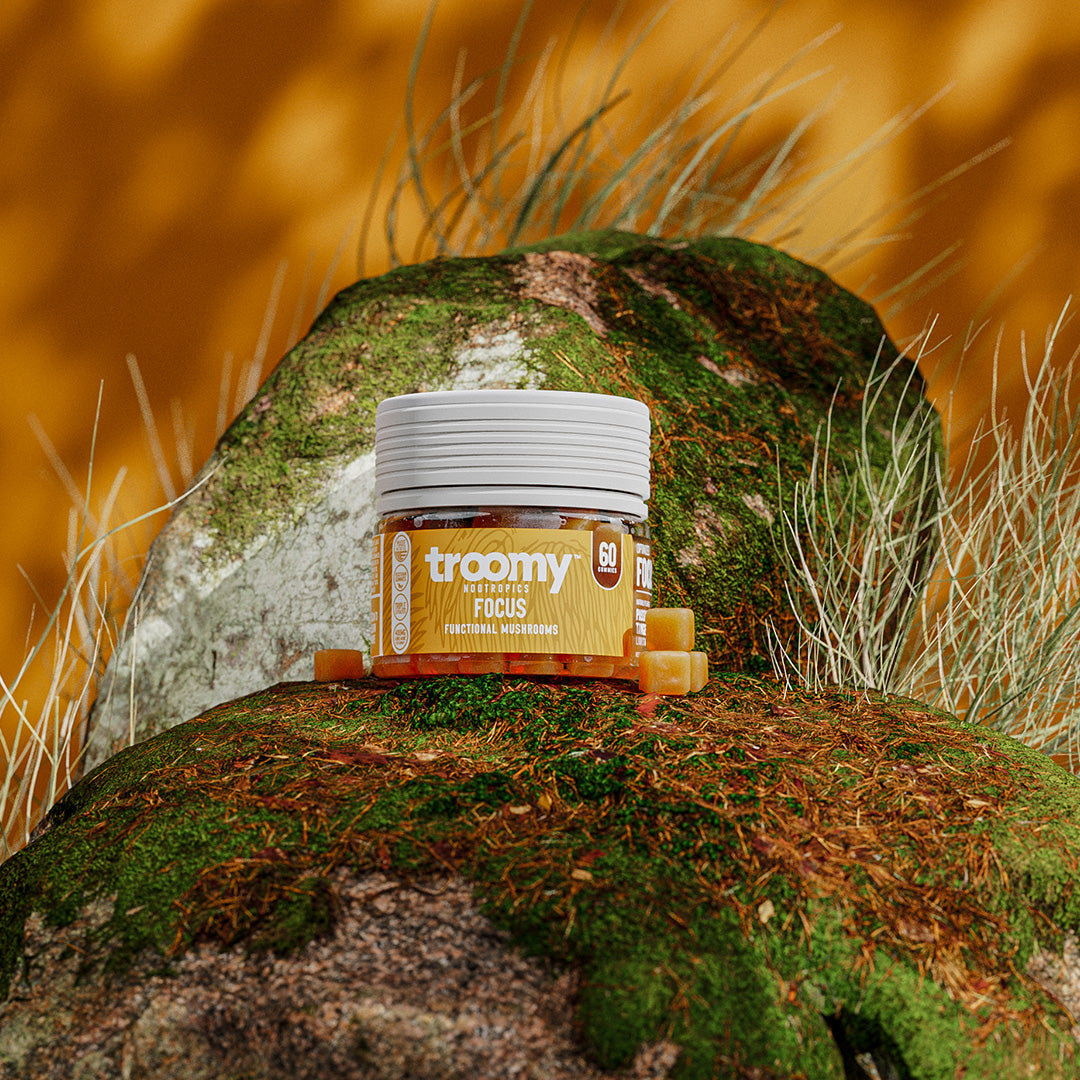
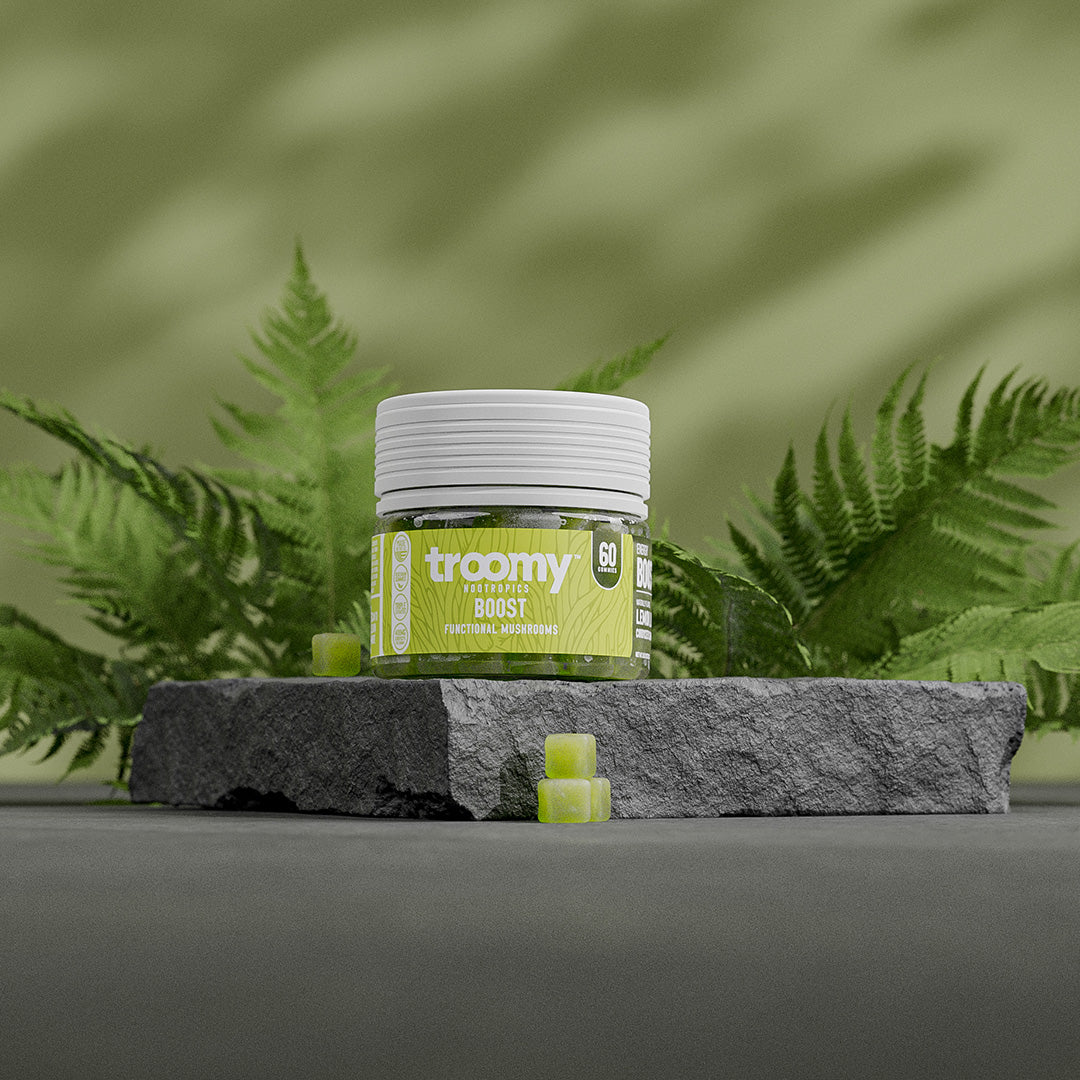
Daily 14 also includes maitake, lion's mane and cordyceps. This guide focuses on the three mushrooms most often discussed for immune support, so these three are not ranked here. Lion's mane is best known for focus and everyday brain support, and cordyceps for energy and stamina. If afternoon brain fog is the bigger problem, Troomy's Focus Lion's Mane Gummies are the more direct fit, and if you want energy without the crash of another coffee, Troomy's Boost Cordyceps Gummies are caffeine-free.
Should you take one mushroom or a blend?
It depends on your main problem. If stress and sleep are the issue, a focused reishi product makes sense. If you want broad everyday immune and gut support, a blend gives you several mushrooms with different compounds in one step: turkey tail's polysaccharopeptides, reishi's triterpenes and chaga's polyphenols each bring something the others do not.
The tradeoff is that a blend spreads its total amount across every mushroom in it, and many brands, Troomy included, do not disclose each mushroom's share. You get breadth rather than a high dose of any single mushroom.
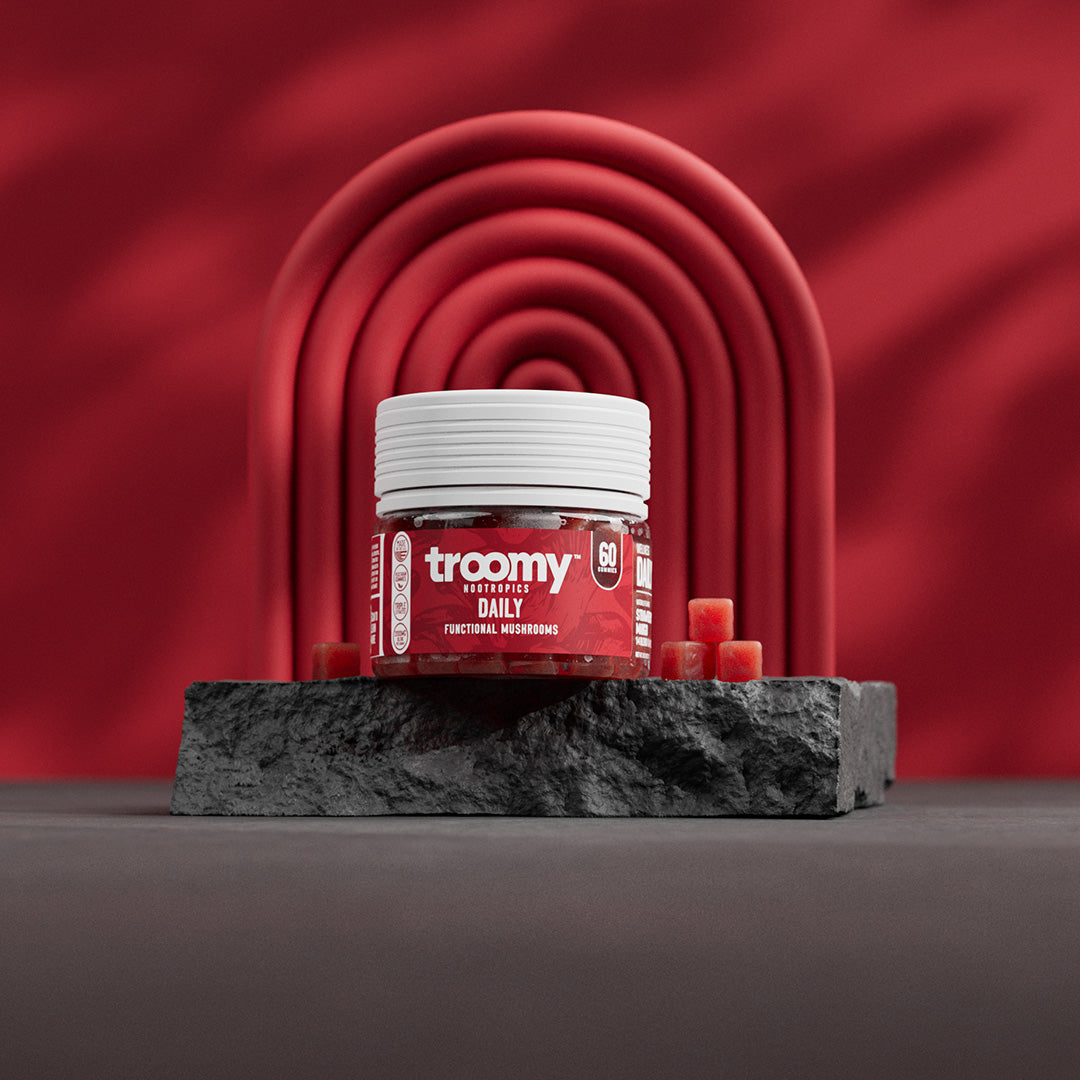
Instead of choosing just one? Troomy's Daily 14 Mushroom Blend gummies combine turkey tail, reishi, chaga and 11 more functional mushrooms in one daily gummy. Triple-extracted, vegetarian, made in the USA.
What makes a good mushroom gummy for immunity?
Gummies are the easiest format to take every day, which matters because the human studies on turkey tail and reishi used two to four weeks of daily intake (Pallav et al., Gut Microbes, 2014; Wachtel-Galor et al., British Journal of Nutrition, 2004). When you compare gummies, check four things: the extract amount per serving, the extraction method (hot water or triple extraction), which part of the mushroom is used, and whether the brand third-party tests its products.
Daily 14 lists an organic blend of 14 mushroom fruiting bodies and mycelium, 2,000 mg per serving (troomy.com, October 2026). A gummy that fails any of those four checks is rarely worth the money, so read the label before the flavor. Even a perfect label only helps once the mushroom fits your problem, which is why matching the mushroom to what is bothering you comes first.
Capsules can usually hold more extract per serving, while gummies are easier for many people to take every day, so weighing gummies against capsules and powder mostly comes down to dose, taste and which one you will actually keep taking.
When should you start taking immune mushrooms?
Before you need them, not once you are already sick. Mushroom research has used weeks of steady daily intake, so starting the day a cold arrives gives the mushrooms no time to do anything. If the office cold usually catches you in a particular season, start a daily routine a month or so before it. Pair your gummy with something you already do every morning, like breakfast, so you do not miss days. Consistency matters more than the exact time of day, and if you stop for a while, give it a few weeks again when you restart.
What should you expect?
No mushroom gummy will stop you catching what is going around the office, and no brand should claim it does. A consistent daily habit can support normal immune function alongside the basics that matter most. Judge it after a month, not a week.
Immune support is hard to feel directly, so look at patterns instead of single days. After a month, ask yourself how often you have felt run down, how your digestion has been, and whether you actually took it every day. A quick note in your phone when you start makes that comparison easier.
Run down every time the office cold makes the rounds? Browse the Troomy Immunity Collection for everyday immune support in a gummy you will actually want to take.
At a glance
| Troomy Daily 14 Mushroom Blend | |
|---|---|
| Who this is for | Adults who feel run down often and want broad, everyday immune and gut support in one step |
| The problem | Too many single-mushroom bottles, or none at all, when the busy season hits |
| What it does | Supports normal immune function and everyday wellness with 14 functional mushrooms, including turkey tail, reishi, chaga and maitake |
| Price | $39.99 for 60 gummies, about $0.67 per gummy; 30-count bottle $19.99 (troomy.com, October 2026) |
| Proof | 2,000 mg mushroom blend per serving, triple-extracted, vegetarian, made in the USA (troomy.com, October 2026) |
| How to start | Follow the label dose daily for 30 days; check with a healthcare provider if you are under medical care |
Frequently Asked Questions
What is the best mushroom for the immune system?
Turkey tail has the deepest research for immune support and a link to gut health. Reishi is the better pick if stress and sleep are part of the problem. Chaga is studied mainly for its antioxidant compounds. For broad daily support, a blend that combines all three is the simplest option.
Do mushroom gummies help with immunity?
A well-made mushroom gummy can support normal immune function as part of a healthy routine. Look for extracted mushrooms, a clear amount per serving and a transparent label. No gummy prevents colds, so be wary of any brand that claims it does.
Is turkey tail or reishi better for immune support?
Both support normal immune function. Turkey tail leans toward gut health, while reishi is the mushroom most associated with stress and sleep support, though human research on that is limited. If you feel run down and stressed, start with reishi; if your gut has felt off, start with turkey tail. Or take a blend that includes both.
How long do immune mushrooms take to work?
Give them at least 30 days of daily use. Human studies on turkey tail and reishi used two to four weeks of daily intake, so a few days is too soon to judge.
Can I take immune mushrooms every day?
Yes, for most healthy adults daily use is how they are meant to be taken. Start with the label dose, and talk to a healthcare provider first if you are pregnant or nursing, under medical care, or allergic to mushrooms or mold.
Are mushroom gummies as effective as capsules?
The format matters less than what is inside it. A gummy and a capsule with the same extract and the same amount per serving deliver the same mushroom. Capsules can usually hold more extract per serving, while gummies are easier for many people to take every day.
These statements have not been evaluated by the Food and Drug Administration. This product is not intended to diagnose, treat, cure, or prevent any disease.


