



Turkey tail and reishi both show up on every list of immune mushrooms, and you are not sure which one fits your problem. The short answer: it depends on whether you are also dealing with stress and sleep, or with your gut. Here is how they compare.
Choose turkey tail if you feel run down and your digestion has also felt off. Choose reishi if feeling run down comes with stress or poor sleep. If you want both covered, take them together in a blend.
What is turkey tail best for?
Turkey tail (Trametes versicolor) is a thin, striped mushroom that grows on dead wood and has a long history in traditional Chinese and Japanese medicine. It is rich in beta-glucans and contains two protein-bound polysaccharides, PSP and PSK, which are a big part of why it is one of the most researched functional mushrooms.
What sets turkey tail apart is its gut connection. Its polysaccharides reach the large intestine largely intact, and in a small trial, healthy adults who took a turkey tail extract daily for two weeks showed gut bacteria changes consistent with a prebiotic (Pallav et al., Gut Microbes, 2014). That matters for immunity because an estimated 70 to 80 percent of immune cells are found in the gut (Wiertsema et al., Nutrients, 2021).
Best for: feeling run down when your digestion has also felt off, which is where turkey tail's research is strongest.
What is reishi best for?
Reishi (Ganoderma lucidum) is a glossy, reddish-brown mushroom used for centuries in China, Japan and other Asian countries. Its two main groups of active compounds are polysaccharides, including beta-glucans, and triterpenes (Wachtel-Galor et al., NCBI Bookshelf, 2011).
Reishi is studied for normal immune function, like turkey tail, and it is also the functional mushroom most associated with calm and rest. That is why it anchors so many stress and sleep products. Human research on those benefits is still limited, so treat reishi as gentle, consistent support rather than a sedative.
Best for: feeling run down when stress and poor sleep are part of the picture. Reishi works best as a daily routine rather than a one-off, and using it for everyday stress follows the same several-week pattern as its immune and sleep uses.
How do turkey tail and reishi compare?
| Turkey tail | Reishi | |
|---|---|---|
| Scientific name | Trametes versicolor | Ganoderma lucidum |
| Main compounds | Beta-glucans, PSP and PSK | Beta-glucans and triterpenes |
| Immune support | Supports normal immune function; deep lab research on PSP and PSK | Supports normal immune function; long traditional use |
| Gut health | Its main point of difference; a small human trial shows prebiotic-like effects | Not its main research focus |
| Stress | Not its main research focus | The mushroom most associated with calm; human research limited |
| Sleep | Not its main research focus | Commonly paired with sleep support; human research limited |
| Taste on its own | Earthy, slightly bitter | Distinctly bitter |
| Common formats | Tea, powder, capsules, blends | Tea, powder, capsules, gummies, blends |
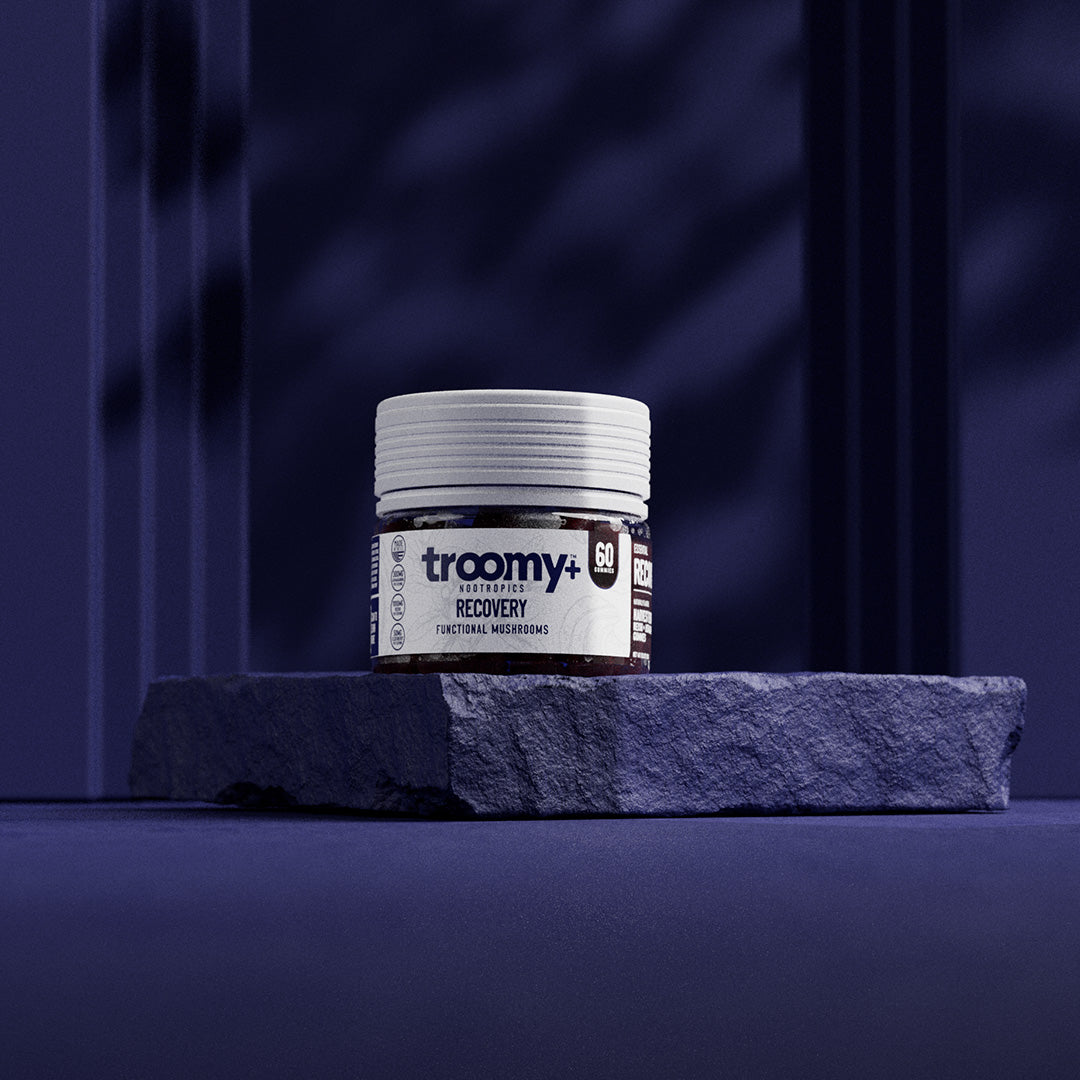
| Troomy products | Daily 14 Mushroom Blend | Daily 14, Calm Reishi, Sleep Reishi, Recovery |
Which one fits your problem?
Start with what is bothering you, then pick the mushroom.
You keep feeling run down, and your gut has felt off for weeks. Lean toward turkey tail, because its polysaccharides act as a potential prebiotic, feeding the bacteria in the part of your body where much of the immune system sits.
You keep feeling run down, and you are stressed and sleeping badly. Lean toward reishi. You get its immune research plus the mushroom people reach for when they cannot switch off at night.
You want broad everyday support and do not want to pick. Take a blend that includes both and use it every day.
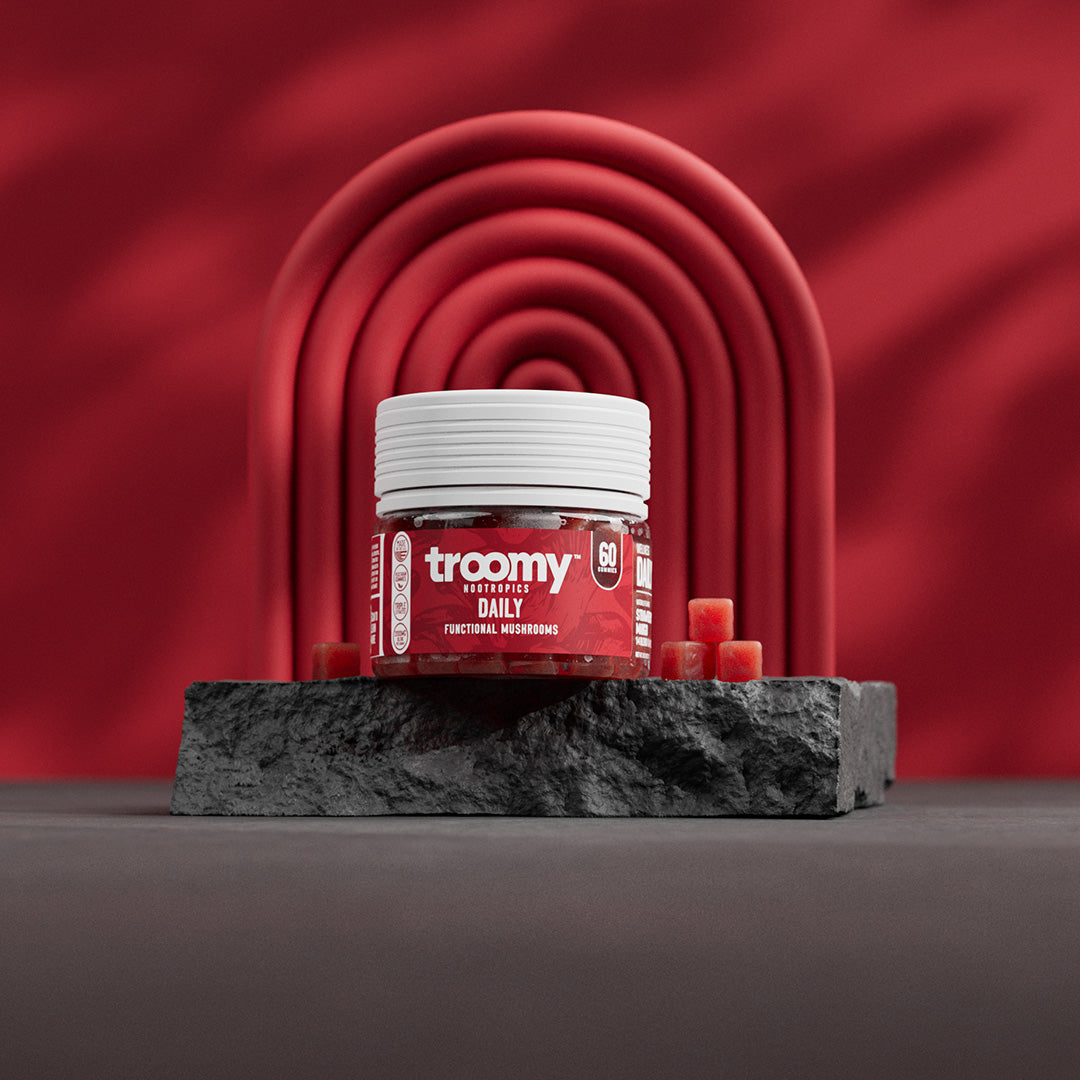
Do not want to choose? Troomy's Daily 14 Mushroom Blend gummies include both turkey tail and reishi in one daily gummy.
Can you take turkey tail and reishi together?
Yes. They are often combined, and many blends, including Troomy's Daily 14, contain both. Because they bring different compounds, polysaccharopeptides from turkey tail and triterpenes from reishi, a combination covers more ground than either one alone.
Check your labels so you know how many products already include each mushroom, and start one product at a time so you can tell how each one sits with you. Both mushrooms appear to be well tolerated, but neither is risk-free. Like any mushroom, turkey tail can cause allergic reactions, especially in people who react to mold or other mushrooms. Talk to a healthcare provider first if you are pregnant or nursing, under medical care or taking prescription medication.
If you already take a reishi product for sleep and want turkey tail's gut support too, adding a blend is reasonable. If stress or sleep is the bigger problem, a dedicated reishi product is the more focused choice.
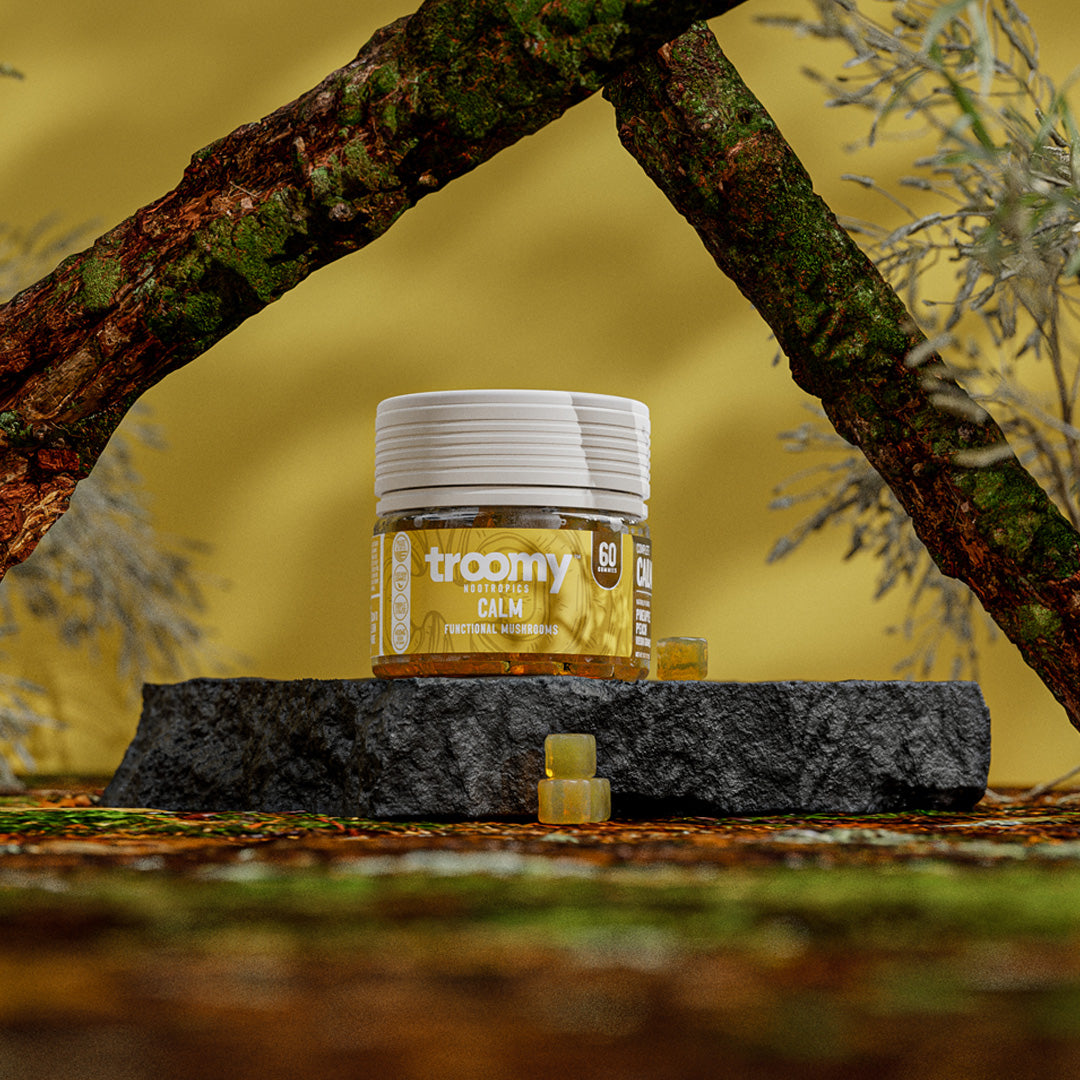
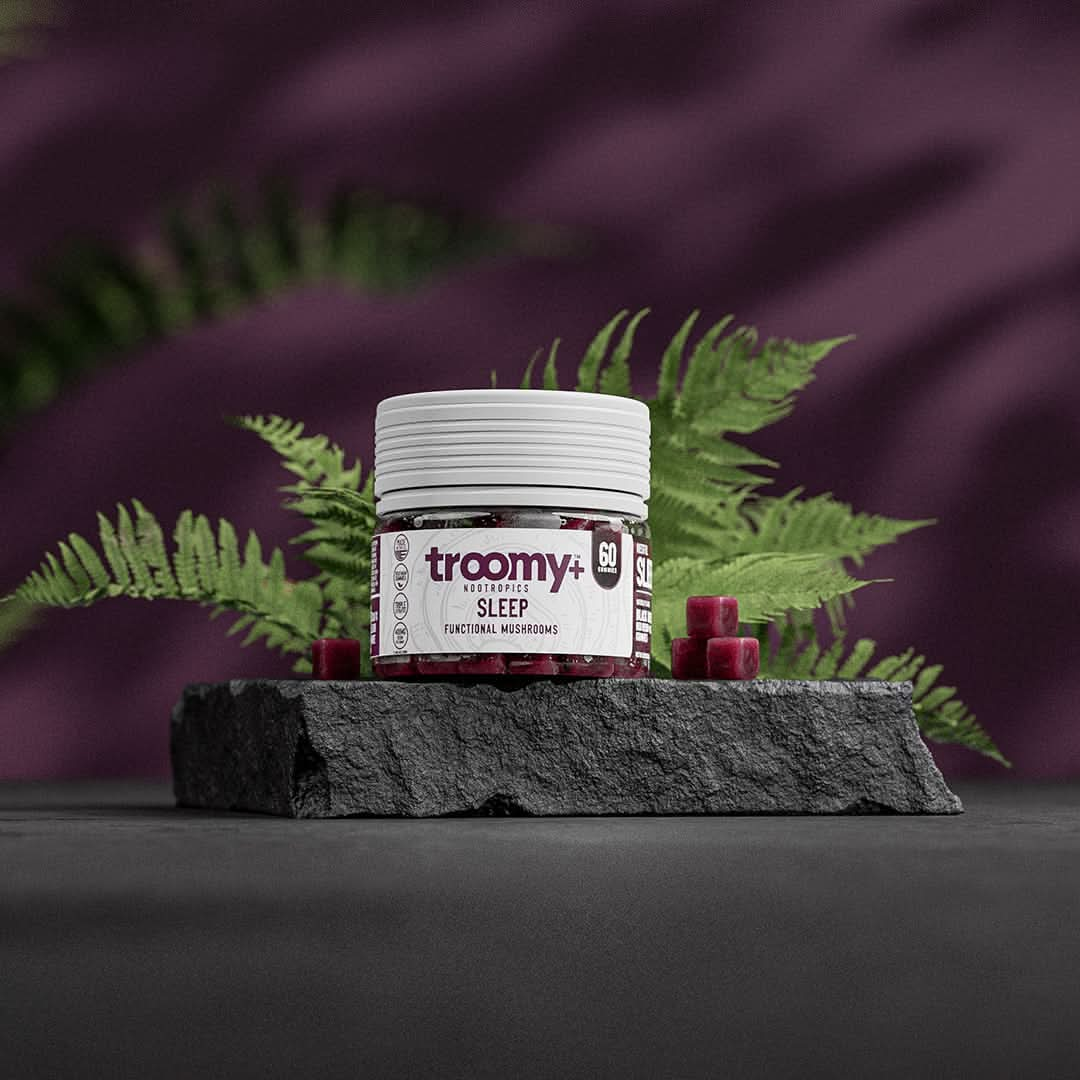
Can't switch off at night? Troomy Sleep Reishi Gummies pair reishi with melatonin for bedtime, and Troomy Calm Reishi Gummies are built for everyday stress and relaxation. Both are $39.99 for 60 gummies (troomy.com, October 2026). Melatonin is the deciding factor: if a groggy morning has put you off it before, reishi's slower approach to sleep may suit you better on its own.
How should you take each one?
Turkey tail fits easily into the morning with breakfast, because it has no calming or energizing effect you need to plan around. Reishi is more flexible: many people take it in the evening to wind down, while others take a calm-focused reishi product during the day to take the edge off stress. If you take both in a blend like Daily 14, any consistent time works.
On their own, both taste earthy, and reishi is noticeably bitter, which is why so many people prefer them as extracts in capsules or gummies rather than as tea. If you are new to both, start with one product for a couple of weeks before adding the other, so you can tell how each one sits with you. Give whichever you choose at least 30 days of daily use before judging it.
What neither mushroom will do
Neither turkey tail nor reishi will stop you catching what is going around, and neither has large human trials behind it. Reishi's suggested benefits come mostly from cell and animal studies (LiverTox, NCBI Bookshelf, updated October 2024), and the main human trial on turkey tail had only 24 participants (Pallav et al., Gut Microbes, 2014). Both can support normal immune function when you take them daily for at least 30 days, alongside enough sleep and a varied diet.
Chaga is the other mushroom people often weigh against reishi, and the choice usually turns on whether you need antioxidant support or calm.
At a glance
| Troomy Daily 14 Mushroom Blend | |
|---|---|
| Who this is for | Adults who feel run down and do not want to choose between turkey tail and reishi |
| The problem | Two good immune mushrooms, two bottles, and no clear way to pick |
| What it does | Supports normal immune function and everyday wellness with 14 functional mushrooms, including turkey tail and reishi |
| Price | $39.99 for 60 gummies, about $0.67 per gummy (troomy.com, October 2026) |
| Proof | 2,000 mg mushroom blend per serving, triple-extracted, vegetarian, made in the USA (troomy.com, October 2026) |
| How to start | Follow the label dose daily for 30 days; add Calm or Sleep Reishi only if stress or sleep is your main problem |
Frequently Asked Questions
Is turkey tail or reishi better for immunity?
Neither is clearly better. Both support normal immune function, and neither has large human trials behind it. Turkey tail has deeper research on its immune-related polysaccharides and a gut connection, while reishi is the mushroom most associated with stress and sleep support, though human research on that is limited. Pick based on your main problem, or take both in a blend.
Can you take turkey tail and reishi together?
Yes. They bring different compounds, so they are often combined, and Troomy's Daily 14 blend contains both. Start one product at a time, check labels for overlap, and talk to a healthcare provider first if you are pregnant or nursing, under medical care or taking prescription medication.
What is the difference between turkey tail and reishi?
Turkey tail is a thin, striped mushroom known for its protein-bound polysaccharides, PSP and PSK, and its prebiotic-like gut effects. Reishi is a glossy, reddish-brown mushroom known for beta-glucans and triterpenes, and it is the mushroom most associated with calm and rest. Reishi also tastes noticeably more bitter.
Which is better for gut health?
Turkey tail. Its polysaccharides reach the large intestine largely intact, and a small randomized trial in healthy adults found gut bacteria changes consistent with a prebiotic. Gut health is not reishi's main research focus.
Which is better for stress and sleep?
Reishi. It is the functional mushroom most associated with calm and rest, though human research on those benefits is still limited. If stress or sleep is your main problem, a dedicated reishi product is the more focused choice.
When should you take turkey tail and reishi?
Turkey tail is easy to take with breakfast. Reishi is often taken in the evening to help you wind down, or during the day in a calm-focused product. If you take both in one blend, choose any time you will stick to every day.
These statements have not been evaluated by the Food and Drug Administration. This product is not intended to diagnose, treat, cure, or prevent any disease.


