



You cannot leave work at work. The meetings are over but your brain is still running the replay. You are tired but wired, and you already know melatonin alone is not the answer. Here is what reishi actually does for the stress that precedes the sleep problem.
Reishi is Troomy's primary stress and calm adaptogen, and it earns that role for a specific reason. Rather than sedating you into sleep or numbing the feeling of stress, reishi works upstream, on the mechanism that produces both the racing mind at night and the tired but wired feeling during the day: cortisol.
What Is Happening In Your Body When You Cannot Switch Off?
The stress that follows you home is not just a mood. It is a physiological pattern driven largely by cortisol, the hormone your adrenal glands release in response to perceived threats, deadlines, and conflict. In short bursts, cortisol is useful. It sharpens focus and prepares your body to handle a challenge. The problem is when cortisol stays elevated well past the point where the actual stressor has ended, which is exactly what happens after a demanding workday that keeps replaying in your head.
This is regulated by the HPA axis, short for the hypothalamic pituitary adrenal axis, a feedback loop between your brain and your adrenal glands that is supposed to turn cortisol production up when needed and back down when the stressor passes. When that feedback loop gets overworked from chronic stress, it can start running with cortisol staying elevated longer than it should, which is the mechanism behind that tired but wired feeling.
What Reishi Contains And How Its Compounds Interact With The Stress Response
Reishi mushroom contains two compound groups that are central to its role as an adaptogen: beta-glucans and triterpenes. Beta-glucans are complex sugars found in the mushroom's cell walls that are associated with immune modulation, while triterpenes are the bitter compounds responsible for much of reishi's traditional reputation as a calming, balancing substance in Chinese medicine, where it has been used for centuries under the name lingzhi.
Modern research has focused on how these compounds interact with the body's stress and immune systems. The working theory behind reishi's role in stress support is that it helps support a healthier HPA axis response, which in turn is connected to more stable cortisol patterns throughout the day. This is different from simply blocking cortisol or forcing sedation. It is a regulatory, upstream approach.
What The Peer-Reviewed Research Shows About Reishi And Cortisol
Reishi has a long history of traditional use for calm and vitality, and modern research has increasingly focused on its adaptogenic properties, particularly its interaction with the immune system and its potential role in stress regulation. It is worth being honest about where the science currently stands. Reishi is among the more researched functional mushrooms, but as with most adaptogens, the evidence base is still developing, particularly for standardized dosing and long-term outcomes in the general population. What research consistently supports is reishi's traditional reputation for calm, its beta-glucan content, and its standing as one of the few calming mushrooms with a well-tolerated daily track record rather than a fast-acting sedative effect.
Reishi For Stress Versus Reishi For Sleep
If you have looked into reishi before, you have probably seen it associated with both stress relief and sleep. That is not a marketing contradiction. It is the same underlying mechanism producing two related benefits. The cortisol dysregulation that keeps your mind racing after a stressful day is the same dysregulation that keeps you from falling asleep easily, even when you are exhausted. Address the upstream cortisol pattern, and both the daytime stress and the nighttime restlessness tend to improve together, which is why reishi shows up across so many benefit lanes, from stress-focused to sleep-focused product lines.
How Does Reishi Compare To Ashwagandha For Stress?
Reishi and ashwagandha are often mentioned together, and for good reason: they are two of the most studied adaptogens, but they are not interchangeable. Ashwagandha has a stronger research base specifically around acute stress and measurable cortisol reduction over relatively short study periods. Reishi's research leans more toward immune modulation and longer-term nervous system regulation, with its calming reputation rooted in centuries of traditional use alongside a growing modern research base.
In practice, this means reishi tends to be the better fit for someone whose stress shows up as an inability to unwind, while ashwagandha may appeal more to someone dealing with sharper, more acute stress spikes. Many people find that pairing ashwagandha's faster cortisol response with reishi's steadier regulation covers more ground than doubling down on either alone.
What To Expect In The First Two Weeks And First Month
Reishi is not a fast-acting solution, and setting the right expectations matters. In the first two weeks of consistent daily use, some people notice a subtle shift, feeling slightly less reactive to the small frustrations of the day or finding it a bit easier to disengage from work stress in the evening. The more noticeable changes tend to build over the first month of consistent, daily use.
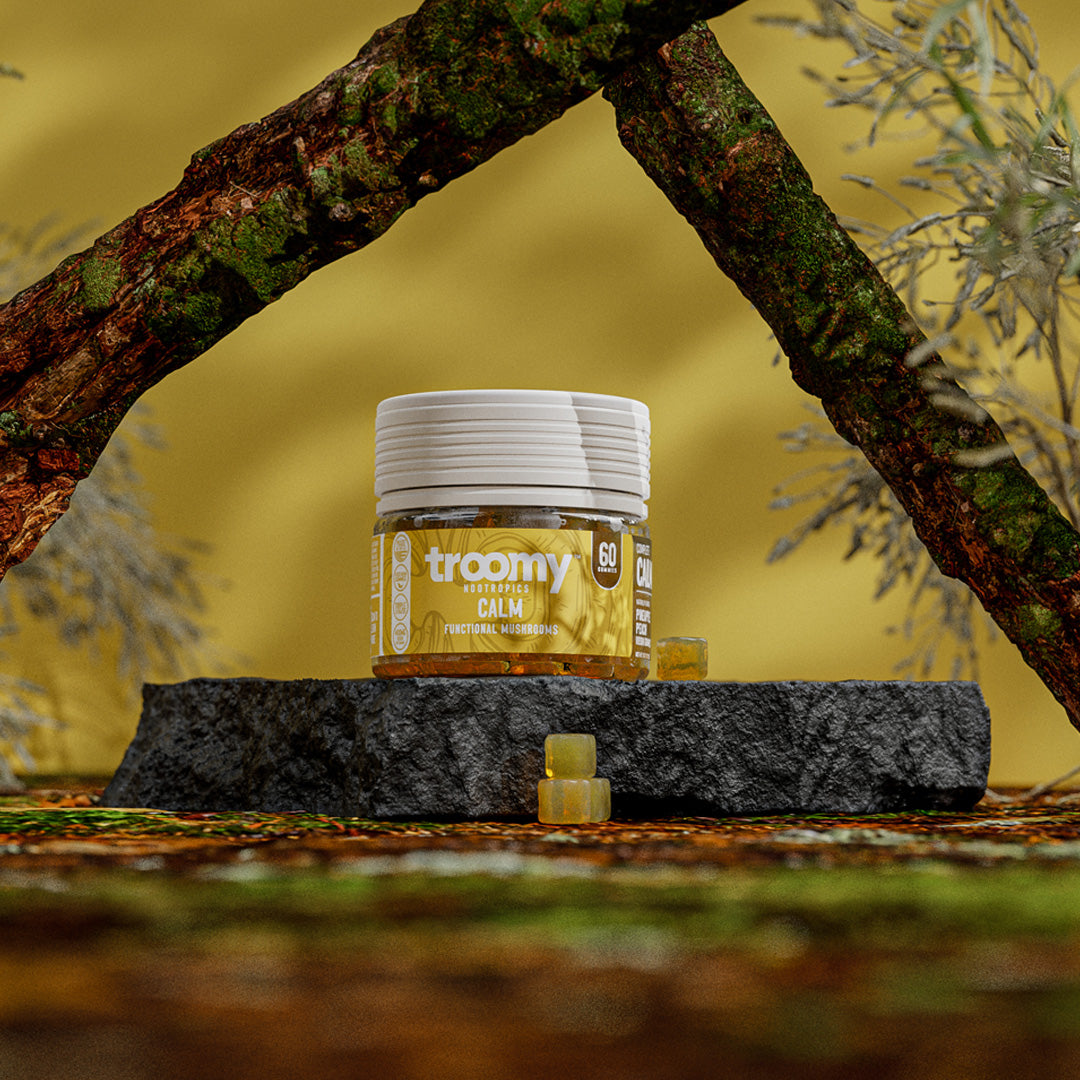
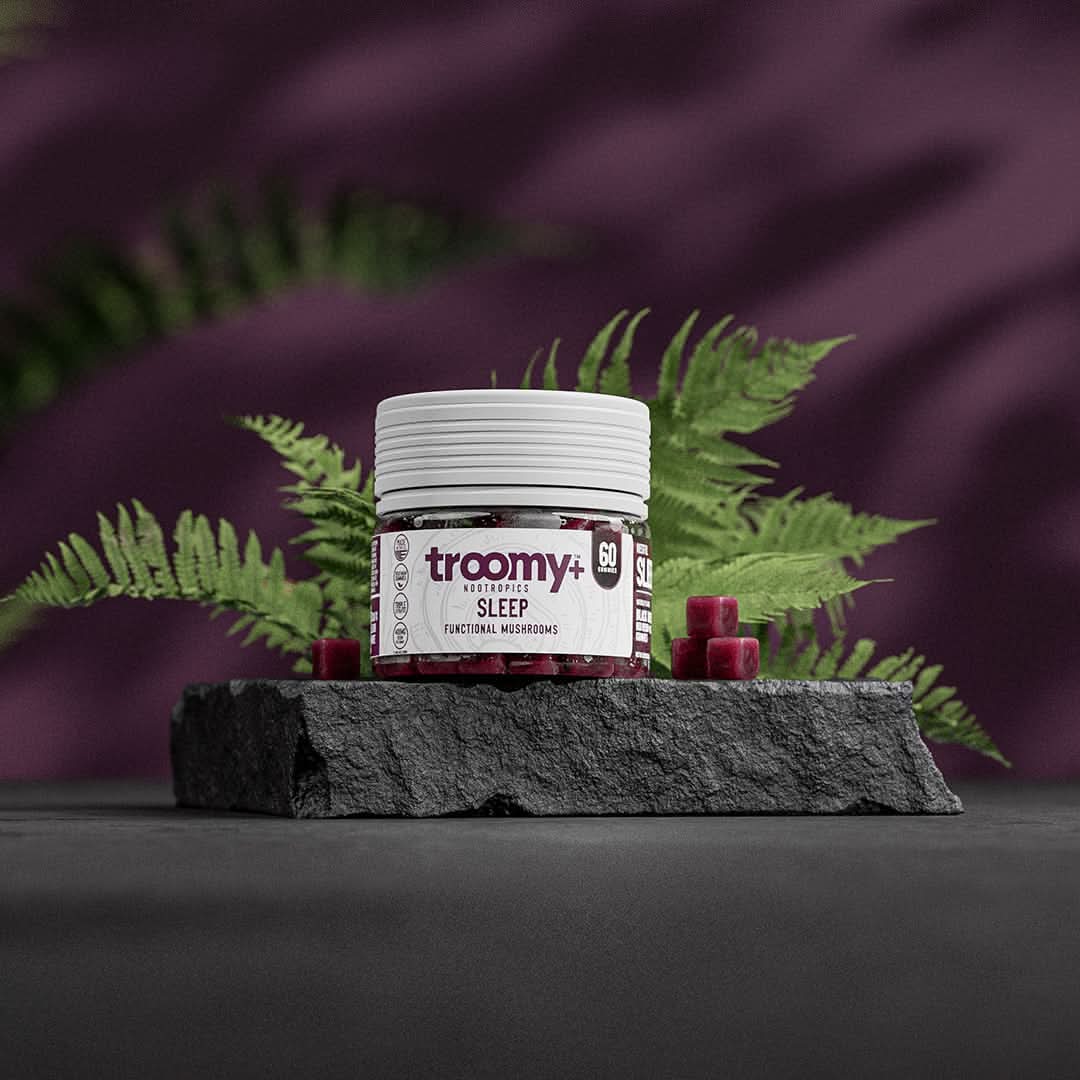
Can't switch off after a stressful day? Troomy's Calm Reishi Gummies use triple-extracted reishi to support your body's stress response from the inside out. They are caffeine-free, crash-free, and built for daily use, which matters, because reishi only works if you actually take it consistently.
Tired of feeling tired but wired every night? A single daily Troomy Calm Reishi Gummy is designed to work with your body's own stress regulation system rather than forcing sedation, so you can actually feel the difference build over time instead of chasing a quick fix that wears off. It follows the same problem-first logic behind everything in the mood collection: name what's actually going wrong, then solve for that specifically.
Frequently Asked Questions
Does reishi mushroom help with stress?
Reishi is one of the most studied adaptogenic mushrooms for stress support. It is believed to work by supporting a healthier HPA axis response, which is connected to more stable cortisol patterns, rather than by sedating the nervous system directly.
How does reishi reduce cortisol?
Reishi contains beta-glucans and triterpenes that are thought to support the body's stress regulation system, the HPA axis, helping the body manage its own cortisol response rather than blocking cortisol outright.
Is reishi good for anxiety?
Reishi has a long traditional history as a calming adaptogen and is generally well tolerated. It is not a treatment for a diagnosed anxiety disorder, and anyone managing clinical anxiety should work with a healthcare provider, but many people use it for everyday, non-clinical stress and tension.
How long does reishi take to work for stress?
Most people take reishi consistently for two to four weeks before noticing a clear difference, since it works through a gradual, regulatory mechanism rather than an immediate sedative effect.
Can I take reishi every day for stress?
Yes, reishi is intended for daily use. Its benefits build with consistent intake over time, which is why Troomy's Calm Reishi Gummies are formulated as a one-a-day product.
These statements have not been evaluated by the Food and Drug Administration. This product is not intended to diagnose, treat, cure, or prevent any disease.


