



You have seen the word adaptogen everywhere lately. On supplement labels, in wellness content, in your social media feed. But what does it actually mean, and more importantly, does it actually work? Here is the honest guide.
Adaptogens are not a trend invented by the supplement industry. They are a category of natural substances, mostly plants and mushrooms, that have been used for centuries in traditional medicine systems and are now being studied by modern researchers for their role in how the body responds to stress. The term itself is specific. An adaptogen does not sedate you, and it does not stimulate you the way caffeine does. Instead, it helps your body regulate its own stress response so you feel more like yourself, whether that means calmer during a stressful stretch or steadier through a demanding week.
This guide breaks down what adaptogens are, how they are different from the other tools in your medicine cabinet, which ones have the most research behind them, and how to figure out whether they belong in your routine.
What Is An Adaptogen?
An adaptogen is a natural substance, typically a plant, root, or mushroom, that helps the body adapt to physical, chemical, or biological stress without pushing it in one direction the way a stimulant or sedative would. The concept originated in Soviet-era pharmacology in the 1940s, when researchers were looking for natural compounds that could help the body handle stress more efficiently, whether that stress came from cold, illness, physical exertion, or mental strain.
To count as an adaptogen, a substance generally needs to meet three criteria. It should be non-toxic at normal doses. It should produce a non-specific response, meaning it supports the body’s overall resistance to stress rather than targeting a single symptom. And it should have a normalizing effect, helping bring an overactive or underactive system back toward balance rather than forcing it in one direction.
That last point is what makes adaptogens genuinely different from most things people reach for when they are stressed. A sedative calms you down no matter what. A stimulant wakes you up no matter what. An adaptogen works with your body’s own regulatory systems, particularly the hypothalamic pituitary adrenal axis, often shortened to the HPA axis, which is your body’s central stress response system.
How Do Adaptogens Work Differently From Stimulants, Sedatives, And Anti-Anxiety Medications?
It helps to understand what adaptogens are not. They are not a replacement for prescribed anti-anxiety medication, and anyone managing a diagnosed anxiety disorder should work with a doctor rather than relying on supplements alone. What adaptogens can do is support the everyday stress response that most people experience but rarely address directly.
Stimulants like caffeine work by increasing alertness and energy, often at the cost of a later crash and, over time, a higher baseline level of tolerance. Sedatives, including many over-the-counter sleep aids, work by slowing down the nervous system, which can leave you groggy and does nothing to address the underlying stress that kept you wired in the first place.
Adaptogens take a different approach. Compounds in reishi mushroom, for example, contain beta-glucans and triterpenes that appear to support the HPA axis, helping regulate cortisol, the body’s primary stress hormone. Instead of forcing a state, the goal is to help the body’s own stress regulation system function more efficiently. This is why adaptogens are typically taken daily over weeks rather than reached for in the moment of a panic.
The Most Studied Adaptogens: What Each One Does
Not all adaptogens work the same way. Some of the best adaptogenic mushrooms for stress target cortisol directly, while others are better suited to fatigue or focus, so matching one to your specific pattern matters more than picking whichever one happens to be trending.
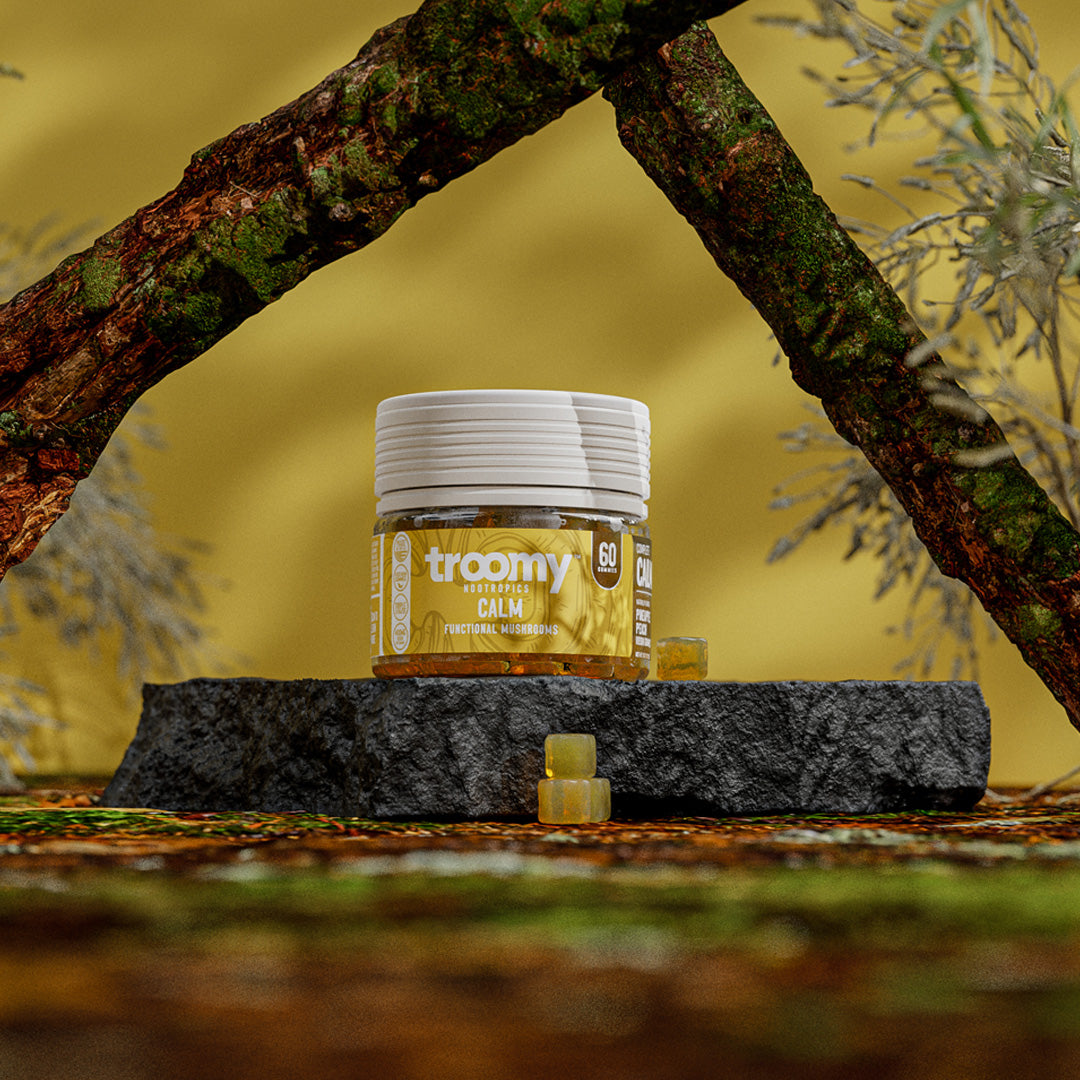
Reishi mushroom is one of the most studied adaptogenic mushrooms, with a long history of use in traditional Chinese medicine and a growing body of modern research into its beta-glucan and triterpene content. Reishi is associated with calm, nervous system regulation, and immune support, and it is the primary ingredient behind Troomy’s Calm Reishi Gummies. The connection between reishi mushroom and stress comes down to an overworked HPA axis, the exact mechanism reishi has the most research behind.
Ashwagandha is an herb, not a mushroom, and it is one of the most researched adaptogens overall, particularly for its effects on cortisol and perceived stress. It is often paired with reishi because ashwagandha and reishi together mean ashwagandha and reishi together cover more of the stress picture than either manages alone.
Rhodiola is known primarily for its role in supporting energy and reducing fatigue during periods of stress, making it a common choice for people dealing with burnout rather than acute anxiety.
Cordyceps is another adaptogenic mushroom, more associated with sustained energy and stamina than with calm, which makes it a better fit for fatigue-related stress than for winding down at night.
Holy basil, also called tulsi, has a long history in Ayurvedic medicine and is often used for its calming properties alongside its adaptogenic effects on the stress response.
Who Benefits Most From Adaptogens
Adaptogens are not designed for a single symptom. They tend to be most useful for people dealing with chronic, low-grade stress rather than an acute crisis. That includes people managing burnout, the everyday grind of work stress that follows you home at the end of the day, and HPA axis dysregulation, which is the medical term for a stress response system that has been running too hot for too long.
If you find yourself tired but wired at night, unable to relax even when you finally have downtime, or noticing that stress is dragging down your sleep, feeding into brain fog that makes it hard to concentrate, or flattening your mood, that pattern of interconnected symptoms is often exactly what adaptogens are studied for. It is also worth being honest about what adaptogens are not for. If you are dealing with a diagnosed anxiety disorder, panic attacks, or a mental health crisis, adaptogens are not a substitute for professional care.
How Long Do Adaptogens Take To Work?
This is one of the most common questions, and the honest answer is that adaptogens are not designed for immediate relief. Unlike a sedative, which works within an hour, adaptogens typically need consistent daily use over two to four weeks before people notice a meaningful shift. Some people report subtle changes within the first two weeks, such as feeling slightly less reactive to daily stress, with more noticeable effects building over a full month of consistent use.
This is why the framing matters. Adaptogens are a daily habit, not an emergency tool. Setting that expectation upfront leads to better results and less disappointment than treating them like a fast-acting remedy.
Why Are Mushroom-Based Adaptogens Among The Most Researched?
Functional mushrooms have become one of the most actively researched categories within the broader adaptogen space. Reishi in particular has decades of use in traditional medicine paired with a growing body of modern research into its beta-glucan content and its relationship to immune function and the stress response. This combination of long-standing traditional use and modern scientific interest is part of why mushroom-based adaptogens, rather than synthetic stress-relief supplements, have become the ingredient of choice for brands like Troomy that are trying to build genuinely research-grounded products. That same research-first approach shapes Troomy’s natural nootropics line as well, where lion’s mane plays the role reishi plays here.
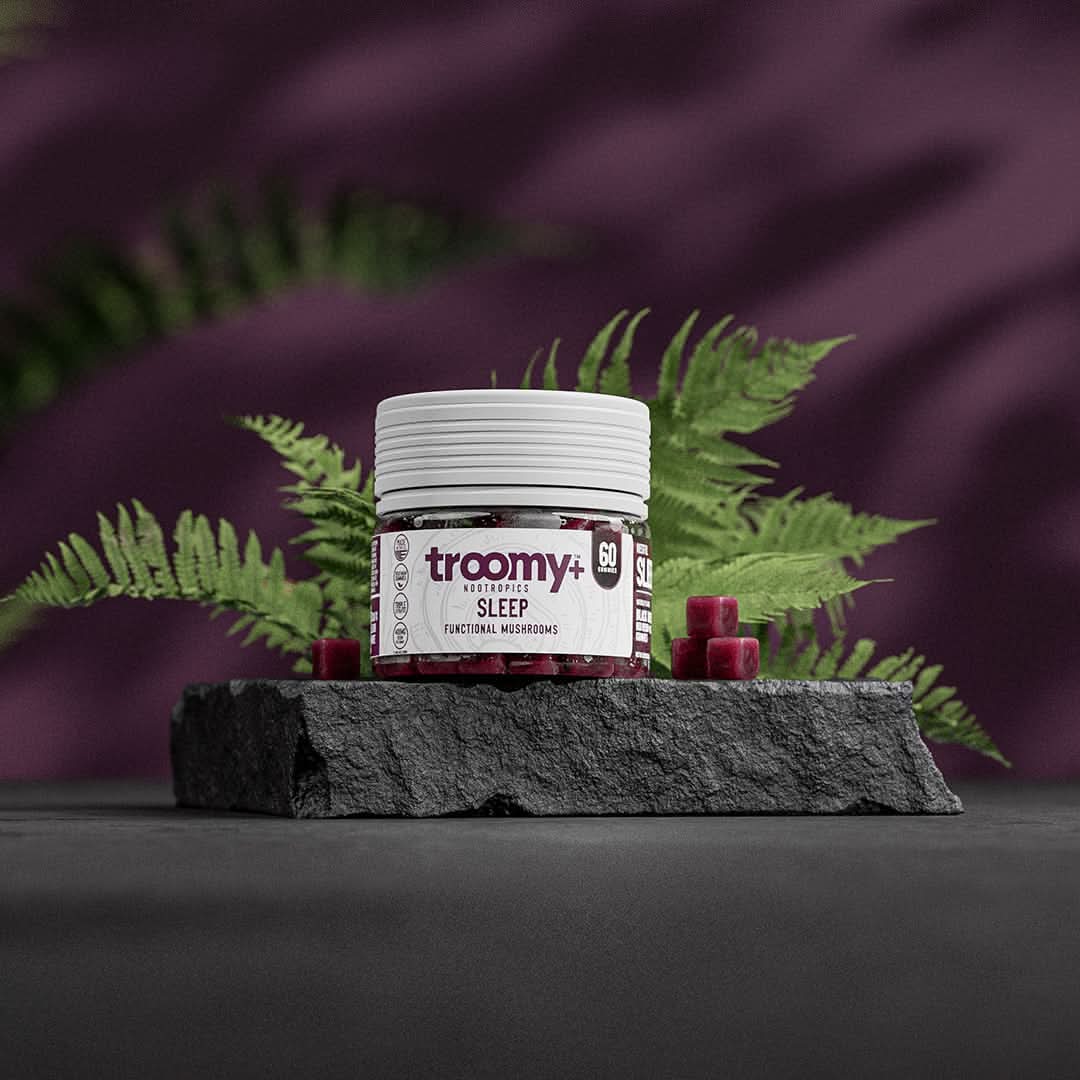
Can’t switch off after a stressful day? Troomy’s Calm Reishi Gummies use triple-extracted reishi to support your body’s stress response from the inside out, and they are caffeine-free, vegetarian, and made in the USA. One gummy a day, and no crash to worry about.
Choosing The Right Adaptogen For Your Situation
If your stress shows up mostly as trouble winding down, reishi is typically the starting point since it is one of the few calming mushrooms with real nervous system regulation research behind it, not just general wellness claims. If your stress is more acute or tied to specific triggers, ashwagandha’s research base on cortisol reduction makes it a strong option, and the two combine well precisely because they work on complementary mechanisms rather than doing the same job twice.
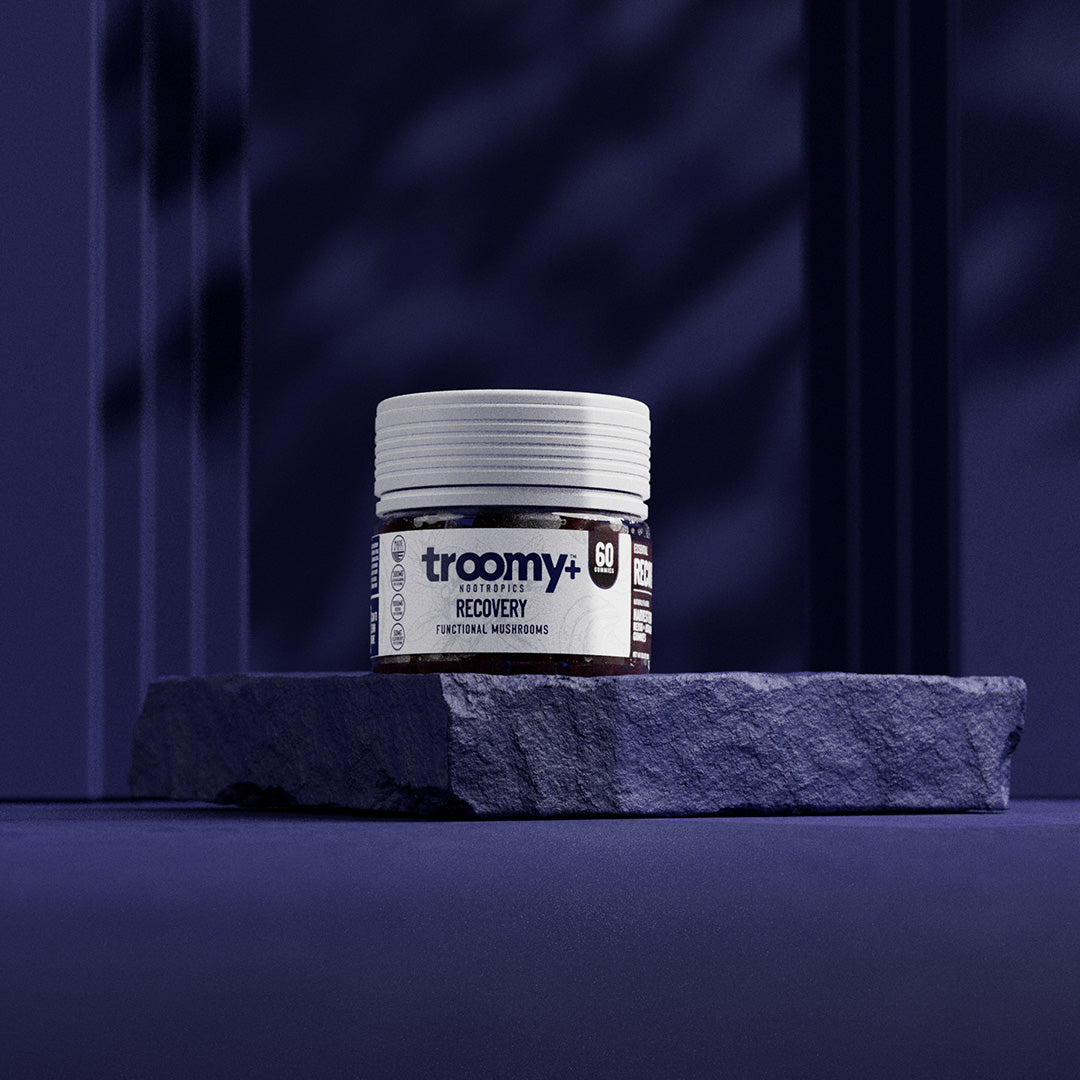
Struggling to unwind and stay calm through a stressful week? Troomy’s Recovery Ashwagandha and Reishi Gummies combine two of the most studied adaptogens in one daily gummy, covering more of the stress picture than either ingredient manages alone, one of several formulas built around that same problem-first approach in the mood collection.
Frequently Asked Questions
What are adaptogens?
Adaptogens are natural substances, usually plants or mushrooms, that help the body regulate its stress response rather than simply stimulating or sedating it. They work primarily through the HPA axis, the body’s central stress regulation system.
Do adaptogens actually work?
There is a growing body of research on individual adaptogens like reishi and ashwagandha, particularly around their effects on cortisol and perceived stress. The evidence is strongest for consistent, long-term use rather than single-dose effects, and results vary by individual.
What is the best adaptogen for stress?
Reishi and ashwagandha are the two most studied adaptogens specifically for stress, working through complementary pathways. Which one is best depends on whether your stress shows up more as trouble winding down, which favors reishi, or as elevated day-to-day cortisol and reactivity, which favors ashwagandha.
How long do adaptogens take to work?
Most people need two to four weeks of consistent daily use before noticing a meaningful difference. Adaptogens are not designed for immediate, single-dose relief the way a sedative is.
Are adaptogenic mushrooms the same as psychedelic mushrooms?
No. Adaptogenic mushrooms like reishi, cordyceps, and lion’s mane contain no psychoactive compounds and are legal, food-grade functional mushrooms used for their beta-glucan and triterpene content, not for any mind-altering effect.
Can you take adaptogens every day?
Yes, adaptogens are generally intended for daily use, since their effects build over time with consistent intake rather than providing an immediate, one-time result.
These statements have not been evaluated by the Food and Drug Administration. This product is not intended to diagnose, treat, cure, or prevent any disease.


