




Not all functional mushrooms are adaptogens, and not all adaptogens are equally studied for stress. Here is an honest, practical breakdown of which mushrooms actually have real research behind them for stress relief, and how to choose the right one for your own specific situation.
The functional mushroom category has grown fast, and with that growth has come a lot of blurred lines. Lion’s mane gets marketed for focus. Cordyceps gets marketed for energy. Reishi gets marketed for calm. But when the goal is specifically stress relief, not every mushroom in the category is pulling equal weight. This guide walks through the main adaptogenic mushrooms, what makes a mushroom count as adaptogenic in the first place, and which ones actually have the research and traditional use to back up a stress-specific claim.
What Makes A Mushroom Adaptogenic?
Not every functional mushroom qualifies as an adaptogen. To earn that classification, a substance generally needs to support the body’s overall resistance to stress without being toxic at normal doses, and it needs to have a normalizing effect rather than simply stimulating or sedating. Functional mushrooms that meet this bar typically owe their effects to beta-glucans, complex sugars in the mushroom’s cell wall associated with immune modulation, and in some cases triterpenes, which are more specific to certain species like reishi.
This matters because it separates genuinely adaptogenic mushrooms from mushrooms that are simply “functional” in a broader wellness sense. Reishi, cordyceps, and chaga all have reasonable claims to adaptogenic status, each through a different combination of traditional use and modern research interest. Lion’s mane is more accurately described as a cognitive-support mushroom, though its relationship to stress-related brain fog gives it a supporting role in this conversation too.
Reishi: The Most Studied Adaptogenic Mushroom For Stress And Cortisol Regulation
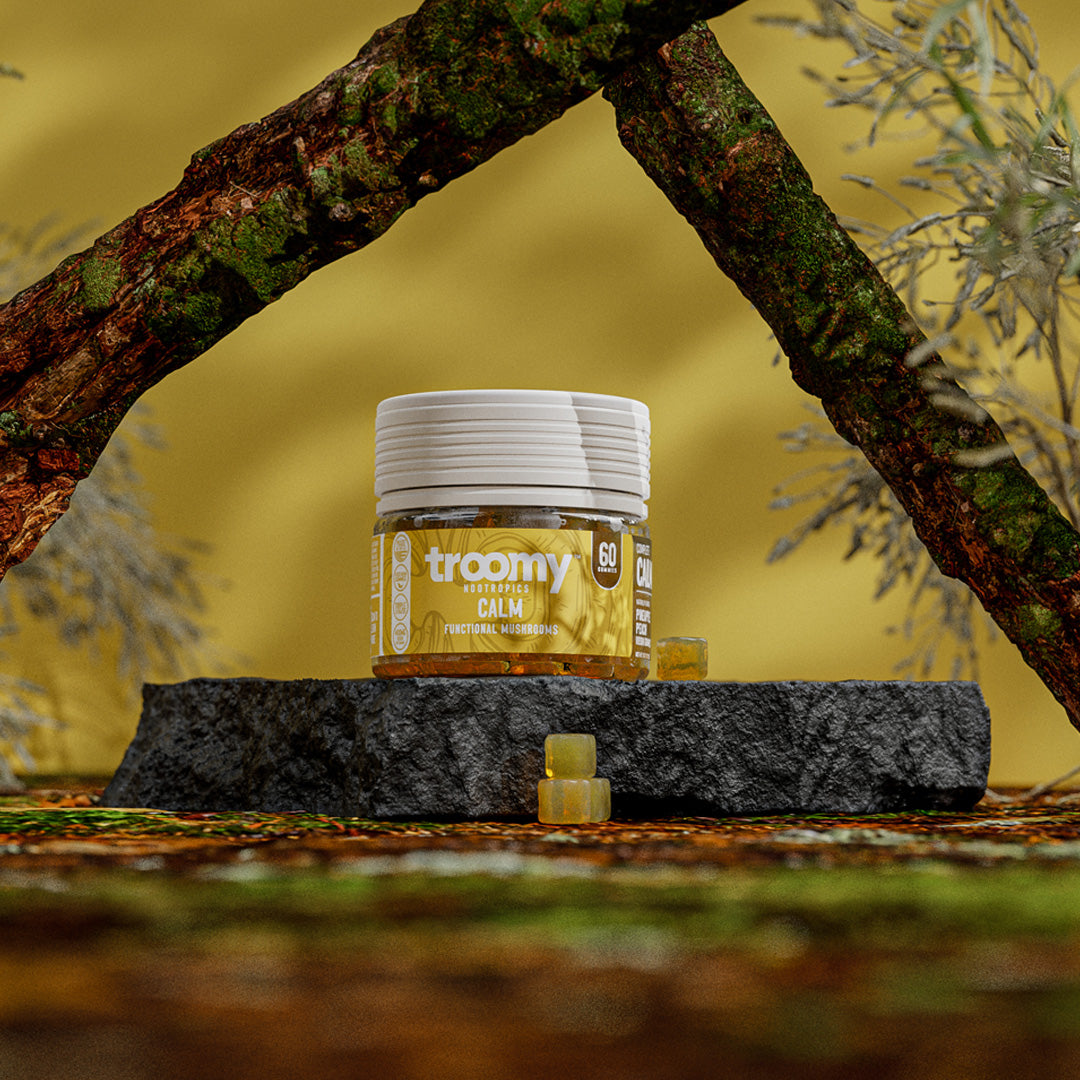
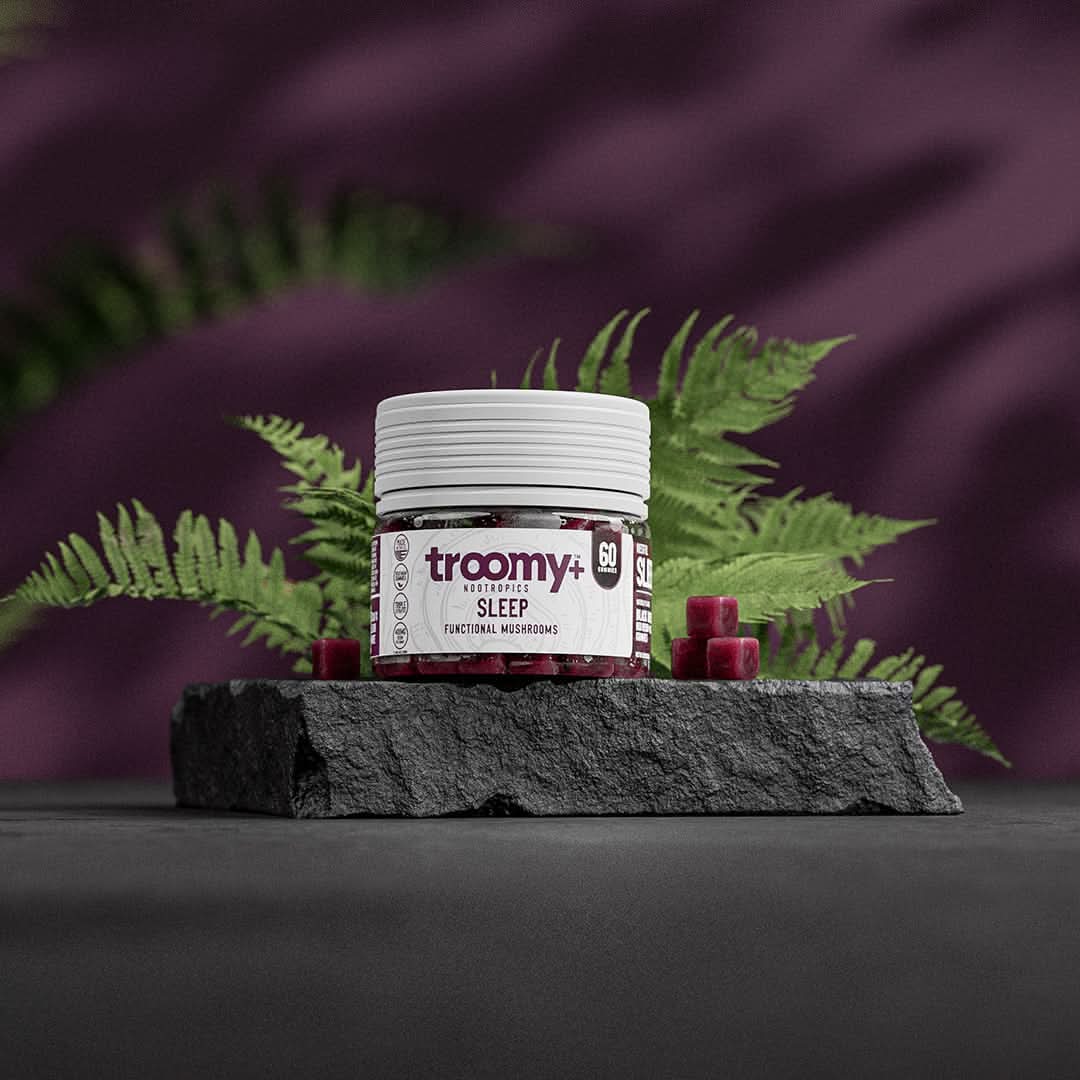
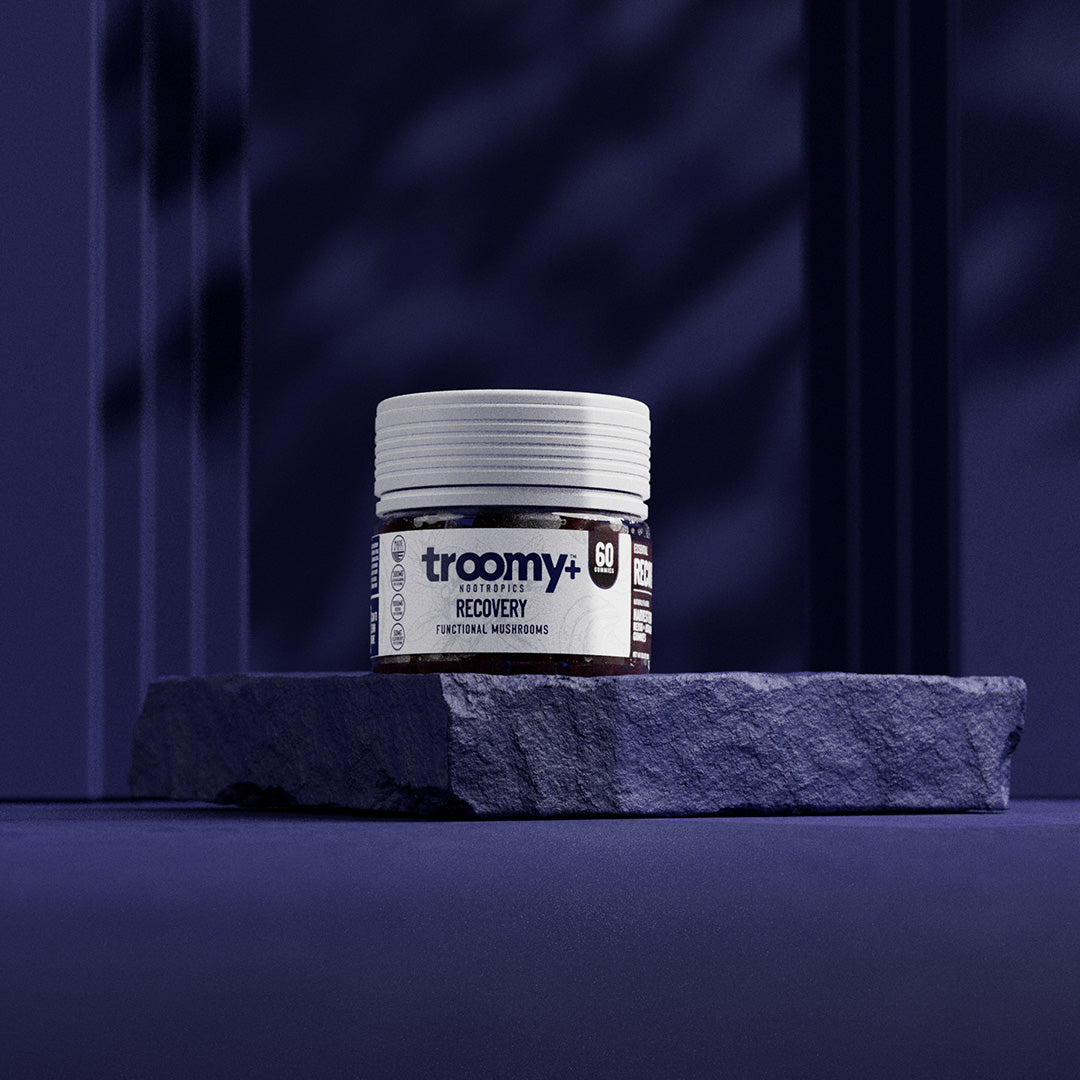
Reishi leads this list for a reason. It has centuries of traditional use in Chinese medicine specifically for calm and vitality, and it is the mushroom most consistently associated in modern research with HPA axis support and cortisol regulation. Its beta-glucan and triterpene content is the most studied of any adaptogenic mushroom when it comes specifically to the stress response, which is why it anchors Troomy’s Calm Reishi Gummies and Recovery Ashwagandha and Reishi Gummies.
If your stress shows up as an inability to switch off after a demanding day, reishi mushroom for stress is generally the first thing worth trying, both because of its traditional reputation and because it is the mushroom most directly tied to the HPA axis mechanism that governs whether your body can actually wind down.
Cordyceps: The Energy And Fatigue Angle Of Stress
Cordyceps takes a different approach to stress. Rather than targeting the racing-mind, wired feeling, cordyceps is more closely associated with energy and stamina, which makes it relevant to a specific kind of stress: the exhaustion and fatigue that build up when you have been running on empty for too long. If your stress feels less like anxiety and more like depletion, cordyceps addresses a real, adjacent piece of the picture, even though it is not the primary calming mushroom in this category, and it is generally better suited to daytime use than to winding down in the evening.
Chaga: Immune Support And Inflammation-Related Stress
Chaga’s reputation centers on immune support, and there is a growing recognition that chronic stress and immune function are closely linked. Ongoing stress can affect the body’s inflammatory response, and chaga’s traditional use for general resilience and immune health makes it a relevant, if less direct, part of the adaptogenic mushroom conversation. It is generally considered a supporting player rather than the primary choice for stress specifically, more useful layered into a broader routine than relied on as a standalone solution.
Lion’s Mane: Cognitive Stress And Brain Fog
Lion’s mane is best known for cognitive support rather than calm, but it belongs in this conversation because of how closely stress and brain fog are linked. Chronic stress affects the prefrontal cortex, the part of the brain responsible for focus and clear thinking, which is why people under sustained stress often report feeling foggy or forgetful. Lion’s mane addresses the cognitive side of that equation, making it a useful complement to reishi or ashwagandha rather than a direct substitute.
How Do You Choose The Right Adaptogenic Mushroom For Your Symptoms?
The honest answer depends on what your stress actually feels like. If it is the tired but wired, cannot switch off feeling, reishi has both the strongest traditional reputation and the most direct research relevance. If it is exhaustion and depletion, cordyceps is a better match. If brain fog and forgetfulness are the dominant symptom, lion’s mane addresses that specific piece. And if you are dealing with more than one of these at once, which is common since stress rarely shows up as a single, isolated symptom, pairing reishi with ashwagandha often makes more sense than trying to pick a single mushroom to solve everything.
Why Does Extraction Method Actually Matter?
Picking the right mushroom is only half the equation. How that mushroom is processed determines whether you are actually getting the beta-glucans and triterpenes responsible for its effects, or mostly starch and filler. Raw mushroom powder is poorly absorbed by the body because those active compounds are locked inside tough cell walls that human digestion cannot fully break down on its own.
Extraction solves that problem by pulling the beneficial compounds out of the mushroom material before it ever reaches you. Single extraction, typically using either hot water or alcohol, only captures part of the profile. Hot water extraction is effective for beta-glucans but misses triterpenes, while alcohol extraction does the reverse. Triple extraction combines multiple methods specifically to capture both compound groups, which is part of why it has become the standard that more rigorous supplement brands hold themselves to.
This is not a minor technical detail. Two products can list the same mushroom on the label and produce meaningfully different results depending on how that mushroom was extracted and at what concentration. Fruiting body extracts, taken from the mature mushroom itself rather than the mycelium it grows from, also tend to carry a higher concentration of active compounds, which is another detail worth checking on a label. When comparing adaptogenic mushroom supplements, extraction method and source material are worth checking as closely as the ingredient list itself.
Looking for the most research-backed adaptogenic mushroom for stress? Troomy’s Calm Reishi Gummies and Recovery Ashwagandha and Reishi Gummies both use triple-extracted reishi, the most studied adaptogenic mushroom available, so you are starting with the ingredient that has the strongest case behind it.
For anyone dealing with stress that comes with noticeable brain fog on top of it, lion’s mane is worth layering in alongside whichever adaptogenic mushroom addresses the stress itself, since the two symptoms tend to respond to different ingredients rather than one all-purpose fix.
Frequently Asked Questions
What are the best adaptogenic mushrooms for stress?
Reishi is the most studied adaptogenic mushroom specifically for stress and cortisol regulation. Cordyceps addresses the energy and fatigue side of stress, chaga supports the immune and inflammation-related side, and lion’s mane addresses the cognitive brain fog that often accompanies chronic stress.
Is reishi or cordyceps better for stress?
Reishi is generally the stronger choice for the tired but wired, racing-mind form of stress, since its research and traditional use both point toward calm and nervous system regulation. Cordyceps is better suited to stress that shows up primarily as exhaustion and depleted energy.
Do adaptogenic mushrooms help with anxiety?
Adaptogenic mushrooms are not a treatment for a diagnosed anxiety disorder, and anyone managing clinical anxiety should work with a healthcare provider. For everyday, non-clinical stress and tension, mushrooms like reishi have a long traditional history of calming use alongside a growing modern research base.
How long do adaptogenic mushrooms take to work for stress?
Most adaptogenic mushrooms need two to four weeks of consistent daily use before producing a noticeable effect, since they work through gradual regulation of the body’s stress response rather than an immediate sedative action.
Are adaptogenic mushrooms safe to take daily?
Adaptogenic mushrooms like reishi, cordyceps, and chaga are generally well tolerated by most healthy adults when taken as directed. This is not medical advice, and anyone on medication or managing a health condition should consult a doctor before starting a new supplement.
These statements have not been evaluated by the Food and Drug Administration. This product is not intended to diagnose, treat, cure, or prevent any disease.


