



You have probably seen both ashwagandha and reishi on supplement shelves. You might even be taking one of them already. Here is why combining them makes more sense than choosing one, and what the stack actually does for stress that neither ingredient can do alone.
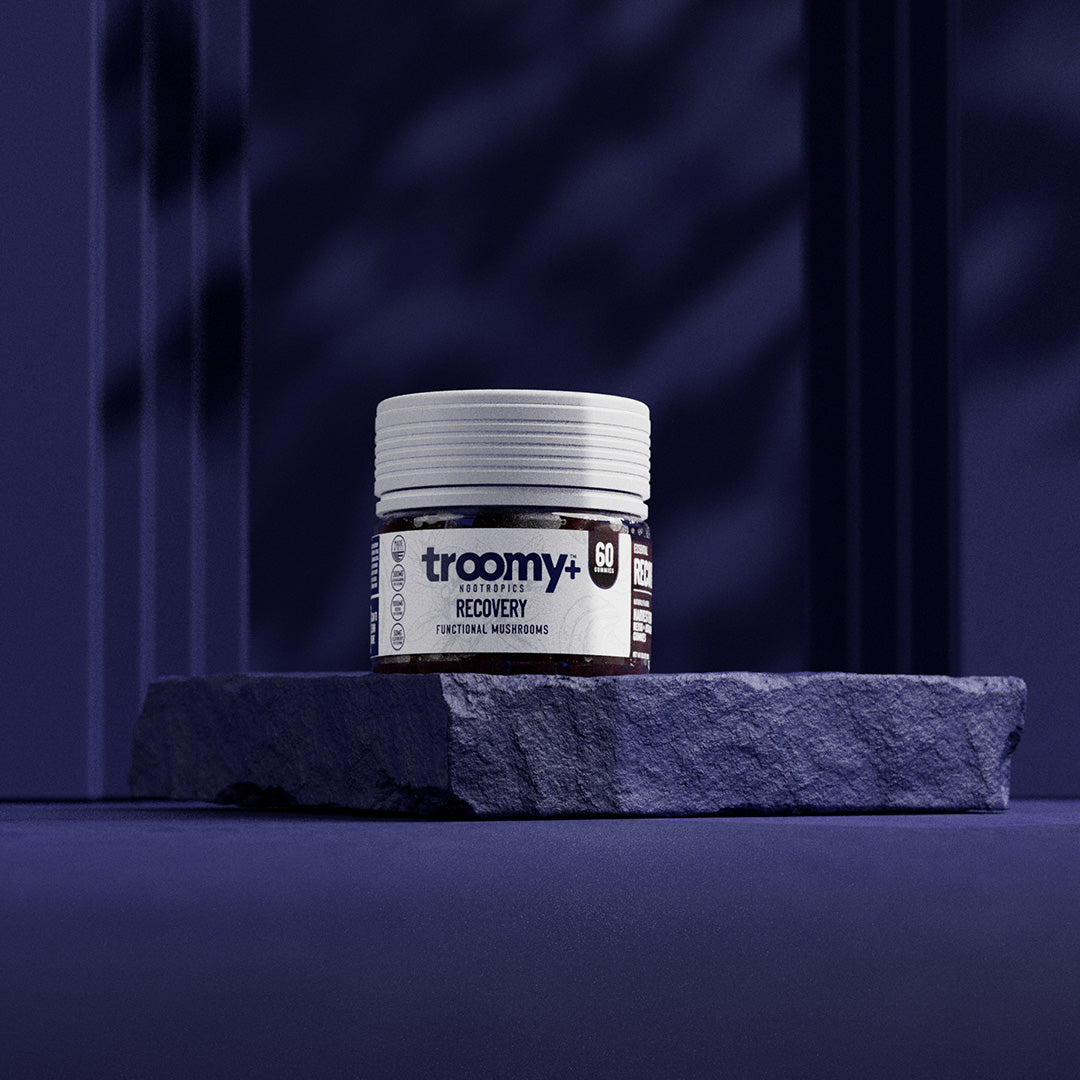
Troomy’s Recovery Ashwagandha and Reishi Gummies were built around a simple idea: stress rarely comes from just one direction, so a single-ingredient solution often only covers part of the picture. Ashwagandha and reishi are two of the most studied adaptogens available, and they work on genuinely different pathways, which is what makes the combination worth understanding rather than just another "more is better" supplement trend.
What Does Ashwagandha Do For Stress?
Ashwagandha is an herb used in Ayurvedic medicine for centuries, and it has become one of the most researched adaptogens in modern supplement science, largely because of its studied effects on cortisol and perceived stress. Most commercial ashwagandha supplements use a standardized extract, commonly KSM-66 or Sensoril, both of which have been the subject of clinical research specifically looking at stress and anxiety markers.
The mechanism centers on the HPA axis, the feedback loop between your brain and adrenal glands that governs cortisol release. Ashwagandha’s research base leans toward more acute, measurable effects on cortisol over relatively short study windows, which is part of why it has become a go-to ingredient for people dealing with day-to-day stress spikes rather than a general sense of being run down.
What Does Reishi Do For Stress?
Reishi mushroom takes a different route to the same broad goal. Rather than the sharper cortisol effects associated with ashwagandha, reishi’s beta-glucans and triterpenes are more closely tied to immune modulation and a longer, steadier form of nervous system regulation. Reishi has centuries of traditional use in Chinese medicine as a calming, balancing substance, and modern interest in it has grown alongside broader research into functional mushrooms and their adaptogenic properties.
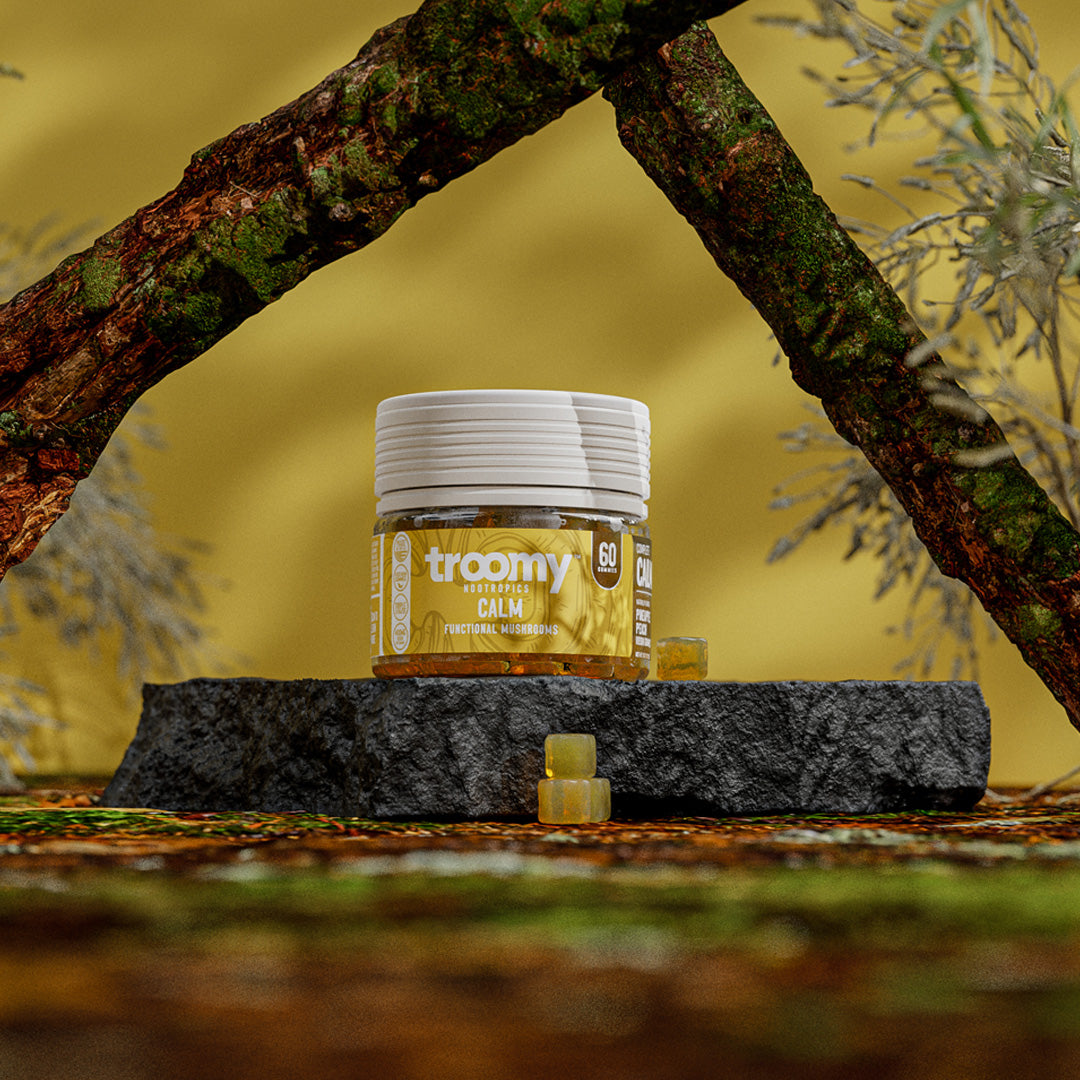
Where ashwagandha tends to address the sharper edges of a stress response, reishi tends to support the underlying resilience of the system over time, which is why it plays such a central role in Troomy’s stress-focused product line, including the Calm Reishi Gummies. The reason reishi affects stress at all comes down to an overworked HPA axis, the exact system it is most studied for supporting.
Why The Two Work On Complementary Pathways
This is the core of the stack argument. Ashwagandha and reishi are not redundant. One leans toward acute cortisol regulation and stress markers. The other leans toward immune-mediated, longer-term nervous system support. Combining them means you are covering more of the actual stress picture, both the sharp spikes and the slow-burning background tension, rather than doubling down on one mechanism and hoping it covers everything.
This is the "stack equals value" idea in practice. It is not about piling on more ingredients for the sake of a longer label. It is about recognizing that two well-researched adaptogens working on different systems can address more of a genuinely multi-part problem than either one alone.
What The Research Shows About Each Ingredient Individually
Ashwagandha has a relatively strong and growing body of clinical research behind it, particularly studies measuring perceived stress scores and cortisol levels before and after supplementation. Reishi’s research base leans more heavily on traditional use combined with modern interest in its immune and adaptogenic properties, and while it has a long history of safe use, standardized large-scale human trials specifically on stress outcomes are still an active area of ongoing research. Both are considered well-tolerated for most healthy adults when taken as directed, but this article is not medical advice, and anyone on medication or managing a health condition should talk to a doctor before starting a new supplement.
How Should You Take Them Together?
Consistency matters more than timing precision. Most people take a combination ashwagandha and reishi product once daily, and Troomy’s Recovery Gummies are formulated as a single daily gummy specifically so that the habit is easy to maintain. Because both ingredients work through gradual, regulatory mechanisms rather than immediate effects, skipping days regularly will blunt the results far more than the exact time of day you take them.
Give it time before judging whether it is working. As with reishi and ashwagandha individually, most people need two to four weeks of consistent daily use before noticing a clear shift, with effects continuing to build over a full month.
Who Benefits Most From This Combination
The Recovery stack tends to be the right fit for someone who is not just dealing with one flavor of stress. If you notice both the sharper, in-the-moment stress spikes that ashwagandha’s research targets and the slower, harder-to-shake background tension that reishi is traditionally used for, a combined approach makes more practical sense than picking one ingredient and hoping it happens to cover both patterns.
Troomy’s Recovery Gummies combine ashwagandha and triple-extracted reishi in one daily gummy, two of the most studied adaptogens working on complementary stress pathways. They are vegetarian, caffeine-free, and made in the USA, built as a genuine daily habit rather than an occasional fix.
Feeling stress from more than one direction, the sharp spikes and the slow grind both? One Troomy Recovery gummy a day is built to meet both, so you are not stacking separate bottles just to cover the whole picture yourself, the same reasoning behind every formula in the mood collection.
Frequently Asked Questions
Can you take ashwagandha and reishi together?
Yes. Ashwagandha and reishi work through different, complementary mechanisms, ashwagandha through more acute cortisol regulation and reishi through longer-term immune-mediated nervous system support, which makes them well suited to being combined in a single daily product.
What is the difference between ashwagandha and reishi for stress?
Ashwagandha has a stronger research base around short-term cortisol reduction and perceived stress scores. Reishi’s traditional and research profile leans toward longer-term, immune-linked nervous system regulation. They address different parts of the stress picture rather than duplicating each other.
Does the ashwagandha and reishi combination work better than either alone?
Because the two ingredients work on different pathways, combining them is designed to cover more ground than either ingredient used on its own, particularly for people whose stress shows up in more than one way. Individual results vary, and this is not a guarantee of a specific outcome.
How long does it take to feel the ashwagandha and reishi stack?
Most people need two to four weeks of consistent daily use before noticing a meaningful shift, with results continuing to build over the first month.
Is ashwagandha or reishi better for anxiety?
Neither ingredient is a treatment for a diagnosed anxiety disorder, and anyone managing clinical anxiety should consult a healthcare provider. For everyday, non-clinical stress, ashwagandha’s research leans toward acute stress relief while reishi leans toward longer-term calm, which is why many people use them together.
These statements have not been evaluated by the Food and Drug Administration. This product is not intended to diagnose, treat, cure, or prevent any disease.


