






Your brain gets about four hours of genuine focus per day. Most people spend three of them fighting through fog.
Here is what nootropics actually are, which ones have real research behind them, and why the natural ones are having a moment.
What Is a Nootropic? The Definition in Plain Language
A nootropic is any substance, natural or synthetic, that supports cognitive function. That includes memory, focus, mental clarity, learning, and processing speed. The term was coined in the 1970s by a Romanian chemist studying compounds that protected the brain and supported cognition without the sedating or stimulating side effects of older drugs.
In practice, the word now covers a wide range of things. On one end you have prescription stimulants and synthetic compounds developed specifically to enhance cognition. On the other end you have everyday substances people already use for focus, like caffeine, and further along that spectrum, natural compounds derived from plants, adaptogens, and functional mushrooms.
What ties them together is the goal, not the ingredient list. A true nootropic should support how your brain works without breaking down how your body works. That distinction matters more than most marketing lets on, and it is the reason so many people end up disappointed with their first nootropic experience. A jittery stimulant that wrecks your sleep is not doing your brain any favors, even if it makes you feel sharp for two hours.
What's the Difference Between Synthetic and Natural Nootropics?
Synthetic nootropics include prescription stimulants like Adderall, wakefulness drugs like modafinil, and a category of lab created compounds called racetams that some people cycle through in an attempt to optimize performance. These substances can produce strong, fast effects. They can also come with real tradeoffs: dependency risk, tolerance buildup, crash periods, and in many cases the need for a prescription and medical supervision.
Natural nootropics work differently. Compounds like lion's mane, bacopa monnieri, rhodiola rosea, ashwagandha, ginkgo biloba, and cordyceps do not force your nervous system into overdrive. Instead, most of them work on slower, more foundational processes, supporting nerve growth, reducing the physical impact of stress on the brain, or improving blood flow and oxygen delivery. The effects tend to build over days and weeks rather than hitting in the first thirty minutes.
This is the tradeoff in plain terms. Synthetic nootropics can be more powerful in the short term. Natural nootropics are generally safer for daily, long term use and tend to support the brain in ways that do not come with a crash. For someone dealing with everyday brain fog, an afternoon slump, or the mental fatigue of a demanding job, that difference is often exactly what matters, and it is the whole premise behind Natural Nootropics vs Synthetic: Which Is Better for Everyday Focus?, the piece where we work through who each approach actually makes sense for. Brain fog on its own has enough distinct causes, poor sleep, chronic stress, blood sugar swings, inflammation, that it gets its own dedicated answer in Brain Fog: What Causes It and What Natural Supplements Actually Help.
Which Natural Nootropics Have the Most Research Behind Them?
Not everything labeled a nootropic has research behind it. Here are the natural compounds with the most consistent evidence, starting with the one that has the clearest biological mechanism of the group.
Lion's Mane
Lion's mane mushroom contains two compound groups, hericenones and erinacines, that have been shown in laboratory and early human research to stimulate nerve growth factor, or NGF, a protein involved in the growth and maintenance of neurons. This is the clearest mechanistic explanation of any widely consumed natural nootropic, which is part of why lion's mane has become the flagship ingredient in the category. Is Lion's Mane a Nootropic? What the Research Actually Says goes deeper into that NGF mechanism, including how the 2025 randomized controlled trial in Frontiers in Nutrition was structured and what it actually measured in adults supplementing with lion's mane.
Cordyceps
Cordyceps is best known for supporting ATP production and oxygen utilization at the cellular level. It is more associated with physical energy than cognition directly, but because mental fatigue and physical fatigue are closely linked, cordyceps often shows up in focus oriented stacks as a way to support sustained mental energy without caffeine. Paired with lion's mane, it is one of the two mushrooms most commonly used in nootropic formulations.
Bacopa Monnieri
Bacopa has one of the longer research histories in the natural nootropic space, with studies suggesting it supports memory consolidation over weeks of consistent use. It is a slow acting compound, and most of the research points to benefits appearing after four to twelve weeks rather than immediately.
Rhodiola Rosea
Rhodiola is an adaptogen studied primarily for its role in fatigue resistance and stress response. Some research points to improved mental performance specifically under conditions of stress or sleep deprivation, which makes it a common choice for people dealing with demanding, high pressure schedules.
Ashwagandha
Ashwagandha is another adaptogen, and its cognitive benefit is largely indirect. By supporting a healthier cortisol response, it can reduce the specific kind of brain fog that comes from chronic stress rather than from lack of sleep or poor diet.
Ginkgo Biloba
Ginkgo has one of the longest histories of use for cognitive support, with research generally focused on blood flow to the brain. Evidence is mixed compared to some newer compounds, and effects tend to be modest, but it remains one of the most studied natural nootropics available.
Lion's mane leads this list for a reason, but the right choice often depends on the specific problem you are solving for, which is exactly what Best Natural Nootropics for Focus: A Ranked Guide ranks these six against, evidence by evidence.
What Does the Research Actually Show?
It is worth being honest here instead of overselling it. Natural nootropics are not a replacement for sleep, and they are not going to turn a chaotic schedule into a productive one overnight. What the research generally supports is more modest and more believable: consistent supplementation with compounds like lion's mane, bacopa, and rhodiola is associated with measurable improvements in specific areas of cognitive performance, particularly focus, memory, and resistance to mental fatigue, when used consistently over weeks rather than as a one time fix.
The strongest mechanistic case belongs to lion's mane, because NGF stimulation is a well documented biological pathway, not a marketing claim. Other natural nootropics have supportive but generally smaller or more mixed evidence bases. None of them work like a stimulant, and none of them should be marketed that way. If you are trying to decide whether a natural approach makes sense compared to something like Adderall or modafinil, the honest answer usually comes down to what you actually need day to day: a short, powerful burst of focus, or steady, sustainable support you can rely on every afternoon without a crash at the end of it.
Who Uses Natural Nootropics and Why?
The audience for natural nootropics has expanded well beyond the biohacking crowd. Professionals use them to get through long days of meetings and deep work without relying on a fourth coffee, especially in roles where a caffeine crash at 3pm means an entire afternoon lost to a fog that will not lift. Students use them during exam periods when sustained focus matters more than a short burst of energy, and when the stakes of a single bad night's sleep before a test feel too high to leave to chance.
Gamers and creatives use them for long sessions that require attention over hours, not minutes, where the goal is staying locked in rather than getting an initial jolt. Parents, particularly those managing full time work alongside family responsibilities, use them simply to feel like themselves by 3pm instead of running on fumes after a morning that started before anyone else in the house was awake. Exam season alone sends enough people looking for this kind of answer that it earns its own guide: Nootropics for Studying: Natural Cognitive Support That Actually Helps.
What connects all of these groups is not a desire to be superhuman. It is a desire to function normally on a day that is asking more of them than eight hours of sleep and a cup of coffee can provide.
How Long Do Natural Nootropics Take to Work?
This is one of the most common questions, and the honest answer is that it depends on the compound and the person. Some people notice a subtle difference in mental clarity within the first one to two weeks of consistent use, particularly with lion's mane. Others, especially with slower acting compounds like bacopa, may not notice a meaningful shift until closer to the four to eight week mark. What matters most is consistency. Natural nootropics are a daily habit, not an as needed tool, and skipping days regularly will blunt whatever cumulative benefit is building.
Why Are Mushroom-Based Nootropics Growing So Fast?
Functional mushrooms have become the fastest growing corner of the natural nootropic category, and it is not just a trend. Lion's mane in particular offers something rare: a plausible, well documented biological mechanism, a growing body of human research, and a safety profile that makes daily use realistic for almost anyone. Compare that to synthetic options that require a prescription or carry dependency risk, and it is easy to see why more people are choosing mushroom based nootropics as their everyday cognitive support. What Are Nootropic Mushrooms? Lion's Mane, Cordyceps and the Brain Health Stack gets into how lion's mane and cordyceps actually work together as a stack, and where reishi and chaga fit in as smaller, more supportive players.
Extraction quality matters enormously here. Whole mushroom powder is not the same as a triple extracted concentrate, and the difference shows up in how much of the active compound actually reaches your body. This is where product quality becomes the deciding factor between a supplement that does something and one that is mostly filler.
Whether mushrooms are actually the better everyday choice compared to herbal options like bacopa and ginkgo, or synthetic ones like Adderall and modafinil, is a fair question, and it is the entire subject of Mushroom Supplements vs Traditional Nootropics: Which Is Better for Everyday Use?.
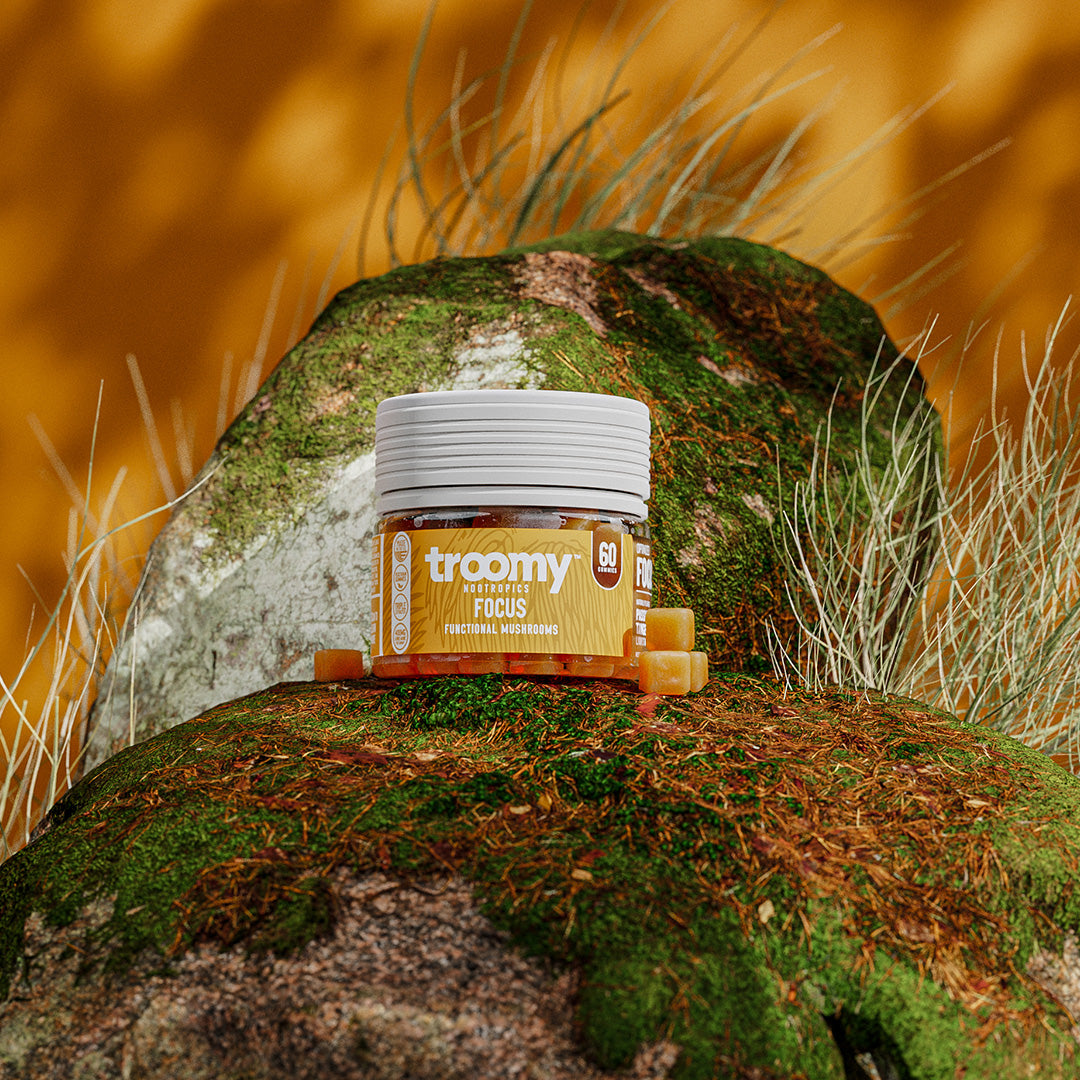
If you are looking for a natural nootropic you can actually feel, Troomy's Focus Lion's Mane Gummies deliver 800mg of triple-extracted lion's mane per serving, caffeine-free, made in the USA, vegetarian. Clear the fog without the crash.
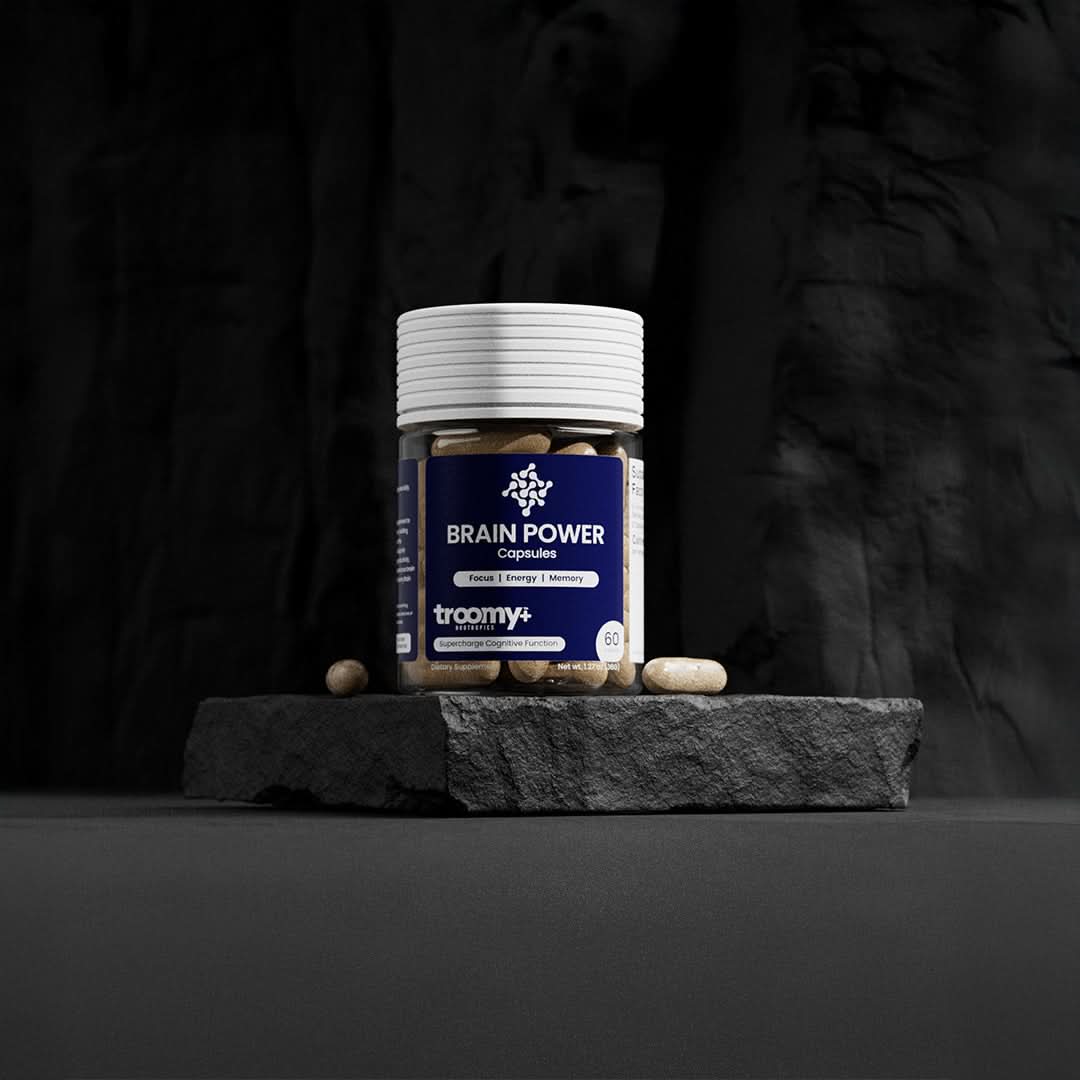
Stuck in back to back meetings with nothing left by mid afternoon? Troomy's Brain Power Capsules combine lion's mane, cordyceps, and caffeine into one daily capsule built for sustained, everyday focus, not just a short lived boost that leaves you flat an hour later.
Frequently Asked Questions
What are nootropics?
Nootropics are substances, natural or synthetic, that support cognitive function such as memory, focus, and mental clarity. The category ranges from prescription stimulants to natural compounds like lion's mane, bacopa, and rhodiola.
Are natural nootropics safe?
Most natural nootropics with research behind them, including lion's mane, bacopa, and ashwagandha, have a strong safety profile for daily use in healthy adults. As with any supplement, it is worth talking to a doctor if you are pregnant, nursing, or taking prescription medication.
Do nootropics actually work?
The better researched natural nootropics, particularly lion's mane, have real mechanistic and clinical support for supporting cognitive function. Effects tend to be gradual rather than immediate, and consistency matters more than any single dose.
What is the best natural nootropic for focus?
Lion's mane currently has the strongest combined evidence base and mechanism of any natural nootropic, largely due to its role in stimulating nerve growth factor. Cordyceps and rhodiola are often paired with it to support energy and stress resilience.
How long do nootropics take to work?
Some people notice subtle changes within one to two weeks of consistent use, while others, particularly with slower acting compounds like bacopa, may need four to eight weeks. Daily consistency matters more than the specific timeline.
What is the difference between nootropics and smart drugs?
Smart drugs typically refers to synthetic, often prescription compounds like Adderall or modafinil, which tend to produce stronger, faster effects along with more risk. Nootropics is the broader term that includes both those synthetic options and gentler, natural compounds meant for everyday, long term use.
These statements have not been evaluated by the Food and Drug Administration. This product is not intended to diagnose, treat, cure, or prevent any disease.


