



You have seen ‘nootropic mushrooms’ on labels and in wellness content everywhere. But what actually makes a mushroom a nootropic, and which ones have the research to back it up?
A nootropic, in plain terms, is any substance, natural or synthetic, that is studied for its effect on cognitive function such as memory, focus, mental clarity, or processing speed. Not every supplement marketed for brain health actually meets that bar, and mushrooms are no exception.
What Makes a Mushroom a Nootropic?
Not every functional mushroom qualifies as a nootropic, even though the wellness aisle can make it seem that way. Reishi, chaga, turkey tail, cordyceps, and lion's mane each have their own body of research, but only some of them have a documented mechanism that connects specifically to cognitive function, memory, focus, or nerve health. A mushroom earns the nootropic label when there is a plausible biological pathway linking it to brain function, not simply a general reputation for supporting wellness. That distinction matters if you are trying to build a routine around brain health rather than just general immune or energy support, and it is the difference between a mushroom that happens to be in a brain health gummy and one that is actually doing something for your brain.
By that standard, lion's mane and cordyceps stand out as the two strongest nootropic mushrooms available today, each working through a distinct, separately studied mechanism. Reishi and chaga still belong in a broader wellness routine and each plays a supporting role in brain health, but their connection to cognition is more indirect. The sections below walk through what the research actually shows for each one.
How Does Lion's Mane Work as a Nootropic?
Lion's mane contains two groups of compounds, hericenones and erinacines, shown in research to stimulate nerve growth factor, a protein responsible for the growth, repair, and maintenance of neurons. This is the clearest, most specific mechanism connecting any widely available mushroom to cognitive support, which is why lion's mane is usually the mushroom people mean when they talk about functional mushrooms for brain health. A 2025 randomized controlled trial published in Frontiers in Nutrition examined cognitive outcomes with lion's mane supplementation, building on earlier research that measured cognitive performance in adults over sustained periods of daily use. The research base is still developing, but the underlying mechanism, nerve growth factor stimulation, is well established in the broader scientific literature.
In practical terms, this means lion's mane is less about an immediate mental boost and more about supporting the brain's underlying maintenance systems over time. Most people report noticing a difference within two to three weeks of consistent daily use, not within the first sitting, which is a meaningfully different experience than a stimulant. That is also why lion's mane shows up so often in nootropic mushroom gummies rather than as an occasional-use product. Consistency, not dosage spikes, appears to be what drives the benefit, which fits a supplement you take as part of a daily routine rather than only on demanding days.
Is Cordyceps Actually a Nootropic?
Cordyceps works through an entirely different pathway than lion's mane. Its research base centers on supporting ATP production, the energy currency of your cells, and improving how efficiently the body uses oxygen. While this mechanism is more closely associated with physical stamina than cognition, mental energy and physical energy are closely linked. Fatigue is one of the most common hidden causes of poor focus, and cordyceps addresses that root cause rather than masking it the way caffeine does. A randomized, double-blind, placebo-controlled crossover trial published in PLOS One found that participants who took cordyceps militaris extract before exercise showed faster reaction times on a standard cognitive test compared to placebo, alongside measurably higher oxygen uptake, which is one of the first pieces of human evidence tying the oxygen utilization mechanism directly to cognitive performance rather than physical stamina alone.
This is why cordyceps is often paired with lion's mane rather than used as a replacement for it. One supports the brain's structural maintenance and nerve health, the other supports the cellular energy needed to actually use that focus once you have it. Together they address two separate pieces of the same everyday problem, feeling foggy and feeling drained, rather than asking one ingredient to do both jobs at once.
Does Reishi Support Brain Health?
Reishi's role in cognitive support is indirect but real. It is studied primarily for its calming, adaptogenic properties, helping support a healthier response to everyday stress. Since chronic stress is a well-established contributor to brain fog, reishi's cognitive benefit comes through supporting a calmer nervous system rather than acting on neurons directly the way lion's mane does. For someone whose focus problems trace back to a racing mind at the end of a long day rather than pure mental fatigue, reishi can be the more relevant piece of the stack, even though it is not typically classified as a nootropic on its own.
What Does Chaga Do for the Brain?
Chaga is best known for its antioxidant content. Its connection to brain health is largely about reducing oxidative stress and supporting the body's broader anti-inflammatory processes, which some researchers believe plays a supporting role in long-term cognitive health, even though the cognitive research specific to chaga is less developed than for lion's mane or cordyceps. Chaga is best thought of as a long-term protective layer rather than something that will noticeably change how sharp you feel this week. It fits alongside a more targeted nootropic mushroom rather than in place of one.
Nootropic Mushrooms at a Glance
Before deciding how to stack them, it helps to see the four side by side. Here is how each one's mechanism, best use case, and evidence strength compare:
-
Lion's mane: works through nerve growth factor stimulation. Best for ongoing brain fog and everyday cognitive maintenance. Strongest human research base of the four.
-
Cordyceps: works through ATP production and oxygen utilization. Best for fatigue-related focus problems. Growing human research, including direct cognitive performance data.
-
Reishi: works through stress and cortisol modulation. Best for stress-driven brain fog. Strong stress research, but the cognitive link is indirect.
-
Chaga: works through antioxidant and anti-inflammatory activity. Best for long-term protective use. The least developed cognitive-specific research of the four.
How to Evaluate a Nootropic Mushroom Product
Not all nootropic mushroom gummies on the shelf are delivering the same thing, even when the label lists the same mushroom. Extraction method matters because the compounds responsible for the nootropic effect, hericenones and erinacines in lion's mane, cordycepin and adenosine derivatives in cordyceps, are concentrated through extraction, not simply present in raw mushroom powder. A product made from whole mushroom powder can technically list lion's mane on the label without delivering a meaningful dose of the compounds that actually do the work. Triple extraction, which uses water, alcohol, and heat to pull out a broader range of active compounds, is generally considered the more reliable standard. Dose matters as much as extraction. A gummy with a fraction of a gram of lion's mane is unlikely to replicate what researchers used in clinical studies, regardless of how the label is worded.
Which Nootropic Mushrooms Should You Stack Together?
If brain fog and mental clarity are the main issue, lion's mane on its own is the strongest single choice, since it is the mushroom with the clearest documented cognitive mechanism. If fatigue is part of the picture, adding cordyceps addresses the energy side of the equation instead of layering on more caffeine. If stress is the underlying driver of the fog, reishi becomes the more relevant addition, since it works on the nervous system rather than on neurons directly. Chaga fits best as a general, long-term wellness layer rather than a targeted cognitive tool, so it makes more sense alongside one of the other three than as your only mushroom.
For a wider look at how natural nootropics compare to synthetic options like Adderall and modafinil, see our complete guide, What Are Nootropics? The Complete Guide to Natural Brain Health Supplements, which covers the full category this article fits into.
If cordyceps is the piece you are most curious about, our dedicated cordyceps guide covers the research on ATP production and oxygen utilization in more depth.
Want to try the most research-backed nootropic mushroom? Troomy's Focus Lion's Mane Gummies deliver 800mg of triple-extracted lion's mane per serving, the real thing, not whole mushroom powder.
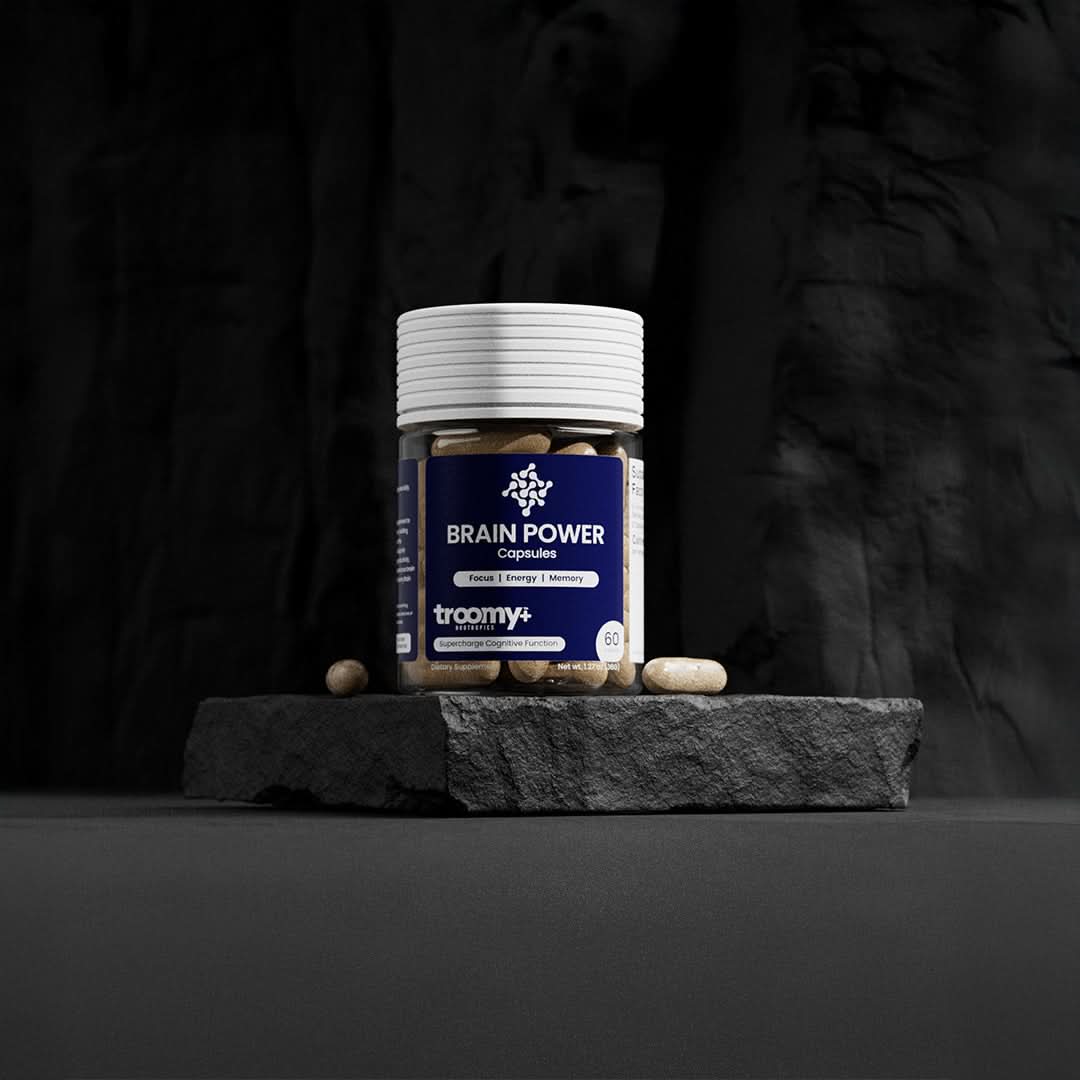
Dealing with both the fog and the crash? Troomy's Brain Power Capsules combine lion's mane and cordyceps with caffeine in one daily capsule, triple-extracted and made in the USA, so you get sustained focus without relying on caffeine alone.
Frequently Asked Questions
What are nootropic mushrooms?
Nootropic mushrooms are functional mushrooms with a documented mechanism connected to cognitive function. Lion's mane and cordyceps are the two with the strongest, most specific research bases, while reishi and chaga support brain health more indirectly.
Is lion's mane the best nootropic mushroom?
It has the clearest documented mechanism, nerve growth factor stimulation, and the deepest human research base of any widely available mushroom, which makes it the leading choice for cognitive support specifically.
Can you stack cordyceps and lion's mane?
Yes. They work through different, complementary mechanisms, cellular energy production and neural maintenance, which is why they are commonly combined in a single daily product like a capsule or gummy.
What do nootropic mushrooms actually do?
Depending on the mushroom, they support nerve growth, cellular energy production, stress resilience, or antioxidant protection, all of which can contribute to better focus and mental clarity over time.
Are mushroom nootropics safe?
Lion's mane and cordyceps both have strong safety profiles for daily use in healthy adults. As with any supplement, check with a doctor if you are pregnant, nursing, or taking medication.
These statements have not been evaluated by the Food and Drug Administration. This product is not intended to diagnose, treat, cure, or prevent any disease.


