




If you have spent any time researching natural nootropics you have probably found ten conflicting listicles, half of which are sponsored. Here is an honest ranking based on what the research actually shows, not what brands are paying to promote. Maybe you are staring down another 2pm crash, losing your train of thought mid task, or reaching for a third coffee just to get through a meeting. If that sounds familiar, the good news is that a small number of natural nootropics actually have research behind them for exactly this kind of problem.
Before getting into the ranking, it helps to have the bigger picture. If you are still getting oriented on what nootropics are and how natural options differ from synthetic ones, our complete guide to natural nootropics covers that ground in more depth. This article focuses specifically on the five natural nootropics with the strongest case for supporting focus, ranked by the depth and quality of the evidence behind each one, not by marketing budget. If you have typed some version of best nootropics for focus into a search bar and come away more confused than when you started, this ranking is built to actually answer that question.
How to Evaluate a Natural Nootropic
Before ranking anything, it helps to know what actually separates a good natural nootropic from a wellness trend riding on a mushroom or herb's popularity. Three things matter most, and almost every disappointing nootropic experience traces back to one of them.
Extraction quality comes first. Whole mushroom or herb powder is not the same as a properly extracted concentrate. If a label does not specify an extraction method or a concentration ratio, the active compound content is likely low, no matter how large the total mushroom or herb weight looks on the label. Look for terms like dual extraction, hot water extraction, or a specific beta glucan percentage. These indicate a manufacturer that is actually processing the raw material rather than just grinding it up and encapsulating it.
Research depth comes second, and this is the factor that actually drives the ranking below. Not all research is equal. A compound with a documented biological mechanism and human trial data ranks above a compound whose evidence is mostly animal studies, cell studies, or centuries of traditional use with little modern testing behind it. A lot of natural nootropic marketing treats these two tiers of evidence as interchangeable. They are not, and the ranking below is ordered specifically by how far each compound has moved from theoretical mechanism to demonstrated human effect.
Dose transparency comes third. A product hiding behind a proprietary blend without disclosing individual ingredient amounts makes it impossible to know if you are getting a dose anywhere close to what the research actually used. If a label lists a blend total but not the amount of each individual ingredient, treat that as a red flag rather than a selling point. Run any product through these three checks and you will find that the best nootropic supplements tend to pass all three, while the ones relying on hype usually fail at least one.
With that framework in mind, here is how the five most researched natural nootropics for focus stack up against each other, and why each one sits where it does relative to the compound above and below it.
1. Lion's Mane: The Strongest Evidence Base
Lion's mane takes the top spot because it has both a documented mechanism and a growing body of human research behind it. The mushroom contains hericenones and erinacines, compounds shown in laboratory research to stimulate nerve growth factor, a protein involved in maintaining, repairing, and growing neurons. Nerve growth factor is not just theoretical biology. It plays a direct role in how well neurons communicate, which is a large part of what people experience as mental clarity and sustained focus.
A 2025 randomized controlled trial published in Frontiers in Nutrition examined cognitive outcomes with lion's mane supplementation, adding to earlier research on the mushroom's effects in older adults over multiple months of consistent use. Earlier Japanese research going back over a decade found similar patterns in adults reporting age-related cognitive changes, with measurable improvement that faded again after supplementation stopped, which is itself a useful clue. It suggests the compound is actively supporting a biological process rather than producing a placebo response. That said, the human trial base for lion's mane, while the strongest on this list, is still made up of a relatively small number of studies compared to a well-established pharmaceutical compound, and researchers are still refining questions like optimal dose and duration.
What to expect: gradual, cumulative support for focus and mental clarity, typically noticeable within two to four weeks of consistent daily use, not an immediate jolt the way caffeine or a stimulant would produce. This is also why extraction quality matters so much here specifically. A poorly extracted lion's mane supplement may contain almost none of the hericenones and erinacines responsible for the nerve growth factor effect, even if the mushroom content on the label looks generous. This combination, a documented mechanism plus actual human trial data, is why lion's mane sits at the top of this list. Nothing else below it pairs a known biological pathway with direct human evidence this closely.
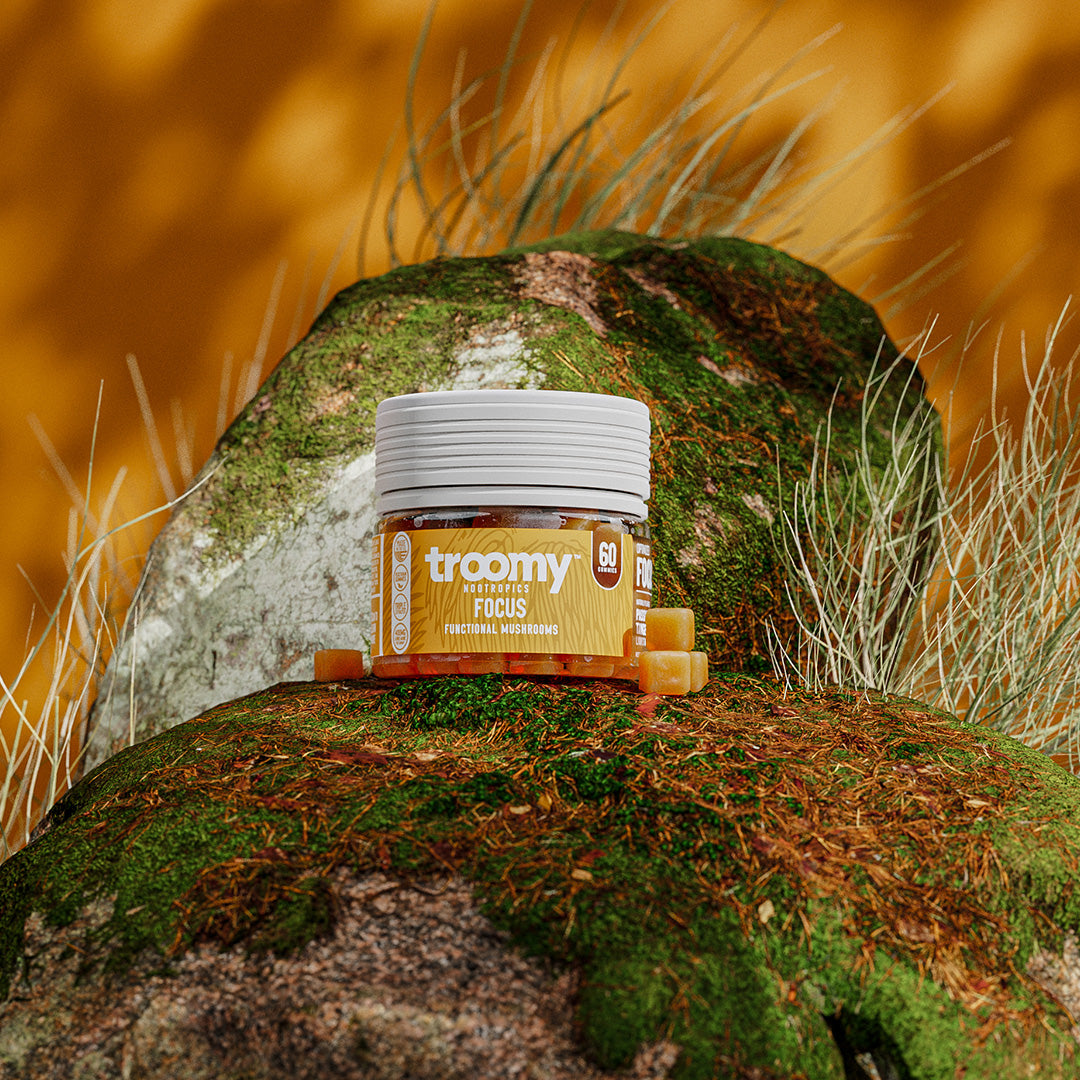
If brain fog and unpredictable focus are your main issue, this is the place to start. Troomy's Focus Lion's Mane Gummies use 800mg of triple-extracted lion's mane per serving, caffeine-free, made in the USA, and formulated to deliver the concentration of active compounds the research is actually built on, not just a large number on the label. A 60-count bottle works out to about $1.17 a day, or under $1 a day with a subscription. For a deeper look at the research specifically, our full lion's mane guide breaks down the studies in more detail.
2. Cordyceps: Energy and Oxygen Utilization
Cordyceps ranks second, not first, for a specific reason: its evidence is strong but indirect. Its research base centers on ATP production and oxygen utilization at the cellular level, mechanisms studied extensively in the context of athletic performance and endurance, most often measuring things like VO2 max and exercise capacity rather than focus itself. The active compounds most studied here, cordycepin and adenosine derivatives, have a clearer link to physical energy metabolism than to a direct cognitive pathway. That makes the connection to focus a reasonable extrapolation rather than a finding a study set out to measure directly, which is exactly the distinction that keeps it behind lion's mane.
Still, the practical case for cordyceps is strong. If your attention drifts by mid-afternoon and coffee only produces a jittery, short-lived fix followed by a crash, that pattern often points toward cellular fatigue rather than a cognitive deficit. Cordyceps, particularly the cultivated Cordyceps militaris strain used in most reputable supplements today, has been studied for its effect on how efficiently the body uses oxygen during exertion, and that same efficiency plausibly carries over into sustained mental tasks that require stamina rather than a single burst of focus.
Pairing cordyceps with lion's mane is one of the more logical natural nootropic stacks, since one supports cellular energy and the other supports neural maintenance. They are addressing two different bottlenecks rather than competing for the same one, which is part of why this combination shows up so often in more thoughtfully formulated cognitive support products.
3. Ashwagandha: The Stress-Brain Fog Connection
Ashwagandha ranks below cordyceps because its cognitive benefit, while real, sits two steps removed from focus rather than one. Cordyceps has a fairly direct line from cellular energy to sustained attention. Ashwagandha's path runs from extract, to lowered cortisol, to a calmer stress response, to less stress-driven fog, which is a longer and more indirect chain even though each individual link is reasonably well studied. As an adaptogen, it is most often tested using standardized extracts such as KSM-66 or Sensoril, with controlled trials showing measurable reductions in self-reported stress and improvements in sleep quality over roughly eight to twelve weeks of consistent use.
Chronic stress is one of the most common and underrated causes of brain fog, and it rarely gets named as the culprit. A nervous system that is constantly cycling through a low grade stress response pulls resources away from the prefrontal cortex functions responsible for sustained attention and working memory. By helping regulate that stress response, ashwagandha can meaningfully reduce fog that has nothing to do with sleep or nutrition and everything to do with a nervous system stuck in overdrive. It will not sharpen focus the way lion's mane or cordyceps can, but for people whose fog tracks closely with a demanding, high-pressure period of life, it addresses a cause the other options on this list do not touch.
4. Bacopa: Longer-Term Memory Support
Bacopa monnieri has one of the longer research histories in this category, with human studies generally pointing to improvements in memory consolidation over extended use, often in the range of eight to twelve weeks. The active compounds, bacoside A and bacoside B, have modern controlled trials behind them in addition to a long history in Ayurvedic practice, which gives bacopa a more defensible place on a ranked list than a compound relying on tradition alone.
It ranks below ashwagandha for two reasons rather than one weak point. First, the timeline to a noticeable effect is the longest of anything on this list. Second, the benefit is more specifically tied to memory formation and recall than to the broader focus and mental clarity most people searching this topic actually want. A compound that takes longer to work and targets a narrower outcome reasonably ranks behind one that works faster on a more directly relevant problem. If your main complaint is forgetting what you just read or losing your train of thought mid-task, bacopa is worth considering as an addition to a lion's mane routine rather than a replacement for it.
5. Rhodiola: Fatigue Resistance and Sustained Performance
Rhodiola rosea rounds out the list. Its research, centered on compounds called rosavins and salidroside, focuses on fatigue resistance and mental performance under stress or sleep deprivation rather than on focus in ordinary, low-stress conditions. Studies tend to involve demanding, high-stress conditions such as exam periods, shift work, and physically taxing environments, where rhodiola has shown an ability to reduce the drop-off in mental performance that normally follows extended mental or physical strain.
It ranks fifth because that evidence base is the narrowest of the five for everyday focus specifically. The other four compounds all have some case for daily, ordinary use. Rhodiola's strongest data is tied to acute high-stress windows rather than a typical Tuesday. Someone dealing with ordinary, garden variety brain fog is likely better served starting with lion's mane. Someone heading into finals week, a product launch, or a physically grueling stretch of shift work is the more specific use case where rhodiola earns its spot, even if it is not the everyday default.
How to Choose Between Them Based on Your Specific Problem
If your main problem is general brain fog and mental clarity, start with lion's mane. If you are also dealing with low energy or fatigue that shows up as poor concentration, pair it with cordyceps. If your fog is clearly tied to stress, an overloaded schedule, or a demanding season of life, ashwagandha is worth prioritizing alongside lion's mane. Bacopa and rhodiola are better suited as additions for people with a specific memory concern or a high-stress performance window, rather than a first step for everyday focus.
It is also worth thinking about how natural nootropics compare to the synthetic options many people default to first. If you are weighing something like this list against Adderall, modafinil, or another prescription stimulant, our full comparison of natural versus synthetic nootropics breaks down the tradeoffs around onset speed, strength, and long-term safety in more detail.
Whichever product fits, the same rule applies across all five of these compounds: dose and extraction quality determine whether you actually feel a difference, or just paid for a bottle of powdered filler. A supplement built on the same forms and concentrations used in the actual research is the difference between a product that works and one that only sounds like it should.
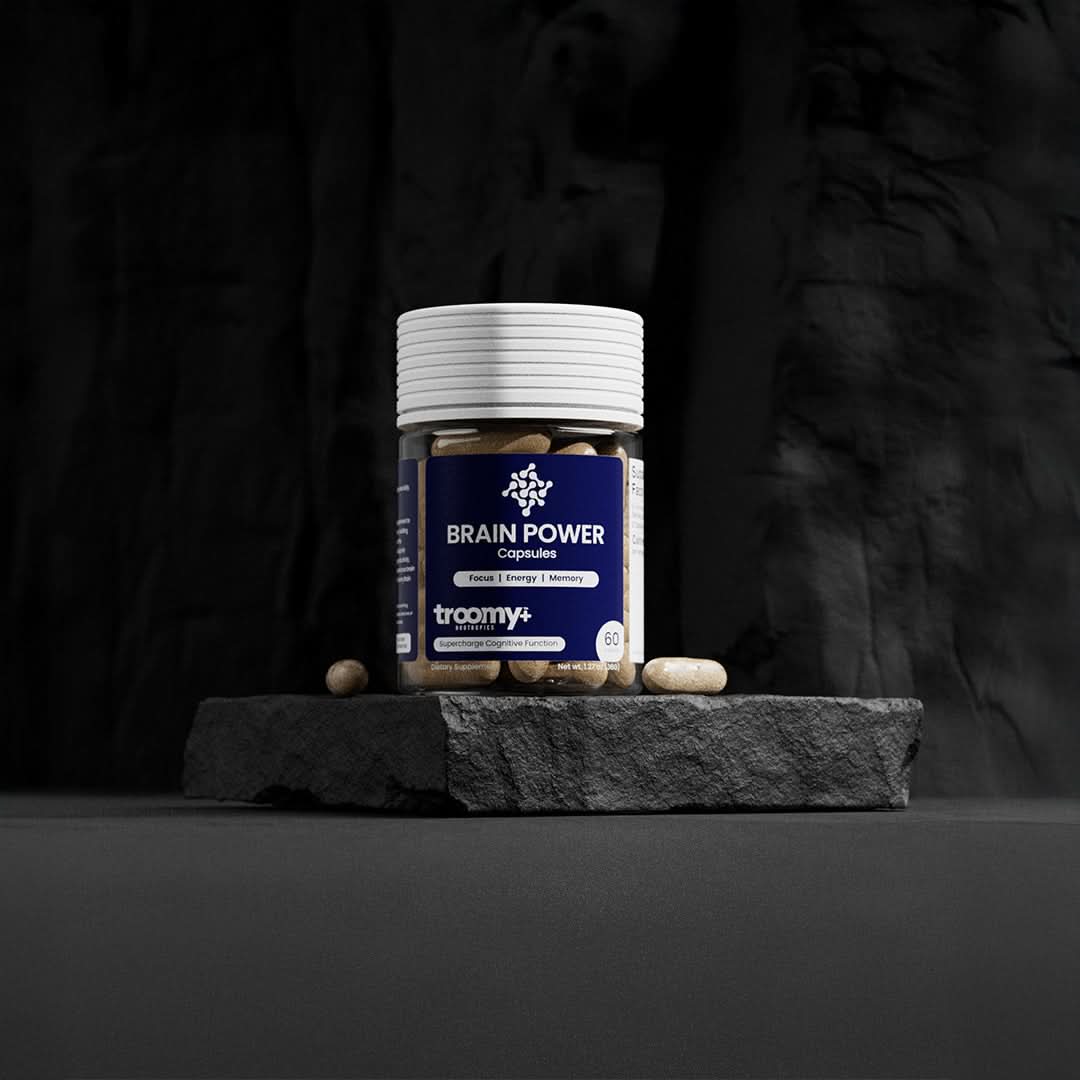
If you want the two highest-evidence natural nootropics in one daily habit, Troomy's Focus Lion's Mane Gummies and Brain Power Capsules both use triple-extracted mushrooms, no fillers, no proprietary blends, made in the USA. A 60-count bottle of Focus Lion's Mane Gummies runs $34.99, about $1.17 a day, or under $1 a day on a subscription. Brain Power Capsules run $39.99 for a 60-count, one-month supply, about $1.33 a day. If something is not right with your order, just reach out within 10 days of delivery and Troomy will help make it right.
Frequently Asked Questions
What are the best natural nootropics for focus?
Based on the depth of research and documented mechanism, lion's mane ranks highest, followed by cordyceps, ashwagandha, bacopa, and rhodiola, each suited to slightly different underlying causes of poor focus.
Does lion's mane really improve focus?
Research points to lion's mane supporting nerve growth factor production, which is associated with improvements in specific measures of cognitive function when taken consistently over several weeks.
Which natural nootropic works fastest?
None of the well-researched natural nootropics act immediately the way a stimulant does. Lion's mane and cordyceps tend to show noticeable effects earliest, often within two to four weeks of consistent use.
Can I stack multiple natural nootropics?
Yes. Lion's mane and cordyceps are commonly combined since they address different mechanisms, neural maintenance and cellular energy, rather than overlapping or competing.
What natural nootropic is closest to Adderall?
None of them replicate Adderall's mechanism or intensity. The closest natural option for sustained, everyday focus without a prescription is a lion's mane and cordyceps combination, though the effect is gradual rather than immediate.
These statements have not been evaluated by the Food and Drug Administration. This product is not intended to diagnose, treat, cure, or prevent any disease.


