





You have heard about nootropics. You have probably also heard about Adderall, modafinil, and the various "smart drug" stacks that tech people swear by. But you are not looking for a prescription or a stimulant. You want something that works for real life. Here is the honest comparison.
Nootropics cover a wide range of substances, from prescription stimulants to plant based compounds people take alongside their morning coffee. If you want the full picture of what the category includes, our guide on what nootropics are is a good place to start. This article narrows in on one specific question: when you put natural options head to head with synthetic ones for regular, everyday focus, which one actually makes sense for your life.
The short answer: for everyday, ongoing focus, natural nootropics are usually the better fit. They are safer for daily use and do not carry the dependency risk that comes with regular synthetic stimulant use. Synthetic nootropics still matter, but for a narrower set of situations than most people assume. Here is why.
What Synthetic Nootropics Are
Synthetic nootropics include prescription stimulants like Adderall and Vyvanse, wakefulness promoting drugs like modafinil, and a category of lab created compounds called racetams that some people use off label in an attempt to sharpen focus and memory. These are not inherently bad or dangerous when used as prescribed and medically supervised. Adderall genuinely helps people with ADHD function, and modafinil has legitimate medical uses for conditions like narcolepsy.
The honest picture, without demonizing them, is that these compounds work by directly altering neurotransmitter activity, primarily dopamine and norepinephrine. That is exactly why they can produce such a strong, fast effect on focus. It is also why they carry real risks outside of medical supervision: dependency potential, tolerance that builds over time, a crash once the effect wears off, and side effects like elevated heart rate, anxiety, and disrupted sleep.
Because these risks are well known, a growing number of people are searching for natural cognitive enhancers that offer some of the same everyday benefit, sustained attention, less mental fatigue, without the prescription or the comedown. That search is exactly what this comparison is here to answer honestly.
What Natural Nootropics Are and How They Work Differently
Natural nootropics, compounds like lion's mane, cordyceps, rhodiola, bacopa, and ashwagandha, take a different approach entirely. Rather than flooding the brain with neurotransmitters, most of them work on slower, foundational processes: supporting nerve growth, improving the body's stress response, supporting cellular energy production, or improving blood flow. There is no artificial spike to come down from, because there was no artificial spike to begin with.
This is why natural nootropics feel different in practice. You will not notice a jolt thirty minutes after taking one. What you may notice, with consistent use over several weeks, is a steadier baseline: less afternoon fog, more sustained attention, fewer of the crashes that come from relying on caffeine alone.
As natural cognitive enhancers, compounds like lion's mane are built for consistency rather than a single acute spike. That distinction matters most for people who are not managing a diagnosed condition and simply want their focus to hold steady through a normal workday, which describes most of the people reading a comparison like this one.
The Key Tradeoffs: Onset Speed, Strength, Safety, Dependency Risk
Laid out honestly, the comparison comes down to four factors.
Onset speed favors synthetic options by a wide margin. A stimulant can change how you feel within the hour, sometimes within thirty minutes. Natural nootropics typically require days to weeks of consistent use before effects become noticeable, because they are working on slower biological processes rather than triggering an immediate neurotransmitter response.
Peak strength also tends to favor synthetics in the short term. If you need maximum acute focus for a single high stakes event, a stimulant prescribed and monitored by a doctor will outperform any natural compound on that specific day. This is not a knock on natural nootropics. It simply reflects that they are built for a different kind of outcome.
Safety for daily, long term use tips clearly toward natural nootropics. Compounds like lion's mane and ashwagandha have strong safety profiles for everyday use in healthy adults, without the tolerance and dependency concerns that come with regular stimulant use. This is one of the main reasons people who are not managing ADHD or narcolepsy choose natural nootropics: they can take them every day, indefinitely, without watching for the same warning signs.
Dependency risk is the sharpest divide. Synthetic stimulants carry a real risk of tolerance and dependency with regular non medical use, meaning the dose that worked last month may not work as well this month. Natural nootropics generally do not create that cycle, which is a major reason people looking for a sustainable daily habit gravitate toward them instead of cycling through a stimulant they have to manage carefully.
Weighed together, three of these four factors favor natural nootropics for anyone whose goal is steady, everyday focus rather than a single acute boost. Synthetic nootropics only pull ahead on the two factors, onset speed and peak strength, that matter most for occasional, high stakes performance rather than daily life.
Why Most People Looking for Everyday Focus Don't Need Synthetic Nootropics
Most people searching for focus support are not dealing with a clinical condition that requires medication. They are dealing with an afternoon slump, a demanding job, poor sleep, or the general mental fatigue of trying to do too much in a day. For that kind of everyday problem, the strength and speed of a synthetic stimulant is often more than what is actually needed, and it comes with tradeoffs, the crash, the dependency risk, the need for a prescription, that most people would rather avoid if there is a real alternative.
That is where natural nootropics fit. They are built for the daily, cumulative use case, not the single high stakes moment. If your goal is showing up focused at nine in the morning and still focused mid afternoon, five days a week, that is a consistency problem, and consistency is exactly what natural nootropics are designed to support.
The Best Natural Nootropics by Use Case
Different problems call for different natural nootropics, and matching the compound to the problem matters more than picking whichever one is trending.
For sustained cognitive support and everyday brain fog, lion's mane has the strongest evidence base. Research, including a randomized controlled trial published in Frontiers in Nutrition in 2025, has examined lion's mane's documented role in stimulating nerve growth factor, a mechanism tied to the brain's ability to support and maintain healthy neurons over time. That mechanism is the clearest, most researched explanation for why lion's mane shows up on nearly every nootropic list.
For energy and focus without caffeine, cordyceps supports cellular energy production and oxygen utilization, which is why it is a common pairing for people dealing with mental fatigue rather than a pure attention problem. It will not sharpen focus in isolation the way lion's mane does, but it addresses the tiredness that often masquerades as a focus problem.
For stress related brain fog, the kind that shows up after a genuinely hard week, ashwagandha works indirectly by supporting a healthier response to cortisol, the body's primary stress hormone. When cortisol stays elevated for too long, concentration is often one of the first things to suffer, so calming that response can clear mental space that no amount of caffeine will.
For a deeper, ranked breakdown of how these and other natural nootropics compare, our guide to the best natural nootropics for focus walks through the evidence for each one in more detail.
Who Synthetic Nootropics Might Make Sense For
To be fair to the other side of this comparison, prescription stimulants and wakefulness drugs genuinely help specific populations, particularly people with diagnosed ADHD or narcolepsy, under a doctor's care. If you suspect you have a condition like ADHD rather than everyday brain fog, that conversation belongs with a physician, not a supplement aisle. Natural nootropics are not a substitute for a medical diagnosis, and no honest discussion of natural alternatives to Adderall should suggest otherwise.
So, Which Is Better for Everyday Focus?
For everyday focus, the kind you need Monday through Friday rather than for one big presentation, natural nootropics are the better choice for most people. They are safer for daily, indefinite use, they do not create the tolerance and dependency cycle synthetic stimulants can, and they build toward the steady, cumulative kind of focus that actually holds up over a full week.
Synthetic nootropics remain the right tool for a smaller set of situations: a diagnosed condition managed with a doctor, or a single day where nothing but maximum acute strength will do. For the everyday problem most people are actually trying to solve, less afternoon fog, more sustained attention, a habit you can keep up without watching for side effects, natural nootropics are built for exactly that.
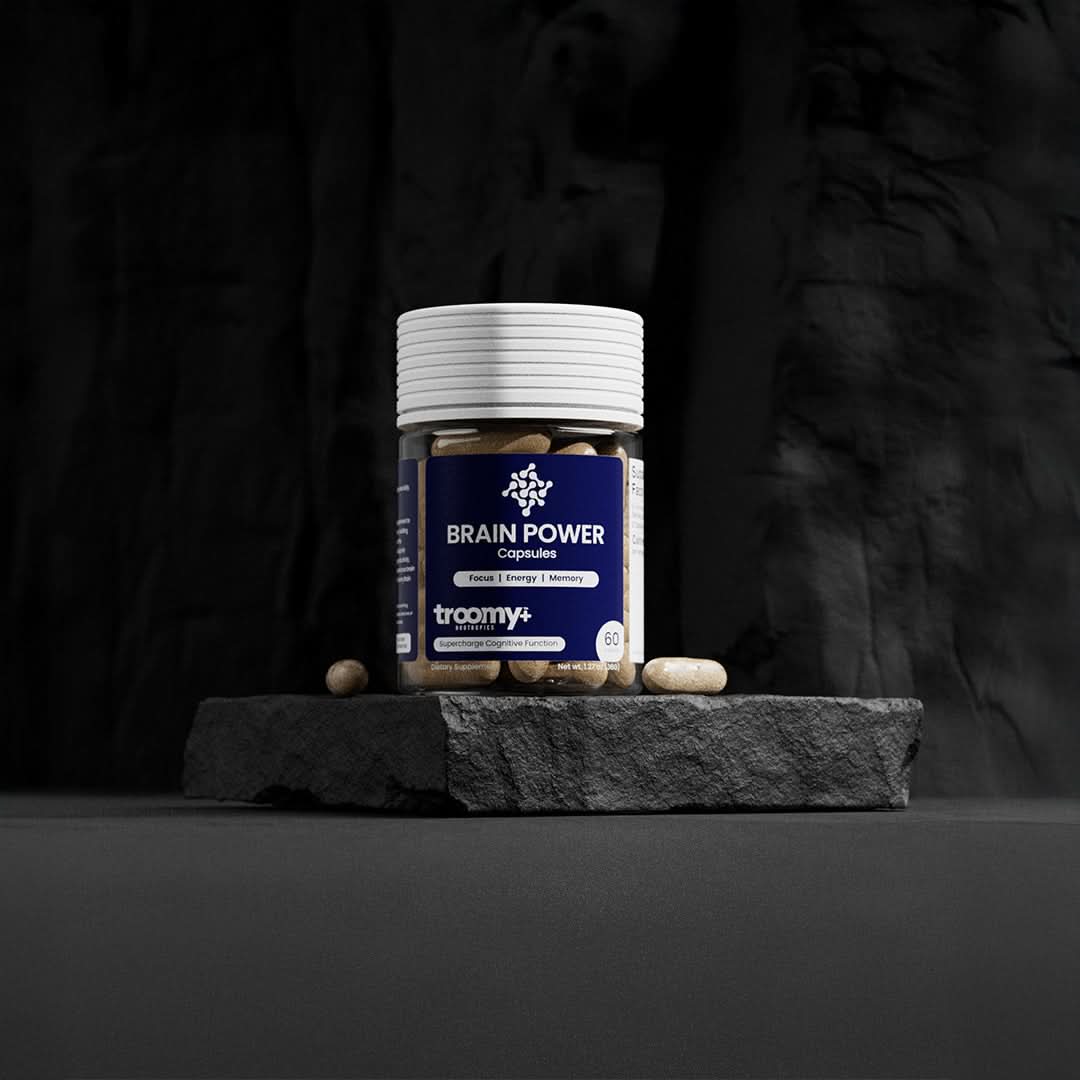
Need sharp, sustained focus without the prescription or the crash? Troomy's Brain Power Capsules combine lion's mane, cordyceps, and caffeine in one daily capsule, triple-extracted, USA-made, and built for real life.
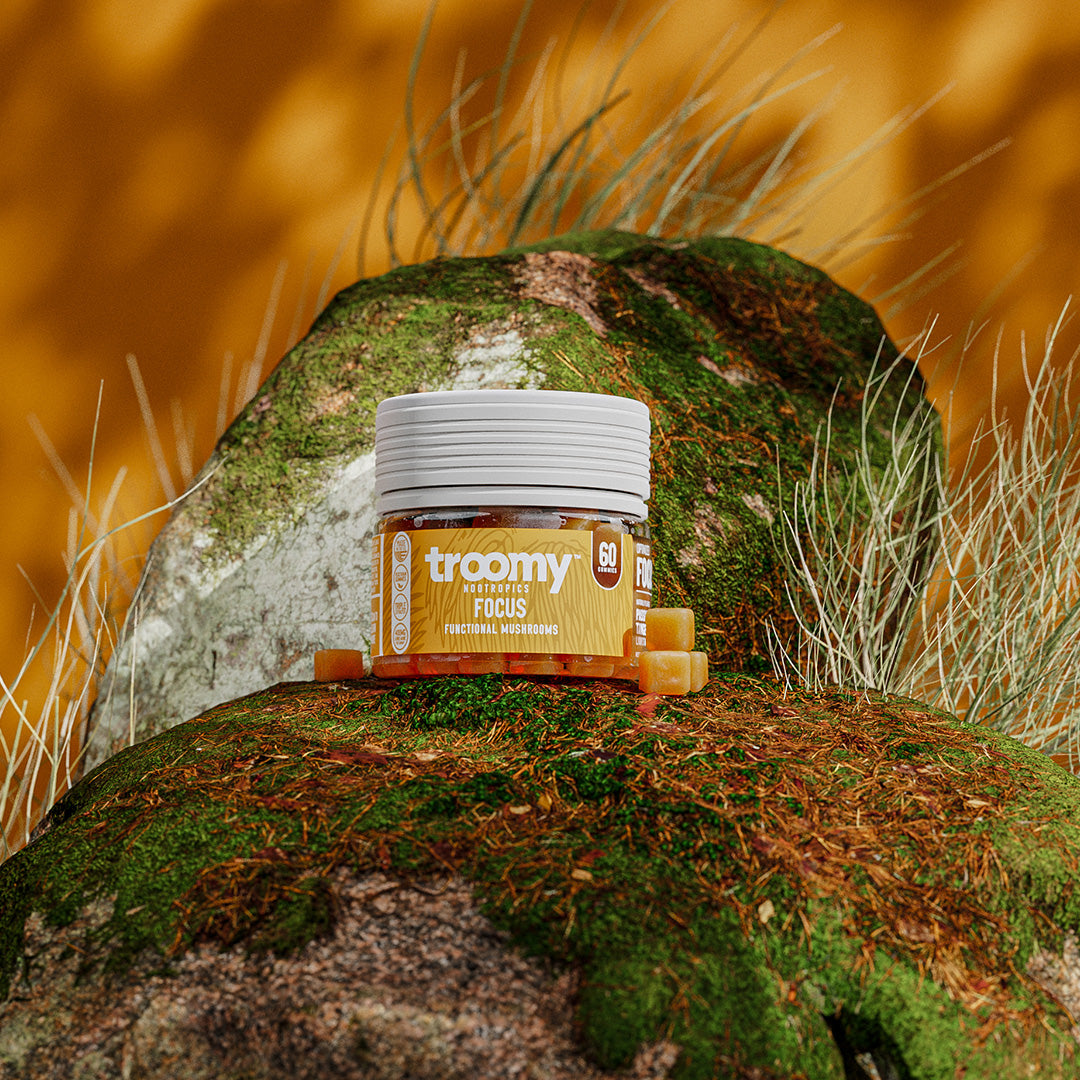
If brain fog specifically, rather than a need for energy, is your main problem, Troomy's Focus Lion's Mane Gummies deliver 800mg of triple-extracted lion's mane per serving, caffeine-free and built for daily consistency.
Frequently Asked Questions
Are natural nootropics as effective as Adderall?
Not in the same way. Adderall produces a stronger, faster acute effect by directly altering neurotransmitter activity, which is useful for the specific population it is prescribed to. Natural nootropics work more gradually and are generally better suited to sustained, everyday use rather than acute, high stakes performance, so effectiveness really depends on which problem you are trying to solve.
What is the best natural alternative to Adderall for focus?
Lion's mane is currently the most researched natural option, largely due to its documented role in nerve growth factor stimulation. It is not a direct substitute for Adderall and will not produce the same immediate effect, but among natural alternatives to Adderall, it has the strongest evidence base for supporting everyday focus without a prescription.
Are natural nootropics safe to take daily?
Compounds like lion's mane, cordyceps, and ashwagandha have strong safety profiles for daily use in healthy adults. Anyone pregnant, nursing, or on prescription medication should check with a doctor first, and it is always worth introducing one new supplement at a time so you can tell what is actually helping.
What natural nootropics actually work?
Lion's mane has the strongest mechanistic and clinical evidence of the natural options, followed by cordyceps, rhodiola, and bacopa, each with more targeted, well documented benefits. None of them work overnight, so consistency matters more than the specific brand or format you choose.
Can you stack natural nootropics?
Yes. Natural nootropics are commonly combined, such as lion's mane with cordyceps for focus and energy together, since they work through different, complementary mechanisms rather than competing for the same pathway. Starting with one ingredient before adding a second makes it easier to notice what each one is actually doing.
Which is better for everyday focus, natural or synthetic nootropics?
For most people managing everyday focus rather than a diagnosed condition, natural nootropics are the better fit. They are safer for daily, long term use and do not carry the tolerance or dependency risk that comes with regular non medical stimulant use. Synthetic nootropics still make sense for people with diagnosed ADHD or narcolepsy working with a doctor, or for a single high stakes moment where maximum acute strength matters more than sustainability.
These statements have not been evaluated by the Food and Drug Administration. This product is not intended to diagnose, treat, cure, or prevent any disease.


