



You keep seeing lion's mane listed alongside nootropics. But is it actually one? And more importantly, does it work the same way? Here is the honest scientific answer, and what it means for whether you should be taking it.
What Makes Something a Nootropic?
A nootropic is a substance that supports cognitive function, things like memory, focus, learning, and mental clarity, ideally without the harsh tradeoffs of stimulants or sedatives. That is a broad definition, which is part of why the label gets applied loosely. The more useful question is not whether something is called a nootropic, but whether it has an identifiable mechanism for supporting the brain, and whether that mechanism has been studied in people, not just in theory.
By that stricter standard, lion's mane holds up better than almost any other natural compound on the market.
For the full landscape, from synthetic options to the most researched natural ingredients, see our complete guide to natural nootropics.
For a deeper look at lion's mane specifically, including dosage guidance and how to build it into a daily routine, see Troomy's Lion's Mane Mushroom: The Definitive Guide.
Why Lion's Mane Qualifies: The NGF Mechanism, Explained Simply
Lion's mane mushroom contains two groups of compounds, hericenones, found in the fruiting body, and erinacines, found in the mycelium. Both have been shown in research to stimulate the production of nerve growth factor, commonly abbreviated as NGF.
NGF is a protein your body already produces. Its job is to support the growth, maintenance, and survival of neurons, the cells that make up your nervous system and brain. Think of it as part of the maintenance crew that keeps your brain's wiring in good working order. As you age, or under chronic stress, NGF production can decline, which is one of the factors researchers associate with slower cognitive processing and reduced mental sharpness.
Lion's mane is one of the only widely consumed foods that has been shown to stimulate this specific pathway. That is a meaningfully different claim than "supports brain health" in the vague sense most supplements use. It is a specific, testable mechanism, and it is the reason lion's mane is treated differently from other functional mushrooms in the nootropic conversation.
This is also why lion's mane for brain health has become such a specific claim rather than a vague one. Most ingredients marketed for brain health point to general antioxidant content or traditional use. Lion's mane points to a named protein, a measurable pathway, and a body of research that has grown steadily over the past two decades, first in animal models and more recently in human trials.
What the Peer-Reviewed Research Shows
A 2025 randomized controlled trial published in Frontiers in Nutrition examined cognitive performance in adults supplementing with lion's mane extract, adding to a growing body of clinical research alongside earlier trials that measured cognitive scores in older adults over multiple months of use. Together, this research points in a consistent direction: regular, sustained use of a quality lion's mane extract is associated with measurable improvements in specific areas of cognitive function, and effects tend to build over weeks of daily use rather than appearing after a single dose.
Earlier research on lion's mane cognitive function focused mostly on older adults with mild cognitive concerns, using standardized cognitive assessments before and after weeks of supplementation. Those studies reported measurable gains in cognitive scores that faded once supplementation stopped, which is itself informative. It suggests the mechanism is active and reversible rather than a one time structural change, and it reinforces why consistency matters more than any single dose.
It is worth being straightforward about the limits here too. The research base, while growing and encouraging, is still smaller than what exists for some pharmaceutical compounds, and individual results vary. Lion's mane is not a substitute for sleep, stress management, or a functioning daily routine. What the honest research supports is a supporting role, not a miracle one.
How Lion's Mane Compares to Synthetic Nootropics for Everyday Use
Synthetic nootropics like Adderall or modafinil act quickly and can produce a stronger short term jump in focus. They also come with real downsides for everyday use: potential dependency, tolerance, crash periods, and in most cases a prescription requirement. Lion's mane does not work that way. It will not give you a noticeable jolt within the hour. What it offers instead is a mechanism for supporting your brain's underlying maintenance systems, in a way that is safe to take every single day without the crash and recover cycle that comes with stimulants.
For someone managing a demanding job, a full schedule, or just the general mental fog of modern life, that tradeoff, slower but steadier, tends to be the more sustainable choice.
There is also a cumulative dimension to this comparison that is easy to miss. Synthetic nootropics tend to produce the same effect on day one and day one hundred, assuming tolerance does not build. Lion's mane works differently. Because it supports NGF production rather than directly stimulating the central nervous system, its benefits are described in the research as building over weeks rather than appearing instantly and staying flat. That makes it a poor choice for someone who needs to perform in the next thirty minutes, and a reasonable choice for someone thinking about their cognitive baseline over the next several months.
Cost and access matter too. Prescription stimulants require a diagnosis, a doctor, and ongoing monitoring, and using them without a prescription carries legal and health risk. A natural nootropic sold as a daily supplement does not carry that barrier, which is part of why so many people who are not interested in a prescription route are looking at lion's mane and similar options in the first place.
Who Benefits Most from Lion's Mane as a Nootropic?
Three groups tend to get the most out of lion's mane specifically.
People dealing with everyday brain fog make up the largest group. This is the person who is not sick, not sleep deprived in any dramatic sense, but who consistently hits a wall in the early afternoon or struggles to hold focus during long stretches of desk work, back to back meetings, or detailed tasks that require sustained attention. For this group, lion's mane is typically taken as a daily habit rather than an as needed fix.
People interested in supporting long term cognitive health are a second, growing segment. This includes people in their forties and fifties who are not experiencing dramatic symptoms but who are paying closer attention to brain health as a category, often after watching a parent or older relative go through cognitive decline. For this group, the appeal of lion's mane is less about an immediate felt effect and more about a proactive, low risk daily habit.
The third group has usually already tried something else. These are people who have used prescription stimulants, high dose caffeine, or over the counter energy products and are looking for something they can take every day without the crash, the tolerance buildup, or the dependency risk that comes with those approaches. For this group, the appeal of lion's mane is specifically what it does not do: it does not spike and crash, and it does not require increasing the dose over time to get the same effect.
Extraction Quality: Why It Matters Specifically for Nootropic Effects
Not all lion's mane products are equal, and this matters more here than with most supplements because the active compounds, hericenones and erinacines, are only present in meaningful amounts when the mushroom is properly extracted. Whole mushroom powder, the kind you find in cheaper products, contains the mushroom's cell walls largely intact, which the body struggles to break down and absorb. Triple extraction uses water, alcohol, and heat to pull the beneficial compounds out of both the fruiting body and the mycelium, making them bioavailable.
This is the difference between a product that can plausibly deliver the NGF supporting compounds the research is actually about, and one that is mostly ground up mushroom filler.
This is also where sourcing matters. A supplement label can list lion's mane without specifying whether it uses whole mushroom powder, a basic extract, or a full triple extraction, and the difference in actual NGF supporting compound content between those three can be significant. Looking for a stated extraction method and a specific milligram amount per serving, rather than a proprietary blend with no breakdown, is one of the more reliable ways to evaluate whether a lion's mane product is built to deliver the nootropic effects the research is actually describing.
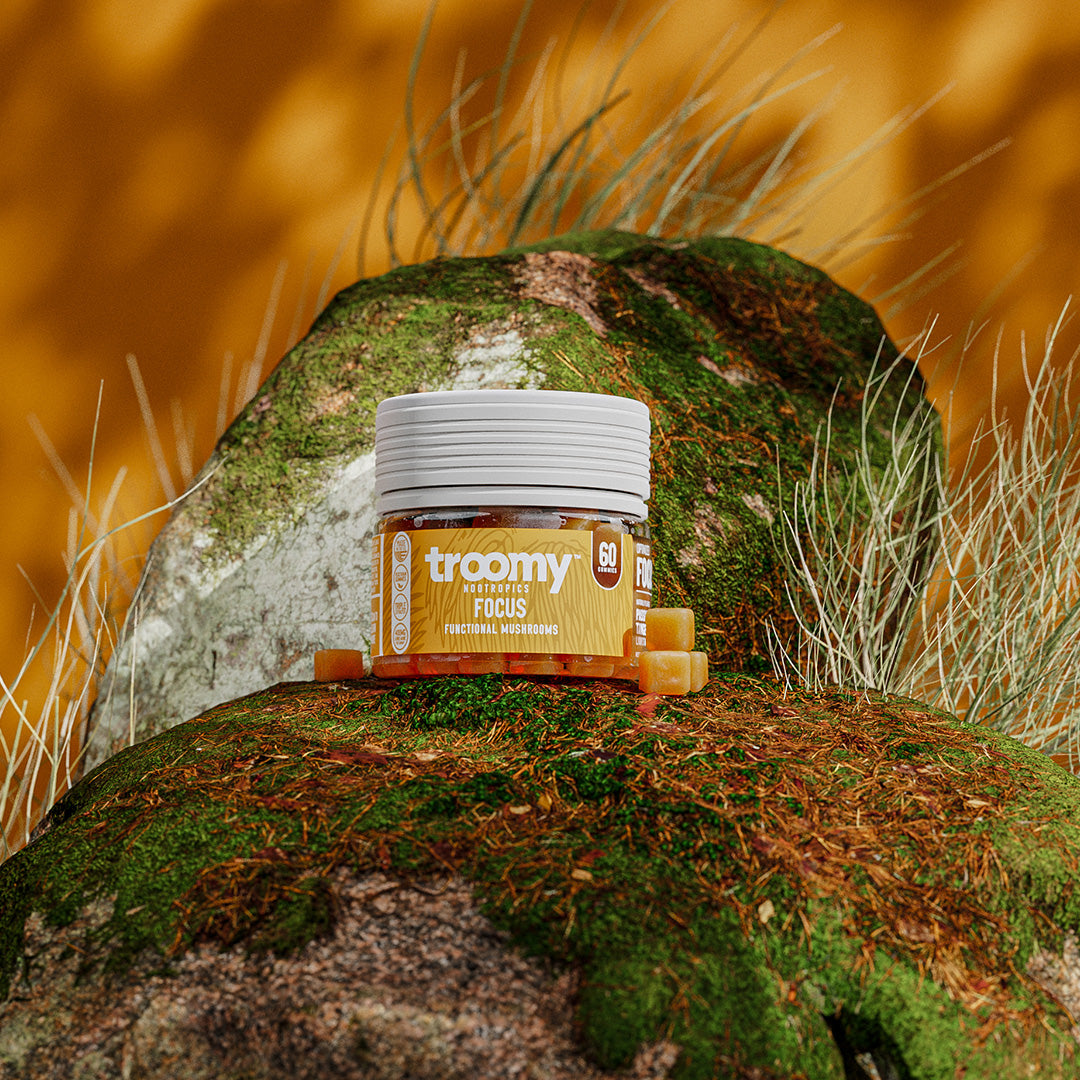
Struggling to stay focused without the caffeine crash? Troomy's Focus Lion's Mane Gummies use 800mg of triple-extracted lion's mane per serving, the form that actually delivers the nootropic compounds your brain needs.
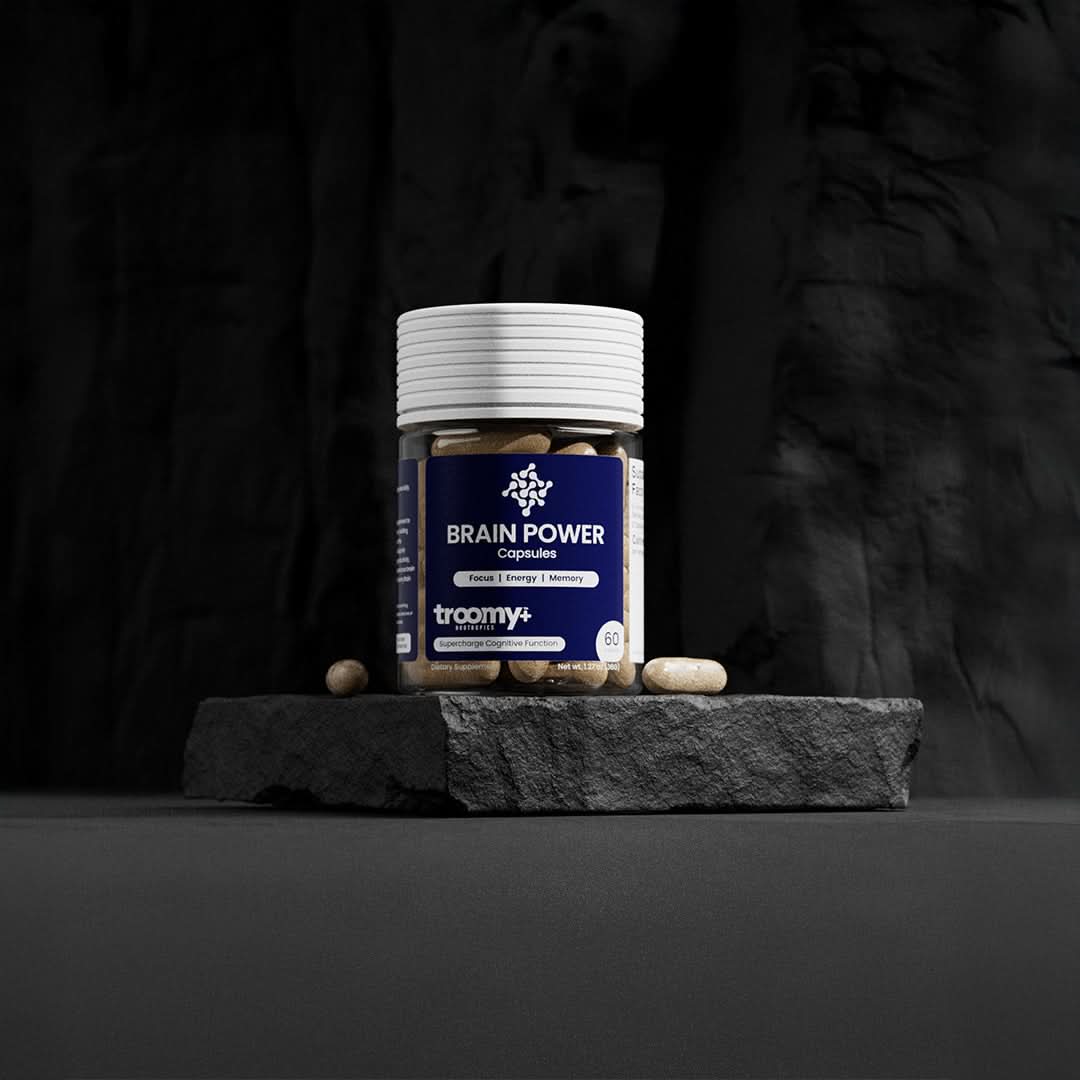
Need more than lion's mane alone to get through a demanding day? Troomy's Brain Power Capsules pair triple-extracted lion's mane with cordyceps and caffeine in one daily capsule, built for sustained focus without the midafternoon crash.
Frequently Asked Questions
Is lion's mane a nootropic?
Yes. Lion's mane contains hericenones and erinacines, compounds shown in research to stimulate nerve growth factor, giving it one of the clearest documented mechanisms of any natural nootropic.
How does lion's mane work as a nootropic?
It primarily works by stimulating nerve growth factor, a protein involved in the growth and maintenance of neurons, which supports the brain's underlying maintenance systems over time.
Does lion's mane improve focus?
Research suggests consistent use of a quality lion's mane extract is associated with improvements in specific measures of focus and cognitive function, particularly with daily use over several weeks.
How long does lion's mane take to work for cognitive function?
Most people report noticing a difference within two to four weeks of consistent daily use, though this varies by individual.
Is lion's mane better than synthetic nootropics?
It is different rather than strictly better or worse. Synthetic nootropics can act faster and more intensely but carry more risk for daily use, while lion's mane works more gradually and is generally considered safer for everyday, long-term use.
These statements have not been evaluated by the Food and Drug Administration. This product is not intended to diagnose, treat, cure, or prevent any disease.


