



You read the same sentence four times and none of it sticks. You walk into the kitchen and forget why. It is 3pm and your thoughts feel like they are moving through wet sand. Most of us call that feeling brain fog, and most of us treat mental clarity as its opposite, some vague sense of being sharp. That definition is too fuzzy to be useful. If you want more clarity, you first need to know what it actually is and what it is made of.
This guide gives you a functional, practical definition of mental clarity, explains what quietly erodes it, and walks through realistic ways to build more of it, including where naturally sourced nootropics and functional mushrooms fit in. No jargon, no hype, just a clear picture you can use starting today.

What is mental clarity?
Mental clarity is the state in which your attention, working memory, and mental energy are aligned enough that thinking feels smooth instead of effortful. In plain terms, it is the experience of being able to focus on what matters, hold the right information in mind, and move through tasks without your brain fighting you at every step. It is less about how smart you are and more about how well your brain is running in this moment.
It helps to see clarity as three parts working together. The first is attention, your ability to point your mind at one thing and keep it there. The second is working memory, the mental notepad that holds the details you need while you use them. The third is mental energy, the fuel that keeps the first two online. When all three line up, you feel clear. When any one of them dips, the whole system feels foggy, even if the other two are fine.
What does mental clarity actually feel like?
Clarity is easiest to recognize by its absence. When you have it, tasks that normally take real effort feel almost automatic. You read something once and absorb it. You sit down to work and the first ten minutes do not feel like pushing a boulder uphill. You can switch between tasks without losing your place, and by late afternoon you still have something left in the tank.
When clarity is gone, the signs are just as familiar. Words feel slippery. Simple decisions take longer than they should. You reach for your phone every few minutes because sitting with one thought feels uncomfortable. You are busy all day and somehow finish with your real list untouched. If that sounds like most of your afternoons, the good news is that clarity is far more trainable than it feels.
What causes brain fog and a loss of mental clarity?
Brain fog is rarely one big problem. It is usually several small, everyday drains stacking on top of each other until the effect is impossible to ignore. Understanding the common culprits is the fastest way to figure out which levers are yours to pull. We go deeper on this in our guide to the best mushrooms for brain fog, but here are the ones that show up most often.
How does sleep affect mental clarity?
Sleep is the single biggest input to next-day clarity. While you sleep, your brain consolidates memories and clears metabolic waste that builds up during waking hours. Shortchange it, even by an hour or two across a few nights, and attention and working memory take the first hit. If your fog is worst in the morning or follows a run of late nights, start here before anything else.
Can stress cause brain fog?
Yes. When your nervous system sits in a low-grade state of stress for hours or days, it keeps your body primed for action and your mind primed for distraction. That is useful in a genuine emergency and exhausting as a daily baseline. A wound-up, overthinking brain has fewer resources left for deep focus, which is why stress and fog so often travel together. Calming the system is a clarity strategy, not just a mood one, and we cover natural approaches in our overview of adaptogens for stress and resilience.
Do caffeine and blood sugar swings play a role?
They do. A big coffee gives you an hour of sharpness followed by a crash that feels foggier than where you started, and stacking three or four cups only deepens the dip. Skipped meals and sugar-heavy snacks create the same roller coaster through blood sugar. The pattern is the problem: sharp spikes force sharp drops, and the drops are where the fog lives. Steadier fuel produces steadier thinking.
What else drains clarity?
A few quieter factors round out the list. Dehydration alone can dull focus long before you feel thirsty. Under-recovery from hard training leaves your whole system depleted, brain included. And constant task-switching, answering a message mid-thought, checking a tab, glancing at a notification, fragments attention so thoroughly that no single task ever gets your full mind. Most people are dealing with two or three of these at once.

How do you get mental clarity back?
Because clarity has multiple inputs, the most reliable approach is to fix the foundations first, then add support on top. Supplements work best when the basics are in place, not as a substitute for them. Here is the order that tends to pay off.
-
Protect your sleep. Aim for a consistent schedule and a genuine wind-down before bed. This is the highest-leverage change most people can make.
-
Calm the system. Build in real recovery, whether that is a walk, breathwork, or simply not stacking every stressor into one day. A calmer baseline frees up focus.
-
Move your body. Even a short walk improves blood flow to the brain and tends to lift mental energy for hours afterward.
-
Steady your fuel and hydration. Regular meals, water, and a lighter hand on caffeine keep your energy from spiking and crashing.
-
Protect single-tasking. Give one task a real, undistracted block. Attention is a muscle, and constant switching keeps it weak.
Once those are working for you, targeted support can help you get more out of them. Timing matters too, and our guide on when to take functional mushroom supplements walks through how to build them into a morning-to-night routine.
Can functional mushrooms support mental clarity?
This is where naturally sourced nootropics come in. Functional mushrooms are edible mushrooms studied for their effects on the body and mind, and they are not the same as psychedelic mushrooms. They have no hallucinogenic properties. Instead, they contain bioactive compounds that researchers have connected to focus, calm, energy, and recovery, the very inputs that make up mental clarity.
A few mushrooms map neatly onto the three parts of clarity we defined earlier. Below is what each one is known for and how it connects to a specific everyday problem. You can also read our deeper explainer on how mushroom gummies support mental clarity without the caffeine crash.
Lion's Mane for focus and a clearer head
Lion's Mane (Hericium erinaceus) is the mushroom most associated with focus and mental clarity. It contains two compounds found almost nowhere else, hericenones and erinacines, which have been studied for their role in supporting nerve growth factor, a protein involved in keeping brain cells healthy. In a double-blind, placebo-controlled trial, older adults with mild cognitive impairment who took Lion's Mane for 16 weeks scored higher on a cognitive scale than those on placebo (Mori et al., 2009). A separate double-blind pilot study in healthy younger adults found faster performance on a focus and attention task about an hour after a single dose (Docherty et al., 2023). Research is still growing and results across studies are mixed, so we frame this as support rather than a cure, but the mechanism is a strong fit for the fog most people feel at work.
Troomy's Focus Lion's Mane gummies put 800mg of triple-extracted Lion's Mane into two caffeine-free gummies, so you can support steady focus without the jitters. If you want the full background, our complete guide to what Lion's Mane does breaks down the research in plain language.
Cordyceps for clean energy without the crash
Sometimes fog is really an energy problem in disguise. When mental energy drops, attention and working memory have nothing to run on. Cordyceps is the mushroom studied for energy and endurance, and it works differently from caffeine. Rather than stimulating your nervous system, it has been linked to better oxygen utilization at the cellular level. In one double-blind, placebo-controlled study, three weeks of a Cordyceps-containing blend supported an increase in VO2 max, a measure of how efficiently the body uses oxygen (Hirsch et al., Journal of the International Society of Sports Nutrition). The practical takeaway is energy that does not borrow from tomorrow. Our Boost Cordyceps gummies are caffeine-free, and you can read more in our guide to cordyceps for energy without caffeine.
Reishi for a calmer, clearer baseline
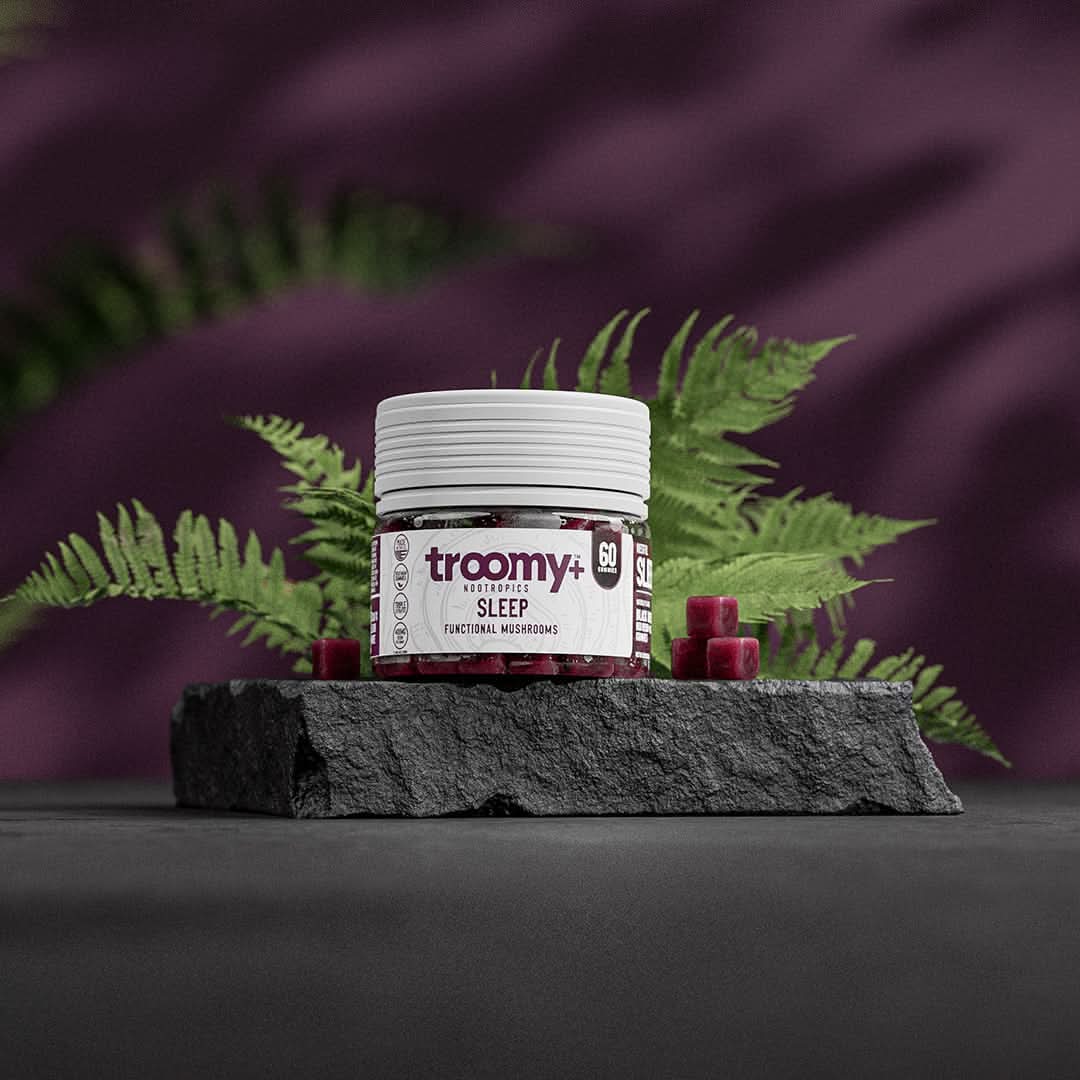
If your fog rides in on a wound-up, overthinking mind, calm is the missing piece. Reishi (Ganoderma lucidum) has been used for centuries to help the body settle, and its triterpenes and polysaccharides are the focus of ongoing research. In one animal study, an extract of Reishi promoted sleep through a pathway involving serotonin and the gut (Nature Scientific Reports, 2021). Better sleep and a calmer baseline both feed directly back into next-day clarity. Reishi shows up in Troomy's Calm Reishi gummies for daytime stress support, and in our Sleep gummies for winding down at night. For the sleep angle specifically, see Reishi for sleep versus melatonin.
Building clarity into a daily foundation
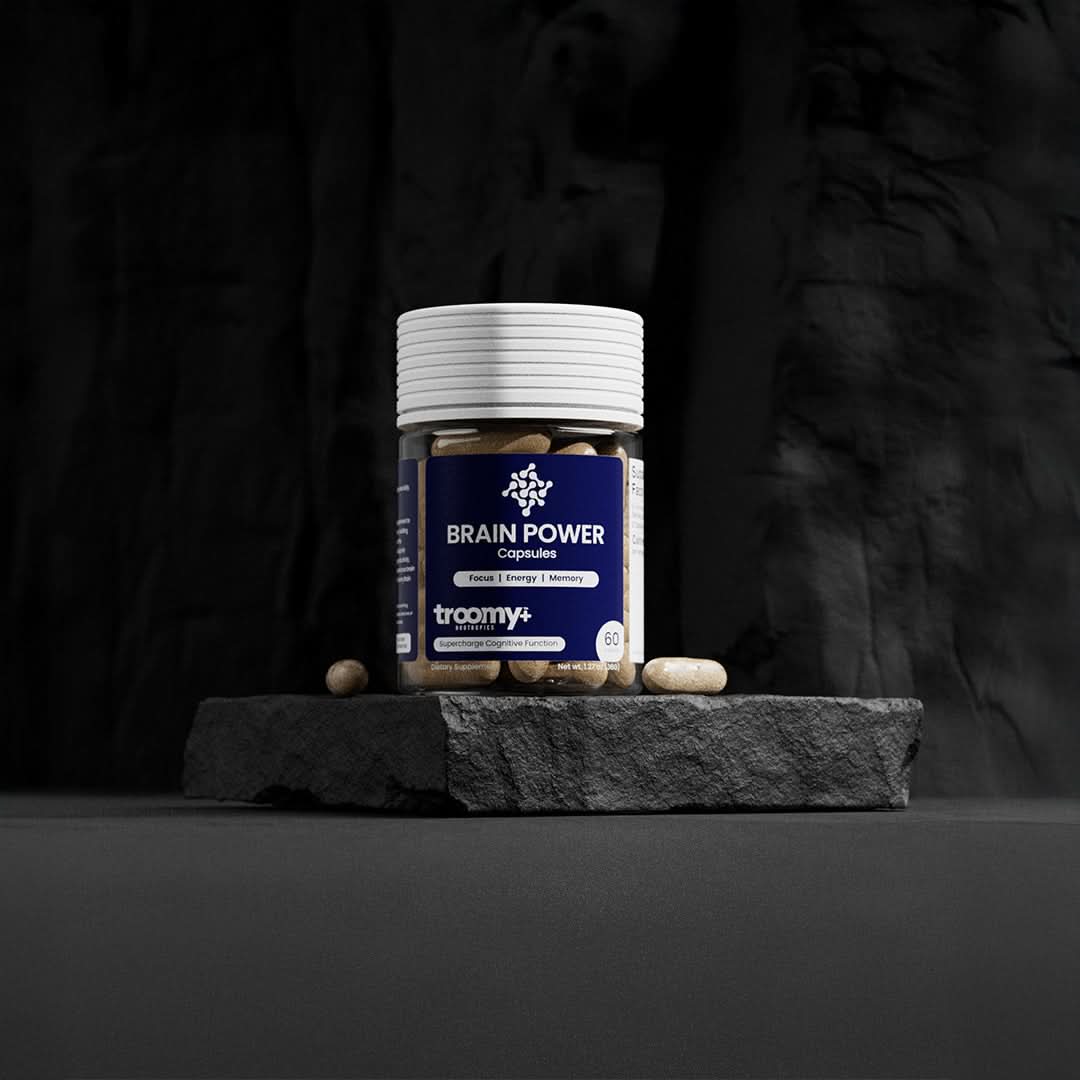
Clarity is a routine, not a one-off. Many people find that pairing focus support during the day with calm and better sleep at night does more than any single product on its own, an idea we unpack in our Lion's Mane and Reishi stacking guide. For long, demanding days, Brain Power cognitive capsules combine Lion's Mane and cordyceps with citicoline and L-theanine. One note on that product: it contains 125mg of natural caffeine, about one cup of coffee, so take it earlier in the day. Every other blend in the line is caffeine-free. You can explore the full range on our brain health collection and energy collection pages.

How long does it take to feel more mental clarity?
It depends on which lever you are pulling. Foundational changes like sleep and stress tend to show up within a few days to a couple of weeks of consistency. With functional mushrooms, timing splits into two camps. Fast-acting blends built around focus and energy, such as Focus, Boost, and Brain Power, are often felt within 30 to 60 minutes, which is why many people take them before a demanding block of work. Others, like a daily whole-body blend, build gradually the way a daily vitamin does, so consistency matters more than any single dose.
The other variable is quality, and it is a big one. If you want to understand why extraction method changes how much of a mushroom your body can actually use, read what triple extraction is and why most brands skip it.
What should you look for in a mental clarity supplement?
Not all mushroom products are built the same, and the differences show up in how you feel. A few things separate a supplement worth your time from one that does nothing. Look for triple extraction, which pulls the full spectrum of beneficial compounds from both the fruiting body and mycelium rather than a single, shallow pass. Look for products made in the USA in a GMP-certified facility and third-party tested, so you know what is actually in the bottle. And look for a format you will genuinely stick with, because the best supplement is the one you keep taking.
This is where Troomy is built to fit real life. Our blends are triple-extracted, made in the USA, vegetarian, and made with real fruit flavors people actually enjoy, with the whole line caffeine-free except Brain Power. Two gummies is the entire routine, which makes clarity support something you can keep up on your busiest days rather than one more thing you abandon.
The bottom line on mental clarity
Mental clarity is not a mysterious talent some people are born with. It is a functional state built from attention, working memory, and mental energy, and every one of those inputs responds to how you sleep, manage stress, move, fuel, and focus. Fix the foundations first, then add targeted, naturally sourced support where it fits. Do that consistently and the fog that felt permanent starts to lift, one clear afternoon at a time.
Frequently asked questions
What is the difference between mental clarity and focus?
Focus is one ingredient of mental clarity, not the whole thing. Focus is your ability to direct attention at a single task. Mental clarity is the broader state that also includes working memory and mental energy. You can have the intention to focus and still feel foggy if your energy is low or your mind is racing, which is why supporting all three inputs works better than chasing focus alone.
How can I improve mental clarity naturally?
Start with the foundations that have the biggest effect: consistent sleep, real stress recovery, regular movement, steady hydration and meals, and protecting undistracted time for one task at a time. Once those are in place, naturally sourced nootropics like Lion's Mane for focus, Cordyceps for clean energy, and Reishi for calm can help you get more out of them. Support the basics first and the extras work harder.
Does Lion's Mane help with mental clarity?
Lion's Mane is the functional mushroom most studied for focus and cognitive support, thanks to compounds called hericenones and erinacines. Human trials have shown promising, though still mixed, results, so it is best thought of as support for a clearer, more focused head rather than a guaranteed fix. Troomy's Focus gummies use 800mg of triple-extracted Lion's Mane per serving.
Are functional mushrooms the same as psychedelic mushrooms?
No. Functional mushrooms such as Lion's Mane, Cordyceps, and Reishi have zero hallucinogenic properties. They are edible mushrooms studied for how their bioactive compounds support things like focus, energy, calm, and recovery. They will not alter your perception. They are meant to be a simple, daily part of a wellness routine.
How long does it take for mushroom gummies to work?
It varies by blend. Fast-acting blends focused on energy and focus, like Boost, Focus, and Brain Power, are often felt within 30 to 60 minutes. Blends meant for whole-body wellness build gradually over weeks of consistent use, similar to a daily vitamin. Foundational habit changes like better sleep typically show up within a few days to two weeks.
Is caffeine bad for mental clarity?
Caffeine is not inherently bad, but relying on it heavily can work against you. Large or frequent doses tend to produce a spike followed by a crash that feels foggier than your starting point. Many people find they get steadier clarity from caffeine-free support like Cordyceps and Lion's Mane, which is why most of Troomy's line is caffeine-free. Brain Power is the one exception and contains 125mg of natural caffeine, so it is best taken earlier in the day.


