



Two Hydration Ingredients, One Big Question
If you have spent any time browsing skincare or beauty supplement shelves lately, you have probably noticed hyaluronic acid everywhere. It has earned its reputation as the gold standard hydrating ingredient for over a decade. Lately, though, a new name keeps showing up next to it: tremella mushroom. Beauty editors have started calling it the new hyaluronic acid, and the comparison question, tremella versus hyaluronic acid, has quickly become one of the most searched topics in the beauty supplement space.
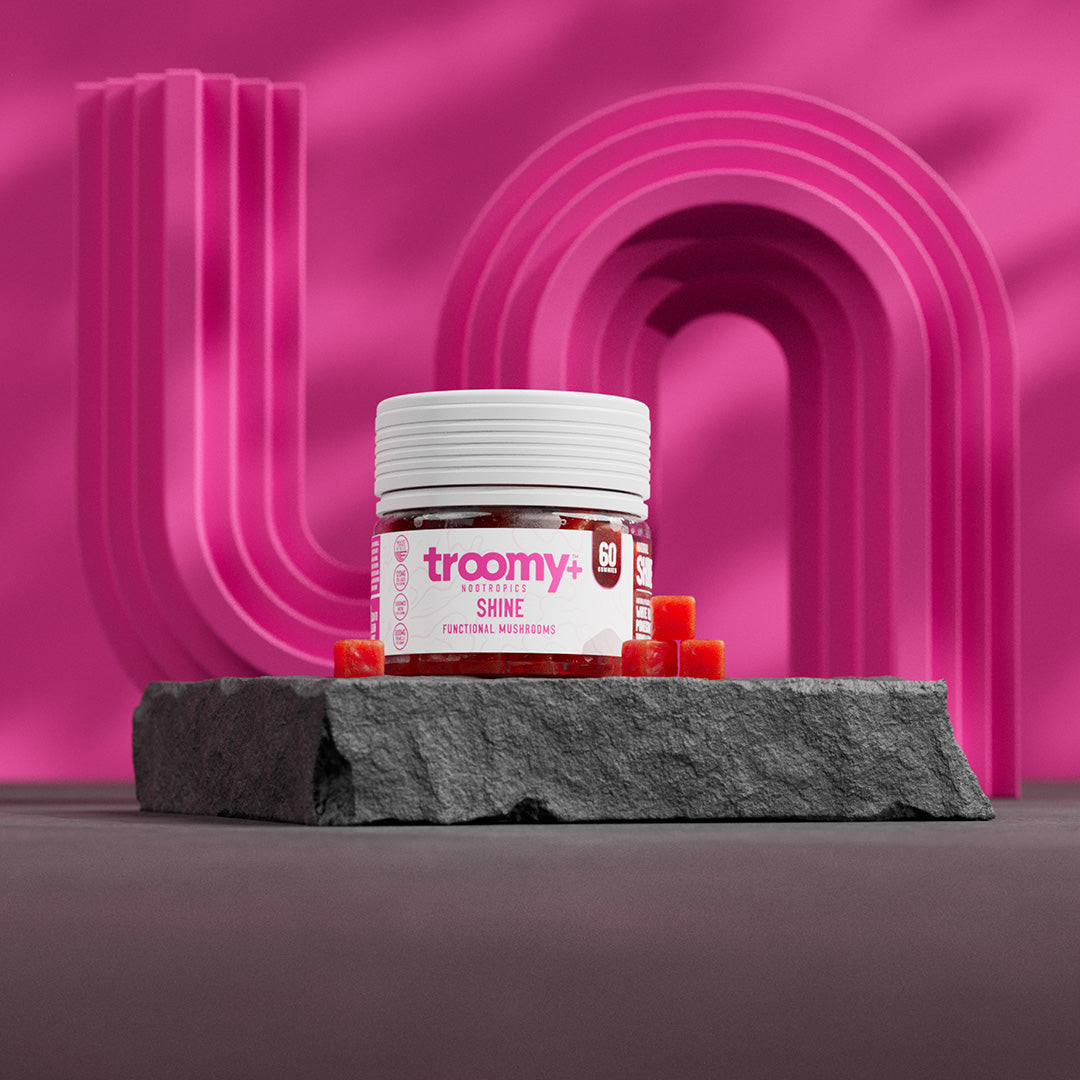
This is a fair question to ask, and it deserves a fair, science-based answer rather than a marketing one. To understand why tremella has earned this comparison in the first place, it helps to start with the full science behind tremella mushroom's beauty benefits, which covers the polysaccharide research, the collagen mechanism, and the thousand-year history behind this ingredient. Troomy makes a tremella product, the Shine Biotin Collagen Tremella Gummies, so we have a stake in this conversation. But the honest answer is more interesting than picking a winner, and it is the answer we will give you here: tremella and hyaluronic acid are not really competitors. They are complementary hydration tools that work through different mechanisms, and understanding both makes you a smarter shopper either way.
How Hyaluronic Acid Hydrates Skin
Hyaluronic acid, often shortened to HA, is a naturally occurring molecule already present in human skin, joints, and connective tissue. Its defining feature is an extraordinary capacity to bind water, a property that has made it the backbone of modern hydrating skincare for years. Topical hyaluronic acid serums and creams work primarily at or near the surface of the skin, drawing moisture into the upper layers and helping create a smoother, more supple appearance.
HA's biggest strength is the sheer depth of clinical research behind it. Decades of dermatological studies, formulation science, and topical clinical trials have validated its hydrating effects in human skin, which is part of why it remains the most trusted hydration ingredient in skincare today. Different molecular weights of HA penetrate skin to different depths, and skincare brands have spent years refining formulations to maximize that effect.
How Does Tremella Compare to Hyaluronic Acid for Hydration?
Tremella fuciformis hydrates through a different structural mechanism: long chains of polysaccharides that form a gel-like network capable of binding an exceptional volume of water, reportedly up to 500 times the polysaccharide's own weight. That is comparable to, and by some measures exceeding, the water-binding capacity associated with hyaluronic acid. A 2023 review in Archives of Dermatological Research (Mineroff and Jagdeo, PMID: 36757441; doi:10.1007/s00403-023-02550-4) confirmed tremella's moisturizing effects as comparable to reference hydrating compounds, alongside antioxidant and photoprotective activity.
Here is where the comparison gets genuinely interesting rather than just a marketing talking point. Tremella polysaccharides tend to have a smaller molecular size than many forms of hyaluronic acid. Smaller molecules generally penetrate the skin's surface layers more readily than larger ones, which means tremella may reach somewhat deeper into the epidermis when applied topically than higher molecular weight HA formulations. This is a meaningful mechanistic distinction, not just a marketing footnote, though it is worth noting that direct, head-to-head human penetration studies comparing the two are still limited.
Beyond Hydration: What Tremella Offers That HA Does Not
Hyaluronic acid is, fundamentally, a hydration specialist. It does one thing extremely well. Tremella's research base points to a broader set of mechanisms operating at the same time.
-
Antioxidant activity, helping skin manage everyday oxidative stress from environmental exposure
-
Photoprotective support against UV-induced cellular stress, documented across multiple reviews
-
Collagen and elastin support, including inhibition of the enzymes responsible for breaking these structural proteins down
A 2024 review in Nutrients examining 52 publications on macrofungal extracts for anti-aging confirmed that Tremella fuciformis carries antioxidant, photoprotective, moisturizing, anti-inflammatory, and collagen- and elastin-stabilizing properties together (PMID: 39203946; doi:10.3390/nu16162810). Hyaluronic acid alone does not deliver this combination. It is an excellent hydrator, but it is not an antioxidant or a collagen-support ingredient in the way tremella's polysaccharides appear to be. For a deeper look at how this plays out specifically for hydration, anti-aging, and collagen support, our full breakdown of tremella's skin benefits walks through each mechanism in more detail.
Research published in the International Journal of Immunopathology and Pharmacology adds a further dimension specific to oral intake: studies found that tremella polysaccharides improved both moisture content and collagen levels in UV-exposed skin, and that taking tremella polysaccharides orally stimulated regeneration of the body's own collagen while preserving a healthy ratio between type I and type III collagen. That is a systemic, whole-body mechanism that a topical HA serum simply is not designed to provide.
Where Hyaluronic Acid Still Has the Advantage
Fairness matters here, and HA still leads in one important category: clinical validation. Hyaluronic acid has been studied in human topical trials for decades, with well-established dosing, formulation science, and penetration data specific to skincare applications. Tremella's research base, while growing quickly and increasingly compelling, still leans more heavily on in-vitro and animal-model studies than large-scale human clinical trials. The 2023 dermatology review is the strongest current human-applicable evidence summary for tremella, but it is honest about the fact that much of the underlying mechanistic research has not yet been replicated at the same scale as decades of HA studies.
If you are looking purely at topical, surface-level hydration with the deepest clinical paper trail behind it, hyaluronic acid remains the most thoroughly validated choice on the market today.
Can You Take Tremella and Hyaluronic Acid Together?
Yes, and this is genuinely the most useful takeaway from this whole comparison. There is no known conflict between using topical hyaluronic acid skincare and taking an oral tremella supplement. In fact, the two work on different timelines and through different pathways, which makes stacking them a logical strategy rather than a redundant one. HA serums offer fast, surface-level hydration you can feel within days. Tremella, taken daily as an oral supplement, works systemically over several weeks to support hydration, collagen, and antioxidant status from the inside.
Many people already layer multiple skincare and supplement approaches, a vitamin C serum in the morning, a retinol at night, a collagen supplement with breakfast. Adding a daily tremella gummy like Shine Biotin Collagen Tremella Gummies to an existing hyaluronic acid skincare routine is a complementary addition rather than a substitution decision.
Does Tremella Mushroom Really Hydrate Skin?
Based on the current peer-reviewed evidence, yes, with the appropriate caveat that most of the strongest mechanistic data comes from in-vitro and animal-model research rather than large human clinical trials. The polysaccharide water-binding mechanism is well-documented at the molecular level, and the moisturizing effects observed in the 2023 Archives of Dermatological Research review were described as comparable to established reference hydrating compounds. That is a meaningful scientific signal, even as more human trials would strengthen the case further.
So, Which Is Better: Tremella or Hyaluronic Acid?
The honest scientific answer, and also the most practically useful one, is that neither ingredient is simply better across the board. Hyaluronic acid offers proven, fast-acting topical hydration with an unmatched clinical research history. Tremella offers a broader mechanism that includes hydration plus antioxidant defense, photoprotection, and collagen support, delivered through a convenient daily oral supplement rather than a topical product alone.
For most people, the smartest approach is not choosing one over the other. It is using both: a topical HA product for immediate surface hydration, and a daily tremella supplement, like Shine Biotin Collagen Tremella Gummies, to support skin from the inside over time. Browse Troomy's full Beauty Collection to see how Shine fits into a complete daily beauty routine.
Frequently Asked Questions
Is tremella better than hyaluronic acid?
Neither ingredient is simply better. Hyaluronic acid has more extensive human clinical research behind its topical hydration effects, while tremella offers a broader combination of hydration, antioxidant, and collagen-support benefits, primarily through oral supplementation. They are complementary rather than competing options.
How does tremella compare to hyaluronic acid for hydration?
Both ingredients hydrate through water-binding mechanisms. Tremella polysaccharides can hold up to roughly 500 times their weight in water, a capacity comparable to hyaluronic acid, and tremella's smaller molecular size may allow somewhat deeper skin penetration when applied topically, though direct human comparison studies remain limited.
Can you take tremella and hyaluronic acid together?
Yes. There is no known conflict between a topical hyaluronic acid product and an oral tremella supplement. Many people use both, layering immediate topical hydration from HA with the systemic, longer-term skin support that oral tremella supplementation provides.
Does tremella mushroom really hydrate skin?
Current peer-reviewed research supports tremella's hydrating effects, with moisturizing activity described as comparable to established reference compounds in a 2023 dermatology review. Most of this evidence currently comes from in-vitro and animal studies rather than large human clinical trials.
What is the difference between tremella and hyaluronic acid?
Hyaluronic acid is a single-function hydrating molecule with decades of topical clinical research behind it. Tremella is a functional mushroom whose polysaccharides hydrate skin while also offering antioxidant, photoprotective, and collagen-support properties, typically delivered through oral supplementation rather than topical application alone.
These statements have not been evaluated by the Food and Drug Administration. This product is not intended to diagnose, treat, cure, or prevent any disease.


