



If you have spent any time in the beauty supplement aisle lately, you have probably noticed tremella showing up everywhere. It is not a passing trend. Tremella fuciformis, also called snow mushroom or silver ear mushroom, has been used in skin-focused wellness practices for centuries, and modern research is finally catching up to explain why. This jelly-like fungus does something most beauty ingredients cannot: it works on hydration, collagen support, UV protection, and antioxidant defense all at once, instead of targeting just one piece of the skin aging puzzle.
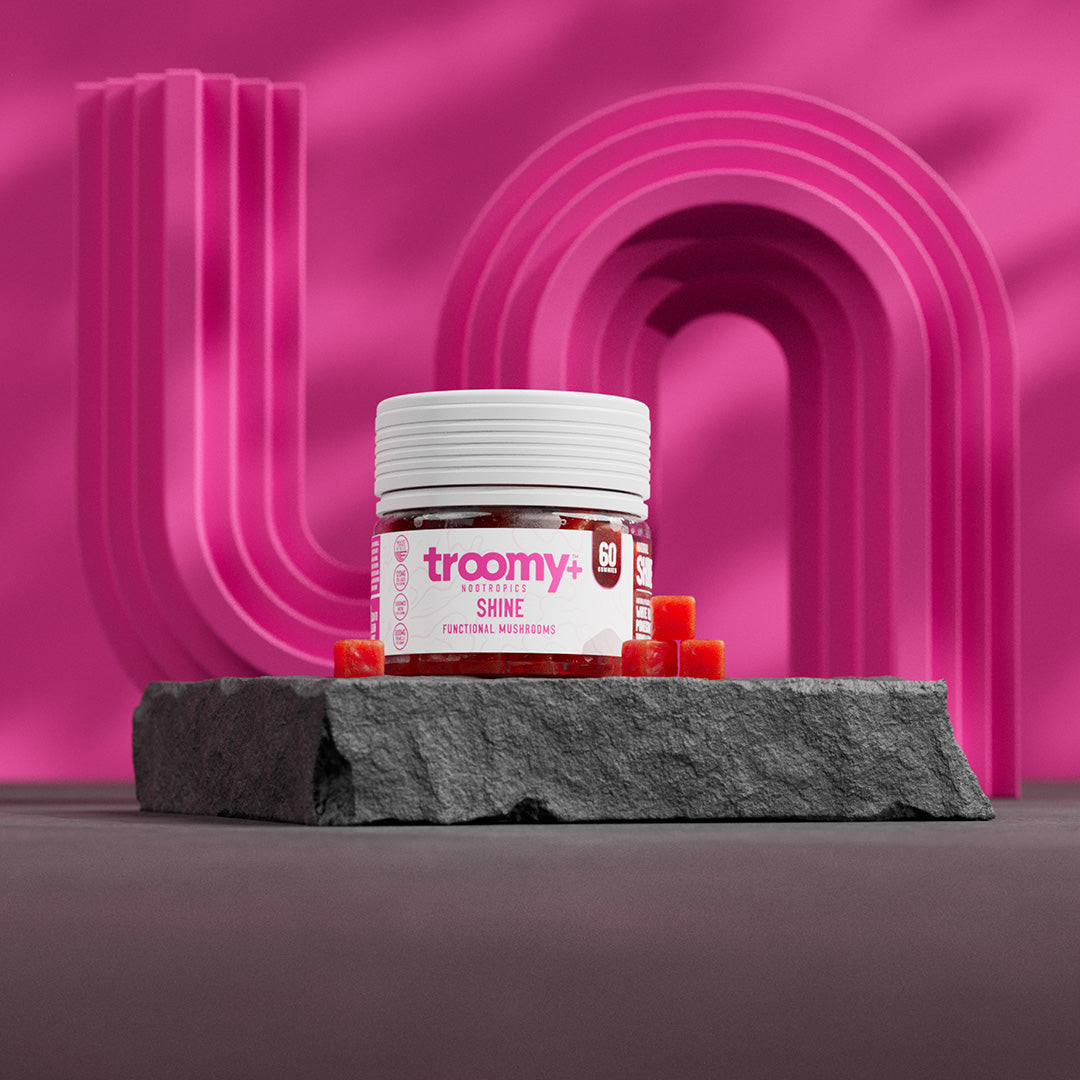
That multi-mechanism quality is exactly why tremella has earned its place in Troomy's Shine Biotin Collagen Tremella Gummies, and it is why this article exists. We are going to walk through what the science actually says about tremella and skin, not just the marketing version. That means citing real, peer-reviewed research, being upfront about where the evidence is strong and where it is still developing, and giving you a clear picture of how tremella fits into a beauty-from-within routine.
What Is Tremella Mushroom and Why Is It Called the Beauty Mushroom?
Tremella fuciformis is a translucent, jelly-like fungus that grows on decaying wood in tropical and subtropical regions, most notably across China and other parts of East Asia. Its pale, ruffled appearance has earned it a handful of nicknames over the centuries, including snow mushroom, silver ear mushroom, and white fungus. Despite the different names, they all refer to the same species.
The "beauty mushroom" title is not a modern marketing invention. Tremella has a documented history in Traditional Chinese Medicine stretching back over a thousand years, where it was prized specifically for skin nourishment and longevity. Historical accounts associate tremella with Yang Guifei, one of the Four Beauties of ancient China during the Tang Dynasty, who is said to have used it as part of her skin care routine. Whether or not that specific story is verifiable history or beauty folklore, it captures something real: people have been turning to this mushroom for skin health for an extremely long time, long before anyone understood the biochemistry behind it.
What is different now is that researchers have actually identified the compounds responsible. The skin benefits people have associated with tremella for centuries trace back primarily to its polysaccharides, the complex carbohydrate molecules that make up much of the mushroom's structure. Those polysaccharides are the foundation for almost everything we are about to cover. For the full picture of tremella's history, biology, and skin science in one place, our tremella mushroom benefits and beauty science guide covers it in more depth.
How Does Tremella Mushroom Hydrate Skin?
Hydration is tremella's headline benefit, and the mechanism behind it is genuinely impressive. Tremella polysaccharides can hold up to 500 times their own weight in water. That is not a small number. It puts tremella's water-binding capacity in the same conversation as hyaluronic acid, the ingredient most people already associate with deep hydration.
The way this works is fairly straightforward. Polysaccharides are large, complex sugar molecules with a structure that allows them to attract and trap water molecules. When tremella polysaccharides are present on or in the skin, they act like a sponge, pulling in moisture and holding onto it rather than letting it evaporate away. This is what gives tremella-based skin care its reputation for a plumping, dewy effect.
A 2023 review in the Journal of Cosmetic Dermatology examined the cutaneous benefits of Tremella fuciformis and documented moisturizing effects comparable to established reference compounds, alongside antioxidant and photoprotective activity (Gasmi Benahmed et al., 2023, PMID: 36757441, DOI: 10.1111/jocd.15636). This review is considered the primary peer-reviewed reference point for tremella's hydration and anti-aging effects, and it anchors most of what we know about how this mushroom interacts with skin.
It is also worth noting that tremella polysaccharides tend to have a smaller molecular size than many forms of hyaluronic acid. A smaller molecule can penetrate the surface layers of skin more easily, which is one reason tremella has become such an interesting alternative and complement to HA in topical formulations.
Does Tremella Mushroom Help With Collagen Production?
Hydration is only part of the story. The collagen angle is where tremella starts to separate itself from simpler hydrating ingredients, because tremella does not just sit on top of skin holding water. Research suggests it actually supports the skin's own collagen-producing machinery.
Collagen is the structural protein that keeps skin firm, smooth, and resilient. As we age, natural collagen production slows down and existing collagen begins to break down faster than the body can replace it, which is a major driver of fine lines, sagging, and loss of elasticity. Anything that can support collagen synthesis or slow collagen degradation is doing real work against visible skin aging.
Research published in the International Journal of Immunopathology and Pharmacology found that tremella polysaccharides improved both moisture content and collagen levels in skin exposed to UV radiation. Separate studies in the same journal found that oral intake of tremella polysaccharides stimulated regeneration of the body's own endogenous collagen, while maintaining the natural ratio between type I and type III collagen, which matters because that ratio affects how strong and elastic the resulting skin structure actually is.
The 2023 Journal of Cosmetic Dermatology review adds another piece to this picture, documenting that tremella's compounds help inhibit the degradation pathways that break down both collagen and elastin (Gasmi Benahmed et al., 2023, PMID: 36757441). In plain terms, tremella appears to work on collagen from two directions at once: helping support new collagen formation while also slowing the breakdown of what is already there.
A broader 2024 review in Nutrients examined macrofungal extracts for anti-aging applications across 52 separate publications and confirmed that Tremella fuciformis contains compounds with collagen and elastin-stabilizing properties, in addition to antioxidant, photoprotective, moisturizing, and anti-inflammatory effects (2024, PMID: 39203946, DOI: 10.3390/nu16162810). Because it draws on such a wide base of research, this review is one of the most citable current summaries of what tremella does for skin.
Can Tremella Protect Skin From UV Damage and Free Radicals?
Hydration and collagen support get most of the attention, but tremella's photoprotective and antioxidant properties are just as important to the bigger picture of skin aging. UV exposure and oxidative stress from free radicals are two of the most significant drivers of premature skin aging, and tremella appears to offer support against both.
The 2023 Journal of Cosmetic Dermatology review documented photoprotective activity alongside tremella's antioxidant effects, meaning the compounds in tremella may help defend skin cells against some of the damage caused by UV exposure (Gasmi Benahmed et al., 2023, PMID: 36757441). The research connecting tremella polysaccharides to improved collagen and moisture levels specifically in UV-exposed skin reinforces this, suggesting tremella's benefits are not limited to skin in ideal conditions but extend to skin actively dealing with environmental stress.
On the antioxidant side, tremella's compounds work the way most plant and fungal antioxidants do: by neutralizing free radicals before they can damage skin cells, proteins, and DNA. Free radical damage accumulates over time from sun exposure, pollution, and normal metabolic processes, and it is one of the underlying mechanisms behind visible aging. The 2024 Nutrients review reinforces that this antioxidant activity is one of the consistent findings across the broader body of tremella research.
Put together, this means tremella is not a single-purpose ingredient. It is hydrating, it supports collagen, it offers antioxidant protection, and it has documented photoprotective activity. That combination of mechanisms working at the same time is the real reason tremella has earned its place as a serious ingredient in Troomy's Beauty Collection rather than a passing wellness trend.
How Does Tremella Compare to Hyaluronic Acid?
This is one of the most common questions people ask once they start researching tremella, and it deserves an honest answer rather than a marketing one.
Tremella and hyaluronic acid both work primarily through water-binding polysaccharide-like structures, and tremella's capacity to hold up to 500 times its weight in water puts it in genuinely comparable territory to HA. Where tremella has an edge is in its smaller molecular size, which allows for deeper penetration into the skin's surface layers, and in the fact that it brings antioxidant, collagen-supporting, and photoprotective benefits that hyaluronic acid alone does not provide.
Where hyaluronic acid still holds an advantage is in the depth of human clinical research and topical formulation history. HA has decades of established use and a large body of human trials behind it, while a meaningful portion of the tremella research currently available comes from in-vitro or animal studies rather than large-scale human trials. The 2023 Journal of Cosmetic Dermatology review remains the strongest current human-applicable evidence for tremella's skin benefits, but it is one review, not dozens.
The honest scientific position is that tremella and hyaluronic acid work well as complements rather than direct replacements for one another. If you want a deeper, side-by-side breakdown of the mechanisms, the molecular differences, and where each ingredient shines, our dedicated comparison covers the full picture in tremella mushroom vs hyaluronic acid for skin hydration.
Oral Supplementation vs Topical Application: Which Works Better for Skin?
A natural question once you understand the science is whether it matters more to apply tremella directly to skin or to take it as a supplement. The honest answer is that both pathways appear to do something, just through different routes.
Topical application puts tremella's hydrating polysaccharides directly where you want them, on the skin's surface, which is why tremella extract shows up in serums and moisturizers. The smaller molecular size compared to many hyaluronic acid formulations allows for some penetration beyond just the surface layer, supporting the moisturizing effects documented in the research.
Oral supplementation works differently. It is a systemic, beauty-from-within approach. The research on oral tremella polysaccharides stimulating regeneration of the body's own endogenous collagen, published in the International Journal of Immunopathology and Pharmacology, points to a real internal mechanism rather than just a topical coating effect. This is the pathway that supplements like Troomy's Shine Biotin Collagen Tremella Gummies are built around, supporting the body's own collagen production and hydration capacity from the inside, alongside biotin for keratin support and added collagen for skin structure.
Neither approach cancels out the other. A topical product gives you immediate surface hydration, while a daily supplement supports the underlying systemic processes that determine how your skin holds up over time. Many people in the beauty-from-within space use both, treating supplementation as the daily foundation and topical skin care as the targeted finishing layer.
How Long Does It Take for Tremella to Improve Skin?
This is one of the most practical questions to ask before starting any beauty supplement, and it deserves a straightforward answer: skin benefits from oral tremella supplementation are not instant.
Collagen turnover is a gradual biological process. Existing collagen does not get replaced overnight, and any supplement working to support collagen synthesis is working within that same natural timeline. Based on what is understood about collagen turnover more broadly, most people taking a daily tremella-containing supplement should expect to wait several weeks of consistent use before noticing meaningful changes in skin hydration and texture, rather than days.
This is exactly why consistency matters so much more than intensity when it comes to beauty-from-within supplementation. Taking a tremella gummy occasionally will not replicate the same support as taking it daily over a sustained period, because the underlying mechanism, supporting your body's collagen production and hydration capacity, depends on steady input over time. Think of it the same way you would think of any skin care habit: the visible payoff comes from showing up consistently, not from a single big dose.
Is Tremella Mushroom Safe to Take Daily?
Tremella has a long history of both culinary and traditional medicinal use, including centuries of consumption in East Asian cuisine and wellness practices, which gives it a strong real-world safety track record. That said, as with any supplement, individual responses can vary, and it is always smart to talk with your healthcare provider before adding a new supplement to your routine, particularly if you are pregnant, nursing, managing a medical condition, or taking medication.
For most healthy adults looking to add tremella to a daily beauty routine, a consistent, moderate daily intake through a supplement formulated for that purpose, like a gummy with a standardized tremella extract amount, is the most straightforward and well-tolerated approach.
Bringing It Together: Why Tremella Belongs in a Beauty-From-Within Routine
What makes tremella stand out in a crowded beauty supplement space is that it is not a one-trick ingredient. Most beauty actives target a single mechanism, hydration or antioxidant protection or collagen support, and ask you to stack several different ingredients to cover all your bases. Tremella's polysaccharides work on hydration, collagen support, photoprotection, and antioxidant defense more or less simultaneously, which is a rare combination for a single natural ingredient to offer.
That is exactly why tremella is the headline ingredient in Troomy's Shine Biotin Collagen Tremella Gummies, formulated alongside biotin for keratin and nail support and collagen for added skin structure support. It is a triple-extracted, vegetarian formula made in the USA, designed for people who want a genuine beauty-from-within approach rather than another serum promising overnight miracles. If you are building out a broader routine, our Beauty Collection brings together the products built around exactly this kind of skin, hair, and nail support. If you want tremella's skin benefits alongside a wider spread of functional mushroom support, our Daily 14 Mushroom Blend pairs tremella with chaga, reishi, lion's mane, and ten other species in one daily formula.
The science on tremella is still developing, and we want to be straightforward about that. A meaningful share of the current research is preclinical or based on smaller human studies rather than large randomized controlled trials. But the existing peer-reviewed evidence, the 2023 Journal of Cosmetic Dermatology review and the 2024 Nutrients review chief among it, paints a consistent and credible picture of a mushroom that does real, multi-mechanism work for skin. Combined with a thousand years of traditional use, that is a strong foundation for tremella's growing reputation as the modern beauty mushroom.
Frequently Asked Questions
Does tremella mushroom help with skin hydration?
Yes. Tremella polysaccharides can hold up to 500 times their weight in water, giving them a hydration capacity comparable to hyaluronic acid. A 2023 review in the Journal of Cosmetic Dermatology documented moisturizing effects from tremella that were comparable to established reference compounds, making hydration one of tremella's best-supported skin benefits.
How does tremella support collagen production?
Research published in the International Journal of Immunopathology and Pharmacology found that oral intake of tremella polysaccharides stimulated regeneration of the body's own collagen while maintaining a healthy ratio between type I and type III collagen. Separate research also found that tremella's compounds help inhibit the pathways that break down existing collagen and elastin, supporting skin structure from two directions at once.
Is snow mushroom good for anti-aging?
Snow mushroom is another name for Tremella fuciformis, and yes, it shows real anti-aging potential. A 2024 review in Nutrients covering 52 publications confirmed that tremella contains antioxidant, photoprotective, moisturizing, anti-inflammatory, and collagen and elastin-stabilizing compounds, which together address several of the core mechanisms behind visible skin aging.
How long does it take for tremella to improve skin?
Because tremella's skin benefits work through processes like collagen turnover, which happen gradually rather than instantly, most people should expect several weeks of consistent daily use before noticing meaningful changes in hydration and texture. Consistency matters far more than an occasional larger dose.
Can you take tremella mushroom for skin every day?
Tremella has a long history of safe culinary and traditional use, and daily intake through a supplement like a gummy is the most common and well-tolerated approach for supporting skin from within. As with any supplement, it is a good idea to talk with your healthcare provider first, especially if you are pregnant, nursing, or managing a medical condition.
These statements have not been evaluated by the Food and Drug Administration. This product is not intended to diagnose, treat, cure, or prevent any disease.


