



You took your first mushroom gummy three days ago. You're not sure if you feel anything yet. You're wondering if it's working. Here's the honest answer, and what to actually expect over the first 30 days.
Most mushroom gummies take two to four weeks of daily use to work, with subtle changes often showing up in the first one to two weeks and a real, felt difference by weeks three to four. So do mushroom gummies work, and when will you feel a mushroom gummy actually start working? Yes, they work, but functional mushrooms are not stimulants, so they don't hit like caffeine. They work cumulatively, which is why the timeline runs in weeks rather than hours. This guide walks through exactly what that timeline looks like, how it changes depending on which mushroom you're taking, and how to tell the difference between a gummy that's working slowly and one that isn't working at all. If you're still deciding which product to buy in the first place, start with our complete mushroom gummies buyer's guide and come back here to set your expectations.
The Honest Answer: Mushroom Gummies Are Not Instant (And That's a Good Thing)
If you're waiting for a mushroom gummy to kick in the way a cup of coffee does, you'll be waiting a long time. Functional mushrooms like reishi, lion's mane, and cordyceps don't work by flooding your system with a stimulant or sedating you into sleep. Their active compounds, including beta-glucans, triterpenes, and hericenones, support the body's own systems, and those systems change gradually.
That slower timeline is actually the point. Caffeine gives you a spike and a crash, then leaves you exactly where you started, usually a little worse. Melatonin on its own can knock you out but often leaves you groggy. Functional mushrooms are playing a different game: steady, cumulative support that builds day over day. The trade-off is patience. You're not going to feel a dramatic shift after one gummy, and any brand that promises you will is telling you something important about their honesty.
So here's the realistic framing to hold onto: think in weeks, not hours. Specifically, think in a 30-day window. That's long enough for the compounds to build up, long enough for you to notice patterns in your sleep, focus, or energy, and short enough that you're not left guessing forever.
What to Expect in Weeks 1 and 2
The first two weeks are the foundation phase. This is when the active compounds start accumulating in your system, and the changes tend to be subtle enough that you might miss them if you're not paying attention.
What subtle looks like in practice: you fall asleep a little faster than usual and don't think much of it. You get through an afternoon without reaching for a second coffee and only notice at 5pm. You feel slightly less frazzled at the end of a long day. These are small signals, not fireworks, and they're exactly what week one and two should look like.
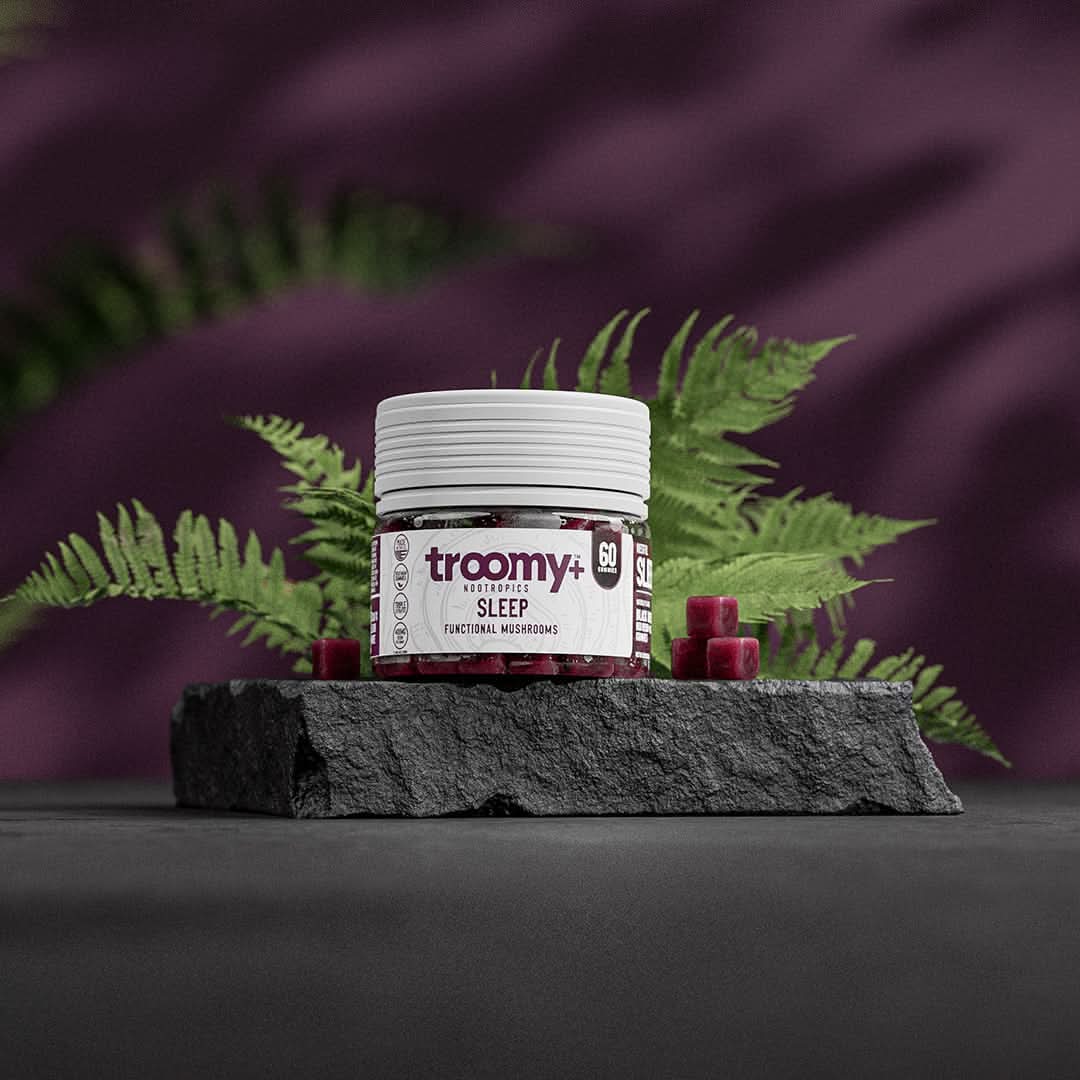
There's one notable exception to the slow start. Sleep-focused gummies that pair reishi with melatonin tend to show their first effects fastest, because melatonin supports sleep onset from night one while the reishi builds in the background. Many people taking Troomy's Sleep gummies report falling asleep more easily within the first week. Timing also matters more than most people realize during this phase. Taking your gummy at a consistent time each day, matched to what it's for, makes the early effects easier to feel and easier to track. Our guide to the best time to take mushroom gummies breaks down the ideal timing by mushroom type.
A practical tip for these first two weeks: keep loose notes. Jot down how long it took to fall asleep, how the 2pm slump felt, how many coffees you had. Cumulative changes are easy to miss in the moment and obvious in hindsight, and a few notes make the hindsight arrive faster.
What to Expect in Weeks 3 and 4
Weeks three and four are where most people cross from "I think something might be happening" to "okay, I actually feel this." The compounds have had time to build, your body has had time to respond, and the small changes from the first two weeks start compounding into differences you'd genuinely miss if they went away.
This is when the everyday wins show up. Waking up actually rested instead of hitting snooze three times. Getting through your afternoon without the wall. Sitting down to work and finding the focus is just there, without the ramp-up. Winding down at night without lying in bed replaying the day. These are the outcomes people stay for, and for most consistent daily users, this is the window where they arrive.
If you reach the end of week four and feel nothing at all, that's meaningful information too. Either the product you chose isn't right for your problem, or, more often, the product itself is the issue. A large share of mushroom gummies on the market use unextracted whole mushroom powder, which means the active compounds are locked inside cell walls your body can't break down. No amount of patience fixes that. This is why extraction quality matters more than any other factor when choosing a gummy, and why a fair 30-day test only works if you started with a properly extracted product.
How Long Does Each Mushroom Take to Work?
The 30-day framework holds across the board, but different mushrooms move at different speeds because they're doing different jobs. Here's the honest breakdown by type.
Reishi for sleep: the fastest to feel
Reishi supports sleep through a calming, adaptogenic mechanism rather than sedation, and when it's paired with melatonin the combination tends to show results faster than any other functional mushroom use case. Falling asleep more easily often shows up within the first week. The deeper benefit, waking up feeling genuinely rested, typically lands in the week three to four window as the reishi accumulates. If you can't wind down at night even when you're exhausted, Troomy's Sleep Reishi Gummies combine triple-extracted reishi with melatonin, passionflower, and lemon balm, made in the USA and vegetarian. Better sleep for under $1 a night, and you'll likely feel the first difference before the first week is out.
Lion's mane for focus: the slowest, and the best-studied
Lion's mane supports cognitive function, and cognition changes on a longer timeline than sleep. Most people report subtle improvements in focus and mental clarity somewhere in the two to four week range, with benefits continuing to build beyond that. The research backs up the slow build: a 2009 double-blind, placebo-controlled study published in Phytotherapy Research followed older adults taking lion's mane for 16 weeks and found that cognitive scores improved progressively the longer participants took it, then declined after they stopped. The takeaway is clear. Lion's mane rewards consistency, and the first month is the beginning of the curve, not the whole curve.
If afternoon brain fog is your problem, Troomy's Focus Lion's Mane Gummies deliver triple-extracted lion's mane with no caffeine and no crash. They are made in the USA, vegetarian, and come in flavors you'll actually want to take daily. Give them 30 days of daily use before you judge, and expect the clearest results in weeks three and four.
Cordyceps for energy: quick to notice, better with time
Cordyceps supports energy and physical performance, and it sits between reishi and lion's mane on the speed scale. Many people notice a difference in workout stamina or afternoon energy within the first week or two, particularly if they take it in the morning. Like the others, the effect deepens with consistent daily use, so the energy you feel in week one is a preview of week four, not the ceiling.
Why Daily Consistency Matters More Than Dose
Here's the part most people get wrong. When a mushroom gummy doesn't seem to be working, the instinct is to take more. But with cumulative compounds, frequency beats quantity. A consistent daily dose builds and maintains levels in your system. A double dose taken sporadically doesn't.
Think of it like sleep itself. One twelve-hour night doesn't fix a week of five-hour nights. The benefit comes from the pattern, not the peak. The same logic applies to functional mushrooms, which is honestly a big part of why the gummy format works so well: a gummy you actually enjoy taking is a habit that actually sticks. Missing a single day won't undo your progress, so don't stress about the occasional slip. But skipping whole weeks resets the clock, and "taking it whenever I remember" is the most common reason people conclude that mushroom gummies don't work. If you're brand new to all of this and still deciding where to begin, our guide to the best mushroom gummies for beginners pairs each starting point with the problem it solves.
What the 30-Day Guarantee Actually Means
Everything above adds up to one honest ask: give it 30 days of daily use. That's the fair test. And because Troomy is asking you to wait a month before judging, Troomy takes on the risk of that month, not you. Try it for 30 days. If you can't feel the difference, it's on us.
If you're not sure which product to start that 30-day test with, the sleep gummies tend to show results fastest. Most people notice they're falling asleep quicker within the first week, which makes Sleep Reishi Gummies the easiest place to feel it working early. If focus is the bigger problem, start with Focus Lion's Mane Gummies and trust the slower build. Either way, the timeline is the same: subtle in weeks one and two, real in weeks three and four, and risk-free the whole way through.
Frequently Asked Questions
How long does it take for mushroom gummies to work?
Most people notice subtle changes within the first one to two weeks of daily use and a clear, felt difference by weeks three to four. Functional mushrooms work cumulatively rather than instantly, so daily consistency over a full 30 days is the most reliable way to judge whether a mushroom gummy is working for you.
Will I feel mushroom gummies right away?
Usually not, and that is normal. Functional mushrooms are not stimulants or sedatives, so there is no immediate jolt or knockout effect. Some effects, like falling asleep faster with a reishi and melatonin gummy, can show up within the first few nights, but most benefits build gradually over two to four weeks of consistent use.
How long does lion's mane take to work?
Lion's mane typically takes longer than other functional mushrooms because it supports cognitive function, which changes gradually. Many people report subtle improvements in focus and mental clarity within two to four weeks, and peer-reviewed research suggests benefits continue to build with longer consistent use over several months.
How long does reishi take to help with sleep?
Reishi tends to be one of the faster-acting functional mushrooms for sleep. When combined with melatonin, as in Troomy's Sleep Reishi Gummies, many people notice they fall asleep more easily within the first week. Reishi's deeper calming benefits, like waking up feeling more rested, usually become noticeable over three to four weeks of nightly use.
What happens if I stop taking mushroom gummies?
Nothing dramatic happens, and there is no crash or withdrawal. Because functional mushrooms work cumulatively, the benefits you built up will gradually fade over the following weeks once you stop. Research on lion's mane found that cognitive improvements declined after participants stopped taking it, which is why a consistent daily habit matters.
These statements have not been evaluated by the Food and Drug Administration. This product is not intended to diagnose, treat, cure, or prevent any disease.


