



If you've started noticing chaga coffee popping up on wellness blogs, in specialty cafes, and across your social feed, you're not alone. Functional mushrooms have had a serious moment, and chaga is right at the center of it. But before you swap out your morning French press routine, it's worth understanding what chaga actually is, what it does, and whether a cup of chaga coffee is really worth the hype.
Spoiler: for a lot of people, it genuinely is. And if brewing a mushroom-infused coffee sounds a little too hands-on for your daily routine, you'll be glad to know there's a much easier way to get the same benefits. More on that in a bit.
What Is Chaga in Coffee?
Chaga is a medicinal mushroom that grows primarily on birch trees in cold-climate regions like Siberia, Russia, Canada, and Scandinavia. In the wild, it looks more like a dark, charred growth on the side of a tree than anything you'd associate with culinary mushrooms. But that rough exterior hides a surprisingly dense concentration of antioxidants, polysaccharides, and beta-glucans that have made it a staple in traditional folk medicine for centuries.
When people talk about chaga in coffee, they mean one of a few things: ground chaga powder blended with regular coffee grounds, a brewed chaga extract added directly to your cup, or a pre-mixed functional mushroom coffee blend that combines both. The result is a beverage that carries the familiar ritual of your morning coffee while layering in the adaptogenic properties of chaga.
Unlike some mushroom supplements that can be overwhelming in flavor or smell, chaga actually plays well in coffee. Its naturally earthy, slightly vanilla-forward taste pairs smoothly with roasted coffee, making it one of the more approachable ways to introduce functional mushrooms into your routine.
A Quick History of Chaga Coffee
Chaga has been used medicinally for thousands of years, particularly in Siberian and Russian folk traditions where it was prepared as a tea to support immunity and overall health. One of its more notable modern appearances came during World War II, when chaga became a coffee substitute in Finland during wartime shortages. That practical workaround ended up becoming a cultural touchstone, laying early groundwork for the functional mushroom coffee trend we see today.
What makes chaga particularly potent in its wild, birch-grown form is the parasitic relationship between the fungus and the tree. Birch trees are rich in betulinic acid, and as chaga grows, it absorbs and metabolizes these compounds into forms that are genuinely useful for the body. Cultivated chaga grown on grain substrates misses this key interaction, which is why sourcing matters so much with this particular mushroom.
Chaga Coffee Benefits
The reason chaga coffee has earned its place in the wellness conversation is not just about trend-chasing. There are real, research-backed reasons people are adding this mushroom to their daily routine.
Antioxidant Support
Chaga is one of the most antioxidant-dense foods studied to date. It contains superoxide dismutase (SOD), an enzyme that helps neutralize free radicals in the body. For daily coffee drinkers, pairing those antioxidants with your existing morning ritual is an easy win.
Immune Function
Chaga is rich in beta-glucans, naturally occurring compounds known to help modulate immune response. The key is wild or birch-grown chaga, where the fungal-tree interaction produces a more complete bioactive profile. Research has found that cultivated chaga may deliver about half the immune-supportive activity of its wild counterpart.
Anti-Inflammatory Properties
Betulinic acid and other triterpenes found in birch-grown chaga have been associated with anti-inflammatory and antiviral effects. For people looking to support a healthier baseline through their daily habits, chaga is a meaningful addition.
Gut Health and Cholesterol
Chaga has also been linked to benefits for digestive health and healthy cholesterol levels. The polysaccharides in chaga support the gut microbiome, and some early research points to a role in maintaining cardiovascular wellness over time.
Mental Clarity and Stress Adaptation
As an adaptogen, chaga helps the body regulate its response to stress more efficiently. Over consistent use, many people report a noticeable sense of mental calm and easier focus. Paired with the natural caffeine in coffee, this can translate into a more balanced, less jittery kind of energy during your morning.
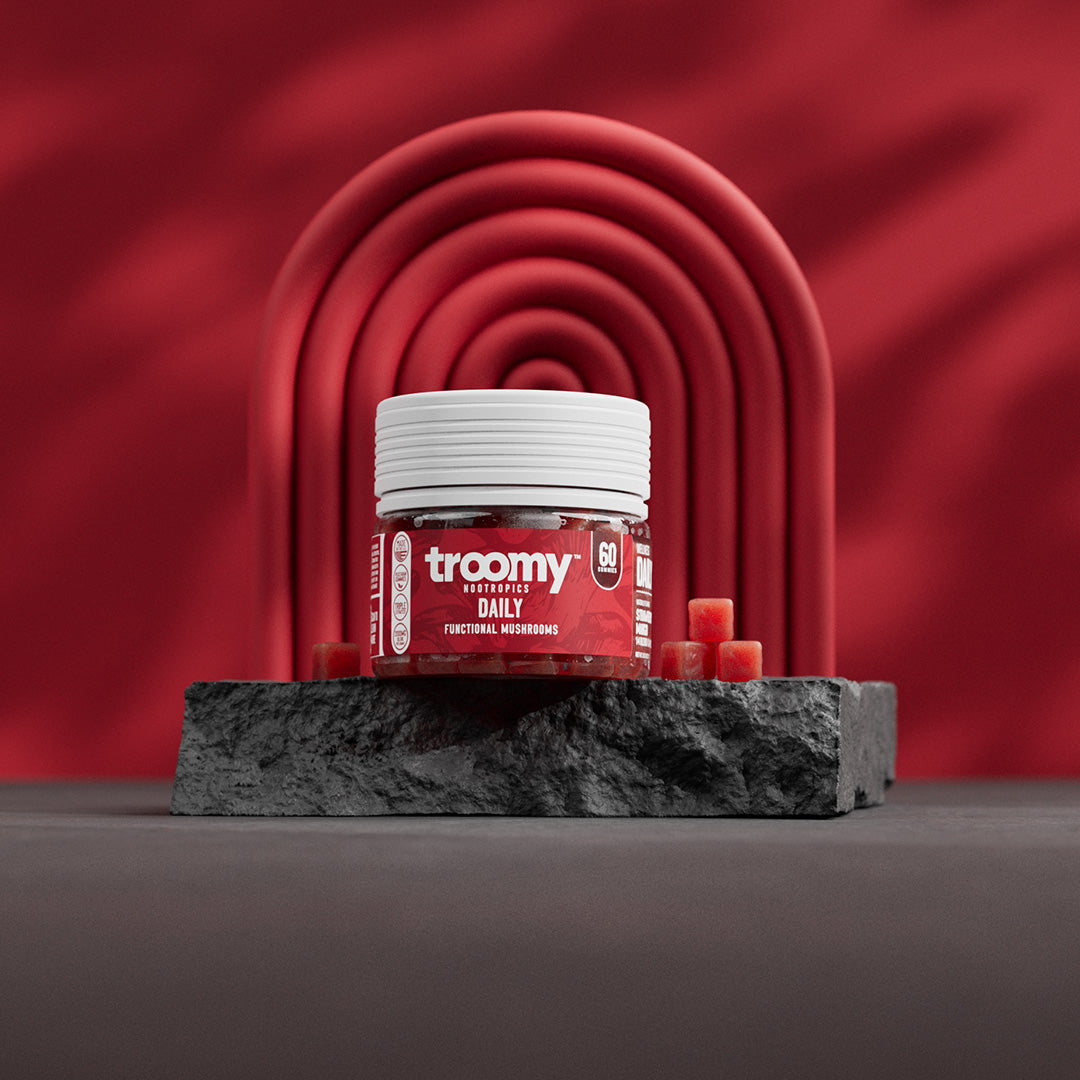
If you want a more comprehensive approach to daily mushroom wellness, Troomy's Daily 14-Mushroom Blend Gummies stack chaga alongside 13 other functional mushrooms in a single daily serving. No brewing required.
Wild vs. Cultivated Chaga: Why the Difference Matters
Not all chaga is created equal. Mushrooms grown in the wild on their natural host trees develop a significantly different bioactive profile than those cultivated on grain-based substrates. For chaga specifically, that difference is especially pronounced because so much of its value comes from its relationship with birch.
Wild-harvested chaga absorbs betulinic acid and other compounds unique to birch bark, compounds that simply are not present in grain-grown alternatives. Studies suggest immune-supportive activity in cultivated chaga is roughly half that of wild-harvested varieties. When choosing a chaga product, always look for transparency around the source and whether the brand uses birch-grown chaga with verified beta-glucan content.
How Do You Make Chaga Coffee?
Making chaga coffee at home is more straightforward than it sounds. Once you get the process down once, it takes about the same amount of time as making a smoothie.
What you need:
-
1.5 cups of hot water
-
1 to 2 teaspoons of chaga powder or ground raw chaga
-
1 teaspoon of maple syrup or honey
-
0.5 cup of your preferred nut milk (almond or walnut work well)
-
A pinch of cinnamon (optional)
-
A blender; milk frother optional
How to make it:
Combine your chaga powder, sweetener, cinnamon, and any other dry additions in the blender. Heat your nut milk separately, then pour it in and blend until frothy and well-integrated. Taste and adjust sweetness or chaga strength to your preference. Serve immediately, or store in the refrigerator for up to three days.
One thing worth noting: chaga powder blends are zero caffeine on their own, so if you want the coffee element, brew a shot of espresso or regular coffee and combine it with your chaga blend.
What Does Chaga Coffee Actually Taste Like?
Chaga has a mild, earthy flavor with subtle vanilla undertones that make it one of the more pleasant-tasting functional mushrooms to work with. It is noticeably less bitter than reishi, which can be quite polarizing on its own. Many people describe chaga coffee as having a rich, slightly smoky quality similar to a medium roast, with a grounding earthiness that feels fitting for a morning ritual.
That said, flavor experience is personal. If you try chaga coffee and find it is not quite your thing, there are plenty of other ways to get the benefits without committing to the taste of mushroom-forward coffee.
Other Ways to Get Chaga Into Your Routine
Chaga Tea
Chaga tea is one of the oldest preparation methods and one of the simplest. You steep dried chaga chunks or powder in hot water for anywhere from 15 minutes to several hours, depending on how strong you want it. The result is a mild, warming drink that works well as a coffee alternative in the afternoon.
Mushroom Powders
Chaga powder gives you more flexibility since you can blend it into smoothies, oatmeal, coffee, or practically anything else. The trade-off is that powder on its own has a strong earthy flavor that not everyone loves, and it requires a bit more daily effort to measure and mix consistently.
Mushroom Gummies
Mushroom gummies are where convenience, flavor, and functional benefits actually come together without compromise. At Troomy, we triple-extract our mushrooms to concentrate their bioactive compounds, then blend them into gummies made with organic ingredients, zero added sugar, and zero gelatin. They are vegetarian, made in the USA, and designed to actually taste good so you will want to take them every day.
The consistency factor matters more than people realize. The benefits of functional mushrooms build over time, so the format you actually stick with is the one that is going to deliver results.
Troomy's Daily 14-Mushroom Blend Gummies include chaga alongside lion's mane, cordyceps, reishi, turkey tail, and nine other functional mushrooms. One gummy covers more ground than a chaga coffee ever could, and it takes about three seconds to work into your morning.
Frequently Asked Questions
What is chaga in coffee?
Chaga in coffee refers to the addition of chaga mushroom powder or extract to a regular cup of coffee, or a pre-blended functional mushroom coffee product that contains chaga. It is a way to combine the ritualistic comfort of a morning coffee with the adaptogenic and antioxidant benefits of chaga mushroom.
What are the main chaga coffee benefits?
The primary benefits associated with chaga coffee include antioxidant support, immune modulation through beta-glucans, anti-inflammatory properties from betulinic acid, gut health support, and stress adaptation through its adaptogenic qualities. These benefits are most pronounced when the chaga is wild-harvested or grown on birch trees.
Does chaga coffee have caffeine?
Chaga mushroom itself contains no caffeine. If you make a chaga coffee blend using actual coffee, the caffeine will come from the coffee component, not the chaga. Pure chaga tea or a standalone chaga mushroom supplement will be caffeine-free.
What does chaga coffee taste like?
Chaga coffee has a mild, earthy flavor with slight vanilla and smoky undertones. It is considerably less bitter than other functional mushrooms like reishi, and it blends naturally with medium-roast coffee. Most people find it a pleasant addition rather than an overpowering flavor.
Is wild chaga better than cultivated chaga?
Yes, in most cases. Wild or birch-grown chaga develops a more complete bioactive profile due to its parasitic relationship with the birch tree, which supplies betulinic acid and other compounds absent in grain-grown alternatives. Research suggests cultivated chaga provides roughly half the immune-supportive activity of wild-harvested chaga.
How do I add chaga to my daily routine without brewing coffee?
The easiest way is through a high-quality mushroom supplement. Troomy's Daily 14-Mushroom Blend Gummies include chaga and 13 other functional mushrooms in a single daily serving. They are triple-extracted, vegetarian, made in the USA, and require zero preparation.
Can I use chaga mushroom gummies instead of chaga coffee?
Absolutely. Mushroom gummies offer the same functional benefits of chaga in a more consistent, convenient format. They eliminate the need for brewing, measuring, or blending, and they have an extended shelf life compared to raw mushrooms or fresh-ground powders.
These statements have not been evaluated by the Food and Drug Administration. This product is not intended to diagnose, treat, cure, or prevent any disease.


