



If you have ever picked up a bottle of lion's mane and wondered how much you are actually supposed to take, you are not alone. Dosage is one of the most common questions people have when they first start exploring functional mushrooms, and for good reason. Get it right, and you will likely feel the difference in your focus, clarity, and mental output. Go too low and you might not notice much at all. Go too high and you are probably just wasting product. The good news is that lion's mane has a strong safety profile and a reasonably well-understood dosage range, even if the science is still evolving.
This guide covers everything you need to know about lion's mane dosage, including how much to take per day, how much lion's mane is too much, how the right form affects potency, and how to tailor your intake around your specific goals. Whether you are brand new to lion's mane mushroom or looking to refine an existing routine, you will leave here with a clear picture of where to start and how to build from there.
What Is Lion's Mane and Why Does Dosage Matter?
Lion's mane (Hericium erinaceus, sometimes called yamabushitake) is a functional mushroom with a long history in traditional Chinese and Japanese wellness practices. In modern research, it has become one of the most studied mushrooms for cognitive support, largely because of its two key bioactive compounds: hericenones, found in the fruiting body, and erinacines, found in the mycelium. Both have been studied for their potential to support nerve growth factor (NGF) production, which plays a role in how the brain maintains and regenerates neurons.
That biological context is exactly why dosage matters more than people expect. Bioactive compounds like hericenones and erinacines need to be present in sufficient concentration to have a meaningful effect. Too little and the body does not have much to work with. The format you choose also matters, since a raw mushroom powder and a triple-extracted supplement can contain vastly different concentrations of these compounds even if the label shows the same number of milligrams.
How Much Lion's Mane Should You Take Per Day?
For most healthy adults, a daily intake of 500 to 2,000 mg of lion's mane is considered a reasonable and well-tolerated range. Many studies and practitioner guidelines suggest starting at the lower end, around 500 to 800 mg per day, and gradually increasing as your body adjusts and you get a clearer sense of how it affects you personally.
There is no universally agreed-upon perfect dose, and that is not a disclaimer we are hiding behind. It is simply the reality of where the science is right now. Individual responses vary based on body weight, metabolic rate, the format of supplementation, and what you are using lion's mane to support. Someone supplementing for general cognitive wellness may do well at 500 to 1,000 mg, while someone targeting more specific neurological support may see guidance in the range of 1,000 to 2,000 mg daily.
The general upper limit most practitioners reference is four grams (4,000 mg) per day. While lion's mane has not been associated with serious overdose effects, exceeding this threshold consistently is not recommended. More is not always better, and loading your system with excess amounts of any supplement is unnecessary when you can dial in a working range at a fraction of that dose.
How Much Lion's Mane Is Too Much?
The honest answer is that lion's mane is widely regarded as safe even at higher doses, with no documented cases of serious overdose in the research available. A clinical trial published in Biomedical Research found that participants taking lion's mane extract for 16 weeks showed no significant adverse effects. That said, "safe at high doses" does not mean you should take as much as possible.
For a practical overview of intake amounts, timing, and what to watch for as a first-time user, Troomy's guide on using lion's mane safely and responsibly covers the key parameters in one place.
Some individuals who take lion's mane at very high doses report mild digestive discomfort, particularly if they are sensitive to mushrooms. A small number of people also experience mild skin reactions, which is typically associated with allergic sensitivity rather than toxicity. If you are new to functional mushrooms, this is another reason to start low and move up incrementally.
From a practical standpoint, taking substantially more than 2,000 mg per day without a specific therapeutic reason offers diminishing returns. The body can only absorb and utilize so much at a time. Splitting your daily intake across two doses, one in the morning and one in the afternoon for example, tends to produce more consistent results than taking everything at once.
Lion's Mane Dosage by Goal
One of the most useful ways to think about lion's mane dosage is by the outcome you are trying to support. Different goals tend to align with different intake levels, and understanding that context helps you make a more informed decision about where to start.
Lion's Mane Dosage for Focus and Memory
For everyday cognitive support, focus, and working memory, lower dosages are effective and well-supported by research. Both animal and human studies have shown meaningful effects on cognitive markers at doses in the 500 to 1,000 mg range. A landmark Japanese double-blind, placebo-controlled clinical trial published in Phytotherapy Research found that participants taking 250 mg of lion's mane extract four times per day (1,000 mg total) for 16 weeks showed improved scores on cognitive function assessments compared to a placebo group (Mori et al., 2009).
This is the range where most people see real, day-to-day benefits in terms of mental clarity, ease of concentration, and memory recall. It is also the dose range built into Troomy's lion's mane gummy blends, making it straightforward to hit that target without any calculation required.
Lion's Mane Dosage for Anxiety and Mood
Lion's mane has been studied in the context of mood and stress resilience, with some early research suggesting that it may support the nervous system's response to emotional stress. The Alzheimer's Drug Discovery Foundation notes that lower doses in the range of a few hundred milligrams upward may be relevant in this context, though results vary significantly between individuals.
If mood support is your primary goal, the standard approach is to start conservatively and assess how your body responds over two to four weeks before making adjustments. Because every nervous system is different, some people notice a meaningful shift at 500 mg while others need to work up toward 1,500 mg before they feel a consistent effect.
Lion's Mane Dosage for Cognitive Decline Support
For those exploring lion's mane in the context of age-related cognitive decline, the Alzheimer's Drug Discovery Foundation references a daily intake of approximately 1,000 mg as the commonly studied dose for Alzheimer's disease support. This aligns closely with the Japanese clinical trial mentioned above, which used four 250 mg doses per day across 16 weeks and found measurable improvements in cognitive function in older adults with mild cognitive impairment.
It is worth noting that lion's mane is not a treatment for any medical condition, and anyone managing a neurological diagnosis should work with a healthcare provider to understand how supplementation might fit into a broader care plan.
Lion's Mane Dosage for Neuropathy
Lion's mane has also been studied for its role in peripheral nerve regeneration, which is relevant to individuals dealing with neuropathic pain or nerve damage. In this context, intake recommendations in available literature typically fall in the 500 to 1,000 mg range taken one to three times per day. There is also emerging evidence that lion's mane does not interfere significantly with conventional neuropathic pain medications, which may make it a complementary option for some people. Always consult your healthcare provider before combining any supplement with prescription medication.
Lion's Mane Extract vs Powder: Which Form Gives You Better Results?
When people ask about lion's mane extract vs powder, they are really asking: does the form I choose actually matter? The answer is yes, and it has a direct impact on how effective your chosen supplement actually is. The distinction between lion's mane extract and lion's mane powder is not just a matter of processing. It fundamentally changes how concentrated and bioavailable the active compounds are.
Lion's mane powder is simply dried mushroom material that has been ground into a fine form. It contains the full range of mushroom components in roughly their natural proportions. This can include beneficial compounds, but it also includes a lot of structural material like chitin (the cell wall fiber of mushrooms) that the human digestive system is not particularly good at breaking down. The result is that a significant portion of the bioactive compounds in plain mushroom powder may pass through without being fully absorbed.
Lion's mane extract goes through an extraction process specifically designed to break down those cell walls and concentrate the bioactive compounds. A dual or triple-extraction process, using both hot water and alcohol extraction, pulls out both the water-soluble beta-glucans and the alcohol-soluble hericenones and erinacines. The end result is a product where those cognitive-support compounds are far more concentrated and bioavailable than in raw powder form.
Understanding what triple extraction actually means for mushroom supplements is worth knowing before comparing products, because it changes how you read every label and explains why the same milligram count can produce very different results.
What this means practically is that a 500 mg dose of a high-quality triple-extracted lion's mane product is likely to deliver meaningfully more bioactive compounds than 500 mg of standard mushroom powder. When comparing products, look for dual or triple-extracted lion's mane, and check whether the product specifies beta-glucan content or extraction ratio on the label.
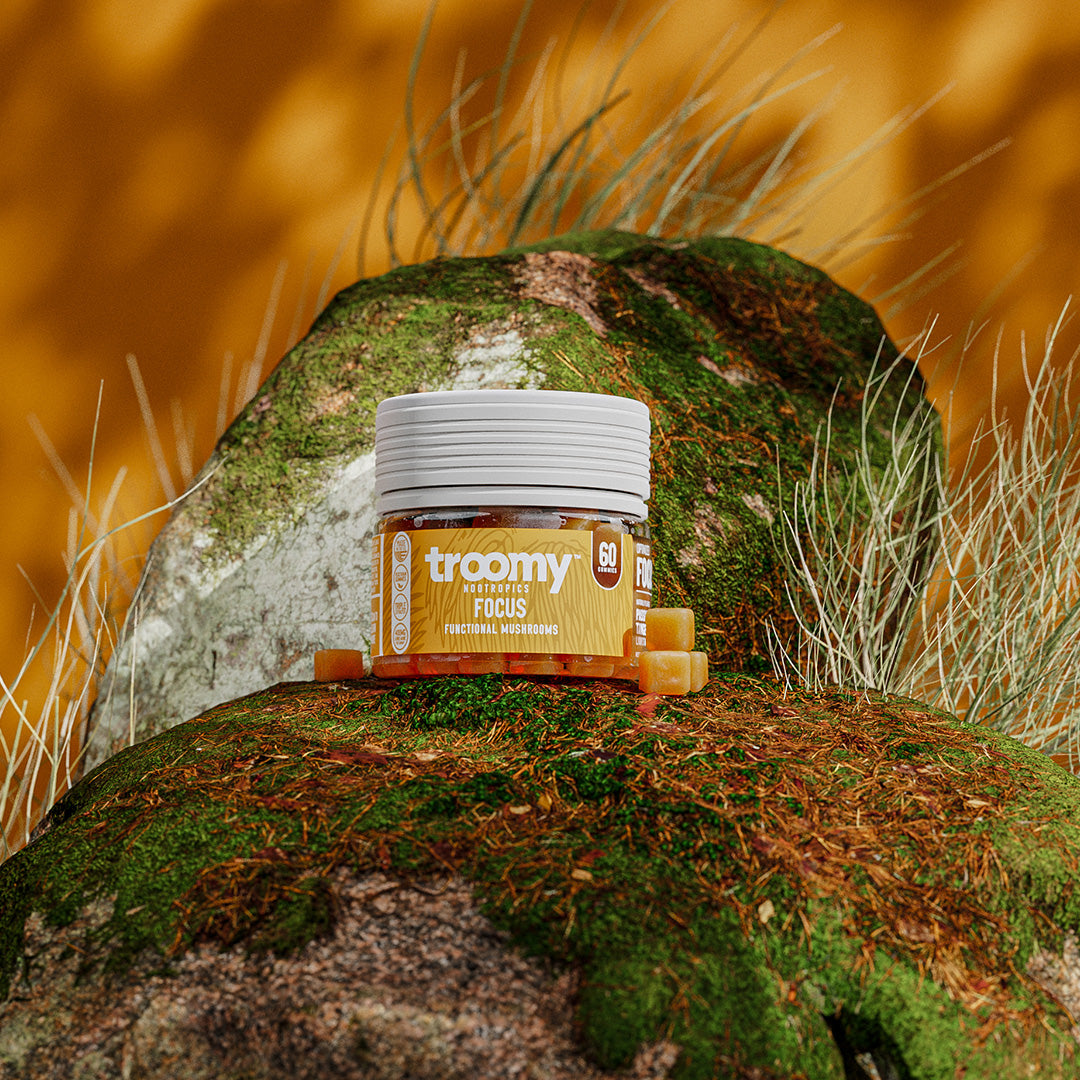
Troomy's Focus Gummies (Focus Lion's Mane Gummies) use a triple-extraction process precisely for this reason. The goal is not just to include lion's mane in the ingredient list but to make sure the bioactive compounds that actually drive the benefits are present in a form your body can use. Made in the USA, vegetarian, and available in natural tropical flavors, they take all the guesswork out of format selection.
What Is the Best Time to Take Lion's Mane?
Timing your lion's mane intake is less about rigid rules and more about aligning supplementation with when you want to feel its effects most. Because lion's mane does not contain caffeine or stimulants, it does not carry the risk of disrupting sleep the way energy supplements can. That flexibility makes it one of the more versatile additions to a daily wellness routine.
Morning
Taking lion's mane in the morning is a popular choice for people who want cognitive support throughout the workday. Pairing it with breakfast and giving it time to absorb before your most demanding hours means you are likely to feel sharper and more focused when it matters most. This timing works especially well for professionals, students, and anyone who needs sustained attention across long stretches of focused work.
Before a Workout
Functional mushrooms and physical training are an increasingly popular combination. Lion's mane taken before exercise may support mental focus during your session, helping you stay sharp and intentional through complex movements or high-volume training. Since there is no crash associated with lion's mane, the transition from workout back to the rest of your day tends to be smooth.
Afternoon
That mid-afternoon dip in concentration is a real phenomenon, and lion's mane is a sensible tool for working through it without reaching for a second cup of coffee. Taking a second smaller dose after lunch can extend your cognitive support into the later afternoon and early evening, which is especially helpful on days that run long.
Evening
Because lion's mane is caffeine-free, evening use is entirely reasonable. Night owls, late-shift workers, and students burning the midnight oil can take lion's mane without the risk of wiring themselves awake. The antioxidant activity it provides is also a nice addition to any evening wind-down routine.
What Is the Best Way to Take Lion's Mane?
The format you choose shapes the consistency and convenience of your lion's mane routine more than almost any other variable. There are three primary options: raw mushrooms, mushroom powders, and mushroom gummies or capsules.
Raw lion's mane mushrooms are genuinely nutritious and worth trying if you want to explore the whole-food experience. However, they are perishable, require cooking, and can be difficult to source consistently. The concentration of bioactive compounds also varies from mushroom to mushroom, making reliable dosing a real challenge.
Mushroom powders and tinctures are more shelf-stable and easier to measure, but they still require effort to work into your routine. Mixing powder into coffee or smoothies adds a prep step that many people find easy to skip on busy mornings, and absorption can be inconsistent depending on the extraction process behind the product.
If you are weighing your options before committing to a format, how mushroom gummies and powders actually compare covers the differences in convenience, bioavailability, and cost that most people do not think about until after they have already bought something.
Mushroom gummies represent the most convenient and consistent format available. A pre-measured dose in each gummy eliminates the guesswork entirely. You know exactly what you are getting, you do not need to prepare anything, and the barrier to actually taking your supplement every day is as low as it gets. For people who struggled with consistency using powders or raw mushrooms, gummies tend to be a genuine turning point.
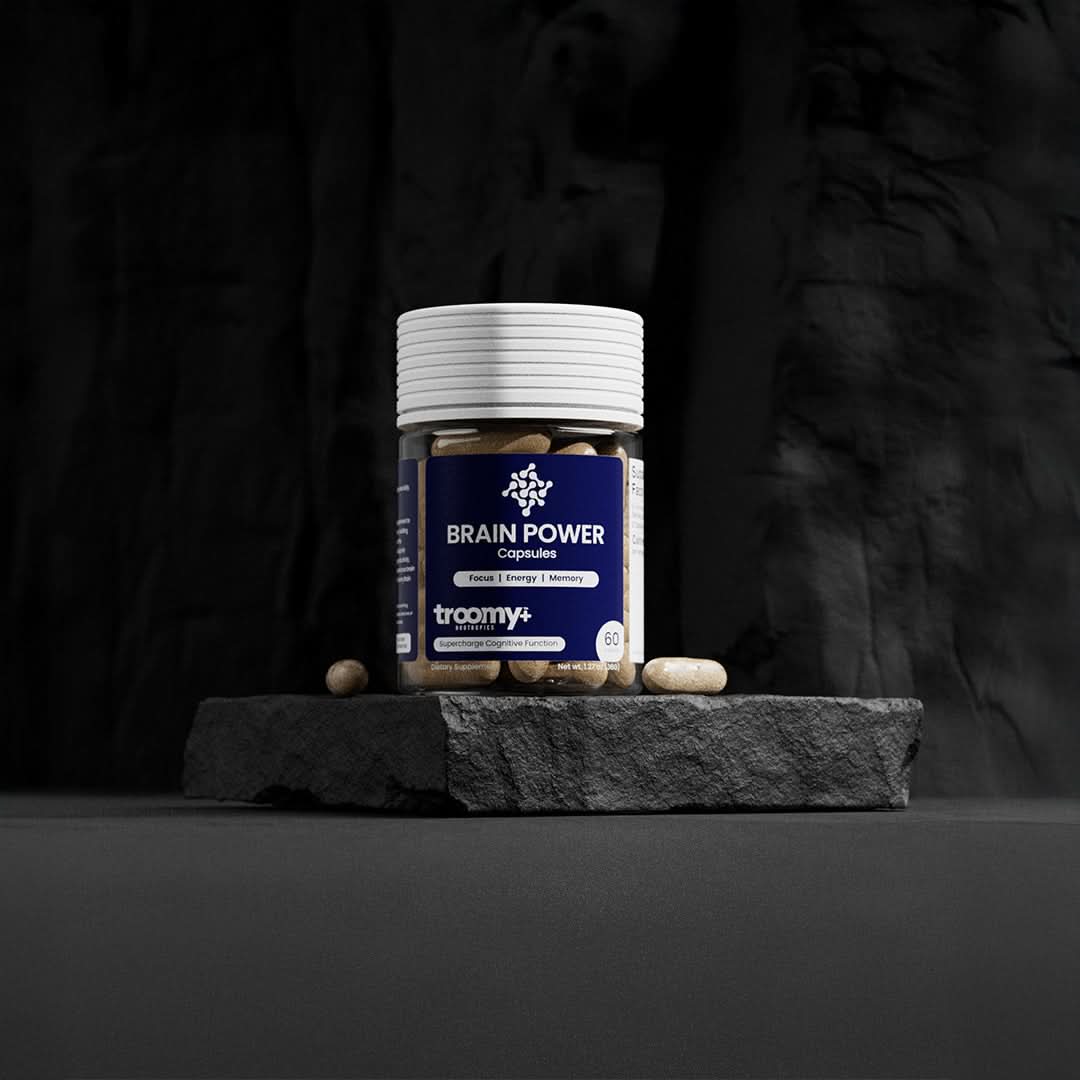
For those who prefer a capsule format, Troomy's Brain Power Capsules (Brain Power Cognitive Function Capsules) offer another excellent option. Formulated for cognitive support and mental performance, they pair well with an active wellness routine and give you a clean, no-fuss daily supplement that fits into any schedule.
How to Find the Right Lion's Mane Dose for You
There is no universal starting point that will work perfectly for every person. Body weight, metabolic rate, existing supplement habits, diet, and the specific goals you have for taking lion's mane all factor into what your ideal dose looks like. The most reliable approach is to start at the lower end of the recommended range, around 500 mg daily, and give it two to four weeks before evaluating your response.
Once you have a baseline, incrementally increasing toward 1,000 to 1,500 mg is a reasonable next step if you want more pronounced or longer-lasting effects. Pay attention to how you feel in the hours after taking it, how your focus holds up across the day, and whether your mood and mental resilience feel different. Those are the clearest signals that your dose is working for you.
The key word is consistency. Lion's mane is not a supplement you take once and feel a dramatic shift. Its effects, particularly the neurological ones related to nerve growth factor, build over time with regular use. A daily routine is what generates meaningful, lasting results.
Frequently Asked Questions
What is the standard lion's mane dosage for adults?
Most adults do well starting with 500 to 1,000 mg of lion's mane per day, with a commonly referenced upper guideline of 4,000 mg daily. The right dose for you will depend on your goals, your body, and the format of supplementation you are using. Starting lower and building gradually is the recommended approach for anyone new to lion's mane.
How much lion's mane is too much?
Lion's mane does not have a well-documented toxicity threshold, and studies have shown it is well tolerated even at doses used consistently over several months. That said, taking more than 4,000 mg per day is generally unnecessary and may cause mild digestive discomfort in some individuals. Staying in the 500 to 2,000 mg range covers the needs of most people using lion's mane for cognitive support.
Is lion's mane extract better than lion's mane powder?
Yes, for most purposes lion's mane extract is the superior option. Extraction breaks down the chitin cell walls of the mushroom and concentrates the bioactive compounds, particularly hericenones and erinacines, in a form the body can actually absorb. Raw powder retains those cell walls and tends to deliver lower concentrations of active compounds per milligram. A dual or triple-extracted lion's mane product will generally provide more bioavailable cognitive support than an equivalent dose of plain mushroom powder.
Can you take lion's mane every day?
Yes. Daily supplementation with lion's mane is both safe and, for most people, the most effective way to use it. Many of its neurological benefits build cumulatively with consistent intake over weeks and months. Taking it at the same time each day helps you build the habit and makes it easier to assess how your body is responding.
When is the best time of day to take lion's mane?
Lion's mane can be taken at any time of day because it does not contain caffeine or other stimulants. Morning is popular for all-day cognitive support. Pre-workout timing is useful for focus during training. An afternoon dose can address the mid-day concentration dip. Evening use is also fine for those who want antioxidant support or late-night productivity without affecting sleep.
Does lion's mane work immediately or does it take time?
Some people report feeling more focused or mentally clear within the first few days of taking lion's mane, but the deeper benefits associated with nerve growth factor support and sustained cognitive function develop over weeks to months of consistent use. Giving it at least four to eight weeks before evaluating results is recommended.
What is the difference between lion's mane tincture and powder?
A lion's mane tincture uses liquid extraction (typically alcohol or a water-alcohol blend) to pull out specific bioactive compounds, making them highly concentrated and fast-absorbing. Lion's mane powder is dried and ground mushroom material with variable compound concentrations. Tinctures and extracts typically deliver more targeted, bioavailable support than raw powders, which is why extraction method is one of the most important quality factors to check when choosing a lion's mane supplement.
These statements have not been evaluated by the Food and Drug Administration. This product is not intended to diagnose, treat, cure, or prevent any disease.


